How to Measure and Replace a Worm Gear — Field Maintenance Guide
When a worm gear fails in the field, the original drawing is rarely available. This guide walks through the complete measurement procedure for identifying a failed component, ordering the correct replacement, and installing it in a way that does not cause the same failure to happen again within six months.
The Reality of Field Worm Gear Replacement Without Original Drawings
In a production facility, a failed worm gear usually arrives at the maintenance desk as a damaged component in a plastic bag with a note that says “from conveyor 3B drive — urgent.” There is no drawing number, no part number, no machine documentation that specifies the gear precisely. The maintenance engineer must measure the failed part, identify all its critical parameters, order a replacement that matches every one of them, and install it correctly — all before the production schedule requires the machine back in service.
The order of these tasks matters. Measurement first, then ordering — not ordering while measurement is still incomplete. Each parameter that is assumed rather than measured is a potential second-trip replacement cost. This guide structures the measurement process in the sequence that experienced maintenance engineers use: start with the parameters that are easiest to measure accurately (tooth count, OD, bore diameter) and end with the ones that require more care (module calculation, thread direction verification).
If the failed component is in multiple pieces or badly deformed, send it to Korea Ever-Power. Our CMM team can extract all critical parameters from a broken worm wheel or worn worm shaft and return a confirmed replacement specification within 48 hours on working days. This service is provided at no charge for orders above minimum quantity.
Tools Required for a Complete Field Measurement
Essential Measuring Tools
▷ Digital vernier caliper, 150 mm range, 0.01 mm resolution — for OD, bore diameter, face width, and overall length
▷ Outside micrometer, 0–25 mm and 25–50 mm range — for shaft diameter and small bore confirmation to 0.001 mm
▷ Depth micrometer or digital depth gauge — for keyway depth measurement
▷ Steel rule or flexible tape — for center-to-center length and worm shaft thread zone length
▷ Thread pitch gauge set (metric and AGMA) — for identifying axial pitch on the worm shaft
Additional Useful Items
▷ Smartphone camera — document measurements alongside the component in the same frame
▷ Coin or known-diameter object — for scale reference in photographs
▷ Needle-nose file — for cleaning tooth surfaces to expose the base material color for material identification
▷ Permanent marker — for marking tooth positions while counting
▷ Cleaning solvent (acetone or IPA) — remove grease and debris before measurement
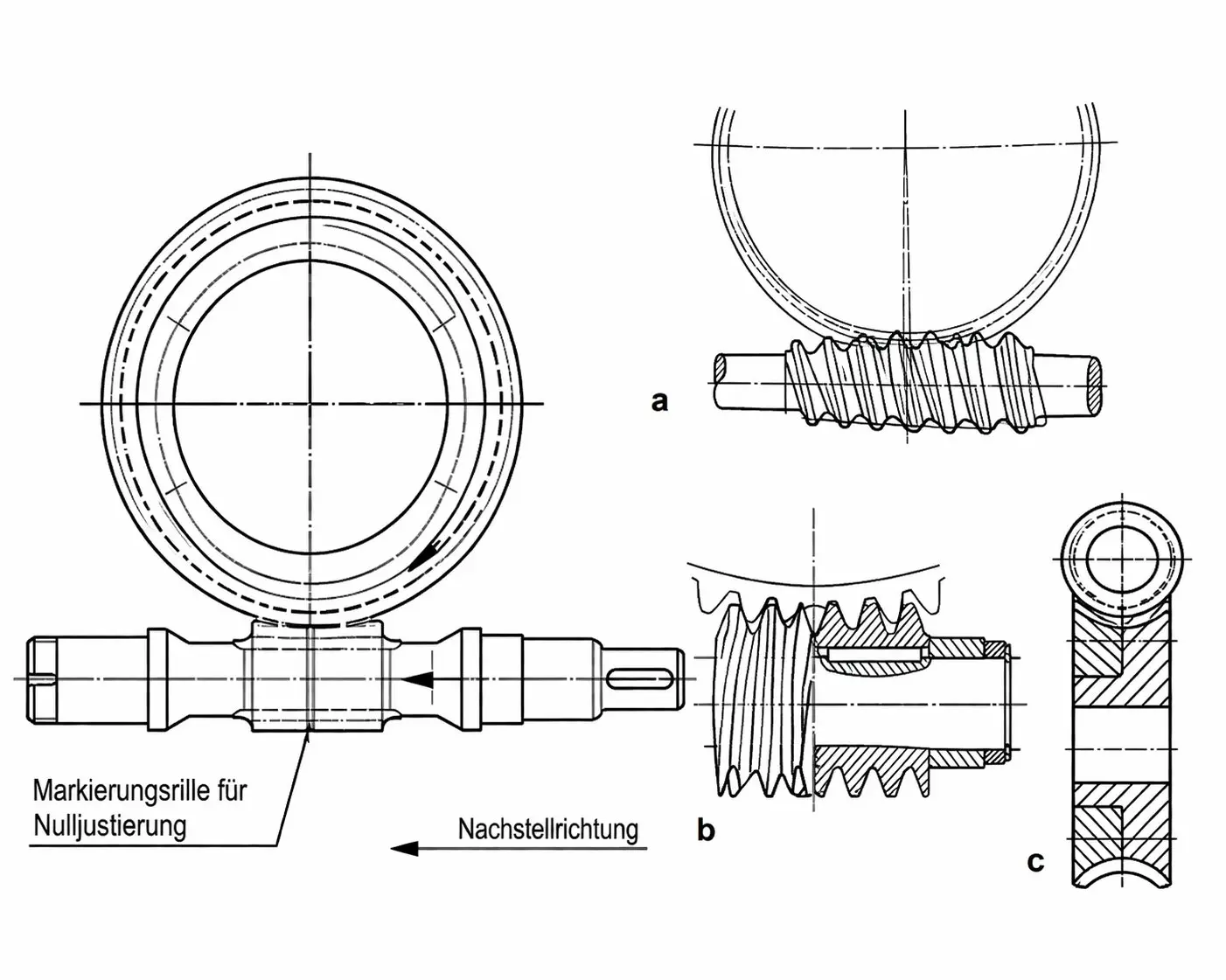
Step-by-Step Measurement Procedure for the Worm Wheel
Work through these steps in order. Do not skip steps or reorder them — the sequence is designed so that each measurement informs or cross-checks the next.
Step 1 — Clean the Component
Remove all lubricant, dirt, and corrosion products from the tooth faces, bore, and OD surfaces using solvent and a clean rag. Measurement over a grease film gives readings 0.1–0.5 mm larger than the actual metal dimension. For corroded components, clean the measurement surfaces with fine wire brush first, then wipe with solvent. Photograph the part at this stage — both the overall view and close-up views of the tooth surface and bore. These photographs become the reference record for the replacement order.
Step 2 — Count the Wheel Teeth
Mark one tooth with a permanent marker as the starting reference tooth. Count every tooth around the circumference, re-marking every 10th tooth to track the count. Verify by counting in the opposite direction and confirming the same total. For damaged wheels where some teeth are broken: count the remaining teeth and inspect the pitch circle for evenly-spaced tooth root marks at the broken positions to infer the total. Write down z2 = (tooth count). Accuracy here is critical — one tooth miscount gives a wrong ratio and potentially a wrong module calculation.
Step 3 — Measure the Outer Diameter
Measure OD at the tooth tip circle using a vernier caliper across the full diameter — not radius times two. For wheels with an even tooth count, a tooth tip is directly opposite another tooth tip and the caliper spans two tips cleanly. For odd tooth counts, no two tips are exactly opposite — measure to the nearest point of the opposing tooth and correct: actual OD ≈ measured span × (1 ÷ cos(180° ÷ z2)). The correction factor for common tooth counts: z2=25: multiply by 1.008; z2=30: multiply by 1.005; z2=40: multiply by 1.003. Record OD to 0.1 mm precision — exact OD is not critical at this stage, it is used only for module calculation.
Step 4 — Calculate the Module
Module m ≈ OD ÷ (z2 + 2). Calculate and round to the nearest standard DIN module value: 1.0, 1.25, 1.5, 2.0, 2.5, 3.0, 4.0, 5.0, 6.0, 8.0, 10.0, 12.0. Example: OD = 44 mm, z2 = 20: m ≈ 44 ÷ 22 = 2.0 — confirmed M2. Cross-check: the calculated pitch circle diameter = m × z2 = 2.0 × 20 = 40 mm, and OD should be approximately pitch diameter + 2×m = 40 + 4 = 44 mm — confirmed. If the cross-check gives a result 2 mm different from the measured OD, the formula is giving the correct answer and the minor discrepancy is from tip rounding on the worn wheel.
Step 5 — Measure the Bore Diameter and Keyway
Measure the bore diameter with a vernier caliper at three positions (entry, mid-depth, and far end of the bore) to check for taper from wear or corrosion. Report the smallest measurement as the nominal bore — a replacement with a bore machined to this nominal H7 will fit correctly. For the keyway: measure the width with a vernier caliper jaw inserted into the keyway slot. Measure the depth from the bore surface to the keyway floor with a depth gauge. Note whether the keyway has a rounded end (indicating a slotting cutter) or a square end (indicating an end mill). Compare the width and depth to DIN 6885 values for the nearest standard shaft diameter — this confirms whether the bore is standard.
Step 6 — Measure Face Width and Hub Dimensions
Measure the face width (the length of the tooth zone across the wheel) using the depth gauge or vernier caliper. Measure the total hub length and any step diameters on the hub face. These dimensions are needed to confirm the replacement fits within the existing housing bearing span. A replacement wheel with correct module, tooth count, and bore but 2 mm wider face width may not fit between the existing housing walls. Record all hub step diameters and lengths — a dimensional sketch with all measurements marked is more useful than a list of numbers for this step.
Step 7 — Identify the Material
File a small area of the tooth face and examine the filing color: yellow/golden filings and bright yellow cut surface = bronze (tin bronze or aluminum bronze — both are copper alloys). Dark grey filings and dull grey surface = cast iron. Silver-grey filings with a bright cut surface = steel. If bronze is confirmed, examine the filing color more carefully: a reddish-gold color suggests a high-copper tin bronze; a silver-gold color suggests an aluminum bronze with higher aluminum content. Both types require the same care with lubricant selection (no sulfur EP additives) but have different strength characteristics. If uncertain, send a filing sample in a sealed bag for laboratory identification.
Measuring the Worm Shaft — Three Critical Dimensions
The worm shaft is harder to measure precisely than the wheel because the thread geometry involves helical surfaces that do not lend themselves to direct caliper measurement. Three measurements are sufficient to specify a replacement: axial pitch, pitch diameter, and start count.
Axial pitch is the distance from one thread flank to the corresponding point on the next thread turn, measured parallel to the shaft axis. Use a thread pitch gauge set — lay the blade of the pitch gauge along the worm thread and find the blade that matches the thread spacing cleanly without rocking. The axial pitch value on the matching blade divided by π gives the module. If no blade matches precisely, measure the distance directly: place a steel rule parallel to the shaft axis, align the zero mark with one thread flank, and read the distance to the same flank on the next thread turn. This is the axial pitch.
Pitch diameter is the diameter of the worm’s pitch cylinder — the theoretical cylinder on which the worm meshes with the wheel. It cannot be measured directly on a thread. Approximate it as: measure the OD of the worm thread (over the thread tips) and the root diameter (between thread flanks), then take the average: pitch diameter ≈ (thread tip OD + root diameter) ÷ 2. For a more accurate value, provide the worm shaft to Korea Ever-Power for CMM measurement.
Start count is determined by looking directly at the end face of the worm shaft (the flat face perpendicular to the axis). Count the number of distinct thread initiation points visible — how many separate grooves begin at the end face. One groove = single-start. Two grooves = two-start. The start count combined with the wheel tooth count gives the gear ratio: i = z2 ÷ z1.
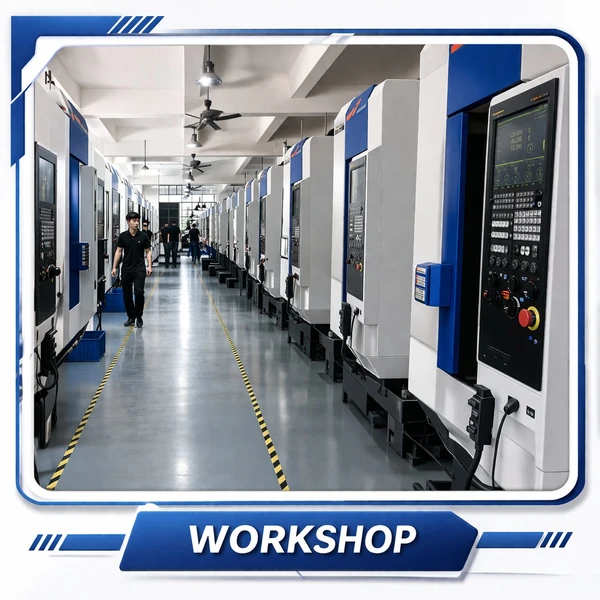
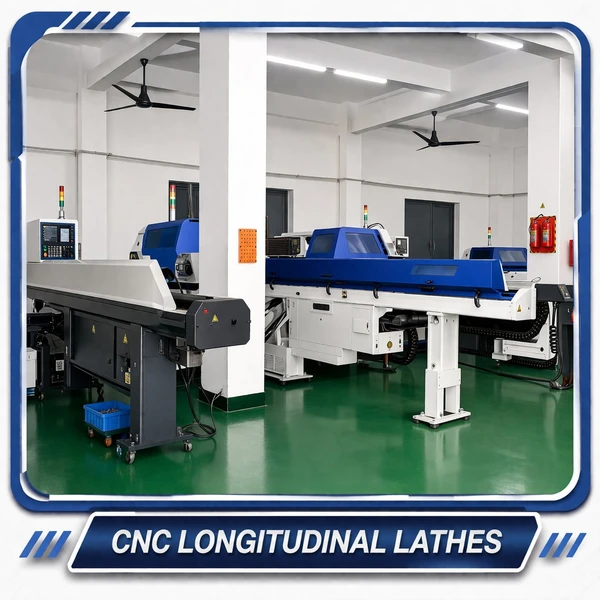
Production at Korea Ever-Power
 |
 |
 |
 |
Measurement Record — Complete This Before Ordering
| Measurement | Value Recorded | Derived Parameter |
|---|---|---|
| Wheel OD (mm) | ___________ | Used to calculate module |
| Wheel tooth count (z2) | ___________ | Used to calculate module and ratio |
| Calculated module m = OD ÷ (z2+2) | ___ → round to nearest std | Confirmed module for order |
| Bore diameter (mm) | ___________ | Bore specification for order |
| Keyway width (mm) | ___________ | Keyway specification |
| Keyway depth (mm) | ___________ | Keyway specification |
| Face width (mm) | ___________ | Confirm fits in existing housing span |
| Worm shaft start count (z1) | ___________ | i = z2 ÷ z1 → confirmed ratio |
| Worm axial pitch (mm) | ___________ | Cross-check: axial pitch ÷ π = module |
| Thread direction (L / R) | ___________ | Worm and wheel must match |
| Wheel material (bronze / iron / steel) | ___________ | Determines replacement material and lubricant spec |
Installation — The Steps That Prevent the Same Failure Recurring
Installing the replacement gear set correctly takes the same amount of time as installing it incorrectly — but only one of them results in the same failure mode recurring three months later. The following installation steps are the ones most frequently skipped under time pressure, and each omission has a predictable consequence:
Pre-Installation: Clean and Inspect the Housing
Before installing new components, drain and collect the old lubricant. Examine it: metallic particles (bronze or steel) confirm tooth contact wear; dark or burnt oil confirms thermal overload; water contamination (milky oil) confirms seal failure. All three indicate conditions that will destroy the replacement gear set at the same rate as the original unless the root cause is fixed. Clean the housing interior with solvent, replace the drain plug O-ring, and inspect all lip seals and vent plugs. A failed seal or blocked vent vent is often the actual root cause of the gear failure — the gear failed because the seal failed first, allowing lubricant loss or water ingress.
Setting the Correct Center Distance
Center distance between the worm and wheel shafts determines backlash. Too small → interference, binding, and immediate failure. Too large → excessive backlash, noisy operation, and reduced contact area. The correct center distance is specified on the housing drawing (which is usually available even when the gear drawing is not), or calculated as: center distance = (d1 + d2) ÷ 2, where d1 is the worm pitch diameter and d2 is the wheel pitch diameter = m × z2. Verify the center distance by pressing the assembled gear set into the housing and manually checking for smooth rotation without binding — then rotating under no-load for 30 seconds and listening for any periodic noise that indicates edge contact from slight center distance error.
Running-In Procedure and First Oil Change
New bronze worm wheels must run in against the worm shaft before carrying full load. During running-in, microscopic high spots on the bronze tooth surface wear flat against the hardened worm thread. This process releases fine bronze particles into the lubricant — which become abrasive if they are not removed before they accumulate. The correct procedure: run the drive at 25–30% of rated load for the first 4 hours, then at 50–60% for the next 4 hours. After this running-in period, drain and replace the lubricant completely. Do not skip this first oil change — the abrasive particles from running-in remain in the lubricant and cause accelerated wear from the second hour of operation if the oil is not changed.
Lubricant Selection — The One That Matches the Wheel Material
The replacement lubricant must be confirmed compatible with the replacement wheel material before filling the housing. For bronze worm wheels (tin bronze or aluminum-iron bronze): use ISO VG 220 to VG 460 mineral gear oil or synthetic PAO gear oil — both must be confirmed free of sulfur- or chlorine-based EP (Extreme Pressure) additives, which chemically corrode copper alloys. Look for labels that say “bronze-compatible,” “suitable for yellow metals,” or “non-EP” or “ashless EP.” For cast iron wheels: standard EP industrial gear oil is acceptable — iron is not reactive with sulfur EP additives. For stainless steel gear pairs: PTFE-based or silicone oil is preferred for food-contact applications; for non-contact, standard PAO synthetic gear oil is appropriate.

Six Common Installation Errors and Their Consequences
| Error Made During Installation | What It Looks Like Later | How to Avoid It |
|---|---|---|
| Center distance set too small | Heavy starting torque, severe galling within first operating hour | Verify center distance against housing bore positions before final bolt-up |
| Wrong lubricant (EP oil in bronze wheel drive) | Tooth face roughens progressively; bronze filings in drained oil; wheel replacement needed within 1,000 hours | Confirm oil label says “bronze compatible” before filling |
| Running-in oil not changed after 4–8 hours | Accelerated wear, short replacement interval — similar life to the failed original | Schedule first oil change at 8 hours run-in — do not leave it to the next planned maintenance |
| Seal not replaced after disassembly | Lubricant loss; water or dust ingress; new gear set wears rapidly within months | Treat all lip seals and O-rings as single-use items — replace all seals opened during maintenance |
| Bearing preload not restored correctly | Worm shaft axial play causes center distance variation under load; intermittent noise; uneven contact pattern | Set worm shaft axial preload per housing manufacturer’s specification before final assembly |
| Full load applied immediately without running-in | Contact zone does not form correctly; bronze tooth surface pits early in service | Follow the running-in procedure — 4 hours at 25–30% load, then 4 hours at 50–60%, then full load |

Replacement worm gear sets from Korea Ever-Power are shipped with individual oil-paper wrap and polyethylene bag to prevent surface contamination between dispatch and installation. For complete enclosed drive unit replacements, worm gear reducers factory-filled with the correct bronze-compatible lubricant grade are available — eliminating the lubricant selection step from the installation procedure.
Frequently Asked Questions
Send Your Measurement Data — Get a Confirmed Replacement Quote
Complete the measurement record form above and send the values — or send photographs of the worn component with a ruler for scale. We confirm the specification and return a price and lead time within one working day. Broken or severely worn components can be sent directly for CMM identification at no charge on orders above minimum quantity.
Editor: Cxm