Practical Guide Series · Field Diagnostics

Worm Gear Troubleshooting — The Field Engineer’s Diagnostic Reference

Eight common worm gear drive problems: what you observe, what it means, what to check first, and when to replace vs repair. Built as a field reference — use the symptom table to go directly to your problem.

Symptom Reference Table
Diagnostic Step-by-Step
Replace vs Repair Decision
⚙ Korea Ever-Power Worm Gear Co., LtdAnsan-si, Gyeonggi-do, [email protected]

Before You Disassemble Anything — A Systematic Approach

The most common worm gear troubleshooting error is disassembly before observation. A drive that is noisy, hot, or leaking provides diagnostic information in its operating state that is lost once it is taken apart. Spend 5 minutes observing the drive in operation — or immediately after shutdown if it cannot be safely observed under load — before touching a single bolt.

The five pre-disassembly observations that narrow the diagnosis: (1) Is the problem continuous or periodic? Continuous problems are usually lubrication or steady-state wear. Periodic problems at a regular interval are usually mechanical — a specific tooth, bearing, or shaft. (2) Is the problem proportional to load, speed, or temperature? Each relationship points to a different root cause. (3) What does the housing feel like? Localized heat on one side of the housing often indicates bearing problems rather than gear mesh problems. (4) When did it start? Sudden onset vs gradual development indicates different failure modes. (5) Has anything changed recently — new oil, new load, new operator?

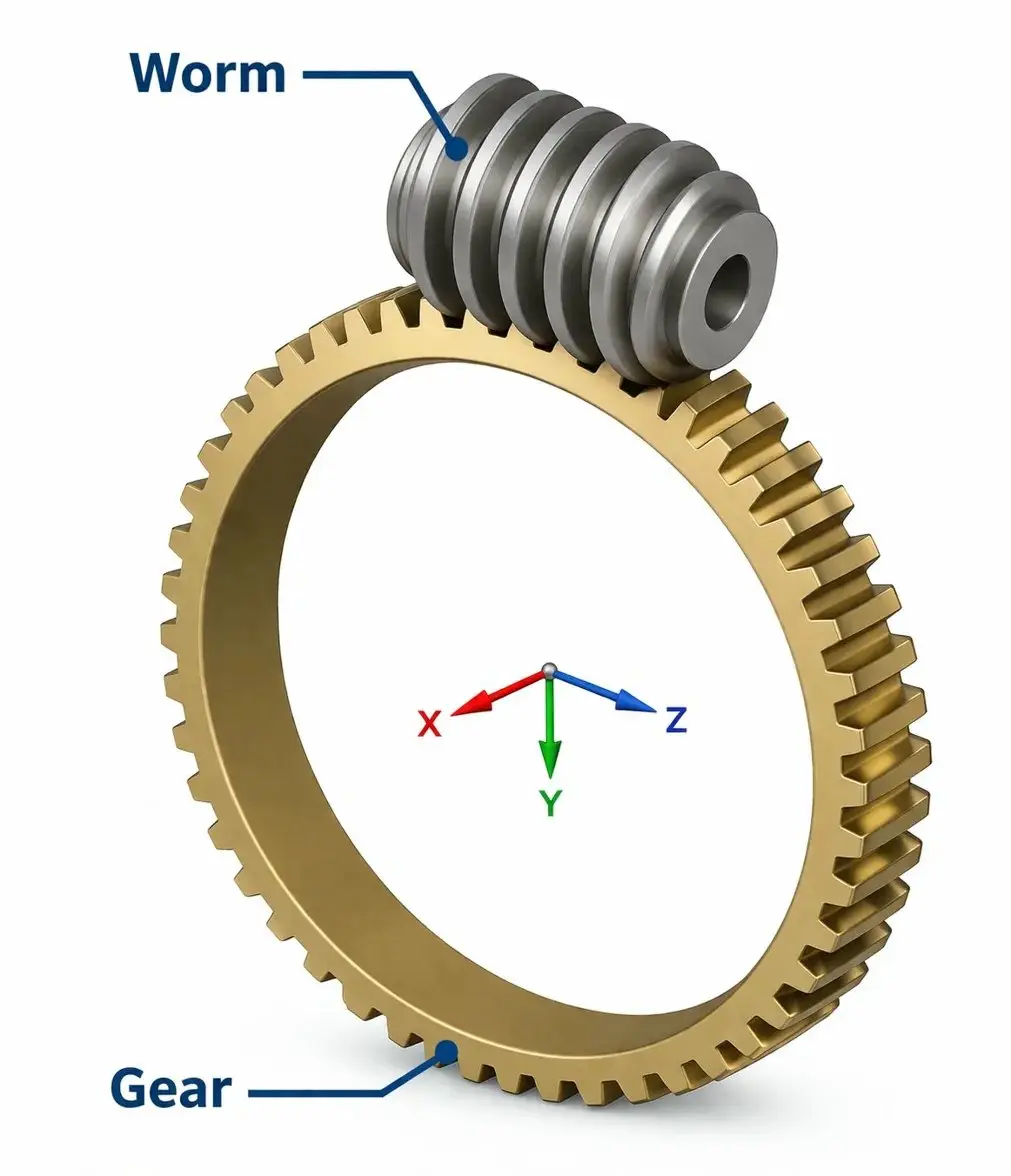
worm gear structure 1
worm gear structure 4

Symptom Reference Table — Go Directly to Your Problem

Observed Symptom Most Likely Cause Urgency First Check Section Below
Housing too hot to touch (>70 degrees C) Thermal overload — efficiency loss, wrong oil viscosity High — reduces to failure Oil level and viscosity vs operating temp P1: Overheating
Progressive noise increase over weeks Abrasive wear — tooth flanks degrading Medium — plan replacement Drain oil, check metallic content P2: Progressive Noise
Sudden loud knock, then vibration Tooth fracture or bearing spall Urgent — stop immediately Do not restart — inspect for fragments P3: Sudden Noise
Oil leaking from shaft seal Shaft seal failure or housing joint Medium — lubrication at risk Check oil level, identify leak source P4: Seal Leakage
Drive will not turn when motor runs Drive locked — gear jam or torque overload High — possible tooth damage DO NOT force — check for jammed load P5: Locked Drive
Output shaft turns but load does not move Key shear or coupling failure Medium — drive not damaged Check keyway, coupling, and key condition P6: Drive Slip
Position error increasing over months Backlash growth from tooth wear Low — correct at next maintenance Measure backlash, compare to spec P7: Backlash Growth
Green oil or green deposits on drain EP oil attack on bronze wheel Medium-high — change oil immediately Drain fully, inspect wheel flanks P8: Oil Contamination

P1
Overheating — Housing Temperature Above 70 Degrees C

High housing temperature is not a failure mode in itself — it is a symptom. Every worm gear drive that runs hot is telling you that the heat it is generating (proportional to 1 minus efficiency) exceeds the rate at which the housing can dissipate that heat to the ambient environment. Addressing housing temperature requires identifying which side of this equation is out of specification.

Housing temperature too high: Check ambient temperature first. Is the drive installed near a heat source or in an enclosed unventilated cabinet? Measure ambient within 0.3m of the housing. A drive designed for 30 degrees C ambient fails its thermal rating at 35 degrees C ambient. Add ventilation or relocate the drive.
Oil level too low: Low oil level reduces the amount of oil available for splash lubrication of the mesh, reducing the heat transfer from the gear contact to the housing. Check and correct the oil level with the drive stationary and oil settled.
Wrong lubricant viscosity: Oil that is too thin (wrong grade or high temperature driving viscosity below design) provides inadequate EHD film, increasing friction and heat generation. Check viscosity grade against the operating temperature. Switch to PAO for improved viscosity stability.
Drive operating above rated torque: Calculate actual output torque from motor current. If above 80% rated torque, the efficiency loss is generating more heat than the housing is designed to reject. Reduce load or specify a more efficient drive (multi-start worm for higher efficiency at the same ratio).
P2
Progressive Noise Increase — Getting Louder Week by Week

Gradually increasing noise in a worm gear drive always indicates a wear mechanism in progress. The noise comes from one of two sources: increasing roughness on the tooth flank surfaces as wear removes material and the ground or hobbed finish degrades; or from increasing backlash as tooth thickness decreases, producing impact at direction reversals. These two sources produce slightly different noise characters.

Drain the oil and inspect: Drain the oil without the drive running (so debris settles to the drain). Inspect for metallic content. Light bronze-coloured metallic paste: normal gradual wear, plan replacement within next scheduled maintenance. Large metallic particles, angular chips: accelerated wear or fatigue — inspect tooth flanks at next opportunity.
Check lubrication: EP oil in a bronze-wheel drive produces corrosive attack that mimics abrasive wear acoustically. Confirm the oil type and change to non-EP immediately if EP oil is confirmed. The damage already done cannot be reversed but further attack stops immediately.
Measure backlash: Rotate the output shaft alternately while holding the input shaft stationary. The angular dead zone is the backlash. If backlash exceeds the original specification by more than 50%, the tooth flanks have worn significantly and replacement should be planned.
Assess remaining life: If noise is a steady increase without sudden changes, the drive is progressing through normal wear. Plan the replacement for the next scheduled maintenance window. If noise increase is accelerating (getting louder faster each week), move the replacement earlier.
P3
Sudden Loud Noise — Knock, Grind, or Vibration Onset

Sudden noise onset is an emergency. Do not attempt to diagnose the cause under load. Stop the drive at the first safe opportunity. A broken tooth fragment in the housing will abrade all remaining wheel teeth rapidly — every minute of additional operation after tooth fracture multiplies the repair cost.

STOP THE DRIVE: Do not force the drive to continue. Do not jog the motor to investigate. A single additional revolution of a fractured gear can cause fragments to jam the mesh, fracture additional teeth, or score the worm shaft thread.
After safe shutdown: drain oil: Drain the oil into a clean container. Inspect for metallic debris. Angular metallic chips indicate tooth fracture. A sudden oil darkening indicates thermal event (scuffing). Drain quality before disassembly gives you the root cause before you open the housing.
Inspect tooth flanks before reassembly: After opening, inspect all 40+ teeth (or whatever z2 is) for: missing teeth; cracks at the root fillet; scuffing damage (torn, pulled metal surface). Count the damaged teeth. If only 1-2 teeth are damaged, investigate the overload event that caused fracture. If 5+ teeth are damaged, the failure began earlier and fragments circulated.
Replace completely or replace wheel: If worm shaft thread flanks are undamaged: replace wheel only. If shaft thread shows scoring, impact damage, or profile distortion: replace the complete set. Never install a new wheel on a damaged shaft — the mismatch accelerates new wheel wear.
P4
Seal Leakage — Oil on the Housing Exterior or Floor

Shaft seal leakage is not a drive failure — it is a maintenance issue that becomes a drive failure if it results in low oil level. A leaking seal should be treated as urgent not because of the seal itself but because of what happens to the drive when it runs low on oil.

Identify the leak source: Is the leak from the shaft seal (rotation point, one side of shaft)? Or from the housing joint (parting line of housing halves)? Or from the fill plug or drain plug? Each requires a different repair. Wipe the housing dry and run for 5 minutes to observe where the fresh oil appears.
Shaft seal leak: replace seal: Standard NBR shaft seals can be replaced without disassembling the gear set if the housing design allows external lip seal installation. Confirm the seal specification (shaft diameter, bore diameter, seal type) before ordering. For marine drives, specify FKM (Viton) replacement seals.
Housing joint leak: reseal: Clean the joint surfaces, apply fresh anaerobic flange sealant, and re-torque the housing bolts in the correct cross-pattern sequence. Allow full cure before refilling and running.
Check and correct oil level: After any seal repair, check and correct the oil level before returning to service. If the drive ran with low oil (housing feels hot on one side, unusual noise), inspect the tooth flanks for scuffing damage before returning to full-load operation.

Additional Problems P5 — P8: Quick Diagnosis Reference

P5

Locked Drive — Will Not Turn Under Motor Power

First response: DO NOT repeatedly jog the motor. Identify the source: is the load mechanically jammed (conveyor belt stuck, material jam), or is the gear itself locked? Disconnect the motor and try to turn the worm shaft by hand. If the worm shaft turns freely by hand but the load does not move: the coupling or key has failed (see P6). If the worm shaft cannot be turned by hand: the gear or bearing is jammed. For gear jam: look for fragments in the oil through the drain plug. For bearing seizure: localized heat on one side of the housing just before failure is the usual preceding sign.

P6

Drive Slips — Motor Runs, Output Shaft Turns, Load Does Not Move

This pattern points to the connection between the gear output shaft and the load, not to the gear itself. Inspect in order: (1) keyway and key — a sheared key allows the shaft to rotate inside the hub; the keyway will show deformation and the key will be broken or displaced; (2) coupling — flexible couplings fail at the elastomeric insert or at the hub bore; (3) bore and shaft — in rare cases, an undersized bore or under-specified shaft fit allows the bore to spin on the shaft after the interference is lost. Gear drive is almost certainly undamaged; focus on the mechanical connection.

P7

Backlash Growth — Position Accuracy Reducing Over Time

Gradual backlash growth is normal in worm gear drives with high cycle rates — tooth flanks wear slowly and the clearance increases. The maintenance question is: when has backlash grown enough to require action? For standard conveyor drives: replace when backlash exceeds 3-4x the original specification. For precision indexing drives: replace (or adjust if duplex worm) when backlash exceeds 1.5-2x original. For safety-critical self-locking applications: measure self-locking condition whenever backlash has increased significantly — worn flanks may change the effective lead angle enough to affect the self-locking margin.

P8

Green or Black Oil — Contamination Detected

Green oil or green-black deposits in the drained oil is the specific signature of EP additive reaction with copper in the bronze wheel — copper sulfide formation. Action: drain immediately, flush with clean non-EP oil (run 30 minutes at 20% load, drain again), refill with correct non-EP oil, and inspect tooth flanks for green staining that indicates the corrosive attack has already penetrated the tooth surface. The attack stops when EP oil is removed; but the wheel life already consumed by corrosion cannot be recovered. Black oil alone (without green tint) usually indicates thermal overheating of the oil — see P1. Milky oil indicates water contamination — check shaft seals.


Replace vs Repair — The Decision Framework

When a worm gear drive fails or is showing signs of imminent failure, the decision is whether to replace the complete set (shaft + wheel), replace only the worn component (typically the wheel), or repair the existing component (possible only in specific situations). The decision depends on the condition of each component and the economics of the alternatives.

Finding at Inspection Shaft Action Wheel Action Rationale
Wheel worn, shaft thread within spec Reuse shaft Replace wheel only Most economical; new wheel conforms to unworn shaft
Wheel worn, shaft thread slightly worn Reuse shaft after polishing (Ra check) Profile-matched replacement wheel Matched wheel corrects for shaft geometry change
Wheel worn, shaft thread heavily worn Replace shaft Replace wheel (complete set) Worn shaft will damage new wheel quickly
Tooth fracture on wheel only Inspect shaft for impact damage first Replace wheel Check shaft for scoring before reuse
Tooth fracture, fragments in housing Replace shaft (fragment scoring likely) Replace wheel (complete set) Fragments abrade shaft thread — must verify or replace
Scuffing damage on both components Replace shaft Replace wheel (complete set) Scuffing is thermal — both surfaces damaged
Corrosive attack (green staining) Replace if pitting deeper than 0.2mm Replace wheel Corrosion is progressive — pitted surfaces accelerate wear
Abrasive wear, both components Replace shaft if Ra >1.6 um (measure) Replace wheel Both components wear simultaneously in abrasive contamination

Korea Ever-Power — Replacement and Repair Supply

worm gear application 5 worm gear application 6
Alloy Steel Worm and Worm Gear worm gear structure 2

Korea Ever-Power

Replacement Products — Right Part, Right Documentation, Fast
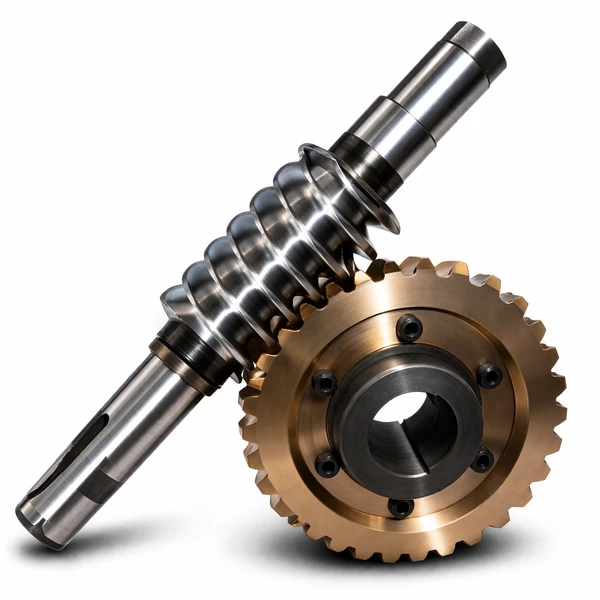
Worm Wheel Replacement -- Fast and Documented
Same-Day Quotation / Profile-Matched Available
Worm Wheel Replacement — Fast and Documented
When a worm wheel fails in a production environment, the replacement needs to arrive quickly, fit correctly, and be documented. Korea Ever-Power provides: same-day quotation response for standard catalog specifications; 5-15 working day delivery for standard catalog wheel sizes (module M2-M10, tooth counts corresponding to standard catalog ratios); 4-6 weeks for non-standard tooth count (custom ratio) with the same documentation. Every replacement wheel ships with material certificate and CMM inspection report confirming bore diameter at 6 measurement points. For replacement on an existing worn shaft, specify the worm shaft module, lead, and pitch diameter — Korea Ever-Power confirms that the replacement wheel geometry matches the shaft before production begins. Emergency replacement programs with agreed lead times and pre-qualification of the wheel geometry are available for facilities managing multiple identical drives.

View / Request

Complete Worm Gear Set -- Full Replacement
Complete Set / When Both Components Worn
Complete Worm Gear Set — Full Replacement
When the inspection decision indicates both worm shaft and wheel must be replaced, Korea Ever-Power supplies matched sets that are assembled and contact-pattern tested before shipment. The matched set eliminates the contact mismatch that occurs when a new wheel is installed on a worn shaft — a mismatch that can reduce the new wheel’s service life by 30-50% in the early operation period. The set arrives with both components at the correct specification, a single CMM report covering both components, and a contact pattern photograph confirming >=70% face width coverage on the assembled set. For non-catalog specifications (non-standard ratio, non-standard bore, special material), provide the original specification or the physical dimensions of the failed components and Korea Ever-Power will confirm the replacement specification before production.

View / Request

Failure Analysis Service -- Prevent the Next Failure
Failure Analysis / Root Cause Support
Failure Analysis Service — Prevent the Next Failure
Replacing a failed worm gear set without identifying the root cause of failure is the fastest way to reach the next failure. Korea Ever-Power provides a failure analysis service for replacement orders: send photographs of the failed components (tooth flanks at 3-5 angles, shaft thread flanks, oil drain plug contents) and a description of the application and operating history. Korea Ever-Power’s application engineers identify the failure mode from the photographic evidence, confirm whether the replacement specification addresses the root cause, and recommend any specification change or maintenance procedure modification that would prevent recurrence. This service is provided at no charge for replacement orders. The analysis is returned typically within 24 hours of receiving photographs.

View / Request

Troubleshooting FAQ

Worm Gear Problems — Questions from Maintenance and Production Teams

My worm gear drive started making a grinding noise suddenly. Can I keep running it at reduced speed to finish the production shift?+

Strongly advised against. A grinding noise in a worm gear drive indicates metal-on-metal contact at the mesh — either the oil film has completely broken down (scuffing in progress) or a tooth has fractured and fragments are circulating. Continuing to operate under either condition accelerates damage geometrically: scuffing creates surface roughness that increases friction, which increases heat, which reduces viscosity further, which increases metal contact — a runaway process. Fragments from a fractured tooth abrade all remaining wheel teeth. Running at reduced speed after grinding noise onset typically converts a wheel-replacement repair into a complete set replacement, and may add bearing and housing damage to the repair scope. Stop the drive at the next safe opportunity and inspect before continuing.

I found a lot of bronze metallic paste on the magnetic drain plug at the oil change. Is this normal?+

A thin film of fine bronze-coloured metallic paste on a magnetic drain plug is normal — it represents the very fine wear particles produced by normal slow tooth flank wear over the oil change interval. Quantify what you see: a film that is barely visible and easily wiped with one finger-swipe is normal. A deposit that requires scraping off, or that has discrete metallic particles visible with the naked eye, is abnormal and should be investigated. The drain plug assessment is most useful as a trend indicator: if the deposit at each oil change is growing over successive changes (more this change than last change), the wear rate is accelerating and the drive should be inspected soon. Photograph the drain plug at each change for comparison.

The drive housing temperature is 82 degrees C at rated load. The specification says maximum 80 degrees C. Is this a significant problem?+

Two degrees above specification is at the margin — it is worth investigating the cause rather than treating as acceptable. At 82 degrees C, mineral oil viscosity has dropped to approximately 90-100 cSt, which is near the minimum for adequate EHD film at typical worm gear sliding velocities. The thermal margin at 82 degrees C is small: a 5 degree increase in ambient temperature, a slight load increase, or lubricant degradation over the oil change interval could push the drive into a thermally critical zone. Recommended actions in order of implementation effort: (1) verify oil level and viscosity grade (undersize oil fill or wrong grade are common causes of marginal temperature); (2) improve ambient ventilation; (3) switch to PAO synthetic oil (typically reduces housing temperature 8-12 degrees C); (4) if none of these reduce temperature below 75 degrees C at rated load, the drive may be thermally undersized for the application — consider a larger module.

We had a worm gear set fail after only 3 months. Our supplier says it was due to incorrect installation. How do we investigate this?+

Three months is well within the running-in period for a worm gear set. Failures within the first 200-500 hours are almost always attributable to one of four causes: (1) incorrect lubricant (EP oil causing corrosive attack — drain and check for green copper deposits); (2) missing running-in oil change at 50-100 hours (running-in debris circulated as abrasive for the full 3 months); (3) contamination at installation (casting sand, tool debris, moisture introduced during assembly); (4) overload (the application load exceeds the gear set’s rated capacity — calculate actual output torque and compare to specification). Photograph the failed tooth flanks — each failure mode has a distinct appearance as described in the failure mode identification guide. Share the photographs with Korea Ever-Power and we will confirm the failure mode from the visual evidence.

After replacing the worm wheel, the new wheel wore out faster than the original. What went wrong?+

New wheel wear faster than the original almost always indicates mismatch between the new wheel profile and the existing worm shaft geometry. The original worm shaft has worn slightly over its service life — its thread flanks are no longer at the exact theoretical profile. A standard replacement wheel, hobbed to the theoretical profile, contacts the worn shaft on a narrow band rather than over the full face width. This concentration of load accelerates wear on the new wheel. The correct remedy: either replace both shaft and wheel simultaneously (the shaft sets the contact geometry), or specify a profile-matched replacement wheel hobbed to match the actual worn shaft geometry. Korea Ever-Power can produce profile-matched replacement wheels if you provide the shaft dimensions or send the shaft for measurement.

How do I measure worm gear backlash in the field without specialized equipment?+

Field backlash measurement with basic tools: (1) secure a pointer or mark on the worm wheel face; (2) rotate the worm shaft slowly clockwise until the tooth flanks are in firm contact on one side; (3) hold the worm shaft stationary and mark the wheel position; (4) rotate the worm shaft anticlockwise until the flanks contact on the other side (you will feel a brief free movement — this is the backlash dead zone); (5) mark the new wheel position. The angular movement of the wheel between the two marks, multiplied by the wheel pitch radius, gives the backlash in linear units. For a 100mm pitch radius wheel: if the angular movement is 0.05 radians (about 3 degrees), backlash = 0.05 x 100 = 5mm — clearly excessive. For precise measurement, a dial indicator on the wheel rim provides better resolution than visual marks.

What is the minimum order quantity for a replacement worm wheel from Korea Ever-Power, and how quickly can it be delivered?+

Minimum order quantity for standard catalog replacement wheels (standard module, standard tooth count corresponding to catalog ratios, standard bore sizes) is 1 piece. Delivery for catalog sizes: 5-15 working days from order confirmation. For non-standard specifications (custom tooth count for non-catalog ratios, non-standard bore, non-standard material): minimum 5 pieces, 4-6 weeks lead time. Sample quantities of 1-2 pieces for non-standard specifications are available at sample pricing (1.5-2x production unit price) with the same lead time. For emergency replacement requirements where the production line is stopped, contact Korea Ever-Power by email ([email protected]) with URGENT in the subject line — expedited scheduling and DHL Express air shipment are available for most specifications within the standard catalog range.

Our maintenance team replaced the worm gear oil with a different brand of the same ISO VG grade. Is this acceptable?+

Switching brands of the same ISO VG grade non-EP worm gear oil is generally acceptable from a lubrication performance standpoint, but with two precautions. First, confirm the replacement oil is non-EP and bronze-compatible — even if the original oil was, the replacement must also be. The label ‘worm gear oil’ or ‘suitable for yellow metals’ on the replacement oil is the confirmation needed. Second, mixing residual old oil with new oil of a different brand is usually harmless for non-EP oils (the additive packages of two non-EP mineral oils are typically compatible), but if in doubt, drain completely before filling with the new oil. The 3% to 5% residual oil left after draining is not enough to cause compatibility problems with most standard non-EP gear oils.

Get a Same-Day Diagnosis and Replacement Quote

Send photographs of the failed components and a description of the symptoms. Korea Ever-Power identifies the failure mode, confirms the correct replacement specification, and returns a quotation and lead time within one working day.

Editor: Cxm