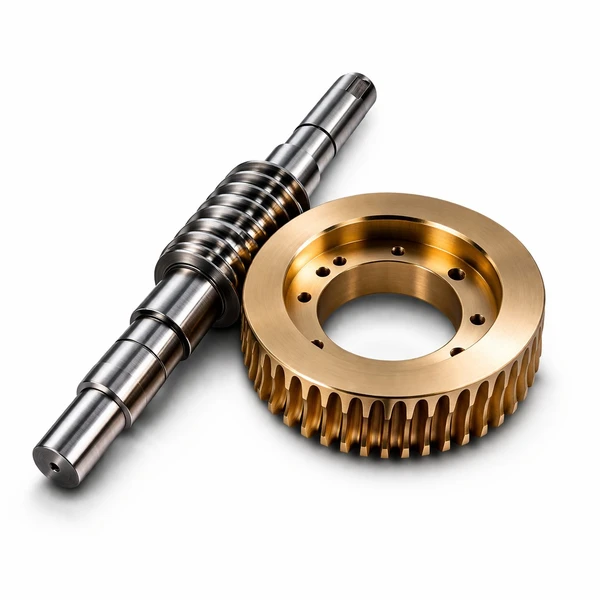
Alloy Steel Worm and Worm Gear for Auto Parts

Product Overview
Automotive-grade worm gears differ from standard industrial gears not primarily in the material or the module — they differ in the requirements that surround the part. A conveyor drive gear needs a functional part within a dimensional tolerance; an automotive worm gear for a power steering column or a seatback adjustment mechanism needs a functional part within tolerance, traceable material certification to the mill heat number, a process capability study (Cpk ≥ 1.33 on critical dimensions), and a validated assembly process at a sample quantity — before a single production piece is shipped. Korea Ever-Power Worm Gear Co., Ltd manufactures precision worm and worm gears for automotive, medical, military, and aircraft applications from Φ5 mm to Φ120 mm, module M0.2 to M2.2, in seven material families, with tolerance achievable to 0.001 mm on CNC-turned features. ODM and OEM services are available; samples are typically ready in 7–10 business days from confirmed drawing.
Full Specifications
All specification data below is from the production datasheet for this product series. Entries marked "as customer required" are application-specific and must be stated at order placement.
| Alloy Steel Worm And Worm Gear for Auto Parts | |
| Dimension | Φ5 mm – Φ120 mm |
| Module | M0.2 – M2.2 |
| Material Type | Aluminum, Copper, Brass, Stainless Steel, Steel, Iron, Alloy, Titanium, etc. as customer required |
| Surface Treatment | Anodizing, Brushing, Galvanized, Laser engraving, Silk printing, Polishing, Powder coating, etc. |
| Processing | CNC Turning, Milling, Drilling, Hobbing, Polishing, Bushing, Surface Treatment, etc. |
| Application | Automotive, Medical, Industrial, Military, Aircraft, Mechanical, etc. |
| Customized | ODM / OEM |
| Sample | Sample available — typically 7–10 business days from confirmed drawing |
| Modes of Packing | PE bag inside, carton outside, or per customer's needs |
| Modes of Delivery | DHL & TNT & FedEx & UPS |
| Tolerance | 0.001 mm – 0.01 mm – 0.1 mm |
Material Selection Guide — Seven Materials at Φ5–Φ120 mm Scale
At the Φ5–Φ120 mm, M0.2–M2.2 scale relevant to these automotive and multi-industry worm gears, material selection is dominated by four competing requirements: weight (relevant for aerospace and automotive), machinability at small module (relevant for M0.2–M0.8 small-tooth gears), corrosion resistance (relevant for medical, marine, and food applications), and load capacity (relevant for automotive drivetrain and military applications). The seven available materials represent distinct trade-off positions across these four axes.
| Material | Key Properties at This Scale | Typical Automotive / Industry Use | Avoid When |
|---|---|---|---|
| Aluminum alloy (6061, 7075) |
Density 2.7 g/cm³ — 3× lighter than steel. Excellent machinability. Anodizing provides a durable oxide surface. Tensile strength 270–570 MPa depending on alloy and temper. | Sunroof actuator gears, HVAC vent drives, window blind motors, drone gimbal drives — wherever weight reduction reduces motor current draw or cycle time | Contact load above 0.15 Nm/mm face width — aluminum fatigues rapidly under high-cycle Hertz contact stress |
| Copper | Excellent thermal conductivity (400 W/m·K vs 50 for steel) dissipates mesh contact heat. Excellent corrosion resistance. Softer than brass — slightly more wear at the mesh contact. | Specialty electrical actuator drives, EMI shielding enclosure fasteners, conductor parts requiring gear profile — niche applications where thermal or electrical conductivity is required alongside gear function | General mechanical drives — cost and softness make it inferior to brass at equivalent load levels |
| Brass | Excellent machinability at M0.2–M1.0 scale. Self-lubricating tendency at mesh contact. Good corrosion resistance without coating. Density 8.5 g/cm³. | IP camera pan-tilt drives, rearview mirror actuators, instrument panel adjustment drives, small valve gearboxes — applications requiring sealed drive with no lubricant access | Contact with sulfur-containing oils or coolants — sulfur chemically attacks brass at the tooth surface |
| Stainless Steel (SS304 / SS316) |
Excellent corrosion resistance. Cannot be heat-hardened (austenitic) — maximum surface hardness ~35 HRC. Density 7.9 g/cm³. SS316 adds Mo for chloride resistance. | Medical device drives (surgical robots, infusion pumps), food equipment, washdown environments, exhaust gas sensor actuators in contact with acidic condensate | High-load drives requiring tooth hardness above 40 HRC — load capacity penalty of 30–40% vs alloy steel must be accommodated by upscaling the module |
| Carbon / Alloy Steel (C45, 40Cr, 42CrMo) |
Highest load capacity in this series. Heat-treatable to 55–62 HRC. Wide module range M0.2–M2.2 fully achievable. Requires corrosion protection in wet environments. | EPS column gears, seat recliner gears, parking brake actuators, industrial conveyor drives — wherever maximum load capacity per unit volume is the design constraint | Bare (uncoated) exposure to moisture, acids, or chlorides — surface treatment is mandatory for outdoor or humid installations |
| Cast Iron (grey / ductile) |
Lowest cost per kg. Good vibration damping. Graphite flakes (grey iron) provide some self-lubricating behavior. Ductile iron has 2–3× higher impact resistance than grey iron. | Low-speed agricultural drive wheels, industrial machinery slow-speed worm wheels, manual adjustment mechanisms — where cost is the primary constraint | M0.2–M0.8 small-tooth gears — cast iron is difficult to hob cleanly at very small module; use brass or aluminum at M0.2–M0.8 |
| Titanium (Ti-6Al-4V) |
Density 4.5 g/cm³ — 40% lighter than steel at similar strength. Excellent corrosion resistance. Biocompatible. Tensile strength 880–1000 MPa. Challenging to machine — requires slow cutting speeds and dedicated tooling. | Aerospace actuator gears, surgical implant-adjacent drives, high-end sports equipment, UAV propulsion drive components — applications where minimum weight at maximum strength is paid for by the application value | Cost-sensitive applications — titanium machining cost is 4–8× alloy steel at equivalent complexity; not economically justified where aluminum or steel can meet the weight and load requirements |
Surface Treatment Selection — When Each Finish Is the Right Specification
Surface treatment does more than improve appearance — it directly affects corrosion resistance, lubrication retention, electrical properties, part identification, and service life in the operating environment. The six treatments in the specification table serve very different engineering purposes at the Φ5–Φ120 mm scale.
Anodizing (Aluminum only)
Electrochemical conversion of the aluminum surface to aluminum oxide — a hard, porous ceramic layer. Type II (standard) anodizing produces 5–25 µm depth. Type III (hard anodizing) produces 25–100 µm and raises surface hardness to approximately 400–500 HV (equivalent to about 42–48 HRC). Hard anodizing significantly improves wear resistance of aluminum gear teeth, extending service life in M0.4–M2.0 aluminum worm gears by 2–4× compared to bare aluminum. The oxide layer also provides electrical insulation and is chemically inert to most organic solvents, oils, and mild acids. Specify the anodizing type and color (natural, black, or custom) when ordering.
Galvanized (Zinc plating)
Electrodeposited zinc layer 5–25 µm thick on steel or iron surfaces. Provides cathodic (sacrificial) corrosion protection — the zinc corrodes preferentially, protecting the underlying steel even at scratches or cut edges. Salt spray resistance: 72–240 hours to white rust, 240–500 hours to red rust depending on plating thickness. Zinc plating adds minimal dimensional change (5–12 µm) and is applied after all machining is complete — the bore and tooth geometry dimensions specified are the post-plating dimensions. Zinc plating is incompatible with copper alloys (brass, bronze) — do not specify for copper material gears.
Laser Engraving
Controlled removal of surface material by focused laser to create permanent markings: part numbers, batch codes, QR codes, directional arrows, or reference marks on gear faces. Marking depth is typically 0.05–0.2 mm — shallow enough to avoid stress concentration effects on part function. Laser engraving does not affect dimensional tolerances on functional surfaces when applied to non-contact areas (gear face, end face, OD land away from tooth profile). For automotive traceability programs, laser-engraved data matrix codes allow 100% individual part tracking through the supply chain without adhesive labels that can fall off in service environments.
Powder Coating
Electrostatically applied dry powder baked at 180–200°C to a 60–120 µm thick organic coating. Provides excellent impact and abrasion resistance, UV stability, and corrosion protection (500–1,000 hours salt spray on prepared steel). Powder coating is applied to gear housings, carriers, and gear body flanges — not to tooth contact surfaces (powder coating on tooth flanks would introduce unacceptable dimensional variation and tribological incompatibility at the mesh). Specify powder coating on the specific surface areas excluding tooth flanks and bore when ordering gear bodies requiring housing integration with powder-coated parts.
Brushing (Mechanical finishing)
Controlled abrasive finishing in a consistent direction to produce a uniform linear surface texture (Ra typically 0.8–3.2 µm). Brushing removes tool marks, oxide layers, and burrs without adding material or significantly changing dimensions. For stainless steel parts, brushing improves the passive film quality and appearance, and is required before electropolishing or passivation treatments. In medical device applications, a brushed #4 finish (180-grit equivalent) on stainless gear bodies is a standard cosmetic and cleanliness specification. Brushing is a non-dimensional-change operation — it does not affect bore or tooth geometry tolerances.
Polishing (Mechanical or electropolishing)
Mechanical polishing achieves Ra below 0.4 µm on gear body surfaces. Electropolishing (for stainless steel) achieves Ra below 0.1 µm and simultaneously improves corrosion resistance by removing the deformed surface layer and micro-burrs, leaving a chromium-enriched passive film. Electropolished stainless gear surfaces are required in pharmaceutical, food processing, and semiconductor applications where surface finish is a contamination control requirement rather than a cosmetic specification. Specify polishing level (Ra target) and surface extent (all surfaces, or bore and end faces only) when ordering.
Tolerance Tiers — 0.001 mm, 0.01 mm, 0.1 mm: What Process Achieves Each
The three tolerance tiers in the specification table are not simply price grades — each requires a specific process or combination of processes to achieve consistently. Specifying 0.001 mm tolerance on a feature that can be held to 0.01 mm by standard CNC adds unnecessary cost; specifying 0.1 mm tolerance on a bore that must mate with a bearing pays for an over-tolerance that causes assembly problems. The guide below clarifies what each tier means in practice.
| Tolerance Tier | Achievable By | Applicable Feature Types | Process Notes |
|---|---|---|---|
| 0.001 mm (1 µm) |
CNC turning with sharp tooling, stable thermal environment, and CMM verification. Precision grinding for bore features requiring roundness control alongside diameter tolerance. | Small bore diameters Φ5–Φ15 mm where the bearing fit tolerance band is 4–10 µm total. Shaft OD for precision shaft-gear interference fits. Thread pitch of worm at very small modules M0.2–M0.5 where profile error directly affects contact ratio. | Must be machined in a temperature-controlled room (20±1°C) — thermal expansion of a 10 mm steel part is 0.0012 mm per degree C. Measurement requires a CMM with 0.5 µm resolution. Each part is measured individually; sampling inspection is not appropriate at this tolerance tier. |
| 0.01 mm (10 µm) |
Standard CNC turning and milling with calibrated tooling. Gear hobbing achieves tooth pitch tolerance in this tier for DIN7–DIN8. Standard bore grinding achieves this tier on bore diameters up to Φ80 mm. | Most bore fits for industrial and automotive gear applications (H7 fit at Φ20 mm = ±0.013 mm tolerance band). OD tolerances for gear body fit into housing bore. Tooth pitch error for DIN7–DIN8. Keyway position tolerance (±0.01 mm position to bore centerline). | Achievable by standard CNC machining centers with in-process measurement. AQL sampling inspection (typically 10%) is appropriate. Batch Cpk ≥ 1.33 confirmation is available for automotive supply applications on request. |
| 0.1 mm (100 µm) |
Standard machining without precision grinding. Conventional hobbing for tooth geometry. Stamped or formed features on gear flanges. | Non-critical body dimensions: overall gear length, housing mounting face position, non-mating flange OD. Tooth profile for DIN9 general industrial applications. Bore for loose-fit applications where the bore will be reamed or bored to final dimension at assembly. | Lowest cost tier — no special measurement requirement beyond standard gauge inspection. Appropriate for general industrial, agricultural, and low-precision consumer product gears where dimensional accuracy of non-critical features does not affect performance. |
Product Features

- ✦High-precision machining from Φ5 mm to Φ120 mm. The 24:1 diameter range within a single product series covers both miniature actuator gears (IP camera drives, medical syringe pumps, UAV gimbal) and full-size vehicle drive components (seat mechanisms, sunroof drives, EPS column auxiliary gears) from the same manufacturing system with consistent quality control.
- ✦Applied across six end-market sectors. Automotive, medical, industrial, military, aircraft, and mechanical — each sector has different documentation, traceability, and quality system requirements. Korea Ever-Power can support the documentation needs of each: material certs for medical, FAI packages for aerospace, Cpk studies for automotive Tier 1 supply, and standard dimensional reports for general industrial.
- ✦Cost-effective engineering design. The tolerance tier system allows cost to be matched to functional requirement — a 0.001 mm bore tolerance on a precision actuator shaft and a 0.1 mm tolerance on a non-mating flange OD on the same part are priced separately, preventing over-specification of non-critical features from inflating the part cost.
- ✦OEM and ODM services with drawing or sample input. Custom worm gear parts accepted from 2D drawings, 3D CAD files, or physical samples. Reverse engineering from samples includes CMM measurement, drawing generation, and confirmation before production — eliminating the risk of incorrect reproduction.
- ✦Short sample lead time. Typically 7–10 business days for samples from confirmed drawing — enabling rapid design iteration in development programs. Production lead times from 18–30 business days depending on material, heat treatment, and surface treatment combination.
Applications — Engineering Requirements by End Market
- ▶Automotive — EPS column gears, seatback recliner drives, sunroof gearbox, rearview mirror actuators, parking brake cable drives, HVAC vent position actuators. The automotive application uniquely requires all three tolerance tiers simultaneously: 0.001 mm on the bearing bore, 0.01 mm on the tooth pitch, and 0.1 mm on the flange datum. Material: typically alloy steel (42CrMo, 20CrMnTi) for load-bearing worm shafts and aluminum or brass for the wheel in noise-sensitive applications. Module range M0.4–M2.0 covers all current automotive worm gear applications.
- ▶Medical — Surgical robot joint actuators (wrist, elbow, shoulder — typically M0.5–M1.5, stainless steel, DIN6–DIN7), infusion pump worm drives (M0.3–M0.8, SS316, FDA-compliant surface treatment), patient positioning table lift drives (M1.0–M2.0, alloy steel with zinc plating, self-locking design). Unique requirement: all medical worm gears must pass biocompatibility screening if they will be used in or near patient contact zones. Material certificates to ISO 10993 standard traceability are provided on request.
- ▶Military and defense — Turret traverse and elevation drives (M1.5–M2.2, 20CrMnTi carburized, DIN6 class), tracked vehicle final reduction supplementary drives (M2.0–M2.2, 42CrMo through-hardened, ductile iron wheel), optical instrument positioning (M0.5–M1.0, stainless or nitrided alloy, near-zero backlash). Defense programs require FAI (First Article Inspection) reports and material traceability documentation at batch level. Korea Ever-Power supports MIL-STD-1916 and AQAP-2110 compatible quality documentation on request.
- ▶Aircraft and aerospace — UAV landing gear retraction drives (M0.8–M1.5, titanium or aluminum alloy, weight-critical), satellite antenna pointing drives (M0.5–M1.0, titanium, extreme temperature range −60°C to +120°C), flight control surface trim actuators (M1.0–M2.0, 17CrNiMo6 carburized, DIN5–DIN6). Aerospace applications typically require AS9100 or equivalent quality system documentation and material traceability to AMS standards — confirm documentation requirements before order placement.
- ▶Industrial machinery — Packaging machine feed drives (M0.8–M1.5, C45 steel, DIN7–DIN8, frequent start-stop cycles requiring low inertia), conveyor indexing drives (M1.0–M2.0, alloy steel, continuous 24-hour duty), precision camera rail drives (M0.5–M1.0, brass or stainless, low noise priority), pump gearboxes (M1.5–M2.2, stainless for fluid compatibility).
- ▶Mechanical equipment — Power tools (M0.4–M1.0, alloy steel, high-speed, compact), test and measurement equipment drives (M0.3–M0.8, stainless or alloy, DIN6–DIN7, vibration-sensitive), consumer robots and automation (M0.5–M1.5, aluminum or alloy steel, noise-controlled, self-locking required for position holding).

Production Facility
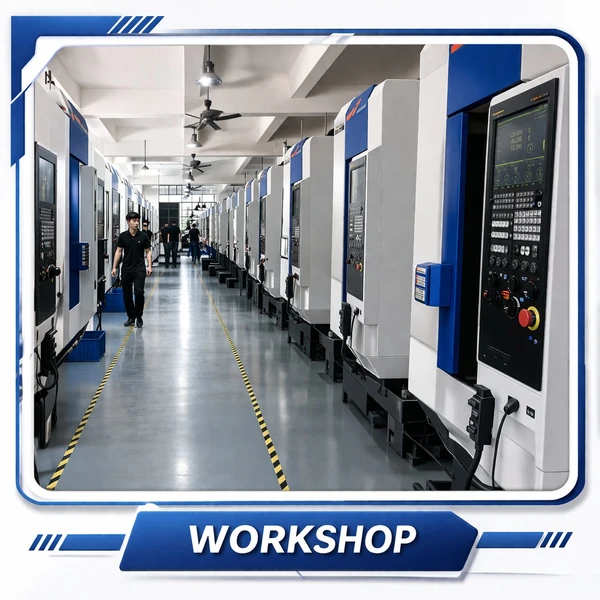
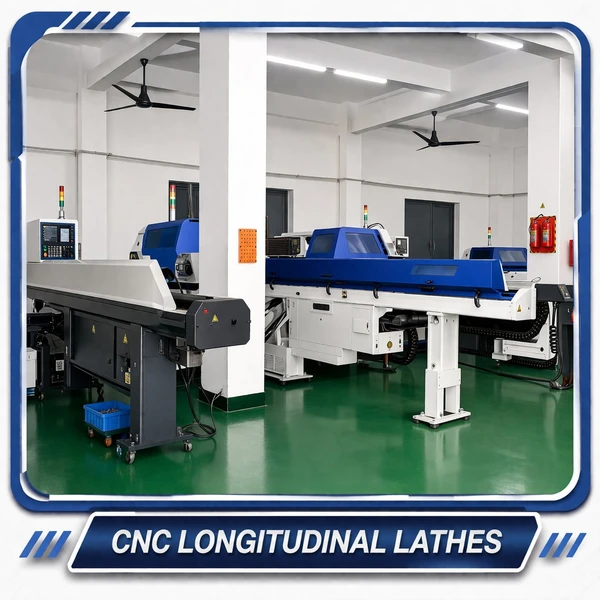
Over ten years of CNC precision machining experience for automotive and multi-industry precision parts. Production equipment includes multi-axis CNC lathes, machining centers, NC gear hobbing machines, gear grinding machines, and CMM measurement stations. Hundreds of qualified production and quality personnel. Material incoming inspection, in-process dimensional check, and final inspection with documentation are standard for all production batches.
 |
 |
 |
 |
 |
 |
Related Components
Matched alloy worm shafts and wheel sets in titanium, high-alloy, and stainless grades are available alongside standard steel materials. Enclosed compact worm gear reducers for automotive-grade packaging, and the broader precision worm wheel and worm gear covering M0.2 to M12, are available from the same manufacturing source.

Frequently Asked Questions
Are you a factory or a trading company?
Korea Ever-Power is factory + trade — we manufacture directly and handle international sales in-house. There is no additional distributor margin between the production floor and the buyer. This structure means engineering queries go directly to the manufacturing team, not through a sales intermediary who cannot answer technical questions — which matters when you are specifying tolerances and surface treatments that affect the function of your product.
How do I get an accurate quotation for custom alloy worm gears?
The most efficient route: submit your 2D drawing in DWG/DXF/PDF format with the following fields populated: material grade, all critical dimensions with tolerance classes (not just nominal dimensions), bore type (straight / tap / keyway), surface treatment, and required quantity. Missing any of these five fields forces a clarification round before quoting — adding 1–2 working days. If you do not have a drawing, submit a photo or sketch with principal dimensions (OD, bore, face width, module if known, tooth count if known) — we return a draft drawing and price within 48 hours for your confirmation.
How long does it take to get a sample?
Typically 7–10 business days from confirmed drawing for standard materials (aluminum, brass, C45 steel, SS304). For alloy steel grades requiring carburizing heat treatment (20CrMnTi, 17CrNiMo6), add 3–5 business days for the heat treatment cycle. For titanium parts, add 2–3 business days for tooling setup due to the specialized cutting conditions required. We will confirm the specific timeline at quotation based on your material and module.
How do OEM services work in practice?
Send drawings or samples. We return a technical proposal covering recommended material, heat treatment, tolerance class, and surface treatment with a price and lead time for your review. After your approval, we produce samples. On sample approval, we produce to your specification under a part number dedicated to your program — no other customer's production is made from your tooling. For automotive OEM programs, we can support PPAP Level 1–3 documentation on request; state the PPAP requirement before production begins.
Will my drawings remain confidential?
Yes, unconditionally. Drawings, CAD files, and sample specifications are not shared with any third party without your written permission. We maintain this as a standard operational practice, not a contractual exception. NDA is available for signature before any file exchange for customers who require formal documentation of confidentiality obligations. Production tooling made to your design is held exclusively for your program.
What if I don't have drawings — how do I start from a sample?
Ship the sample (or a failed part, or even a worn part that retains the critical dimensions) to our facility. Our CMM team measures the part geometry — OD, bore, tooth profile, module, lead, pressure angle, keyway dimensions — and returns a 2D drawing within 3–5 working days for your confirmation. We include a photo report showing the measurement setup and the measured values before they are incorporated into the drawing. Once you approve the drawing, sample production proceeds. No CAD capability is required on your end to begin this process.
How do I start an order?
Submit an inquiry via the contact form on our website, by email, or by direct phone. We respond within one working day with either a quotation or a short list of clarifying questions needed to finalize the specification. For urgent sample requirements, state the timeline in the inquiry — if your schedule requires samples in less than the standard 7–10 days, we will advise on feasibility and any expedite premium that may apply.
Customer Reviews
Kim Hyun-soo — Senior Engineer, Suwon Automotive Systems Ltd (Q3 2025)
42CrMo alloy worm gears for an electric power steering column — bore tolerance 0.005 mm on a Ø18 mm bore, tooth pitch DIN7. Two hundred pieces incoming: bore measurements on 20-piece sample all within ±0.004 mm, which is inside our 0.005 mm call-out. Surface condition after our zinc phosphate pre-treatment showed excellent adhesion. We run Korean Tier 1 automotive incoming inspection protocols — Korea Ever-Power is the first Korean-language-support supplier who has passed our PPAP Level 2 review without a corrective action on the first attempt.
Park Eun-ji — R&D Engineer, Daejeon Medical Devices Corp. (Q1 2026)
M0.5 titanium worm gears for a miniature surgical robot wrist joint — unusual material at this module, machined correctly on the first sample. Korea Ever-Power provided the machining setup parameters and cutting tool records with the samples, which our process engineering team needed for their validation file. Sample lead time: 12 business days from drawing confirmation — acceptable for our product development schedule. No other supplier we contacted was willing to quote titanium at M0.5; most said the module was too small for their equipment. Korea Ever-Power confirmed feasibility and delivered.
Yoon Jin-wook — Technical Buyer, Busan Defense Technology (Late 2025)
Custom alloy steel worm sets for an unmanned ground vehicle steering system — 20CrMnTi carburized and ground, DIN6, full FAI documentation required. Korea Ever-Power supplied the FAI package (dimensional report, material cert with heat number, heat treatment record, hardness test report) without delay and in the format our defense program manager specified. Delivery: 28 days for a technically complex part — fast. Our in-house gear test confirmed mesh quality and backlash within specification on the first production batch. Korea Ever-Power is now an approved supplier on our defense component approved supplier list.
Choi Hye-lim — Production Manager, Incheon Industrial Automation (Q2 2025)
We order M1.0 and M1.5 aluminum worm gears quarterly for a packaging machine indexing line — hard anodized (Type III), black, OD Ø22 mm, Ø6 mm bore H7. Lead time is 18–20 days per batch; we schedule around that window and have never missed a production schedule due to late delivery. The hard anodizing layer is consistent across batches — our QC measures coating thickness on 5 pieces per batch and has stayed within 30–50 µm across 6 quarters of ordering. Price is 15% below our previous Taiwan source at the same specification. No quality incidents in the full period.
Packing & Shipping
Inner packing: PE bag for each part. Outer packing: carton with foam insert for small parts; custom foam-lined carton for larger or precision parts. Surface-treated parts are packed immediately after treatment to prevent contamination. International delivery by DHL, TNT, FedEx, or UPS. Payment: T/T or L/C before shipment.

Related products
-

Customized Worm Gear Set | OEM/ODM, Ratio 20:1–300:1, Full Material & Gear Type Coverage
-

Stainless Steel Worm Gear for CNC | ANSI/DIN, Module 1–3, Hardness 55–60 HRC
-

Duplex Worm Gear | Dual-Lead, Continuously Adjustable Backlash
-

Cylindrical Worm Wheel | Line Contact, High Load Capacity, Bronze & Cast Iron
-

Brass Worm Wheel | M0.5, 20T×1T Matched Set
-

Worm and Wheel | Module M3–M12, Ratio 20:1–300:1, Line Contact Transmission
-

Plastic Worm Gear | POM & Nylon, Module M0.2–M2.0, Self-Lubricating Drive