Brass Worm Wheel | M0.5, 20T×1T Matched Set

One M0.5 brass worm wheel (20T, OD 11 mm, height 12 mm, hole Ø4 mm) + one brass worm shaft (20 × 9.8 × 3.17 mm) supplied as a tested matched pair. Set weight 16 g, ratio 20:1. Three complete specification tables included. Suited for IP cameras, automotive rearview mirror gearboxes, water valve actuators, and miniature instrument drives. Custom bore from Ø2 mm. 12-month warranty, after-sales response within 24 hours.
Product Overview
At modulus 0.5, the outer diameter of this worm wheel is just 11 mm — barely larger than a standard pencil eraser — yet its 20-tooth brass construction delivers a 20:1 reduction ratio with the consistency and surface finish expected of a precision-hobbed commercial gear. This brass worm wheel and matching worm shaft are supplied by Korea Ever-Power Worm Gear Co., Ltd as a verified matched pair: the worm shaft and wheel were meshed together during production quality inspection, not simply packed individually from separate manufacturing runs. The distinction matters at M0.5 because a module-matched pair from different production lots may have center distance variation that produces binding or excess backlash without being detectable from individual part measurements.
At a glance — this specific product
- ◈Material: Brass (yellow, natural surface)
- ◈Modulus: 0.5
- ◈Wheel: 20T, OD 11 mm, hole Ø4 mm, height 12 mm
- ◈Shaft: Ø9.8 × 20 mm, bore Ø3.17 mm
- ◈Set weight: 16 g (wheel + shaft combined)
- ◈Ratio: 20:1 (Z1=1, Z2=20)
- ◈Supplied as tested matched pair — not individual parts
Complete Specification Tables
All three tables below are from the production datasheet for this matched set. The worm wheel table, the worm shaft table, and the general specifications are reproduced in full — these are the dimensions that will be on your incoming inspection report.

| General Specifications | |
|---|---|
| Material | Brass |
| Color | Yellow (natural brass) |
| Modulus | 0.5 |
| Set Weight | 16 g (worm wheel + worm shaft combined) |
| Size of the Worm Wheel | |
|---|---|
| Teeth | 20 |
| Teeth Dia | 11.2 mm |
| Height | 12 mm / 0.47 inch |
| Outer Diameter | 11 mm / 0.43 inch |
| Hole Diameter | 4 mm / 0.16 inch |
| Step Size (Dia × H) | 9 × 7 mm / 0.35 × 0.27 inch |
| Overall Size (H × OD × ID) | 12 × 11 × 4 mm / 0.47 × 0.43 × 0.16 inch |
| Size of Worm Gear Shaft | |
|---|---|
| Height (Length) | 20 mm / 0.79 inch |
| Outer Diameter | 9.8 mm / 0.39 inch |
| Inner Diameter (Bore) | 3.17 mm / 0.12 inch |
| Size (H × OD × ID) | 20 × 9.8 × 3.17 mm / 0.79 × 0.39 × 0.12 inch |
Product Features — Technical Detail
- Includes one M0.5 brass worm gear shaft and one 20-tooth brass worm wheel — matched and supplied as a tested set.
- The worm shaft transmission structure is simple and compact: small volume, light total weight of 16 g, straightforward housing integration with minimum center distance constraint of approximately 10.5 mm.
- Worm Z1 = 1 (single-start, single-lead): each full revolution of the worm advances the wheel by exactly one tooth position (1/20 of a full wheel rotation) — producing a 20:1 ratio. In standard power transmission applications, ratios from 10:1 to 80:1 are achievable; if a higher ratio is required, a multi-stage arrangement with a gear train input stage can reach any practical ratio. A single-start worm also provides inherent self-locking — the wheel cannot drive the worm back at M0.5 and 20:1 ratio under normal operating conditions.
- High-quality brass material selection and careful hobbing produce consistent tooth profile geometry across production batches. The brass surface forms a natural protective oxide layer that reduces initial break-in wear at the mesh contact.
- Long service life in light-duty sealed assemblies — brass at M0.5 under loads below 0.05 Nm sustains millions of cycles before measurable tooth profile wear in controlled endurance conditions.

Why Brass Performs Well at M0.5 — The Metallurgy Explained
Brass is an alloy of copper (typically 60–70%) and zinc (30–40%), with small additions of lead (0.5–3%) in free-machining grades. The combination creates properties specifically well-suited to miniature precision gear production:

Excellent Machinability at Small Tooth Geometry
The lead content in free-machining brass acts as a solid lubricant during cutting, producing clean chip break and minimal burring at the tooth root and tip. At M0.5, the tooth height is only 1.125 mm — any burring at the tooth tip during hobbing would foul the mesh immediately. Brass's clean machinability avoids this. Steel at the same module produces longer chips and more edge burring that require deburring operations adding cost and risk of dimensional damage to delicate small teeth.
Tribological Compatibility at the Mesh
When a brass worm wheel meshes with a brass worm shaft (both from the same alloy), the sliding contact at the mesh generates a thin zinc-rich transfer layer on both surfaces during initial running. This layer reduces the effective friction coefficient to approximately 0.08–0.15 (lubricated) and 0.15–0.30 (dry) — adequate for the low-load conditions typical of M0.5 drives. A steel worm paired with a brass wheel is also common and provides better wear resistance on the worm at the cost of additional machining complexity.
Corrosion Behavior Without Coating
Brass tarnishes (surface oxidation) in air and moisture but does not structurally corrode under normal indoor conditions. The yellow oxide layer that forms is self-limiting — it does not penetrate into the material and does not affect tooth geometry at the dimensional tolerances relevant to M0.5 gears. In contrast, unplated carbon steel at M0.5 would require complete plating coverage of delicate tooth profiles, which is technically difficult without dimensional impact. Brass avoids this requirement entirely.
Brass vs Other Materials — Miniature Worm Gear Comparison at M0.5 Scale
At modulus 0.5 and outer diameters below 15 mm, the material trade-offs are different from those at larger modules. Machinability, dimensional stability after hobbing, and compatibility with compact sealed housings matter more than tensile strength. This comparison is framed specifically for the M0.5–M1.0 scale.
| Property | Brass (this product) | Tin Bronze | Carbon Steel C45 | POM (Plastic) |
|---|---|---|---|---|
| Tooth profile at M0.5 | Clean — minimal burr from hobbing | Clean — similar to brass | Burring at root — needs deburring step | Clean from injection mold — no hobbing burr |
| Continuous torque limit (M0.5) | 0.04–0.10 Nm | 0.06–0.14 Nm | 0.08–0.18 Nm (hardened) | 0.005–0.015 Nm |
| Corrosion without coating | Good — tarnishes superficially, no structural corrosion | Good — tin content stabilizes surface | Poor — rusts rapidly; plating at M0.5 is difficult without tooth damage | Excellent — inherently inert |
| Dimensional stability (bore) | Excellent — metal, humidity has no effect | Excellent | Excellent (until rust forms) | Good for POM (≤0.2% moisture); poor for PA66 (2–3%) |
| Noise at M0.5, 300 RPM | Low — damped by alloy softness | Low — similar to brass | Higher than copper alloys | Lowest — polymer mesh damping |
| Self-lubricating (dry run) | Limited — short-term only dry | Limited — short-term only dry | No — seizes quickly dry | Yes — inherently self-lubricating |
| EP oil compatibility | ⚑ Avoid sulfur/chlorine EP additives — attack brass | ⚑ Avoid sulfur/chlorine EP — tin is vulnerable | Compatible with most EP oils | Avoid sulfur/chlorine EP — may cause stress cracking |
| Best choice when… | Load 0.01–0.08 Nm, metal dimensional stability needed, cost-sensitive, simple housing | Load 0.05–0.14 Nm, continuous duty, highest anti-galling priority | Load above 0.10 Nm, corrosion protection can be managed | Load below 0.01 Nm, no lubrication allowed, lightest weight critical |
Lubrication Guidance for M0.5 Brass Sets
At M0.5 scale, the lubricant quantity and type have an outsized effect on service life. The total volume of lubricant that can be retained in the mesh zone of a 20 mm × 11 mm gearbox is measured in micro-liters — a small error in selection causes very rapid wear compared to the same error at M5 where there is more thermal mass and lubricant reservoir volume.
- →Recommended for sealed assemblies (standard application): A single drop of ISO VG 32 or VG 46 mineral oil applied to the tooth mesh contact zone at assembly. This small quantity provides adequate boundary lubrication for millions of cycles at loads below 0.05 Nm. Too much oil — filling the housing — is actually counter-productive: excess oil creates churning friction and may leak past shaft seals at operating temperature.
- →Recommended for longer-life or higher-load applications: PTFE-based light grease (NLG1 grade 0 or 1, PTFE thickener) applied as a thin film on the worm thread flanks at assembly. The PTFE particles act as a solid lubricant supplement, maintaining a low friction surface even if the oil film is displaced.
- →Silicone grease (for medical or food-contact applications): Food-grade silicone grease is compatible with brass and provides adequate lubrication for low-load, infrequent-cycle drives where FDA or food contact compliance is required.
- ⚑Never use: Lubricants containing sulfur or chlorine EP additives (look for terms like "EP", "Extreme Pressure", "MoS₂" in oil containing sulfur compounds, or any lubricant with chlorinated paraffin). These chemically attack both the brass tooth surface and the zinc content of the alloy, causing accelerated corrosive wear that is invisible until the gear teeth are noticeably damaged. PTFE-based or mineral oil without EP additives is the correct choice for all brass gear applications.
Processing Capability
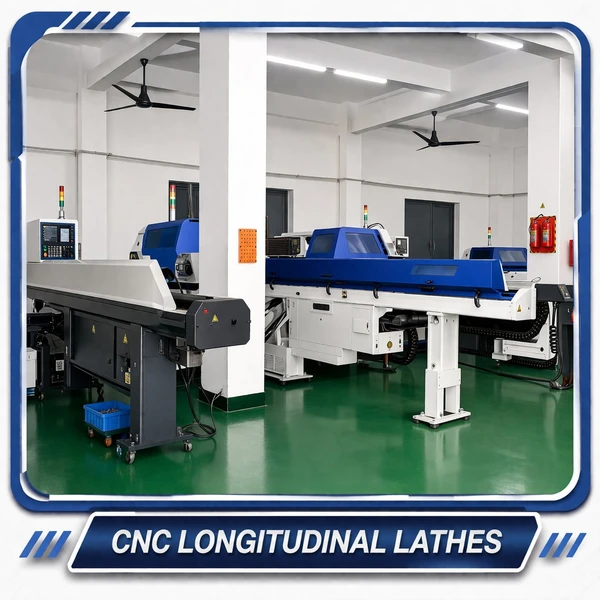
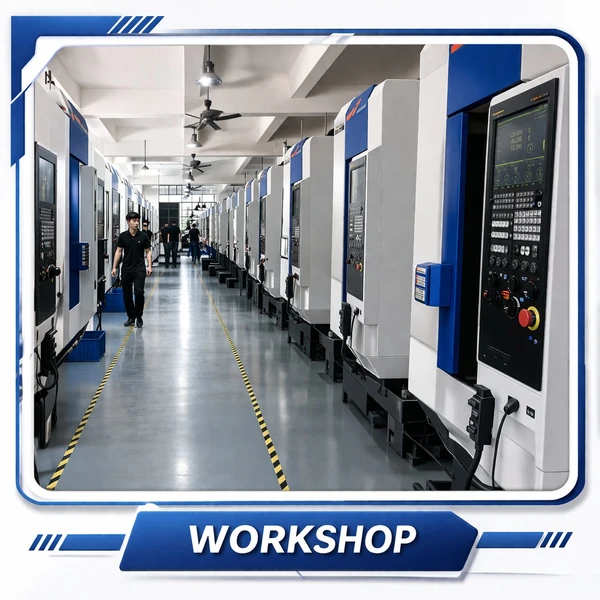
Korea Ever-Power's production facility has been operating since 1998 with NC gear hobbing machines, NC gear shapers (Gleason, Mode), NC lathes, NC gear shaving machines, NC gear milling machines, and NC gear grinding machines. For custom brass worm wheel sets beyond the M0.5 standard product, the following process sequence is standard:
- →Material: Brass, Alloy Steel, Carbon Steel, Stainless Steel, Cast Iron, Aluminum, Copper, Plastic — available for custom orders.
- →Gear processing: Forging, Lathing, Hobbing, Milling, Cutting, Shaping, Shaving, Grinding.
- →Heat treatment methods: Carburizing, Induction hardening, Flame hardening, Nitriding — available for steel custom parts; brass parts do not require heat treatment.
- →Quality inspection: Tooth profile check after hobbing; bore and concentricity gauge inspection; mesh test on matched sets; final dimensional inspection before packing.
 |
 |
 |
 |
 |
 |
Packing, Lead Time, Payment and After-Sales
- ◈Inner packing: Oil paper wrap, polyethylene bag, individual box — each pair individually sealed to prevent surface contact between sets during transit.
- ◈Outer packing: Wooden case or pallet for bulk quantities; rigid carton for small quantities. Customized packing per OEM customer requirements accepted.
- ◈Production lead time: 15–35 days after order approval, depending on quantity and any custom bore or material specification.
- ◈Payment: L/C, D/A, D/P, T/T, Western Union, PayPal. Payment is required before shipment. We offer the payment method range because we are confident in our quality — we do not require pre-payment to guarantee commitment to the order.
- ◈After-sales process: Contact our after-sales department within 30 days of receipt. For minor quality concerns, submit the QC report or photos; we respond within 24 hours. For confirmed serious defects: (1) we dispatch a Quality and Problems Appraiser to confirm the issue; (2) we negotiate compensation and sign an agreement; (3) our After-Sales Department fulfills the agreed terms.
- ◈Warranty: 12 months from delivery date under normal operating conditions. Wear from lubrication incompatibility (e.g., EP oil with brass), mechanical overload, or incorrect assembly is excluded from warranty coverage.
Related Components
The inherent corrosion resistance and machinability of brass make these worm wheels a preferred choice for food processing, marine, and laboratory equipment — anywhere hygiene, moisture exposure, or minimal maintenance is a priority. Pair with a hardened steel worm shaft for an efficient, low-noise mesh with excellent conformability under load. For fully integrated solutions, our worm gear reducers deliver the same material advantages within a compact, sealed unit, ready for direct installation into your drive system.
Worm Shaft — The hardened steel drive counterpart to the brass worm wheel. The steel-on-brass material combination ensures a low-friction mesh, protects the worm shaft from accelerated wear, and supports quiet, reliable operation across a wide speed range.
Worm Gear Reducer — A fully enclosed unit integrating the worm and wheel within a sealed housing. Ideal when consistent center distances, simplified mounting, and protected internal components are required — particularly in humid or wash-down environments.

Frequently Asked Questions
Is the worm shaft included, or is the wheel sold alone?
Both parts — one M0.5 20-tooth brass worm wheel and one brass worm shaft — are supplied as a tested matched pair. They are not sold separately at standard catalog pricing, because the matched-pair quality check is part of what makes the set useful without additional incoming testing on your end. If you specifically need only the wheel or only the shaft in production quantities, contact us for a separate pricing discussion — we will accommodate if your quantities justify a dedicated production run.
Can I get a different bore diameter on the wheel?
Yes. Standard bore is Ø4 mm. Custom bore diameters from Ø2 mm to Ø6 mm are available on production orders. For common motor shaft diameters (Ø3 mm for 130-class motors, Ø5 mm for 280-class), tooling is already held and lead time is unchanged. Non-standard bore diameters add 3–5 working days for tool preparation. When specifying, provide the nominal bore diameter and the fit tolerance class (H7 for a sliding or press-fit shaft, H6 for precision positioning) so we machine to the correct tolerance band.
What is the maximum continuous torque this set can handle?
At M0.5 and full brass construction, the practical continuous output torque limit is approximately 0.05–0.10 Nm depending on input speed and lubrication condition. IP camera pan drives typically require 0.005–0.015 Nm — well within safe operating range with substantial margin. Rearview mirror actuators range from 0.02–0.05 Nm — also within range. If your application approaches or exceeds 0.08 Nm continuously, contact us to discuss whether M0.5 brass is sufficient or whether stepping to M1.0 or a different wheel material (tin bronze) is appropriate.
What products can Korea Ever-Power supply beyond this standard set?
High-quality bevel gears; transmission gears for tractors, trucks, and agricultural machinery; construction machinery machined parts; worm and wheel sets from M0.2 to M12 in brass, bronze, steel, stainless, aluminum, and engineering plastics; and custom ODM gear sets from 2D or 3D drawings. Our production line has been established since 1998 and is equipped with Gleason and Mould bevel gear machines, automatic hobbing machines, gear teeth shaving and grinding machines. Contact us with your specification for a quotation.
What is the advantage of ordering from Korea Ever-Power for this product?
Factory pricing with no trading company markup; stable production scheduling without subcontracting; quality control including matched-pair mesh testing, not just individual part dimensional inspection; 12-month warranty backed by a documented after-sales process; small trial orders accepted without MOQ pressure. The gear production line has operated continuously since 1998 — our hobbing setup for M0.5 has been refined over thousands of production runs. We maintain that there is a meaningful quality difference between long-established tooling and freshly-ground hobs, particularly at small modules where tool wear has a larger proportional effect on tooth profile accuracy.
How do I qualify this supplier for a production program?
Standard qualification path: (1) Order a sample set for mechanical testing in your actual assembly — fee $2–$100 credited on production order. (2) Measure bore and OD on the sample using your incoming inspection equipment. (3) Run an endurance cycle test on the drive mechanism. (4) If results meet your requirement, issue the first production order with confirmed drawings. We provide material certificates, dimensional inspection records for each production batch, and can support an ISO 9001 supplier audit at our facility on request.
Customer Reviews
Kim Ji-hyun — Product Engineer, Seoul Smart Device Lab (Q2 2025)
M0.5 brass matched sets for a mirror-tilt mechanism in a security camera. After 50,000-cycle qualification test at our standard torque load (0.012 Nm), tooth wear was visually undetectable under 50× magnification and backlash increased by only 0.004 mm — well within our 0.012 mm limit. Korea Ever-Power delivered the prototype pieces in 9 calendar days from drawing confirmation — genuinely fast for production-quality gear work, not a crude mock-up. The bore tolerance matched our H7 call-out perfectly on three of three sample pieces measured.
Park Hyun-woo — QC Manager, Incheon Precision Instruments Co. (Late 2025)
We spot-checked 20 pieces from a 200-piece batch using a coordinate measuring machine — all 20 bore diameters were within ±0.006 mm of the 4.000 mm nominal, and wheel ODs were within ±0.008 mm. The mesh test report provided with the batch showed backlash within 0.005–0.010 mm on 15 sampled pairs — consistent enough that our incoming inspection team accepted the batch with 10% AQL sampling rather than 100% inspection. DHL delivered in 3 business days from Korea Ever-Power's dispatch notification.
Lee Soo-jin — R&D Manager, Busan Automation Systems (Q4 2025)
Switched our M0.5 brass gear procurement from a domestic distributor to Korea Ever-Power — price dropped 24% per matched set at our volume with no detectable change in quality. What I appreciated most was the engineering engagement: when I asked about the maximum load at 400 RPM worm speed, Korea Ever-Power came back with a calculated answer based on Hertz contact stress at M0.5 in brass, not a vague marketing statement. That kind of technical engagement is rare from gear suppliers at any scale.
Choi Seong-min — Assembly Team Lead, Daejeon Electronics (Q1 2026)
Assembly throughput improved after switching to these sets. Previously, our technicians had to hand-check the fit of every pair because center distance variation between separately sourced worms and wheels caused binding in about 8% of assemblies. With the Korea Ever-Power matched pairs, the binding rate dropped to under 0.5% — still not zero, but the improvement freed up significant technician time on our 800-unit-per-month line. The per-unit cost saving was secondary to the assembly yield improvement.
Packing & Shipping

Additional information
| Editor | Cxm |
|---|
Related products
-

Alloy Steel Worm and Worm Gear for Auto Parts
-

Customized Worm Gear Set | OEM/ODM, Ratio 20:1–300:1, Full Material & Gear Type Coverage
-

Stainless Steel Worm Gear for CNC | ANSI/DIN, Module 1–3, Hardness 55–60 HRC
-

Duplex Worm Gear | Dual-Lead, Continuously Adjustable Backlash
-

Cylindrical Worm Wheel | Line Contact, High Load Capacity, Bronze & Cast Iron
-

Worm and Wheel | Module M3–M12, Ratio 20:1–300:1, Line Contact Transmission
-

Plastic Worm Gear | POM & Nylon, Module M0.2–M2.0, Self-Lubricating Drive