Knowledge Series · B8 · Standards & Measurement

Worm Gear Standards — DIN, ISO, and AGMA: What Each Measures and How They Compare

A US customer drawing specifies AGMA 10. Your shop works to DIN. Which is tighter? What parameters does each standard actually measure? This guide resolves the confusion with a direct comparison table and precision-class conversion reference.

DIN 3975/3976ISO 1122-1AGMA 6022-C96DIN to AGMA Conversion

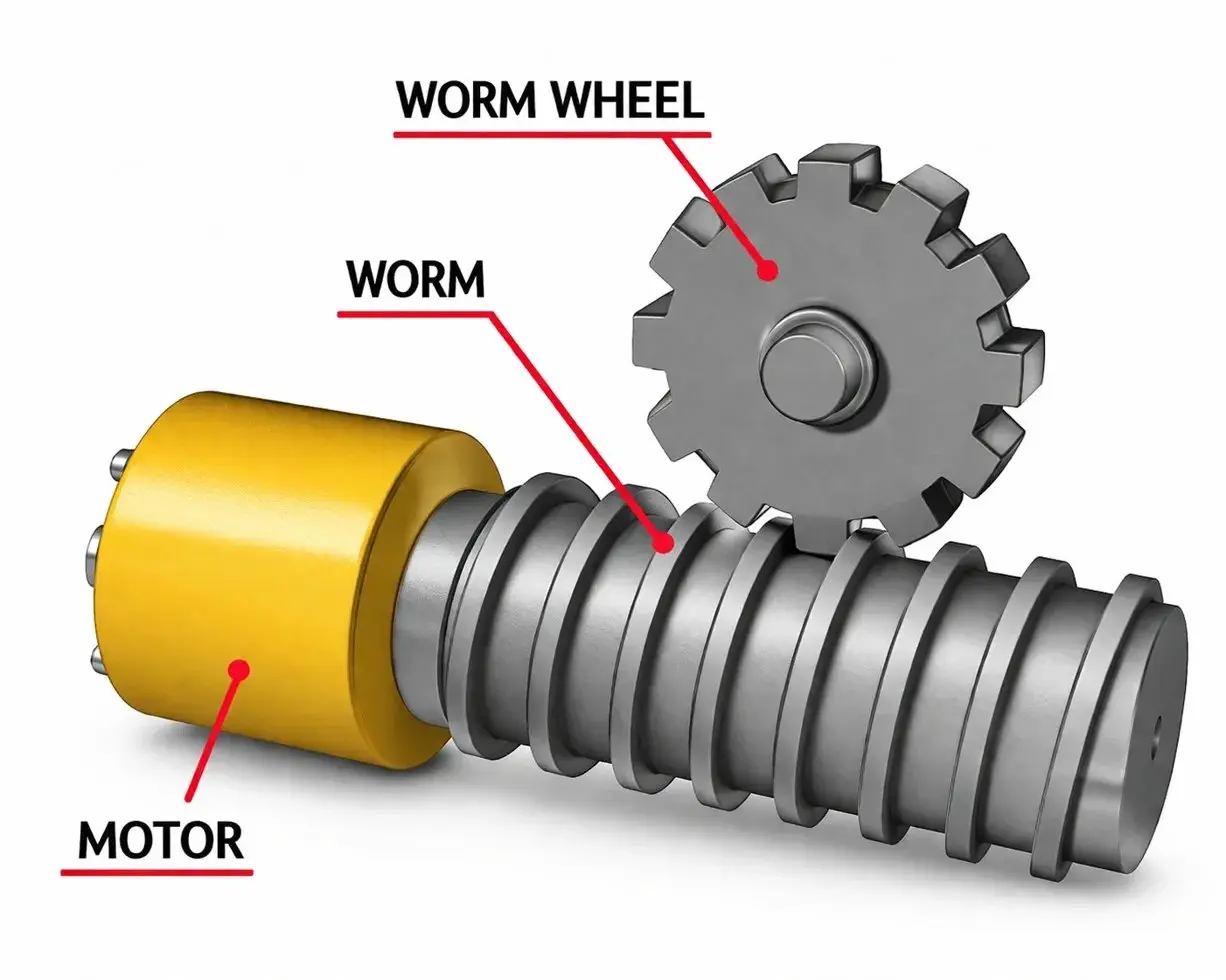
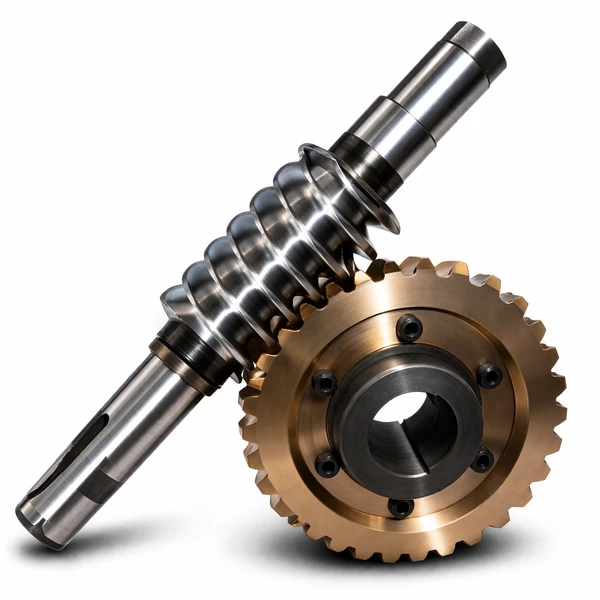
Cylindrical Worm Wheel structure 1

⚙ Korea Ever-Power Worm Gear Co., LtdAnsan-si, Gyeonggi-do, [email protected]

The Drawing That Caused a Three-Week Delay

A Korean machine builder received a purchase order from a US OEM with a worm gear drawing specifying AGMA Quality Class 10. Their production team treated this as equivalent to DIN 8 — a common but imprecise conversion — and manufactured accordingly. The US OEM incoming inspection rejected the parts: their coordinate measuring machine found lead deviation and profile errors within DIN 8 tolerance but outside AGMA 10 tolerance for the specific gear size. The three-week delay while the matter was resolved — re-inspection, new documentation, partial rework — cost more than the gear set itself.

The error was not in the manufacturing. It was in the conversion. DIN and AGMA precision classes are not simple 1:1 translations. They measure overlapping but not identical sets of gear parameters, and their tolerance values scale differently with module and pitch diameter. Understanding what each standard actually specifies — and where their conversion is reliable and where it breaks down — is essential for any engineering team dealing with international customers or suppliers.

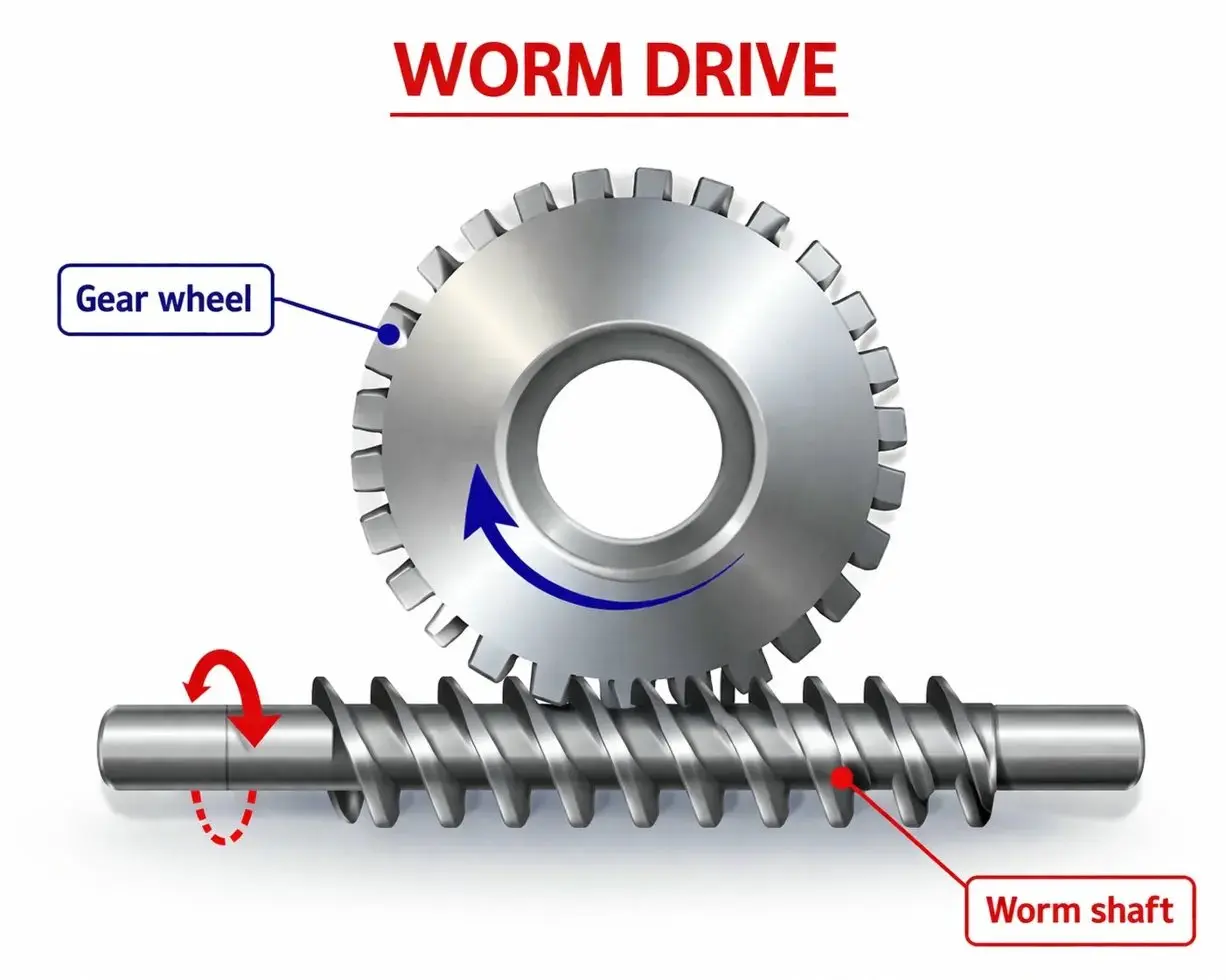
worm gear structure 1
worm gear structure 2

DIN 3975 and DIN 3976 — The European Benchmark

DIN 3975 defines the geometric parameters and terminology for cylindrical worm gears — lead angle, axial pitch, normal pitch, tooth thickness over pins, helix direction, and the relationships between worm geometry parameters. DIN 3976 specifies the tolerances. The precision classes in DIN 3976 run from Class 3 (highest precision, rarely manufactured commercially) through Class 12 (rough commercial). Korea Ever-Power standard supply covers Class 6 through Class 12, with Class 5 available for positioning applications on request.

Each precision class defines allowable tolerances for five primary parameters. These five parameters capture the complete geometric quality of the worm thread — no additional parameters are needed to fully specify worm gear quality under DIN 3976.

Tooth Profile Deviation Ff

Deviation of the actual worm thread profile from the theoretical involute in the normal section. High Ff concentrates load on local contact points rather than distributing it across the full engagement arc. The primary source of worm gear mesh noise.

Lead Deviation Fb

Deviation of the actual thread lead from the theoretical lead along the pitch cylinder. Inconsistent lead causes periodic load variations as the worm rotates — the source of tooth-frequency vibration sidebands.

Single Pitch Deviation fp

Deviation of any single tooth space width from the theoretical value. Each pitch error creates a brief angular acceleration/deceleration pulse — these sum into composite transmission error.

Total Profile Deviation Fa

Peak-to-valley amplitude of the profile error including all harmonics. Used in vibration and acoustic noise calculations. The single most important parameter for quiet worm gear operation.

Tooth Thickness Deviation As

Deviation of tooth thickness from nominal, measured over pins at the pitch cylinder. Directly controls backlash in assembly — undersize tooth increases clearance; oversize risks tooth tip interference.


DIN Precision Classes — Applications, Manufacturing Methods, and Conversions

DIN Class AGMA Approx. Manufacturing Profile Dev. Ff (M5) Lead Dev. Fb Typical Application Korea Ever-Power Supply
DIN 5 AGMA 12+ Ground + lapped 4 um 6 um Surgical robots, metrology, high-precision positioners On request only
DIN 6 AGMA 11 Thread ground 6 um 9 um Robot joints, CNC indexers, high-accuracy automation Available, 4-6 wk
DIN 7 AGMA 10 Thread ground 9 um 14 um Packaging indexers, solar trackers, cobot joints Standard precision
DIN 8 AGMA 9 Hobbed/turned finish 14 um 20 um Industrial conveyors, machine tools, general automation Standard supply
DIN 9 AGMA 8 Hobbed 20 um 28 um General machinery, agricultural, material handling Standard supply
DIN 10 AGMA 7 Hobbed 28 um 40 um Non-critical drives, low-speed equipment Standard supply
DIN 12 AGMA 6 As-cut 56 um 80 um Rough applications, slow occasional-use drives Standard supply

Profile and lead deviation values shown for Module 5 worm at mid-range pitch diameter. Values scale with module and diameter per DIN 3976 tolerance tables.


AGMA 6022-C96 — The American Reference

AGMA 6022-C96 (Design Manual for Cylindrical Worm Gearing) is the primary American Gear Manufacturers Association standard for worm gear design and specification. Quality classes run from AGMA 6 (lowest) to AGMA 14 (highest precision) — note the inverted numbering relative to DIN, where lower numbers indicate higher precision. AGMA 14 = highest precision, AGMA 6 = rough commercial.

The key methodological difference: AGMA 6022 specifies quality classes primarily through the composite transmission error test — the accumulated pitch variation measured across multiple teeth by a gear roll tester. DIN 3976 specifies individual parameter tolerances (Ff, Fb, fp, As) measured separately by CMM. A gear can satisfy one standard while showing marginally higher deviation in a parameter that the other standard weighs more heavily — particularly at non-standard module sizes where tolerance scaling formulas diverge.

Critical practical point: AGMA numbering runs opposite to DIN. AGMA 8 is lower precision than AGMA 12; DIN 8 is higher precision than DIN 12. When reading a drawing, always note which standard is referenced before interpreting the class number. Confusing AGMA 8 (rough commercial) with DIN 8 (standard industrial) is the most common precision class misinterpretation in international gear supply.


CMM Measurement Methods for Worm Gear Parameters
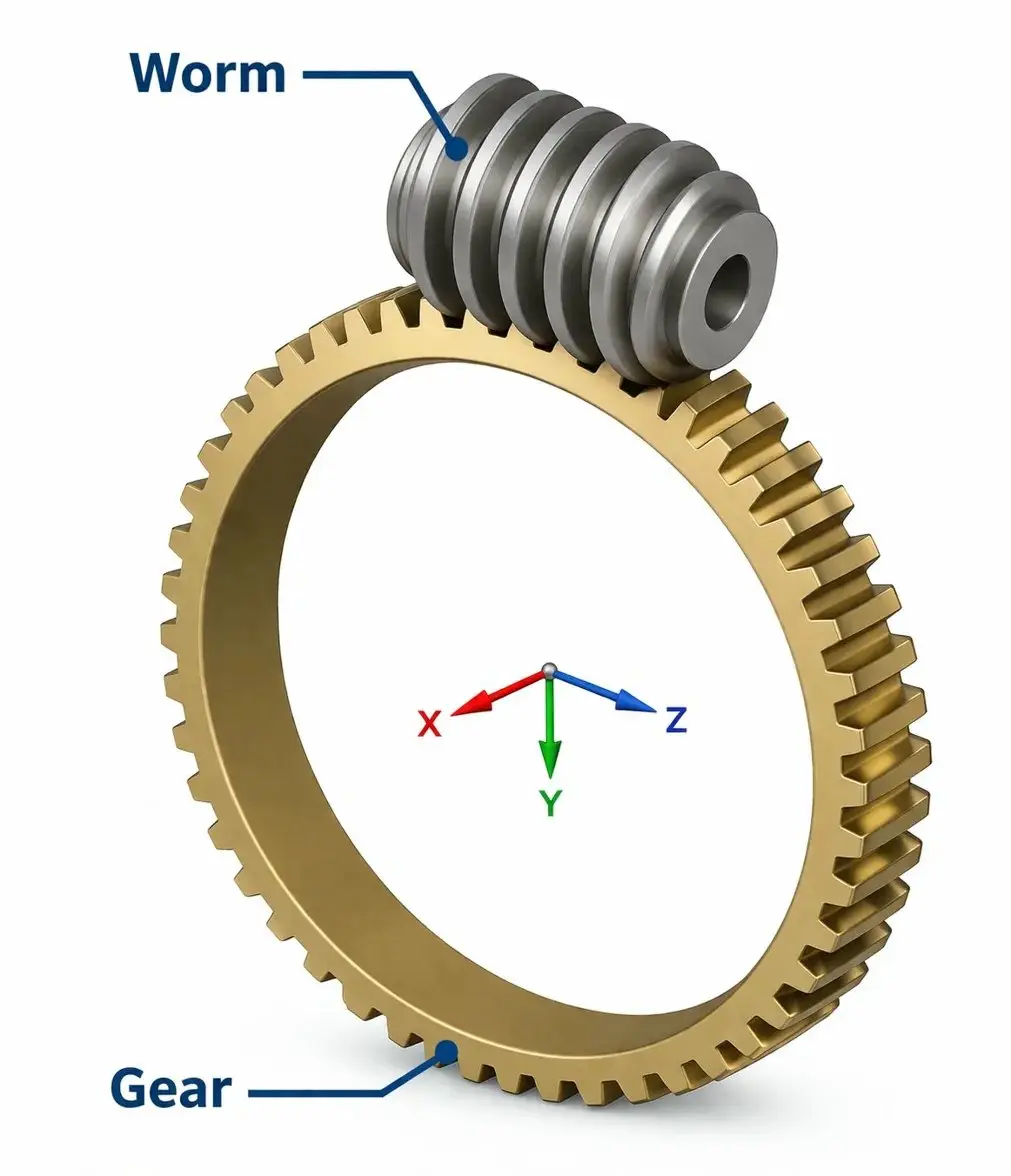
worm gear structure 4

Modern CMM (coordinate measuring machine) measurement using a rotary probe traces the worm thread flank in defined measurement planes, recording the deviation from the theoretical involute at each measured point. The measurement is performed at three axial positions (to check lead consistency) and two profile height positions (to check profile shape) for a total of six measurement sections per thread start.

Profile Measurement
CMM stylus traces thread flank in normal section. Deviation from theoretical involute at each point is the profile error Ff.
Lead Measurement
CMM records thread position at multiple angular steps along full thread length. Lead deviation is max minus min deviation from constant lead.
Tooth Thickness Over Pins
Calibrated pin placed in thread space; measurement over pin gives tooth thickness by geometric calculation.
Bore Measurement
Bore measured at 3 axial positions x 2 perpendicular diameters = 6 measurements confirming H7 compliance.

Inspection and Quality Verification at Korea Ever-Power
Cylindrical Worm Wheel structure 2 worm gear structure 3
worm gear workshop 5 worm gear workshop 6

Reading a Worm Gear Drawing — Required Parameters

A complete worm gear drawing specifies every parameter needed to manufacture and verify the gear. Missing parameters are a drawing deficiency — they should be added before manufacturing begins. The following parameters must appear on any worm gear drawing intended for precision supply.

Drawing Parameter Symbol What Its Absence Causes
Axial module mx Wrong module = wrong tooth size, wrong centre distance, mismate with wheel
Number of starts z1 Wrong start count changes ratio, efficiency, and self-locking behaviour
Wheel tooth count z2 Wrong count changes ratio and centre distance
Diameter quotient q Determines pitch diameter d1 = m x q; affects lead angle
Helix direction R or L Wrong hand = 90 degree shaft crossing error or reversed rotation
Normal pressure angle an Typically 20 deg; different value changes tooth strength and mesh geometry
Precision class DIN/AGMA Wrong class = wrong tolerance — rejection or acceptance of defective parts
Tooth thickness tolerance As Missing = uncontrolled backlash in assembly
Surface finish Ra Ra Non-compliance with food/medical/cleanroom requirements
Centre distance tolerance a +/- tol Housing machining target; affects backlash and contact quality

Korea Ever-Power

Standards-Compliant Products with CMM Documentation

Alloy Steel Worm Gear Set -- Standards-Documented
DIN 6 to DIN 9 — CMM Report Included
Alloy Steel Worm Gear Set — Standards-Documented
Every Korea Ever-Power alloy steel worm gear set ships with a CMM inspection report documenting the actual measured values for each DIN 3976 parameter — not a pass/fail statement, but the measured deviation values alongside the DIN class tolerance for comparison. Engineers can confirm precision class compliance and use the actual measured data when converting a DIN specification to AGMA class compliance for US OEM incoming inspection. Precision class options: DIN 9 standard, DIN 8 precision industrial, DIN 7 ground (automation), DIN 6 high precision (request). AGMA-equivalent compliance statements available when US OEM drawings require AGMA quality class documentation.

View Specifications

Precision Worm Wheel -- DIN Drawing-Compliant
Profile-Matched — Contact Pattern Photo Included
Precision Worm Wheel — DIN Drawing-Compliant
When engineering drawings specify DIN or AGMA precision class, Korea Ever-Power manufactures the matching worm wheel and provides documentation confirming compliance against each DIN 3976 tolerance. CMM report covers bore diameter (6 measurement points confirming H7 compliance), tooth runout, and contact pattern coverage percentage. For customers requiring AGMA-format documentation from DIN-manufactured gears — common when Korean OEMs supply to US customers — supplementary AGMA compliance statements are prepared from the DIN-measured CMM data.

View Specifications

Duplex Worm Gear -- Full DIN Precision Documentation
DIN 5 to DIN 7 — Lead Difference Certified
Duplex Worm Gear — Full DIN Precision Documentation
The duplex worm requires one additional certified parameter beyond standard DIN 3976: the lead difference between left and right thread flanks — the parameter that enables backlash adjustment by axial shift. Korea Ever-Power measures and certifies the lead difference as a specific value (not a range) for each duplex set, allowing the installation engineer to calculate the exact axial shift required to achieve a target backlash. Precision class DIN 5 to DIN 7 as standard for duplex sets. Full documentation includes the lead difference certificate, standard CMM report, and contact pattern photograph.

View Specifications

Standards FAQ

Worm Gear Standards and Inspection — Questions from Quality Engineers

My customer drawing specifies AGMA Quality 10. What DIN class does Korea Ever-Power manufacture to satisfy this?+

AGMA 10 corresponds approximately to DIN 7 for typical worm gear module and diameter combinations. Korea Ever-Power manufactures AGMA 10-equivalent gears at DIN 7 precision class (ground worm thread, DIN 3976 tolerances measured and reported). The exact relationship depends on gear size — for very small modules (M1-M2), DIN 7 may be slightly tighter than AGMA 10; for large modules (M8+), the relationship may differ. When an AGMA quality class is specified on a customer drawing, Korea Ever-Power provides the DIN-measured values alongside an AGMA class compliance statement confirming the actual measured deviations are within the AGMA 10 tolerance limits for the specific gear dimensions.

What is the difference between quality grade and precision class in worm gear specification?+

They refer to the same concept with different terminology by standard. DIN 3976 uses Qualitaetsstufe (quality grade), translated as precision class in English, numbered 3-12 with lower numbers being more precise. AGMA uses Quality Number (Q) numbered 3-14 with higher numbers being more precise — the numbering is inverted relative to DIN, which causes frequent confusion. ISO 10064-6 uses accuracy grade with a similar system to DIN. When specifying internationally, always confirm which numbering system is in use: DIN 8 and AGMA 8 have the same number but represent different precision levels — DIN 8 is significantly higher precision than AGMA 8.

Does Korea Ever-Power provide AGMA inspection reports, or only DIN format CMM reports?+

Standard CMM reports are in DIN 3976 format, reporting measured values against DIN tolerance limits. When a US customer requires AGMA-format compliance documentation, Korea Ever-Power prepares an AGMA class compliance statement from the DIN-measured values — confirming that the measured profile deviation, lead deviation, and pitch variation satisfy the AGMA tolerance limits for the specified quality number at the specific module and pitch diameter. This service is available at no additional charge when AGMA documentation is requested at order placement. For orders where AGMA documentation is requested after shipment, allow 3-5 working days.

How is worm gear backlash measured, and is it documented in the inspection report?+

Worm gear backlash is measured as the angular movement of the output shaft (worm wheel shaft) in degrees when the input shaft is held stationary and the output shaft is rotated alternately in both directions under a specified reference torque. The measurement is performed on a gear mesh test rig at theoretical centre distance. Backlash in angular units converts to linear at the wheel pitch radius. Korea Ever-Power measures backlash on the assembly test rig as part of the contact pattern test for precision class DIN 7 and better — the contact pattern photograph and backlash measurement are both included in delivery documentation. Standard supply (DIN 8-9) includes contact pattern documentation; backlash measurement available on request.

What does total profile deviation Fa mean on a CMM report, and how does it affect gear noise?+

Total profile deviation Fa is the peak-to-valley amplitude of the profile error in the normal section — the algebraic difference between the highest and lowest points on the actual profile relative to the theoretical involute. Small Fa means the thread profile closely matches the theoretical and load distributes uniformly across the engaged contact arc. Large Fa means local high and low points cause load concentration at high points, increasing Hertz contact stress, raising friction, and producing transmission error pulses at the mesh frequency. Fa is the primary source of worm gear mesh noise — reducing Fa through thread grinding (DIN 7 vs DIN 9) is the most effective single action for reducing worm gear acoustic output.

What is the DIN standard for worm gear tooth thickness measurement?+

Tooth thickness of a worm is measured by the measurement over balls (or pins) method as specified in DIN 3960 applied to worm gears via DIN 3975. A calibrated ball of specified diameter is placed in the thread space; the measurement over the ball with another ball diametrically opposite gives a dimension from which tooth thickness is calculated. The ball diameter is selected per the normal module and pressure angle to ensure contact at the pitch cylinder. Korea Ever-Power uses CNC gear measurement centres with touch-probe styli for thread flank profile and lead measurement, supplemented by pin measurement for tooth thickness verification at both the blank stage and after thread grinding. Both measurements appear in the CMM inspection report.

For dual-sourced supply of the same worm gear specification, how do I ensure interchangeability between two suppliers?+

Define the specification to international standard tolerances, not proprietary callouts. Specify: module (exact value), tooth count, helix direction, pressure angle (20 deg standard), precision class (DIN class number), bore to H7 (exact diameter), keyway to DIN 6885A, and material to a composition standard with heat number traceability. Both suppliers must demonstrate compliance with the same CMM inspection report format. For initial qualification, compare actual measured values from both suppliers — not just pass/fail reports — to confirm they achieve equivalent geometry. A first-article dimensional correlation review between two suppliers CMM reports is the most reliable way to confirm interchangeability before production quantities are committed.

What minimum information does Korea Ever-Power need to produce a standards-compliant CMM report?+

To issue a CMM report to DIN 3976, Korea Ever-Power needs: module m; number of starts z1; number of wheel teeth z2; normal pressure angle an; diameter quotient q (or pitch diameter d1); specified precision class (DIN grade number); and bore diameter with tolerance. With these parameters, the DIN 3976 tolerance values for each measured parameter can be calculated, and the measured deviations evaluated for compliance. If any parameter is missing from the order specification, Korea Ever-Power requests it before issuing the report — a report without confirmed specifications is not a valid quality document.

Standards-Compliant Supply with Full CMM Documentation

Specify the precision class (DIN or AGMA) and Korea Ever-Power confirms supply capability, CMM report format, and AGMA conversion documentation availability before the order is placed.

Editor: Cxm