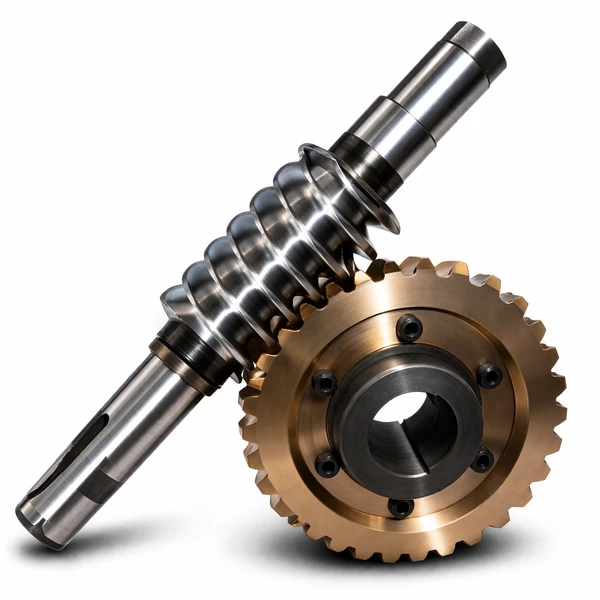
Kennisreeks · Specificaties wormwieloverbrenging

How to Specify a Worm Gear — The Complete Engineer’s Checklist

The 10 parameters you must define before a worm gear specification is complete — in the correct order, with the calculation behind each one — plus a printable checklist that produces a confirmed quotation within one working day.

10-Parameter Framework
Worked Example
Printable Checklist

Wormwieloverbrenging — as en wiel gereed voor specificatie

⚙ Korea Ever-Power Worm Gear Co., Ltd📍 Ansan-si, Gyeonggi-do, Korea📧 [email protected]

Why “I Need a Worm Gear” Is Never Enough

Every worm gear enquiry that arrives at Korea Ever-Power is followed by the same set of questions. Not because the answers are difficult — because most enquiries omit them. Missing parameters delay a quotation by one round-trip per gap. A specification with all 10 parameters confirmed receives a quotation within one working day. One with three parameters may require a week of clarification exchanges before the specification is solid enough to price — and that week is often on the critical path of a machine development program.

The 10 parameters are not arbitrary. They follow a logical sequence: each one constrains the options available for the next. Start with ratio and you can determine start count. Start count determines efficiency, which affects the torque budget. Torque determines module. Module and ratio together determine centre distance. Centre distance is what the housing must accommodate. Everything flows from the first parameter: the required gear ratio. Getting the order right prevents the most common specification error — selecting a module and then discovering it conflicts with the available housing space.

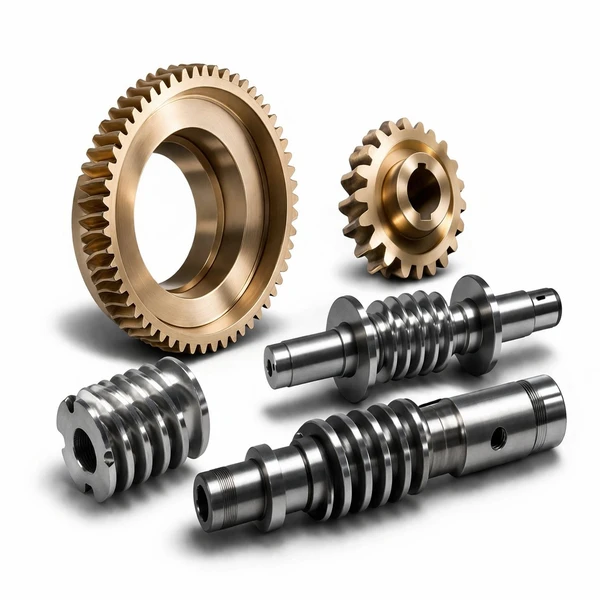
Worm en wormwiel van gelegeerd staal
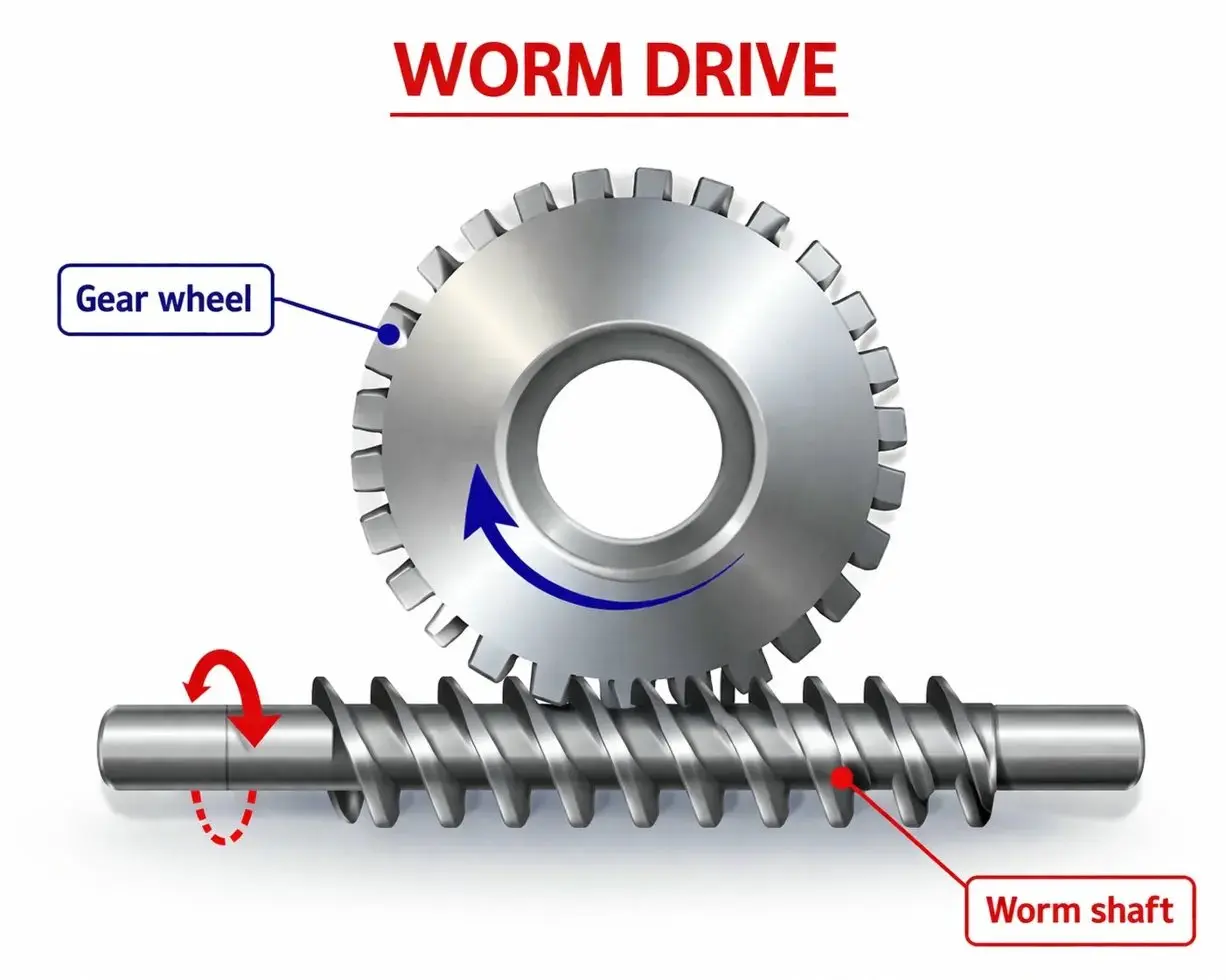
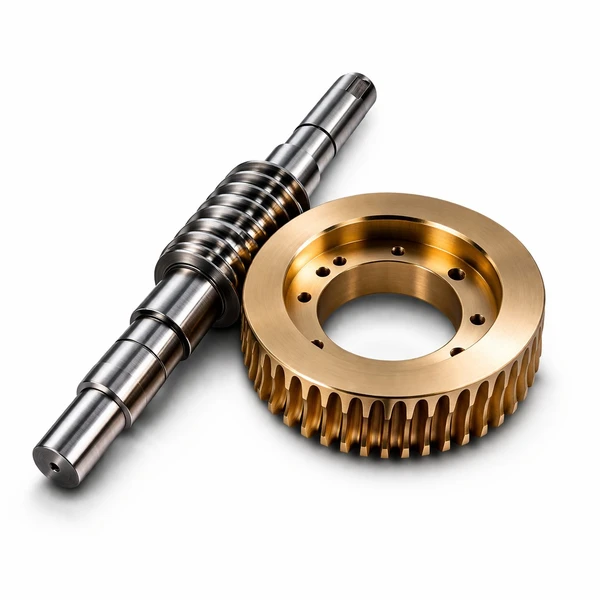
wormwielconstructie 2

The 10 parameters in order:

  1. Gear ratio i
  2. Start count z1
  3. Module m
  4. Output torque T2
  5. Centre distance a
  6. Bore and shaft fit
  7. Keyway
  8. Material and duty class
  9. Precisieklasse
  10. Documentation package

The 10 Specification Parameters — What Each Requires and Why

01
Gear Ratio i = n₁ ÷ n₂

Start with your motor speed (n₁) and the required output shaft speed (n₂). The ratio i = n₁ ÷ n₂ is the primary design input — everything else follows from it. A 4-pole motor at 1450 RPM driving a shaft that must turn at 29 RPM requires i = 50:1. Always calculate the exact required ratio first, then select the nearest standard catalog ratio or specify a custom ratio. Standard ratios (10, 15, 20, 25, 30, 40, 50, 60, 80, 100:1) may not match your requirement exactly. Non-standard ratios are available at Level 3 semi-custom specification without new tooling. The gear ratio also determines whether self-locking is achievable: at high ratios (≥ 30:1 with single-start worm), self-locking is typically achievable; at low ratios, it requires verification.

02
Start Count z1 (1, 2, or 4)

The start count determines two properties simultaneously: self-locking capability and efficiency. Single-start (z1=1): lead angle shallow → self-locking at most ratios → efficiency 50–75%. Double-start (z1=2): efficiency improves to 72–82% → self-locking marginal. Four-start (z1=4): efficiency 83–90% → self-locking not achievable. Specify z1=1 whenever load-holding (safety self-locking) is required — for inclined conveyors, hoists, and cobot joints. Verify self-locking at maximum operating temperature, not ambient: friction coefficient drops with temperature, potentially eliminating self-locking behaviour in a drive that self-locks at 20°C but not at 70°C housing temperature.

03
Module m (from torque, not ratio)

Module is selected from the required output torque, not from the ratio. The torque-module relationship for tin bronze wheel: T₂_rated ≈ 0.9 × m³ × z₂ × 120 MPa (approximate for ZCuSn10Pb1 at moderate speed). For a required T₂ of 300 Nm at 50:1 (z₂=50): m³ ≥ 300 / (0.9 × 50 × 0.12) → m³ ≥ 55.6 → m ≥ 3.82 → select M4. Standard modules: M1, 1.25, 1.5, 2, 2.5, 3, 4, 5, 6, 8, 10. Non-standard modules (M3.5, M4.5, M7) require Level 4 custom tooling. Always select one standard module step above the minimum calculated value to provide service factor margin.

04
Output Torque T₂ (load × service factor)

Calculated torque from the application: T₂ = F × r for linear mechanisms (F = load force, r = moment arm), or T₂ = P/ω for rotary mechanisms. Apply a service factor: 1.0–1.25 for smooth constant load (fans, pumps); 1.5 for moderate shock (conveyors starting under load); 2.0–2.5 for heavy shock (material handling with potential jams, start-stop high-cycle). The design torque T₂_design = T₂_load × SF. Motor torque at output shaft ≠ design torque: T₂_motor = T_motor × i × η — the efficiency reduction means the motor must supply more input torque than the load torque divided by ratio.

05
Centre Distance a (derived, not chosen)

Once module, start count, and tooth count are fixed, centre distance is determined: a = m(q + z₂)/2 where q is the diameter quotient (typically 8–16, often chosen as q=12 or q=10). For M4, q=12, z₂=50: a = 4(12+50)/2 = 124 mm. Centre distance is not a free variable. The machine housing must accommodate the calculated centre distance within the tolerance required for the precision class (typically ±0.10 mm for standard, ±0.05 mm for precision drives). Housing design or selection follows from centre distance — do not design the housing first and fit the gear set to it.

06
Bore Diameter and Shaft Fit

The bore is manufactured to H7 tolerance (standard hole basis). Shaft fit type: H7/k6 — transition fit, removable for maintenance; H7/n6 — light interference, standard medium-duty permanent assembly; H7/p6 — medium interference, heavy-duty shock applications (requires hydraulic press or heating to assemble). Non-standard bore diameters (any value, not just catalog steps) are available as Level 2 custom with 2–4 week lead time and no tooling cost. Specify bore diameter to 0.1 mm and fit type explicitly. Duplex worm shafts (adjustable backlash) require a different shaft fit — H7/g6 clearance fit to allow axial adjustment.

07
Keyway Dimensions

Keyway dimensions follow DIN 6885A as a function of bore diameter. A 30 mm bore: 8×7 mm key (8 wide × 7 high). A 50 mm bore: 14×9 mm key. Specify: (1) keyway standard (DIN 6885A metric default), (2) keyway width tolerance (JS9 for normal clearance; P9 for interference key fit), (3) whether a set screw hole is required. If no keyway is required, state this explicitly — without instruction, a keyway will be machined on all bores above 10 mm as standard. If two keyways are needed (90° apart for balancing or redundancy), this must be specified at order placement.

08
Material and Duty Class

Shaft material governs hardness and hardenability; wheel material governs anti-scuffing and strength. These are a pairing — the correct combination depends on duty class and environment. D1 light: C45 induction-hardened + ZCuSn10Pb1. D2 medium: 40Cr through-hardened + ZCuSn10Pb1. D3 heavy: SCM415 carburized + ZCuAl10Fe3. Food/marine: SS316 + SS316 or SS316 + ZCuSn10Pb1. Stating only the shaft grade (‘I need a 40Cr shaft’) is insufficient — the wheel alloy must be specified too. A 40Cr shaft against ZCuAl10Fe3 wheel has inadequate hardness differential in some conditions; see the material selection guide for pairing rules.

09
Precision Class (DIN 5–12)

DIN precision class specifies the allowable tolerance on lead deviation, profile deviation, pitch error, and tooth thickness. DIN 12: commercial (hobbed only, general industrial); DIN 9–10: standard industrial (hobbed + possible touch-grind); DIN 7–8: precision (thread-ground); DIN 5–6: high precision (ground and lapped, for robotic and positioning drives). Each step tighter roughly doubles the manufacturing cost. Specify the minimum class your application requires. Over-specifying DIN 6 for a warehouse conveyor drive adds cost with no operational benefit; under-specifying DIN 9 for an indexing robot produces position errors. State the required precision class alongside the application type so Korea Ever-Power can confirm the specification is appropriate.

10
Documentation Package

Documentation level must match your quality system requirement. Standard supply: material certificate (heat number traceable) + CMM dimensional inspection report. Food / HACCP: add surface roughness report (Ra measurement) + NSF H1 lubricant compatibility confirmation + HACCP zone statement. Marine / offshore: add 500h ASTM B117 salt spray test certificate. Medical device (ISO 13485): add ISO 10993-1 biocompatibility reference + heat treatment record + mill test certificate. Automotive OEM (PPAP): specify PPAP Level 1, 2, or 3. Documentation requirements cannot always be fulfilled retrospectively from a shipped order — state them at order placement, and Korea Ever-Power will confirm availability before accepting the order.


Worked Example: From Motor + Load to Complete Specification

Application: inclined belt conveyor, warehouse distribution centre. Motor 4-pole 1450 RPM, 3 kW. Drive drum diameter 200 mm (required output: 38.2 RPM). Incline 15°, load mass 600 kg. Standard industrial indoor environment.

Parameter Build-Up
① Ratio
1450 ÷ 38.2 = 37.96 → standard 40:1 (output 36.25 RPM — acceptable ±5%)
② Start count
Incline requires load-holding → z1 = 1 (verify self-locking at 65°C housing temp)
③ Torque
F = 600 × 9.81 × sin15° + 0.15 × 600 × 9.81 × cos15° ≈ 2,368 N; T2 = 2,368 × 0.10 = 237 Nm; SF=1.5 → T_design = 355 Nm
④ Module
m³ ≥ 355 / (0.9 × 40 × 0.12) = 82.2 → m ≥ 4.34 → Module M5 (m³=125)
⑤ Centre distance
a = 5(12+40)/2 = 130 mm
⑥ Bore
Shaft diameter 35 mm, medium duty, no shock → ⌀35 mm H7/n6
⑦ Keyway
35 mm bore → 10×8 mm DIN 6885A
⑧ Material
D2 medium, no shock → 40Cr shaft (50–56 HRC) + ZCuSn10Pb1 wheel
⑨ Precision
Warehouse conveyor → DIN 8
⑩ Documentation
Standard industrial → Material certificate + CMM report

From Specification to Finished Gear Set

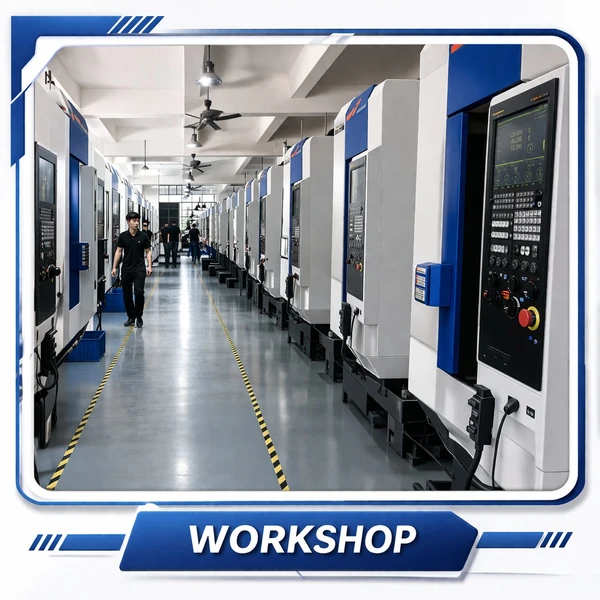
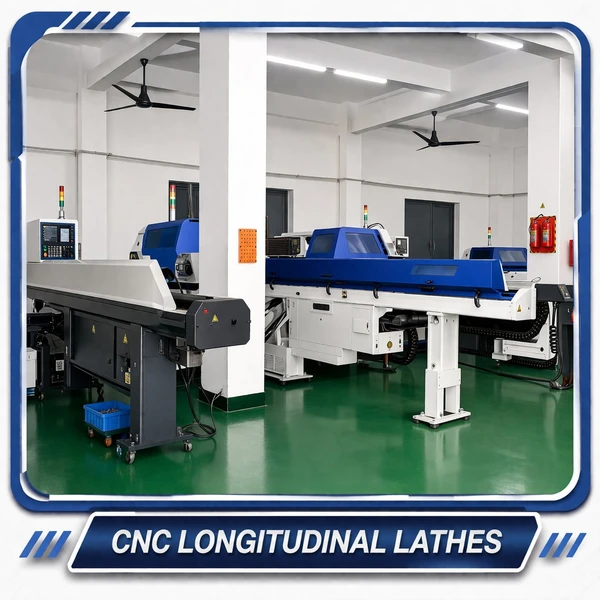
wormwielwerkplaats 1 wormwielwerkplaats 2 wormwielwerkplaats 3
wormwielwerkplaats 4 wormwielwerkplaats 5 wormwielwerkplaats 6

Printable Specification Checklist

Korea Ever-Power — Worm Gear Enquiry Checklist (send to [email protected])
Motor speed (RPM)
Required output speed (RPM)
Gear ratio i (calculated)
Start count z1 (self-locking needed?)
Required output torque (Nm)
Service factor applied
Design torque T_design (Nm)
Module m — or confirm from torque
Centre distance a (mm)
Boringdiameter (mm)
Shaft fit type (H7/k6 / n6 / p6)
Keyway (DIN 6885A width×height, or none)
Worm shaft material + hardness
Worm wheel alloy
Duty class D1–D4
Precision class (DIN 5–12)
IP rating required
Operating temperature range (°C)
Special environment
Documentation standard required
Korea Ever-Power

Products for Every Specification Level

Worm en wormwielset van gelegeerd staal
Catalog or Custom · D1–D3 · M2–M10
Worm en wormwielset van gelegeerd staal
The starting point for any alloy steel worm gear specification. Catalog ratios (5:1 to 100:1) at standard modules M2–M10 deliver in 5–15 working days. Non-standard ratios (any integer from 5:1 to 300:1) manufacture without new tooling as Level 3 semi-custom, first order 4–6 weeks, reorder 2–3 weeks. 40Cr shaft through-hardened to 50–56 HRC with ZCuSn10Pb1 tin bronze wheel is the D2 standard. SCM415 carburized shaft (58–62 HRC) + ZCuAl10Fe3 wheel available for D3 shock applications. Every set ships with material certificate to mill heat number and CMM dimensional inspection report. Bore machined to H7 at any specified diameter — no extra charge for non-catalog bore sizes.

Bekijk product →

Precisie cilindrisch wormwiel
Replacement · Profile-Matched · Any Bore
Precisie cilindrisch wormwiel
For specifying a replacement wheel against an existing worm shaft, provide the shaft module, lead angle (or lead/pitch), and pitch diameter — or send the shaft for reverse measurement. Korea Ever-Power hobs the replacement wheel with a cutter matched to the shaft geometry, producing documented ≥70% contact pattern coverage. Available in ZCuSn10Pb1 (D1–D2), ZCuAl10Fe3 (D3 impact), ZCuSn12 (elevated-duty D2), SS316 (food/marine Zone 1), and PA66/POM for low-load light-noise applications. Bore to any H7 diameter. Keyway to DIN 6885A or omitted. CMM report covering bore diameter, keyway width, and tooth runout included.

Bekijk product →

Customised Worm Gear Set
OEM Program · Any Parameter · PPAP Available
Customised Worm Gear Set
When the full 10-parameter specification falls outside catalog range — non-standard ratio, left-hand thread, non-standard module, unusual bore geometry, or any combination — the Level 3 semi-custom program provides a confirmed quotation within one working day of receiving the complete specification checklist. NDA executed before any drawing submission. PPAP Level 1, 2, or 3 available for automotive and OEM supply programs. Medical device ISO 13485 documentation program available. Supply programs from 10 pieces per order with blanket order option for established programs.

Bekijk product →

Specification FAQ

Worm Gear Specification — Questions from Engineers and Buyers

I only know the motor power and the required output speed. Is that enough to start?+

It is enough to start, but not to complete the specification. From power P and output speed n₂: required output torque T₂ = P × η / ω₂, where η is estimated efficiency (use 0.65 for a conservative start) and ω₂ = n₂ × 2π/60. Gear ratio follows from motor speed: i = n₁/n₂. Module follows from torque. You still need bore diameter, fit type, material, and documentation level — which require knowledge of your shaft size and operating environment. Submit what you have and mark the remaining parameters as ‘to be determined’ — Korea Ever-Power will identify what additional information is needed before the specification can be completed.

What is the correct service factor for a packaging machine that starts and stops 120 times per hour?+

High-cycle start-stop applications generate impact torque peaks at every start that can be 2–4× the running torque. For 120 start-stop cycles per hour with a direct-on-line (DOL) motor start, SF = 2.0 is appropriate. If a soft-start motor controller is used, the starting torque peak is reduced to approximately 1.2–1.5× running torque, allowing SF = 1.5. The distinction matters because the module selected from the design torque (load × SF) directly determines the gear physical size and housing envelope. Specifying DOL starting at SF = 1.5 underestimates peak loading; specifying soft-start at SF = 2.0 over-sizes the gear. Confirm motor start method before finalising the service factor.

How do I calculate the required bore diameter if I don’t have the shaft drawing?+

The bore must be sized to fit the drive shaft with the correct interference or clearance. If the shaft drawing is not available: (1) measure the actual shaft diameter with a vernier or micrometer to 0.01 mm; (2) determine the required fit type (H7/n6 for standard duty, H7/p6 for heavy duty); (3) calculate the shaft nominal diameter range that fits within the H7 bore tolerance at the correct interference. Alternatively: measure the shaft and request the bore that achieves H7/n6 fit on the measured shaft. Korea Ever-Power can calculate the correct bore diameter from a measured shaft dimension. Never simply specify ‘to fit’ without a dimension — manufacturing tolerance requires a specific numerical value.

The nearest catalog ratio is 40:1 but I need exactly 37:1. What are my options?+

37:1 with a single-start worm (z1=1) requires a 37-tooth wheel — the same hobbing equipment used for a 40-tooth wheel at the same module simply changes the index gear setting. This is a Level 3 semi-custom specification. No new tooling is required. Lead time: 4–6 weeks for the first order, 2–3 weeks for reorders. The additional cost over the catalog 40-tooth wheel is typically 20–40% per piece at small quantities, reducing to 10–15% at production quantities (50+ pieces per order). Provide the full specification checklist and Korea Ever-Power will confirm that 37:1 at the required module is achievable and return a quotation.

What precision class should I specify for a solar tracker drive that must hold within 0.1° angular accuracy?+

Solar tracker angular accuracy of 0.1° at the output shaft corresponds to approximately 0.08 mm at a 50 mm worm wheel pitch radius. This requires backlash below 0.08 mm — achievable with DIN 7 precision class (ground, 0.03–0.07 mm backlash range) or with a duplex worm gear at near-zero backlash. Standard DIN 8–9 precision (0.05–0.15 mm backlash typical) is borderline and may not consistently achieve 0.1° accuracy across the temperature range of outdoor operation. For solar tracker applications, specifying a duplex worm gear with adjustable backlash provides consistent accuracy as temperature varies across the day — the backlash can be re-adjusted seasonally without component replacement.

My machine uses metric dimensions but the customer’s drawing specifies AGMA quality class. How do I convert?+

AGMA quality classes and DIN precision classes measure similar geometric parameters (profile deviation, lead error, pitch variation) but use different tolerance calculations and measurement conventions. Approximate conversions: AGMA 12 ≈ DIN 5; AGMA 11 ≈ DIN 6; AGMA 10 ≈ DIN 7; AGMA 9 ≈ DIN 8; AGMA 8 ≈ DIN 9. For precision-critical applications, these conversions are approximate — the exact tolerances must be compared for the specific gear size and module. Korea Ever-Power can provide DIN tolerance values for a specific gear geometry and confirm whether they satisfy an equivalent AGMA quality class requirement for the customer’s drawing review.

I need a worm gear for a hoist application where self-locking is a safety requirement. What specification parameters are critical?+

For a safety-critical self-locking application: (1) z1=1 (single-start worm — mandatory for reliable self-locking at the target ratio); (2) ratio ≥ 20:1 (lower ratios have higher lead angles that may not self-lock); (3) self-locking condition verified at maximum expected operating temperature with the actual specified lubricant — not at ambient conditions; (4) lubricant viscosity grade matched to operating temperature (lower viscosity at high temperature reduces friction angle and may eliminate self-locking); (5) self-locking calculation documentation provided, showing lead angle, friction coefficient at worst-case temperature, and calculated safety margin (ρ’ – λ ≥ 1.5° minimum). Korea Ever-Power provides this self-locking calculation as standard documentation for single-start worm gear sets ordered for safety-function hoist applications.

What is the difference between ‘center distance’ on the gear set and ‘center distance’ on the housing?+

The theoretical centre distance is calculated from the gear geometry: a = m(q + z₂)/2. The actual centre distance in the housing is determined by the bearing positions machined into the housing casting. The housing centre distance must match the theoretical gear centre distance within the precision class tolerance (typically ±0.10 mm for DIN 8, ±0.05 mm for DIN 7). A larger-than-theoretical centre distance increases backlash and may reduce the tooth contact area. A smaller-than-theoretical centre distance creates mesh pre-load, increases running temperature, and risks tooth tip interference. When specifying or designing a custom housing, always confirm the housing centre distance tolerance against the gear precision class tolerance before machining.

Submit Your Specification for a Same-Day Quotation

Complete the 10-parameter checklist and send to [email protected]. Korea Ever-Power returns a confirmed quotation — with specification confirmation, lead time, and documentation availability — within one working day.
⚙ Producten bekijken

Redacteur: Cxm