Seri Panduan Praktis · Diagnostik Lapangan

Roda Gigi Cacing Troubleshooting — The Field Engineer’s Diagnostic Reference

Eight common worm gear drive problems: what you observe, what it means, what to check first, and when to replace vs repair. Built as a field reference — use the symptom table to go directly to your problem.

Symptom Reference Table
Diagnostic Step-by-Step
Replace vs Repair Decision
⚙ Korea Ever-Power Worm Gear Co., Ltd. Ansan-si, Gyeonggi-do, Korea [email protected]

Before You Disassemble Anything — A Systematic Approach

The most common worm gear troubleshooting error is disassembly before observation. A drive that is noisy, hot, or leaking provides diagnostic information in its operating state that is lost once it is taken apart. Spend 5 minutes observing the drive in operation — or immediately after shutdown if it cannot be safely observed under load — before touching a single bolt.

The five pre-disassembly observations that narrow the diagnosis: (1) Is the problem continuous or periodic? Continuous problems are usually lubrication or steady-state wear. Periodic problems at a regular interval are usually mechanical — a specific tooth, bearing, or shaft. (2) Is the problem proportional to load, speed, or temperature? Each relationship points to a different root cause. (3) What does the housing feel like? Localized heat on one side of the housing often indicates bearing problems rather than gear mesh problems. (4) When did it start? Sudden onset vs gradual development indicates different failure modes. (5) Has anything changed recently — new oil, new load, new operator?

struktur roda gigi cacing 1
struktur roda gigi cacing 4

Symptom Reference Table — Go Directly to Your Problem

Observed Symptom Most Likely Cause Urgensi Pemeriksaan Pertama Section Below
Housing too hot to touch (>70 degrees C) Thermal overload — efficiency loss, wrong oil viscosity High — reduces to failure Oil level and viscosity vs operating temp P1: Overheating
Peningkatan kebisingan secara bertahap selama beberapa minggu. Abrasive wear — tooth flanks degrading Medium — plan replacement Drain oil, check metallic content P2: Progressive Noise
Sudden loud knock, then vibration Tooth fracture or bearing spall Urgent — stop immediately Do not restart — inspect for fragments P3: Sudden Noise
Oil leaking from shaft seal Shaft seal failure or housing joint Medium — lubrication at risk Check oil level, identify leak source P4: Seal Leakage
Drive will not turn when motor runs Drive locked — gear jam or torque overload High — possible tooth damage DO NOT force — check for jammed load P5: Locked Drive
Output shaft turns but load does not move Key shear or coupling failure Medium — drive not damaged Check keyway, coupling, and key condition P6: Drive Slip
Position error increasing over months Backlash growth from tooth wear Low — correct at next maintenance Measure backlash, compare to spec P7: Backlash Growth
Green oil or green deposits on drain EP oil attack on bronze wheel Medium-high — change oil immediately Drain fully, inspect wheel flanks P8: Oil Contamination

P1
Overheating — Housing Temperature Above 70 Degrees C

High housing temperature is not a failure mode in itself — it is a symptom. Every worm gear drive that runs hot is telling you that the heat it is generating (proportional to 1 minus efficiency) exceeds the rate at which the housing can dissipate that heat to the ambient environment. Addressing housing temperature requires identifying which side of this equation is out of specification.

Housing temperature too high: Check ambient temperature first. Is the drive installed near a heat source or in an enclosed unventilated cabinet? Measure ambient within 0.3m of the housing. A drive designed for 30 degrees C ambient fails its thermal rating at 35 degrees C ambient. Add ventilation or relocate the drive.
Oil level too low: Low oil level reduces the amount of oil available for splash lubrication of the mesh, reducing the heat transfer from the gear contact to the housing. Check and correct the oil level with the drive stationary and oil settled.
Wrong lubricant viscosity: Oil that is too thin (wrong grade or high temperature driving viscosity below design) provides inadequate EHD film, increasing friction and heat generation. Check viscosity grade against the operating temperature. Switch to PAO for improved viscosity stability.
Drive operating above rated torque: Calculate actual output torque from motor current. If above 80% rated torque, the efficiency loss is generating more heat than the housing is designed to reject. Reduce load or specify a more efficient drive (multi-start worm for higher efficiency at the same ratio).
P2
Progressive Noise Increase — Getting Louder Week by Week

Gradually increasing noise in a worm gear drive always indicates a wear mechanism in progress. The noise comes from one of two sources: increasing roughness on the tooth flank surfaces as wear removes material and the ground or hobbed finish degrades; or from increasing backlash as tooth thickness decreases, producing impact at direction reversals. These two sources produce slightly different noise characters.

Drain the oil and inspect: Drain the oil without the drive running (so debris settles to the drain). Inspect for metallic content. Light bronze-coloured metallic paste: normal gradual wear, plan replacement within next scheduled maintenance. Large metallic particles, angular chips: accelerated wear or fatigue — inspect tooth flanks at next opportunity.
Check lubrication: EP oil in a bronze-wheel drive produces corrosive attack that mimics abrasive wear acoustically. Confirm the oil type and change to non-EP immediately if EP oil is confirmed. The damage already done cannot be reversed but further attack stops immediately.
Measure backlash: Rotate the output shaft alternately while holding the input shaft stationary. The angular dead zone is the backlash. If backlash exceeds the original specification by more than 50%, the tooth flanks have worn significantly and replacement should be planned.
Assess remaining life: If noise is a steady increase without sudden changes, the drive is progressing through normal wear. Plan the replacement for the next scheduled maintenance window. If noise increase is accelerating (getting louder faster each week), move the replacement earlier.
P3
Sudden Loud Noise — Knock, Grind, or Vibration Onset

Sudden noise onset is an emergency. Do not attempt to diagnose the cause under load. Stop the drive at the first safe opportunity. A broken tooth fragment in the housing will abrade all remaining wheel teeth rapidly — every minute of additional operation after tooth fracture multiplies the repair cost.

STOP THE DRIVE: Do not force the drive to continue. Do not jog the motor to investigate. A single additional revolution of a fractured gear can cause fragments to jam the mesh, fracture additional teeth, or score the worm shaft thread.
After safe shutdown: drain oil: Drain the oil into a clean container. Inspect for metallic debris. Angular metallic chips indicate tooth fracture. A sudden oil darkening indicates thermal event (scuffing). Drain quality before disassembly gives you the root cause before you open the housing.
Inspect tooth flanks before reassembly: After opening, inspect all 40+ teeth (or whatever z2 is) for: missing teeth; cracks at the root fillet; scuffing damage (torn, pulled metal surface). Count the damaged teeth. If only 1-2 teeth are damaged, investigate the overload event that caused fracture. If 5+ teeth are damaged, the failure began earlier and fragments circulated.
Replace completely or replace wheel: If worm shaft thread flanks are undamaged: replace wheel only. If shaft thread shows scoring, impact damage, or profile distortion: replace the complete set. Never install a new wheel on a damaged shaft — the mismatch accelerates new wheel wear.
P4
Seal Leakage — Oil on the Housing Exterior or Floor

Shaft seal leakage is not a drive failure — it is a maintenance issue that becomes a drive failure if it results in low oil level. A leaking seal should be treated as urgent not because of the seal itself but because of what happens to the drive when it runs low on oil.

Identify the leak source: Is the leak from the shaft seal (rotation point, one side of shaft)? Or from the housing joint (parting line of housing halves)? Or from the fill plug or drain plug? Each requires a different repair. Wipe the housing dry and run for 5 minutes to observe where the fresh oil appears.
Shaft seal leak: replace seal: Standard NBR shaft seals can be replaced without disassembling the gear set if the housing design allows external lip seal installation. Confirm the seal specification (shaft diameter, bore diameter, seal type) before ordering. For marine drives, specify FKM (Viton) replacement seals.
Housing joint leak: reseal: Clean the joint surfaces, apply fresh anaerobic flange sealant, and re-torque the housing bolts in the correct cross-pattern sequence. Allow full cure before refilling and running.
Check and correct oil level: After any seal repair, check and correct the oil level before returning to service. If the drive ran with low oil (housing feels hot on one side, unusual noise), inspect the tooth flanks for scuffing damage before returning to full-load operation.

Additional Problems P5 — P8: Quick Diagnosis Reference

P5

Locked Drive — Will Not Turn Under Motor Power

First response: DO NOT repeatedly jog the motor. Identify the source: is the load mechanically jammed (conveyor belt stuck, material jam), or is the gear itself locked? Disconnect the motor and try to turn the worm shaft by hand. If the worm shaft turns freely by hand but the load does not move: the coupling or key has failed (see P6). If the worm shaft cannot be turned by hand: the gear or bearing is jammed. For gear jam: look for fragments in the oil through the drain plug. For bearing seizure: localized heat on one side of the housing just before failure is the usual preceding sign.

P6

Drive Slips — Motor Runs, Output Shaft Turns, Load Does Not Move

This pattern points to the connection between the gear output shaft and the load, not to the gear itself. Inspect in order: (1) keyway and key — a sheared key allows the shaft to rotate inside the hub; the keyway will show deformation and the key will be broken or displaced; (2) coupling — flexible couplings fail at the elastomeric insert or at the hub bore; (3) bore and shaft — in rare cases, an undersized bore or under-specified shaft fit allows the bore to spin on the shaft after the interference is lost. Gear drive is almost certainly undamaged; focus on the mechanical connection.

P7

Backlash Growth — Position Accuracy Reducing Over Time

Gradual backlash growth is normal in worm gear drives with high cycle rates — tooth flanks wear slowly and the clearance increases. The maintenance question is: when has backlash grown enough to require action? For standard conveyor drives: replace when backlash exceeds 3-4x the original specification. For precision indexing drives: replace (or adjust if duplex worm) when backlash exceeds 1.5-2x original. For safety-critical self-locking applications: measure self-locking condition whenever backlash has increased significantly — worn flanks may change the effective lead angle enough to affect the self-locking margin.

P8

Green or Black Oil — Contamination Detected

Green oil or green-black deposits in the drained oil is the specific signature of EP additive reaction with copper in the bronze wheel — copper sulfide formation. Action: drain immediately, flush with clean non-EP oil (run 30 minutes at 20% load, drain again), refill with correct non-EP oil, and inspect tooth flanks for green staining that indicates the corrosive attack has already penetrated the tooth surface. The attack stops when EP oil is removed; but the wheel life already consumed by corrosion cannot be recovered. Black oil alone (without green tint) usually indicates thermal overheating of the oil — see P1. Milky oil indicates water contamination — check shaft seals.


Replace vs Repair — The Decision Framework

When a worm gear drive fails or is showing signs of imminent failure, the decision is whether to replace the complete set (shaft + wheel), replace only the worn component (typically the wheel), or repair the existing component (possible only in specific situations). The decision depends on the condition of each component and the economics of the alternatives.

Finding at Inspection Shaft Action Wheel Action Rationale
Wheel worn, shaft thread within spec Reuse shaft Replace wheel only Most economical; new wheel conforms to unworn shaft
Wheel worn, shaft thread slightly worn Reuse shaft after polishing (Ra check) Profile-matched replacement wheel Matched wheel corrects for shaft geometry change
Wheel worn, shaft thread heavily worn Replace shaft Replace wheel (complete set) Worn shaft will damage new wheel quickly
Tooth fracture on wheel only Periksa poros terlebih dahulu untuk mengetahui adanya kerusakan akibat benturan. Ganti roda Periksa poros untuk memastikan tidak ada goresan sebelum digunakan kembali.
Gigi patah, serpihannya berserakan di dalam rumah. Ganti poros (kemungkinan terdapat goresan akibat pecahan) Replace wheel (complete set) Serpihan mengikis ulir poros — harus diperiksa atau diganti.
Kerusakan akibat goresan pada kedua komponen. Replace shaft Replace wheel (complete set) Pengikisan bersifat termal — kedua permukaan rusak.
Serangan korosif (noda hijau) Ganti jika lubang korosi lebih dalam dari 0,2 mm. Ganti roda Korosi bersifat progresif — permukaan yang berlubang mempercepat keausan.
Keausan abrasif, kedua komponen Ganti poros jika Ra > 1,6 µm (ukur) Ganti roda Kedua komponen tersebut aus secara bersamaan akibat kontaminasi abrasif.

Korea Ever-Power — Pasokan Penggantian dan Perbaikan

aplikasi roda gigi cacing 5 aplikasi roda gigi cacing 6
Cacing dan Roda Gigi Cacing dari Baja Paduan struktur roda gigi cacing 2

Korea Ever-Power

Produk Pengganti — Suku Cadang yang Tepat, Dokumentasi yang Tepat, Cepat
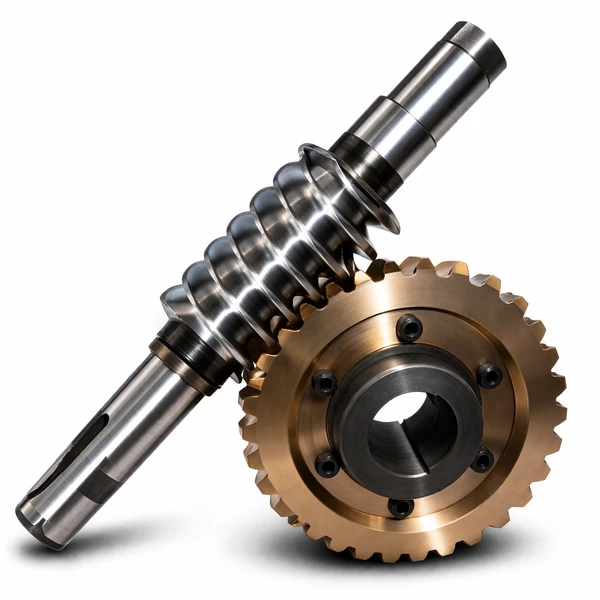
Penggantian Roda Gigi Cacing -- Cepat dan Terdokumentasi
Penawaran Harga di Hari yang Sama / Pencocokan Profil Tersedia
Penggantian Roda Gigi Cacing — Cepat dan Terdokumentasi
Ketika roda gigi cacing mengalami kerusakan di lingkungan produksi, penggantinya perlu segera tiba, terpasang dengan benar, dan didokumentasikan. Korea Ever-Power menyediakan: respons penawaran harga di hari yang sama untuk spesifikasi katalog standar; pengiriman 5-15 hari kerja untuk ukuran roda gigi katalog standar (modul M2-M10, jumlah gigi sesuai dengan rasio katalog standar); 4-6 minggu untuk jumlah gigi non-standar (rasio khusus) dengan dokumentasi yang sama. Setiap roda gigi pengganti dikirimkan dengan sertifikat material dan laporan inspeksi CMM yang mengkonfirmasi diameter lubang pada 6 titik pengukuran. Untuk penggantian pada poros yang sudah aus, tentukan modul poros cacing, ulir, dan diameter pitch — Korea Ever-Power mengkonfirmasi bahwa geometri roda gigi pengganti sesuai dengan poros sebelum produksi dimulai. Program penggantian darurat dengan waktu tunggu yang disepakati dan pra-kualifikasi geometri roda gigi tersedia untuk fasilitas yang mengelola beberapa penggerak identik.

Lihat / Ajukan Permintaan

Set Roda Gigi Cacing Lengkap -- Penggantian Penuh
Set Lengkap / Saat Kedua Komponen Aus
Set Roda Gigi Cacing Lengkap — Penggantian Penuh
Ketika hasil inspeksi menunjukkan bahwa poros cacing dan roda harus diganti, Korea Ever-Power menyediakan set yang cocok yang telah dirakit dan diuji pola kontaknya sebelum pengiriman. Set yang cocok ini menghilangkan ketidakcocokan kontak yang terjadi ketika roda baru dipasang pada poros yang aus — ketidakcocokan yang dapat mengurangi masa pakai roda baru hingga 30-50% pada periode operasi awal. Set tersebut tiba dengan kedua komponen sesuai spesifikasi yang benar, satu laporan CMM yang mencakup kedua komponen, dan foto pola kontak yang mengkonfirmasi cakupan lebar muka >=70% pada set yang telah dirakit. Untuk spesifikasi non-katalog (rasio non-standar, lubang non-standar, material khusus), berikan spesifikasi asli atau dimensi fisik komponen yang rusak dan Korea Ever-Power akan mengkonfirmasi spesifikasi penggantian sebelum produksi.

Lihat / Ajukan Permintaan

Layanan Analisis Kegagalan -- Cegah Kegagalan Berikutnya
Analisis Kegagalan / Dukungan Penyebab Utama
Layanan Analisis Kegagalan — Cegah Kegagalan Berikutnya
Mengganti set roda gigi cacing yang rusak tanpa mengidentifikasi akar penyebab kerusakan adalah cara tercepat untuk mencapai kerusakan berikutnya. Korea Ever-Power menyediakan layanan analisis kerusakan untuk pesanan penggantian: kirimkan foto komponen yang rusak (sisi gigi pada sudut 3-5 derajat, sisi ulir poros, isi sumbat pembuangan oli) dan deskripsi aplikasi serta riwayat pengoperasiannya. Insinyur aplikasi Korea Ever-Power mengidentifikasi mode kerusakan dari bukti foto, mengkonfirmasi apakah spesifikasi penggantian mengatasi akar penyebab, dan merekomendasikan perubahan spesifikasi atau modifikasi prosedur perawatan yang dapat mencegah terulangnya kerusakan. Layanan ini diberikan tanpa biaya untuk pesanan penggantian. Analisis biasanya dikembalikan dalam waktu 24 jam setelah menerima foto.

Lihat / Ajukan Permintaan

Pertanyaan yang Sering Diajukan (FAQ) tentang Pemecahan Masalah

Masalah Roda Gigi Cacing — Pertanyaan dari Tim Pemeliharaan dan Produksi

Penggerak roda gigi cacing saya tiba-tiba mengeluarkan suara bergesekan. Bisakah saya tetap menjalankannya dengan kecepatan yang dikurangi untuk menyelesaikan shift produksi?+

Sangat tidak disarankan. Suara gesekan pada penggerak roda gigi cacing menunjukkan kontak logam-ke-logam pada jaring — lapisan oli telah benar-benar rusak (gesekan sedang berlangsung) atau gigi telah patah dan serpihannya beredar. Terus beroperasi dalam kondisi apa pun akan mempercepat kerusakan secara geometris: gesekan menciptakan kekasaran permukaan yang meningkatkan gesekan, yang meningkatkan panas, yang mengurangi viskositas lebih lanjut, yang meningkatkan kontak logam — sebuah proses yang tak terkendali. Serpihan dari gigi yang patah akan mengikis semua gigi roda yang tersisa. Menjalankan pada kecepatan yang dikurangi setelah timbulnya suara gesekan biasanya mengubah perbaikan penggantian roda menjadi penggantian satu set lengkap, dan dapat menambah kerusakan bantalan dan rumah ke dalam lingkup perbaikan. Hentikan penggerak pada kesempatan aman berikutnya dan periksa sebelum melanjutkan.

Saya menemukan banyak pasta logam perunggu pada baut pembuangan magnetik saat penggantian oli. Apakah ini normal?+

Lapisan tipis pasta logam berwarna perunggu halus pada baut pembuangan magnetik adalah normal — ini mewakili partikel aus yang sangat halus yang dihasilkan oleh keausan sisi gigi yang lambat dan normal selama interval penggantian oli. Kuantifikasi apa yang Anda lihat: lapisan yang hampir tidak terlihat dan mudah dilap dengan satu usapan jari adalah normal. Endapan yang perlu dikerok, atau yang memiliki partikel logam terpisah yang terlihat dengan mata telanjang, adalah abnormal dan harus diselidiki. Penilaian baut pembuangan paling berguna sebagai indikator tren: jika endapan pada setiap penggantian oli bertambah dari penggantian berikutnya (lebih banyak pada penggantian ini daripada penggantian sebelumnya), laju keausan meningkat dan kendaraan harus segera diperiksa. Foto baut pembuangan pada setiap penggantian untuk perbandingan.

Suhu housing drive adalah 82 derajat C pada beban nominal. Spesifikasi menyebutkan maksimum 80 derajat C. Apakah ini masalah yang signifikan?+

Dua derajat di atas spesifikasi berada di batas toleransi — ada baiknya menyelidiki penyebabnya daripada menganggapnya dapat diterima. Pada suhu 82 derajat C, viskositas oli mineral telah turun menjadi sekitar 90-100 cSt, yang mendekati minimum untuk lapisan EHD yang memadai pada kecepatan geser roda gigi cacing yang umum. Batas toleransi termal pada suhu 82 derajat C kecil: peningkatan suhu lingkungan sebesar 5 derajat, sedikit peningkatan beban, atau degradasi pelumas selama interval penggantian oli dapat mendorong drive ke zona kritis termal. Tindakan yang direkomendasikan sesuai urutan upaya implementasi: (1) verifikasi level oli dan tingkat viskositas (pengisian oli yang kurang atau tingkat viskositas yang salah adalah penyebab umum suhu di batas toleransi); (2) tingkatkan ventilasi lingkungan; (3) beralih ke oli sintetis PAO (biasanya mengurangi suhu housing 8-12 derajat C); (4) jika tidak ada tindakan ini yang mengurangi suhu di bawah 75 derajat C pada beban nominal, drive mungkin terlalu kecil secara termal untuk aplikasi tersebut — pertimbangkan modul yang lebih besar.

Kami mengalami kerusakan pada set roda gigi cacing setelah hanya 3 bulan pemakaian. Pemasok kami mengatakan itu disebabkan oleh pemasangan yang salah. Bagaimana cara kami menyelidiki hal ini?+

Tiga bulan masih dalam masa pemakaian awal (running-in) untuk satu set roda gigi cacing. Kegagalan dalam 200-500 jam pertama hampir selalu disebabkan oleh salah satu dari empat penyebab berikut: (1) pelumas yang salah (oli EP menyebabkan serangan korosif — kuras dan periksa endapan tembaga hijau); (2) tidak mengganti oli saat pemakaian awal pada 50-100 jam (serpihan pemakaian awal beredar sebagai bahan abrasif selama 3 bulan penuh); (3) kontaminasi saat pemasangan (pasir pengecoran, serpihan alat, kelembapan yang masuk selama perakitan); (4) beban berlebih (beban aplikasi melebihi kapasitas nominal set roda gigi — hitung torsi keluaran aktual dan bandingkan dengan spesifikasi). Foto sisi gigi yang rusak — setiap mode kegagalan memiliki tampilan yang berbeda seperti yang dijelaskan dalam panduan identifikasi mode kegagalan. Bagikan foto-foto tersebut dengan Korea Ever-Power dan kami akan mengkonfirmasi mode kegagalan dari bukti visual.

Setelah mengganti roda gigi cacing, roda gigi baru aus lebih cepat daripada yang asli. Apa yang salah?+

Roda gigi baru yang lebih cepat aus daripada yang asli hampir selalu menunjukkan ketidaksesuaian antara profil roda gigi baru dan geometri poros cacing yang ada. Poros cacing asli telah sedikit aus selama masa pakainya — sisi ulirnya tidak lagi berada pada profil teoritis yang tepat. Roda gigi pengganti standar, yang digergaji sesuai profil teoritis, bersentuhan dengan poros yang aus pada pita sempit daripada di seluruh lebar permukaan. Konsentrasi beban ini mempercepat keausan pada roda gigi baru. Solusi yang tepat: ganti poros dan roda gigi secara bersamaan (poros menentukan geometri kontak), atau tentukan roda gigi pengganti yang sesuai profil dan digergaji agar sesuai dengan geometri poros yang aus. Korea Ever-Power dapat memproduksi roda gigi pengganti yang sesuai profil jika Anda memberikan dimensi poros atau mengirimkan poros untuk diukur.

Bagaimana cara mengukur celah roda gigi cacing di lapangan tanpa peralatan khusus?+

Pengukuran celah (backlash) di lapangan dengan alat dasar: (1) pasang penunjuk atau tanda pada permukaan roda gigi cacing; (2) putar poros cacing perlahan searah jarum jam hingga sisi gigi bersentuhan erat di satu sisi; (3) tahan poros cacing tetap dan tandai posisi roda; (4) putar poros cacing berlawanan arah jarum jam hingga sisi bersentuhan di sisi lain (Anda akan merasakan gerakan bebas singkat — ini adalah zona mati celah); (5) tandai posisi roda yang baru. Pergerakan sudut roda antara kedua tanda, dikalikan dengan jari-jari jarak antar gigi roda, memberikan celah dalam satuan linier. Untuk roda dengan jari-jari jarak antar gigi 100 mm: jika pergerakan sudutnya adalah 0,05 radian (sekitar 3 derajat), celah = 0,05 x 100 = 5 mm — jelas berlebihan. Untuk pengukuran yang tepat, indikator dial pada tepi roda memberikan resolusi yang lebih baik daripada tanda visual.

Berapa jumlah pesanan minimum untuk roda gigi cacing pengganti dari Korea Ever-Power, dan seberapa cepat pengirimannya?+

Jumlah pesanan minimum untuk roda pengganti standar katalog (modul standar, jumlah gigi standar sesuai dengan rasio katalog, ukuran lubang standar) adalah 1 buah. Pengiriman untuk ukuran katalog: 5-15 hari kerja sejak konfirmasi pesanan. Untuk spesifikasi non-standar (jumlah gigi khusus untuk rasio non-katalog, lubang non-standar, material non-standar): minimum 5 buah, waktu tunggu 4-6 minggu. Jumlah sampel 1-2 buah untuk spesifikasi non-standar tersedia dengan harga sampel (1,5-2x harga satuan produksi) dengan waktu tunggu yang sama. Untuk kebutuhan penggantian darurat di mana jalur produksi dihentikan, hubungi Korea Ever-Power melalui email ([email protected]) dengan subjek URGENT — penjadwalan dipercepat dan pengiriman udara DHL Express tersedia untuk sebagian besar spesifikasi dalam rentang katalog standar.

Tim perawatan kami mengganti oli roda gigi cacing dengan merek berbeda namun dengan tingkat ISO VG yang sama. Apakah ini dapat diterima?+

Mengganti merek oli roda gigi cacing non-EP kelas ISO VG yang sama umumnya dapat diterima dari sudut pandang kinerja pelumasan, tetapi dengan dua tindakan pencegahan. Pertama, pastikan oli pengganti adalah non-EP dan kompatibel dengan perunggu — meskipun oli asli sudah demikian, oli pengganti juga harus demikian. Label 'oli roda gigi cacing' atau 'cocok untuk logam kuning' pada oli pengganti adalah konfirmasi yang dibutuhkan. Kedua, mencampur sisa oli lama dengan oli baru dari merek yang berbeda biasanya tidak berbahaya untuk oli non-EP (paket aditif dari dua oli mineral non-EP biasanya kompatibel), tetapi jika ragu, tiriskan sepenuhnya sebelum diisi dengan oli baru. Sisa oli 3% hingga 5% yang tersisa setelah dikuras tidak cukup untuk menyebabkan masalah kompatibilitas dengan sebagian besar oli roda gigi non-EP standar.

Dapatkan Diagnosis dan Penawaran Penggantian di Hari yang Sama

Kirimkan foto komponen yang rusak dan deskripsi gejalanya. Korea Ever-Power akan mengidentifikasi penyebab kerusakan, memastikan spesifikasi penggantian yang tepat, dan memberikan penawaran harga serta perkiraan waktu pengiriman dalam satu hari kerja.

Editor: Cxm