How to Select the Right Worm Gear — 7-Parameter Specification Guide
Most worm gear procurement problems start the same way: someone orders a part based on two or three parameters and discovers the missing ones after installation. This guide covers all seven parameters that determine whether a worm gear set will perform correctly in your application — and explains what happens when each one is wrong.
Why Two-Parameter Selection Always Ends with a Retrofit
A maintenance engineer in a Korean food packaging facility needed to replace a failed worm gear set on a conveyor index drive. He measured the wheel OD (outer diameter) and bore diameter, ordered a matching part from a supplier’s catalog, and installed it. The replacement ran for three days before seizing. The problem: he had matched two visible dimensions but missed the module — the replacement wheel had a different pitch than the original worm shaft still installed in the machine. The teeth meshed at approximately the right center distance but with the wrong tooth profile, generating severe scuffing from the first revolution.
The module mismatch cost three days of production downtime plus the cost of a second replacement. The original selection would have taken ten minutes with a complete measurement. This guide provides the complete measurement and specification framework so that this kind of second-trip replacement never happens. Korea Ever-Power worm gear sets are available across the full parameter range described below — with dimensional confirmation from drawings or physical samples before production begins.
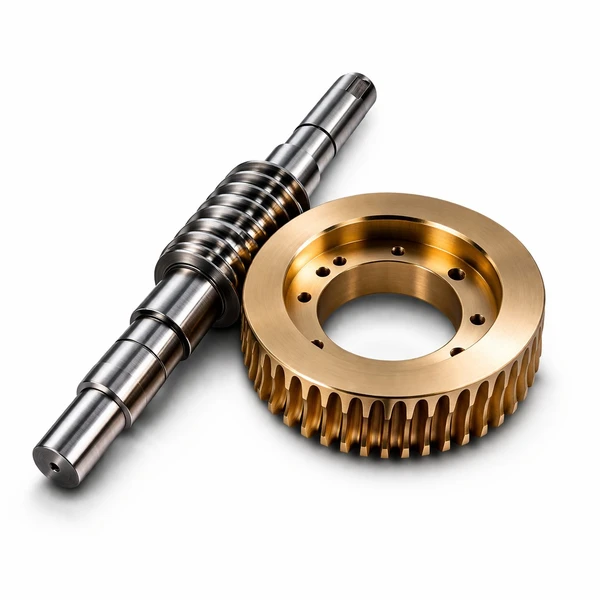
The Seven Parameters That Completely Define a Worm Gear Specification
Every worm gear selection decision reduces to seven parameters. The first four are mechanical requirements derived from the application. The last three are material and manufacturing specifications that determine service life and compatibility with the operating environment. All seven must be confirmed before ordering — not after installation reveals the ones that were guessed.
Parameter Summary
P1 — Module: The One Parameter You Cannot Guess
Module is the ratio of the pitch diameter to the tooth count. It defines the physical size of the teeth — their height, width, and spacing. A module 2 tooth is exactly twice the physical size of a module 1 tooth in all linear dimensions. Two worm gear components will only mesh correctly if they share the same module — there is no adjustment, shimming, or regrinding that corrects a module mismatch after the fact.
For a known component, module can be measured. The most reliable method for the worm wheel is: measure the outer diameter (OD) and the tooth count (z2), then calculate using the formula for the approximate relationship: OD ≈ m × (z2 + 2). Rearranging: m ≈ OD ÷ (z2 + 2). For the worm shaft, measure the axial pitch (the distance from one thread flank to the next, parallel to the shaft axis) and divide by π: m = axial pitch ÷ π.
Standard metric modules follow the normalized series: 1.0, 1.25, 1.5, 2.0, 2.5, 3.0, 4.0, 5.0, 6.0, 8.0, 10.0, 12.0. If your calculation gives a value like 2.03 or 1.97, round to the nearest standard value (2.0) — the small deviation is from measurement uncertainty, not a non-standard design. If the result is midway between two standard values (e.g., 1.75), the component may be a non-standard or AGMA-standard module — contact the original equipment supplier or send us a sample for CMM measurement to confirm.
P2 — Gear Ratio: Starting from Application Speed Requirements
Gear ratio = input RPM ÷ output RPM = worm wheel tooth count ÷ worm start count. When selecting for a new application, work backward from the required output speed. Required ratio = motor nameplate RPM ÷ required output RPM. Round the result to a standard ratio achievable with integer tooth counts — for example, if the calculation gives 43.6:1, specify 44:1 (z1=1, z2=44) rather than trying to achieve exactly 43.6:1 with a non-integer tooth count.
For replacement of a failed component where the original drawing is unavailable: count the wheel teeth directly (z2), determine the worm start count by inspection of the end face (count separate thread initiation points), and calculate i = z2 ÷ z1. Verify this matches the observed speed relationship in the machine before ordering — measure the motor RPM and actual output RPM if possible, as a sanity check against the tooth count calculation.
P3 — Torque and Speed: Confirming the Module Can Carry the Load
Module selection for a new application begins with the output torque requirement. Larger module means larger teeth with greater load capacity, but also a physically larger and more expensive gear set. The minimum module for a given torque can be estimated from the allowable contact stress of the wheel material.
A practical working rule for tin bronze worm wheels against hardened steel worms in continuous industrial service: allowable output torque ≈ 6.5 × m³ × z2^0.5 (in Nm, with m in mm). This is a simplified estimate for preliminary sizing — actual calculation should use the full Hertz contact stress formula with the specific pitch diameter, lead angle, and duty cycle. Use this estimate to confirm whether the module appears adequate; verify with a proper calculation or send us your torque and speed requirements for a sizing confirmation.
For replacement of a failed component: the existing module in the machine was presumably sized for the application load when originally designed. If failures are occurring repeatedly at the original module, the root cause is more likely a material, lubrication, or surface treatment issue rather than an undersized module. Jumping to a larger module without understanding the failure mode is expensive and often does not solve the problem.
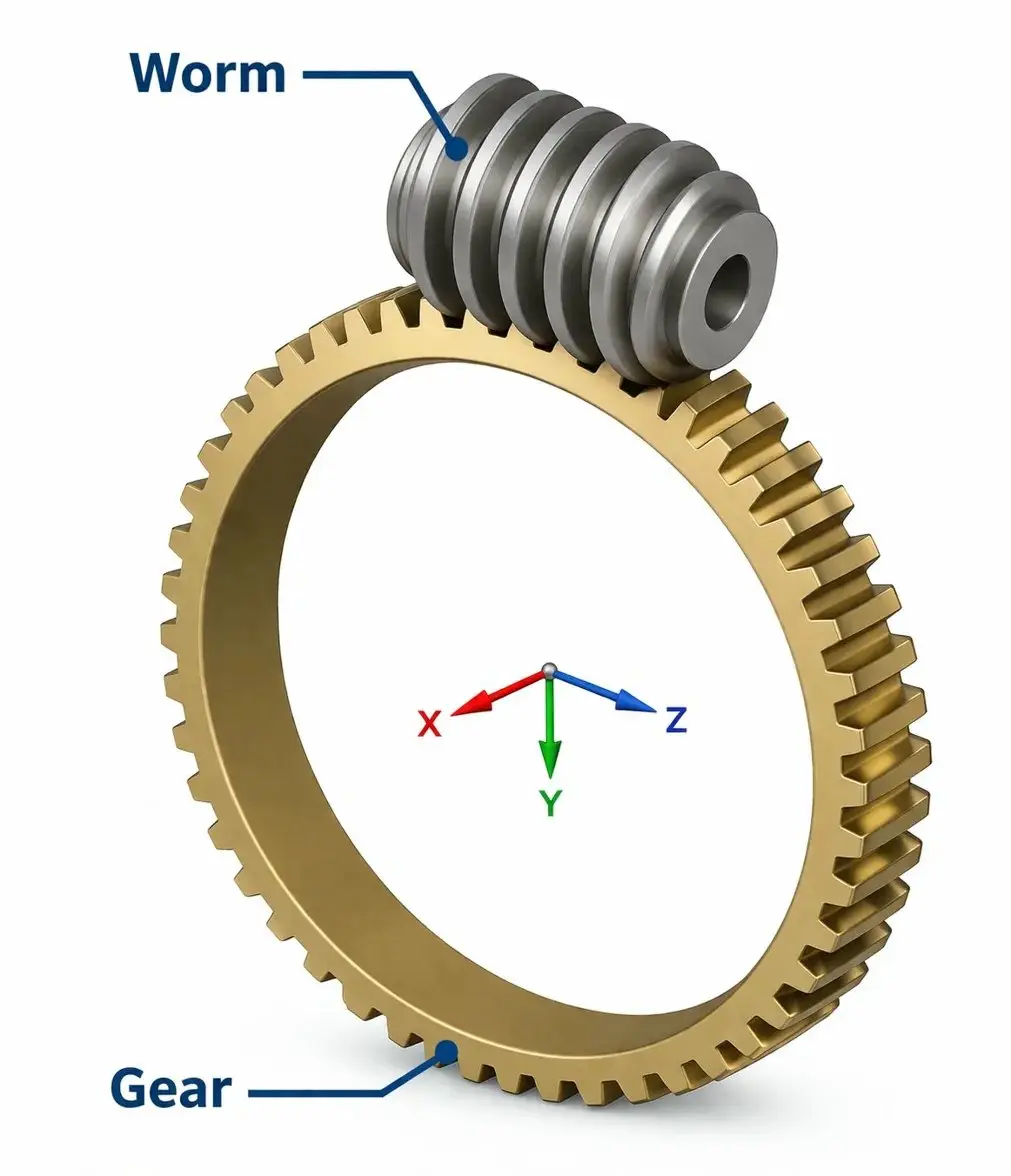
P4 — Bore Configuration: The Parameter Most Often Specified Incorrectly
Bore configuration has three independent specifications that all need to be correct: the bore diameter, the fit tolerance, and the keyway or set-screw configuration. Getting only one of these wrong causes assembly problems.
Bore diameter must match the output shaft diameter. Measure the shaft with a micrometer — not with vernier calipers, which are accurate enough for visual identification but not for specifying a press fit. Specify to 0.01 mm precision. A shaft measuring 24.97 mm should be specified as a 25 mm shaft, not a 24.97 mm shaft — the bore will be machined to H7 tolerance for a 25 mm nominal, which is 25.000 to 25.021 mm. This gives 0.030–0.051 mm clearance on your 24.97 mm shaft — a secure sliding fit.
Fit tolerance determines whether the wheel is a sliding fit (clearance fit, H7/h6 or H7/g6 — for shafts using a set screw or key for torque transmission) or a press fit (interference fit, H7/p6 or H7/r6 — for direct press mounting without key). Most industrial worm wheel applications use H7 bore with a keyway and key for torque transmission. Specifying H7 without a keyway and then relying on friction from a set screw is appropriate only for light-duty applications where output torque is below approximately 20% of the wheel’s rated torque.
Keyway dimensions follow DIN 6885 standard for metric applications. The keyway width and depth are defined by the shaft diameter — a 25 mm shaft uses an 8 mm wide × 7 mm deep keyway in the shaft and a matching 8 mm wide × 3.3 mm deep keyway in the bore. Specify “DIN 6885” when ordering to ensure the keyway matches the standard key dimensions for your shaft diameter, or specify the actual keyway width and depth explicitly.
P5 — Material Selection: Matching the Material to the Operating Environment
Material selection for the worm shaft and wheel is driven by three independent factors that must all be satisfied: load capacity (which sets a minimum hardness requirement), operating environment (which determines corrosion resistance requirements), and tribological compatibility (which determines the correct pairing between the two components). Selecting for one factor while ignoring the others is the most common material specification error.
| Operating Environment | Worm Shaft Specification | Wheel Specification | Critical Constraint |
|---|---|---|---|
| Indoor dry, general industrial | C45 induction hardened, 55–58 HRC | ZCuSn10Pb1 tin bronze | No EP sulfur oil additives on bronze wheel |
| Rocky soil, impact loads (agricultural) | 40Cr through-hardened, 50–55 HRC | ZCuAl10Fe3 aluminum-iron bronze | No sulfur EP oil; Al-bronze needs higher strength |
| Outdoor coastal (within 5 km of sea) | SS316 stainless steel | ZCuSn10Pb1 tin bronze | SS316 load capacity 30–40% lower — upsize module |
| Food / pharmaceutical / washdown | SS316, electropolished Ra ≤ 0.8 µm | SS316 or food-grade bronze | Lubrication must be food-grade certified (NSF H1) |
| CNC / precision servo (DIN5–DIN7) | SCM415, carburized + ground, 58–62 HRC | ZCuSn10Pb1 tin bronze, DIN7 hobbed | Thread must be ground after carburizing — not just hobbed |
| Chemical exposure (acids, solvents) | SS316 or acid-resistant coated alloy steel | Consult application — may require PEEK or PTFE composite | Confirm chemical compatibility with specific media before specifying |
P6 — Precision Class: How Much Accuracy Do You Actually Need?
Precision class is one of the most over-specified and under-specified parameters in worm gear procurement, often simultaneously. Engineers familiar with CNC machine tools sometimes specify DIN5 for a slow agricultural conveyor where DIN9 is entirely adequate and costs 60% less. Engineers sourcing parts for precision rotary tables sometimes accept whatever the catalog shows without asking about the DIN class — then wonder why the angular accuracy is worse than expected.
The DIN class for a worm gear controls three geometric tolerances: single-pitch error (tooth-to-tooth spacing variation), total pitch error (deviation of any tooth from the theoretical perfect position around the full circumference), and tooth profile deviation (how closely the actual tooth flank matches the theoretical involute). DIN5 is the tightest; DIN9 is the loosest. Each step up in number approximately doubles the permissible error.
| Application Type | Recommended Class | Typical Angular Output Accuracy | Key Manufacturing Requirement |
|---|---|---|---|
| Agricultural, conveyor, general industrial | DIN8 – DIN9 | ±0.5° to ±1.5° | Standard hobbing — no grinding required |
| Packaging machines, material handling | DIN7 – DIN8 | ±0.1° to ±0.5° | Shaving after hobbing recommended |
| CNC 4th axis, solar tracker | DIN6 – DIN7 | ±0.01° to ±0.1° | Thread grinding after carburizing mandatory |
| CNC indexing head, gear hobbing machine | DIN5 – DIN6 | ±3 to ±12 arc-seconds | Thread grinding, controlled thermal environment measurement |
| CMM rotary axis, semiconductor equipment | DIN5, duplex worm | ±1 to ±5 arc-seconds | DIN5 ground, preloaded duplex, CMM measured |
P7 — Self-Locking Requirement: The Parameter That Affects Start Count Selection
Self-locking is required when the driven load must remain stationary when the motor is switched off — without a separate mechanical brake or motor holding current. The self-locking condition depends on the worm lead angle being smaller than the effective friction angle at the mesh, which in turn depends on the lubricant viscosity and operating temperature.
For applications that require reliable self-locking, specify z1 = 1 (single-start worm) and a ratio of at least 20:1. This combination produces lead angles of 2–4 degrees for standard pitch cylinder diameters — well below the effective friction angle of 3–6 degrees for oil-lubricated hardened steel against tin bronze. For safety-critical applications (hoists, medical positioning, solar trackers where wind load must be held without motor power), additionally verify the self-locking margin at the maximum operating temperature with the specified lubricant — not at ambient laboratory conditions with a nominal friction coefficient.
When self-locking is not required — or actively undesirable because regenerative braking through the gearbox is needed for deceleration energy recovery — specify z1 = 2 or z1 = 3 (multi-start worm). The larger lead angle of a multi-start worm eliminates self-locking while improving efficiency. Be explicit about this requirement in the order specification so the lead angle is designed appropriately from the start.
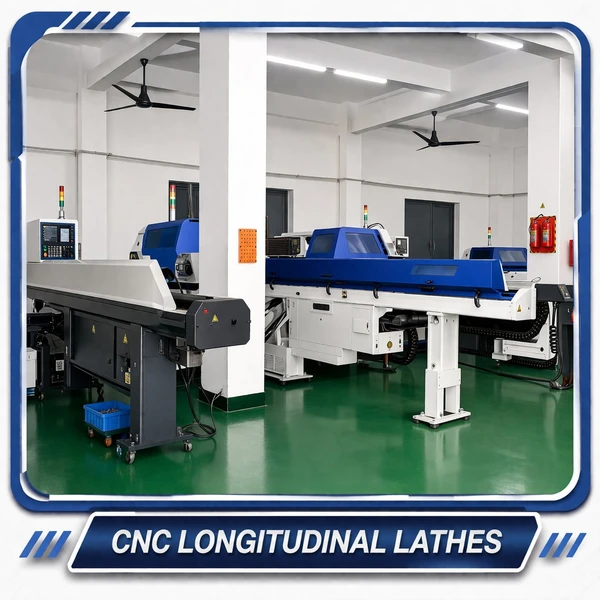
Our Manufacturing Facility
 |
 |
 |
 |
Complete Selection Checklist — What to Confirm Before Ordering
This checklist covers all seven parameters. Print it, fill it in, and verify that every line has a confirmed value before submitting an order. Leaving any line blank means guessing — and guessing costs more than the time the checklist takes.
| Parameter | How to Determine | What Happens If Wrong |
|---|---|---|
| Module (m) | Measure OD + count teeth → m ≈ OD ÷ (z2 + 2); or measure axial pitch ÷ π | Wrong module = wrong pitch — scuffing failure within hours |
| Ratio (i) | Count z2 teeth + count z1 starts at worm end face → i = z2 ÷ z1 | Wrong ratio = wrong output speed — entire application timing is incorrect |
| Output torque (Nm) | Motor rated torque × ratio × estimated efficiency | Under-specification → premature tooth fatigue failure |
| Bore diameter + fit class | Micrometer measurement of shaft → specify nominal + H7 fit | Too tight → cannot assemble; too loose → fretting and keyway fatigue |
| Keyway or set-screw | Measure existing keyway width and depth; confirm DIN 6885 standard | Non-matching keyway → cannot transmit torque reliably |
| Worm shaft material | Determine corrosion environment and load level → see P5 table above | Wrong corrosion resistance → failure in months in harsh environment |
| Wheel material | Tin bronze standard; Al-bronze for shock loads; stainless for corrosive | Steel wheel → adhesive wear; wrong bronze + EP oil → chemical corrosion |
| Precision class (DIN) | Determine required angular output accuracy → see P6 table above | Over-specify → unnecessary cost; under-specify → angular error exceeds allowable |
| Self-locking requirement | Does the load move when motor is off? Yes → specify z1=1 and verify at operating temperature | Missing → load moves under gravity or wind when motor stops — safety incident risk |
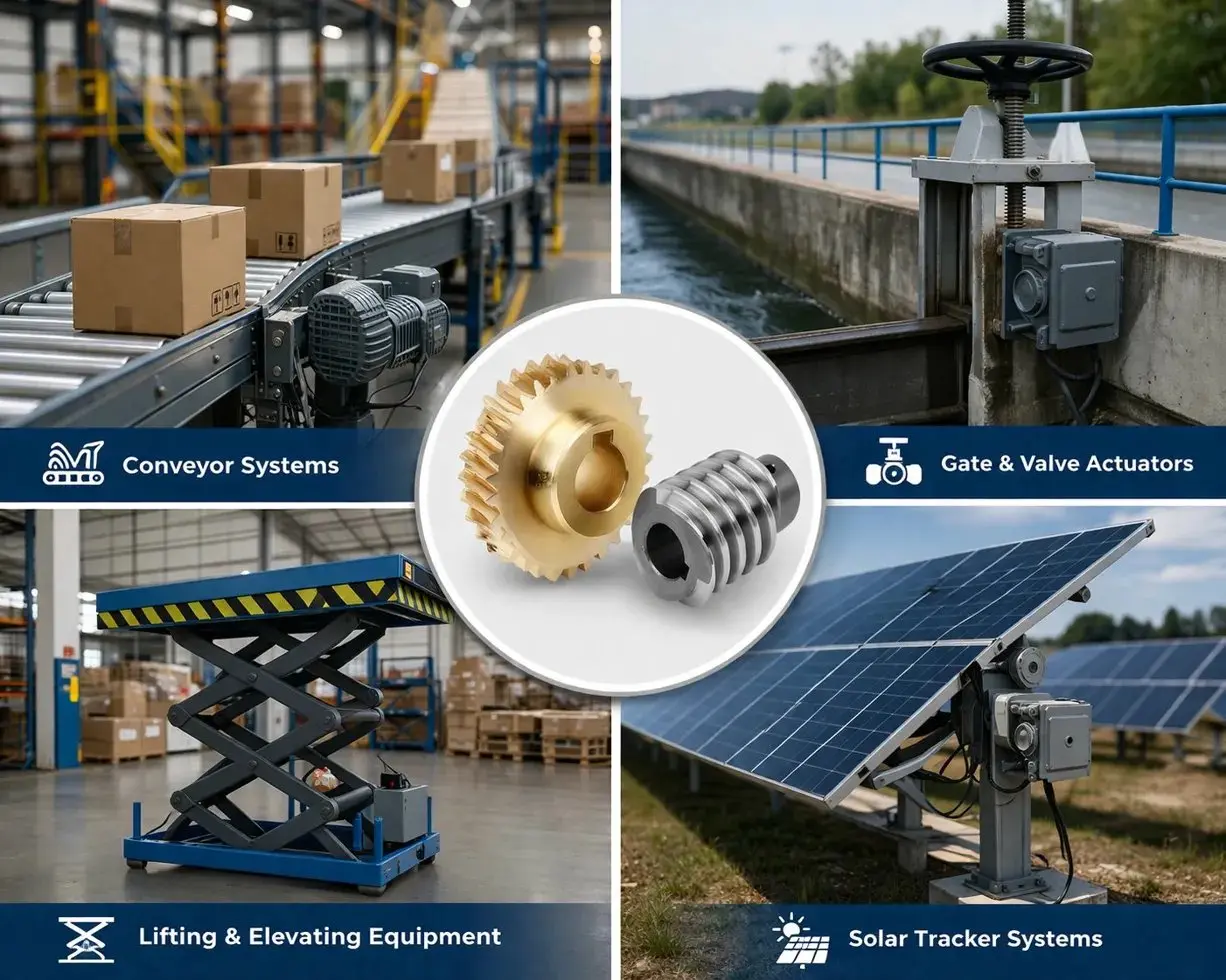
When to Add a Duplex Worm to Your Specification
A standard worm gear set has fixed tooth thickness on both thread flanks. The only way to control backlash is through the center distance at assembly. As the wheel teeth wear over years of operation, backlash increases and cannot be recovered without replacing both the worm and wheel.
A duplex worm gear has different lead values on the left and right thread flanks, making tooth thickness increase continuously along the worm axis. Axially shifting the worm restores the original backlash by bringing a thicker section into contact with the wheel — without changing the contact geometry or load capacity. This feature is worth specifying when any of these conditions apply:
◆ The application has an angular accuracy specification (degrees or arc-minutes) and is expected to maintain this accuracy over a service life exceeding 3 years
◆ The application performs thousands of daily direction reversals (solar trackers, precision positioning stages)
◆ Gear set replacement inside the machine housing is expensive, time-consuming, or requires extended production downtime
◆ A 25-year project life is specified and no unplanned drive maintenance events are acceptable (utility solar installations)
For enclosed drive units, compact worm gear reducers integrating duplex worm shaft with adjustable backlash housing are available alongside bare duplex worm gear set components.
Frequently Asked Questions
Send Your Seven Parameters — Get a Confirmed Specification Today
Use the checklist above to compile your specification. Send the completed parameters to us and we will return a confirmed module recommendation, material specification, precision class, price, and lead time within one working day. Partial specifications are also accepted — we will identify the gaps and ask only the questions needed to fill them.
Editor: Cxm