Vejledning til applikationsteknik · A5
✓ HACCP-zone 1 og 2
✓ SS316 Elektropoleret
✓ NSF H1-kompatibel
✓ Fuld dokumentation

"Snekkegear i rustfrit stål" Er ikke det samme som fødevarekvalitet

Et SS304 snekkegear består en visuel inspektion. Det dumpes i en HACCP Zone 1-revision. Overfladefinishen, smøremiddelcertificeringen og dokumentationssporet afgør, om din maskine opnår lovgivningsmæssig godkendelse – eller om den tages ud to uger efter installationen.

Hvad HACCP-revisionen rent faktisk fandt ud af

I 2022 installerede en koreansk producent af forarbejdet kød en ny skære- og portionslinje. Transportbåndet og portionshåndteringsdrevene brugte gearkasser, der af maskinbyggeren var specificeret som "snekkegear i rustfrit stål". Fire måneder efter idriftsættelse, under en rutinemæssig HACCP-revision foretaget af en tredjepart, blev tre af de tandhjulsdrevne enheder markeret. Ikke for korrosion. Ikke for kontaminering. For overfladeruhed.

Gearkassens udgangsakseltætningsområde havde en bearbejdet overfladeruhed på Ra 3,2-6,4 µm. Kødforarbejdningsregler i Sydkorea kræver, at overflader i fødevarekontakt og stænkzoner skal have en Ra ≤ 0,8 µm. Materialet var rustfrit stål. Materialet var ikke problemet. Det var finishen. Linjen blev sat i karantæne i fire dage, mens gearkasserne blev fjernet, belagt med elektropolerede akselforlængere og recertificeret.

Denne vejledning dækker: HACCP-zoneklassificering og hvad hver zone kræver af gearkomponenter; den metallurgiske forskel mellem SS304 og SS316 i CIP-miljøer; hvorfor NSF H1-smøremidler skaber et kompatibilitetsproblem med bronzehjul; krav til overfladefinish efter anvendelse; og hvordan man opbygger en dokumentationspakke, der består fødevaresikkerhedsrevision.

HACCP-zoneklassificering — rammen der definerer alt

HACCP-zoneklassificering opdeler et fødevareproduktionsmiljø i områder baseret på risikoen for produktkontakt. Gearkomponenter, der anvendes i eller i nærheden af ​​hver zone, står over for forskellige lovgivningsmæssige og tekniske krav.

Z1
Direkte produktkontaktzone
Gearkomponenter berører fysisk eller er nedsænket i fødevareproduktet. Sjældent for drivgear, men forekommer i dejblanderdrev, kødhakkerdrev og noget presseudstyr.
Kræver: SS316L, Ra ≤ 0,4 µm, NSF H1-smøring, fuld FDA/HACCP-dokumentation
Z2
Stænk- og drypzone
Produktet kan sprøjte, dryppe eller løbe ned på gearkomponenter under normal drift eller under rengøring. Den mest almindelige zone for drivgear i fødevareforarbejdningslinjer.
Kræver: SS316, Ra ≤ 0,8 µm, NSF H1 smøremiddel, IP65+ tætning, dokumenterede materialer
Z3
Hygiejnisk omgivelseszone
Ingen direkte kontakt eller stænkkontakt, men inden for fødevareproduktionsbygningen. Regelmæssig afvaskning finder sted. Overfladerne skal kunne rengøres, men produktkontakt forventes ikke.
Kræver: SS304 acceptabel, Ra ≤ 1,6 µm, IP54+ tætning, rengøringsvenlige overflader

SS316 stainless steel worm gear food grade electropolished

Korea Ever-Power SS316 snekkegear med elektropolerede flanker (Ra ≤ 0,4 µm) — overholder kravene i fødevareforarbejdningszone 1 og zone 2.


SS316 vs SS304 vs kulstofstål — Metallurgien bestemmer zonen

Standard CIP-rengøringsopløsninger i kød-, mejeri- og drikkevarefaciliteter bruger natriumhydroxid (NaOH) i en koncentration på 1-2% ved 70-80 °C til organisk rengøring, efterfulgt af salpetersyre eller pereddikesyre til desinficering. SS304 indeholder 18% krom - dets passive oxidlag er modtageligt for grubetæring fra kloridioner over ca. 15 °C. SS316 tilsætter 2-3% molybdæn, hvilket hæver den kritiske grubetæringstemperatur til ca. 50 °C - over temperaturområdet for CIP-operationer.

SS316
Zone 1 og Zone 2
Molybdæn2,0–3,0%
Grubetæringstemperatur~50°C start
CIP-kompatibel.Fuld — NaOH + HNO3
PereddikesyreKompatibel
Biofilmmodstand.Høj (efter Ra ≤ 0,8)
✓ Korrekt til brug i fødevareproduktion
SS304
Kun zone 3
MolybdænIngen
Grubetæringstemperatur~15°C start
CIP-kompatibel.Marginal — kloridrisiko
PereddikesyreMarginal ved høj temperatur
Biofilmmodstand.Nederste — huller indeholder bakterier
⚠ Kun acceptabel for omgivende rene zoner
Kulstof+Zink
Ikke fødevaregodkendt
BeskyttelseOfferzinkbelægning
CIP-kompatibel.Ingen — NaOH-strimler af zink
PereddikesyreØdelægger belægningen
AfvaskningDårlig
HACCP-zoneIkke acceptabelt i nogen zone
✗ Ikke egnet til fødevaremiljøer

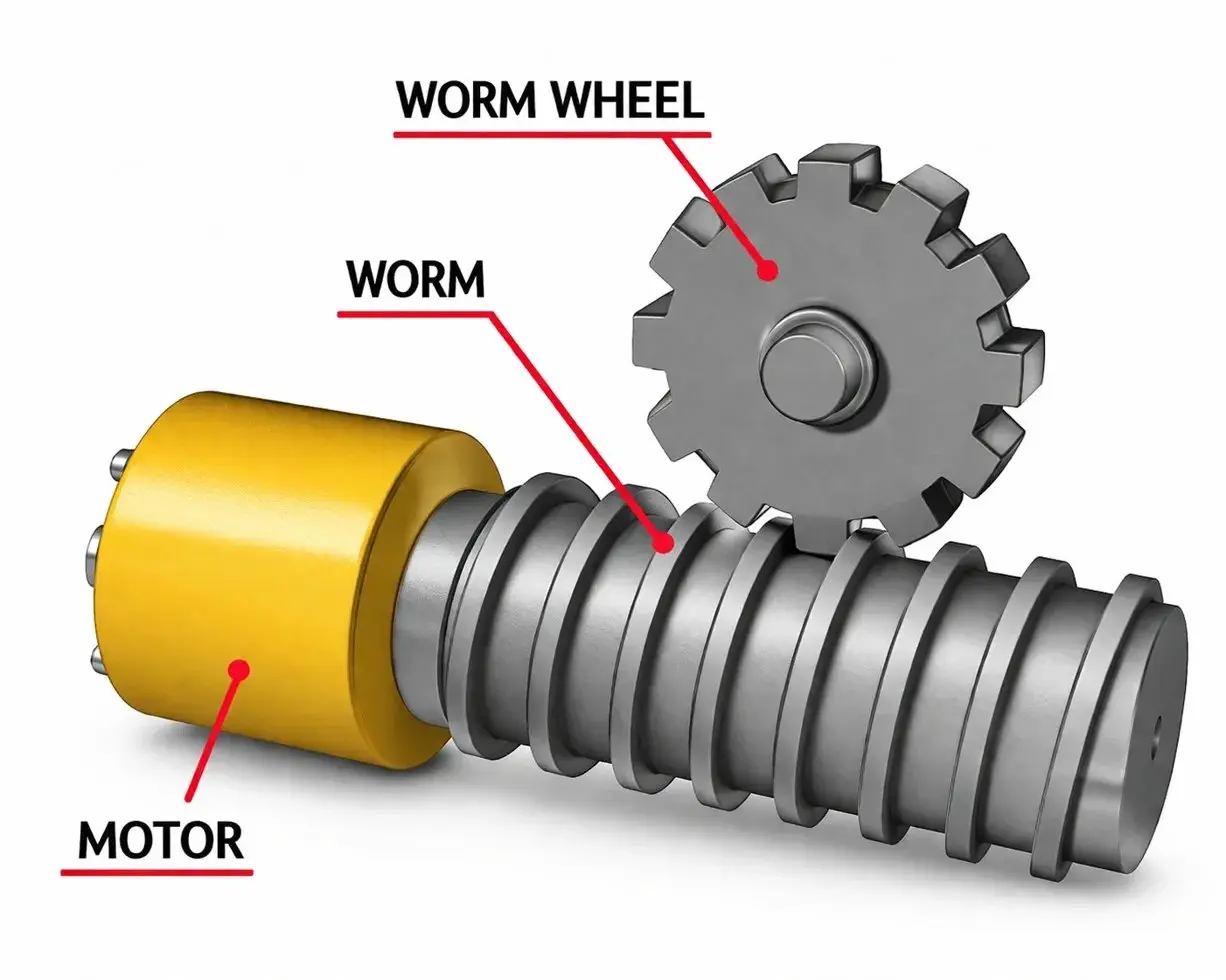
Problemet med kompatibiliteten mellem NSF H1-smøremiddel og bronzehjul
Bronze wheel NSF H1 lubricant compatibility

NSF H1-smøremidler er formuleret til utilsigtet kontakt med fødevarer. De er godkendt til brug, hvor smøremidlet kan komme i kontakt med fødevarer i små mængder – standardspecifikationen for zone 1- og zone 2-gearkasser.

Problemet: NSF H1-formuleringer udelukker svovlbaserede og klorbaserede EP (Extreme Pressure)-additiver – netop de additiver, der giver anti-ridseevne i standard snekkegearolier. Uden EP-additiver har et NSF H1-smøremiddel en lavere anti-ridseevne end en konventionel snekkegearolie, især ved høje glidehastigheder over 6 m/s og forhøjede temperaturer.

Specifikationsstien, der løser dette: Snekkeakslen skal karbureres og slibes SCM415 ved 58-62 HRC. Nettets anti-ridseevne afhænger primært af hårdhedsforskellen. En hærdet SCM415-aksel parret med tinbronzehjul og NSF H1 PAO-olie opretholder tilstrækkelig anti-ridse i hele det fødevarerelevante hastighedsområde. Hold glidehastigheden under 4 m/s for NSF H1-applikationer.

Brug ikke NSF H2 smøremidler hvor der er mulighed for kontakt med fødevarer. NSF H2 certificerer smøremidler kun til brug på overflader, der ikke er i kontakt med fødevarer. H2-formuleringer kan indeholde EP-tilsætningsstoffer, der ikke er godkendt til utilsigtet kontakt med fødevarer. Angiv H1 i alle Zone 1- eller Zone 2-drev, uanset husets tætningsniveau.

Krav til overfladefinish efter anvendelsesposition

Overfladeruhed (Ra) bestemmer, om biofilm kan etablere sig på eksponerede metaloverflader. Bakterieceller (typisk 1-10 µm) sætter sig fast i overfladefordybninger dybere end deres egen diameter, hvor rengøringsmidler ikke kan nå dem.

Ansøgningsposition HACCP-zone Ra-krav Kan opnås af
Tandhjulsflanker (eksponerede) Z1 Ra ≤ 0,4 µm CNC-slibning + elektropolering
Akseltætningsområder og akseltap Z1–Z2 Ra ≤ 0,4 µm CNC-drejning + præcisionsslibning
Boring- og notfladeoverflader Z2 Ra ≤ 0,8 µm CNC-boring + honing
Husets ydre (afvaskning) Z2–Z3 Ra ≤ 1,6 µm Standardbearbejdning
Berøringsfri strukturelle flader Z3 Ra ≤ 3,2 µm Standard drejning
Som støbt / som svejset Ikke egnet Ra 6,3–25 µm Ikke acceptabelt i nogen fødevarezone

Anvendelser af fødevaremaskiner og deres specifikke krav til udstyr

Type fødevaremaskiner Zone Gearspecifikation Nøglerisiko ved forkert
Skære- og portionsmaskine Z1–Z2 SS316, Ra ≤ 0,4 µm, NSF H1 PAO, SCM415 snekke Bakteriel husning; grubetæring fra kødsaft
Påfyldnings- og dispenseringsudstyr Z1 SS316L, Ra ≤ 0,4 µm elektropoleret, fuld dokumentation Produktkontaminering; FDA-dokumentationsfejl
Pakkelinjetransportør Z2–Z3 SS316, Ra ≤ 0,8 µm, IP65-tætning, NSF H1 Korrosion fra afvaskning; lækage af smøremiddel på emballagen
Mejeriforarbejdningslinje Z1–Z2 SS316, elektropoleret, CIP-klassificeret forsegling, fuld sporbarhed Syrekorrosion fra mejeriprodukter; biofilm i overfladefordybninger
Bageri og dejhåndtering Z1–Z2 SS316, Ra ≤ 0,8 µm, fødevaresikker belægning på ikke-SS-overflader Dej, der sætter sig fast i overfladedefekter; gærkontaminering
Drikkevarepåfyldningslinje Z2–Z3 SS316 eller SS304 (kun Z3), IP54+, NSF H1 hvor stænk er muligt Angreb af kulsyreholdig syre på kulstofstål; migration af smøremiddel
Kølerumstransportør (−18°C) Z2–Z3 SS316, koldtemperatur NSF H1 PAO (VI > 150), IP65 Overbelastning ved lav temperaturviskositet; kondenskorrosion

Feltteknik

Fire specifikationer for snekkegear til fødevareforarbejdning — Revisionen, fejlen og løsningen

Gyeonggi-do, Korea · Kødfabrik
HACCP-revisionsafvisning — Overfladefinish på snekkegear i zone 2

En koreansk producent af forarbejdet kød installerede skærelinjedrev specificeret som 'snekkegear i rustfrit stål'. Materialet var SS304. Finishen var Ra 3,2 µm på tætningspunkterne. HACCP-revisionen fandt dette uacceptabelt for Zone 2-produkters stænkområder.

Lave: SS316 worm shaft with CNC-ground journal areas Ra ≤ 0.4 µm. Electropolished ZCuSn10Pb1 wheel flanks Ra ≤ 0.4 µm. Full material certificate, heat treatment record, CMM report, and surface finish measurement report shipped with each unit.

✓ HACCP Zone 2 certification achieved — first audit post-replacement
Chungcheongnam-do, Korea · Dairy Equipment OEM
Pitting Corrosion on SS304 Worm Shafts After 8 Months of CIP Cycling

A Korean dairy equipment manufacturer experienced pitting corrosion on worm gear output shafts after approximately 8 months in service. The CIP protocol used NaOH at 1.5% at 75°C, followed by peracetic acid. Analysis confirmed chloride-induced pitting on the SS304 shaft journals — the farm water supply contained 180 ppm chloride, above the critical pitting temperature for SS304 at 75°C.

Lave: SS304 → SS316 shaft (molybdenum suppresses pitting at CIP temperatures). No changes to dimensions or mounting. Material certification confirming Mo% included in delivery documentation to support the manufacturer’s CE technical file.

✓ Zero pitting corrosion events over subsequent 30-month monitoring period
Ho Chi Minh City, Vietnam · Beverage Packaging
NSF H2 Lubricant Leakage Contaminating Packaging — Audit Non-Conformance

A Vietnamese beverage packager experienced lubricant leakage from worm gear drives onto packaging materials on their filling line. The drives were specified with NSF H2 lubricant (non-food-contact grade). While the quantity was small, the H2 designation was sufficient for the customer’s food safety auditor to issue a non-conformance.

Lave: NSF H2 oil replaced with NSF H1 PAO ISO VG 220 throughout the drive system. Korea Ever-Power supplied replacement worm gear sets with upgraded shaft seals (dual-lip NBR with dust excluder). H1 lubricant certification documentation provided for inclusion in food safety management system files.

✓ Non-conformance closed — packaging customer food safety audit passed
Gyeonggi-do, Korea · Frozen Food OEM
Cold Room Conveyor Worm Gear Failure — Low-Temperature Lubricant Viscosity

A frozen food manufacturer’s cold storage conveyor system used conventional ISO VG 460 mineral oil in the worm gear corner drives. The cold room operated at −18°C. ISO VG 460 mineral oil at −18°C has kinematic viscosity exceeding 4,000 cSt — over 8× the design viscosity at operating temperature. The resulting viscous drag caused motor overcurrent on start-up.

Lave: ISO VG 460 mineral oil → NSF H1 PAO synthetic ISO VG 220 (VI > 160). PAO at −18°C viscosity is approximately 650 cSt — a 2.5× increase, well within motor and seal design margins. Worm gear sets unchanged. Lubricant certification added to food safety management documentation.

✓ Motor overcurrent events eliminated — conveyor runs reliably at −18°C

Korea Ever-Power-produkter

Food Grade Worm Gear Products
SS316 Stainless Steel Worm Gear — Food Grade
Zone 1 & Zone 2 · Full Documentation
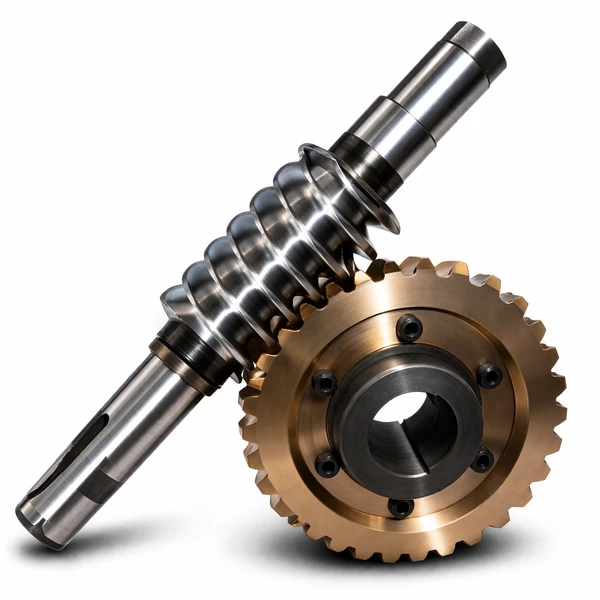
SS316 Stainless Steel Worm Gear — Food Grade
The primary specification for food processing Zone 1 and Zone 2 drive applications. SS316 worm shaft (2.0–3.0% molybdenum) resists chloride pitting in CIP environments where NaOH cleaning runs at 70–80°C — the failure condition that makes SS304 unsuitable for food production. Journal and sealing areas CNC-ground and electropolished to Ra ≤ 0.4 µm as standard. The matched worm wheel is available in SS316 (for Z1 direct contact) or ZCuSn10Pb1 tin bronze with electropolished flanks (for Z2 splash zone). Full documentation package: mill heat number certificate, heat treatment record, CMM dimensional report, surface roughness measurement report. PPAP Level 1–3 available for food machinery OEM supply programs.
MaterialeSS316 (2.0–3.0% Mo)
Surface finishRa ≤ 0.4 µm electropolished
Lubricant compat.NSF H1 PAO, non-EP oils
CIP resistanceNaOH 2%, HNO3 1%, PAA 0.5%
HACCP-zoneZone 1 and Zone 2

Se produktspecifikationer →

Precision Worm Wheel — Food Processing Grade
Zone 2 · Bronze or Full Stainless
Precision Worm Wheel — Food Processing Grade
Available in two configurations for food processing applications. The SS316 full-stainless variant is correct for Zone 1 direct product contact — hobbed from solid SS316 bar stock, with all tooth surfaces electropolished to Ra ≤ 0.4 µm. The ZCuSn10Pb1 tin bronze variant with electropolished flanks is correct for Zone 2 splash zone applications where the bronze anti-scuffing properties are needed at higher sliding velocities. Both variants are bore-machined to H7 tolerance on CMM and supplied with dimensional inspection report. Wheel tooth contact pattern tested on assembly rig before shipment — coverage ≥ 70% required, percentage documented.
Z1 materialSS316, fully electropolished
Z2 materialZCuSn10Pb1 + electropolished flanks
BoringstoleranceH7 CMM verified
Contact pattern≥ 70% documented

Se produktspecifikationer →

Food Safety Documentation Package
Documentation · Audit Support
Food Safety Documentation Package
For food machinery OEMs and production facilities that must maintain food safety management system documentation, Korea Ever-Power provides a structured documentation package that supports HACCP audit, CE/KS certification, and customer food safety system compliance. The standard package includes: material certificate to mill heat number, heat treatment record, CMM dimensional inspection report, surface roughness measurement report, and contact pattern photograph. Extended PPAP Level 1, 2, or 3 packages available. All documentation retained for 5 years from shipment date and available on request at no additional charge.
Standard docsMat. cert + CMM + surface Ra
PPAPLevel 1, 2, or 3 available
BiocompatibilityISO 10993-1 ref. available
Retention5 years from shipment

Se produktspecifikationer →

Food Processing FAQ

Questions from Food Machinery Engineers and Quality Managers

What is the difference between NSF H1 and NSF H2 lubricants, and which do I need for a worm gear drive in a food facility?+

NSF H1 lubricants are formulated for applications where incidental contact with food product is possible. They use food-approved base oils and additive packages. NSF H2 lubricants are for non-food-contact surfaces only — they may contain additives that are not approved for food contact. For any worm gear drive in HACCP Zone 1 or Zone 2 — which includes most conveyor drives, portioning drives, filling drives, and agitator drives in food production areas — specify NSF H1. If there is any doubt about whether a drive position is Zone 2 or Zone 3, default to H1. The cost difference between H1 and H2 lubricants is small; the cost of a food safety non-conformance is not.

Can a tin bronze worm wheel be used in a food processing application, or must the wheel also be stainless steel?+

Tin bronze worm wheels are acceptable in HACCP Zone 2 (splash zone) food processing applications when the wheel flanks are electropolished to Ra ≤ 0.8 µm and the drive is adequately sealed against product ingress. In Zone 2, the risk is surface bacterial adhesion, not product contact — and a properly electropolished bronze surface provides adequate resistance. The case for bronze over stainless steel in Zone 2 is the tribological advantage: bronze provides better anti-scuffing performance at the sliding contact velocities typical of food machinery drives (1–6 m/s), particularly when using NSF H1 lubricants that lack EP additives. For Zone 1 direct product contact, the wheel must be SS316 or another FDA-acceptable material.

How do I specify a worm gear set for a cold room conveyor operating at −20°C?+

Three elements require attention for sub-zero operation. First, lubricant: ISO VG 460 mineral oil at −20°C reaches viscosities of 4,000–8,000 cSt, causing severe viscous drag and motor overcurrent. Specify NSF H1 synthetic PAO ISO VG 100 or 150, which maintains approximately 300–500 cSt at −20°C. Second, seal material: standard NBR seals become brittle below −20°C; specify FKM (Viton) or silicone seals. Third, housing material: standard ductile iron housings are acceptable to −30°C; below −30°C, specify ferritic stainless steel or aluminium housing to avoid brittle fracture risk.

Does Korea Ever-Power supply PPAP documentation for food machinery OEM supply programs?+

Yes. PPAP Level 1 (Part Submission Warrant), Level 2 (PSW + limited supporting documentation), and Level 3 (PSW + full supporting documentation) are available for established supply programs. Confirm the required PPAP level at order placement — Level 3 requires additional production documentation lead time and should be agreed in the initial order confirmation. PPAP is not available on first-order prototype or sample quantities; it is available for production supply programs after sample approval.

What cleaning agents can I use on an SS316 worm gear shaft in a CIP cleaning cycle?+

SS316 is compatible with: sodium hydroxide (NaOH) at up to 4% concentration, 80°C; phosphoric acid (H3PO4) at up to 2%, 60°C; nitric acid (HNO3) at up to 2%, 60°C; peracetic acid (PAA) at up to 0.3%, 40°C; and chlorinated alkaline CIP agents at up to 200 ppm active chlorine, 50°C. Avoid CIP solutions containing hydrochloric acid (HCl) — this will cause rapid pitting corrosion on all grades of stainless steel.

Do I need to disclose the worm gear material and lubricant to my food safety auditor?+

For equipment in Zone 1 and Zone 2, yes. Your HACCP documentation should include a list of all materials in contact with or adjacent to food product, including drive train materials and lubricants. The documentation package from Korea Ever-Power (material certificate, lubricant compatibility confirmation, surface finish report) provides the information needed for this disclosure. If your facility undergoes IFS, BRC, or SQF certification in addition to HACCP, additional disclosure requirements may apply.

Can I use the same worm gear set in both a food processing facility and a pharmaceutical manufacturing facility?+

The material specification (SS316, Ra ≤ 0.4 µm electropolished) is the same. The documentation requirements differ. Food processing facilities typically require NSF/FDA compliance documentation. Pharmaceutical manufacturing facilities under GMP regulations require additional documentation: ISO 10993-1 biocompatibility grouping, material traceability to starting stock, and PPAP or equivalent qualification documentation. Korea Ever-Power can provide the standard food-grade documentation package for food applications and the extended pharmaceutical package for GMP applications — confirm which documentation standard applies at order placement.

How do I handle lubricant change intervals for a worm gear drive in a food processing environment?+

NSF H1 PAO synthetic gear oils have extended drain intervals compared to mineral oils — typically 3,000–4,000 operating hours for enclosed drives at normal operating temperatures. For food processing applications where the housing temperature remains below 60°C, an annual oil change (or every 2,000 hours, whichever comes first) is appropriate. The first oil change after any gear replacement or new installation should be at 50–100 operating hours to remove running-in bronze wear particles. Use only NSF H1 certified lubricants for top-up — mixing H1 and H2 lubricants in a Zone 1 or Zone 2 drive invalidates the H1 compliance of the entire fill.

Specify Your Food Grade Worm Gear Drive

Provide HACCP zone, machine type, drive position, sliding velocity, lubricant requirement, and documentation standard (HACCP, BRC, IFS, PPAP). Korea Ever-Power returns a complete food-grade specification with surface finish confirmation and documentation availability within one working day.

Redaktør: Cxm