Özel Üretim Sonsuz Dişli Takımı | OEM/ODM, Oran 20:1–300:1, Tüm Malzeme ve Dişli Tipi Kapsamı
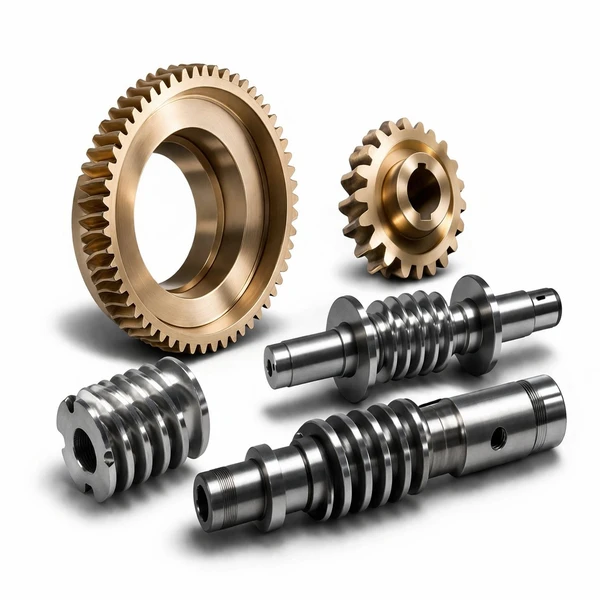
OEM worm gear sets with ratio 20:1 to 300:1+ in a single stage. Gear types: spur, helical, internal, ring, bevel, hypoid, crown wheel, gear shaft, worm & worm shaft, spline shaft. Materials: C45, 40Cr, 20CrMnTi, 42CrMo, 17CrNiMo6, brass, bronze, nylon and more. Heat treatment: quenching, carburizing, nitriding, salt bath. Custom from 3D CAD, 2D drawings, or physical samples.
Ürün Genel Bakışı
Every standard gear catalog was built for the most common applications. Module M4, ratio 20:1, C45 steel, 60-tooth wheel with Ø25 mm bore — this specification covers a large fraction of general industrial drives. But product engineering rarely produces the most common application. An automotive electric power steering column needs 73:1 from a compact package in 42CrMo with a left-hand worm. A medical positioning table needs 48:1 in stainless steel with a DIN7-class tolerance and a keyway at 15° to a specific face datum. A defense turret traverse needs 120:1 with carburized 20CrMnTi worm and a ductile iron wheel with machined mounting bolt circle. None of these exist in any catalog. Korea Ever-Power Worm Gear Co., Ltd manufactures custom sonsuz dişli takımları to any ratio, any material pairing, any bore configuration — from 3D CAD files, 2D drawings, or physical samples when drawings are not available. The NDA is signed before the first drawing is shared.
Why Worm Gears for High-Ratio Single-Stage Drives
The worm — a cylindrical gear resembling a threaded screw — paired with a worm wheel allows smaller gearboxes or planetary drives while retaining full torque or power transmission capacity. It is common for worm gear reductions to reach 20:1 and extend to 300:1 or more in a single stage that would require two or three stages of helical gearing to replicate. The geometry that makes this possible also produces the most distinctive operational feature: the worm can effortlessly drive the worm wheel, but the worm wheel cannot drive the worm back. When the gear attempts to rotate the worm, the shallow lead angle of the worm thread means that friction between the contact surfaces keeps the worm locked in position — self-locking is a natural consequence of the geometry, not an add-on feature.
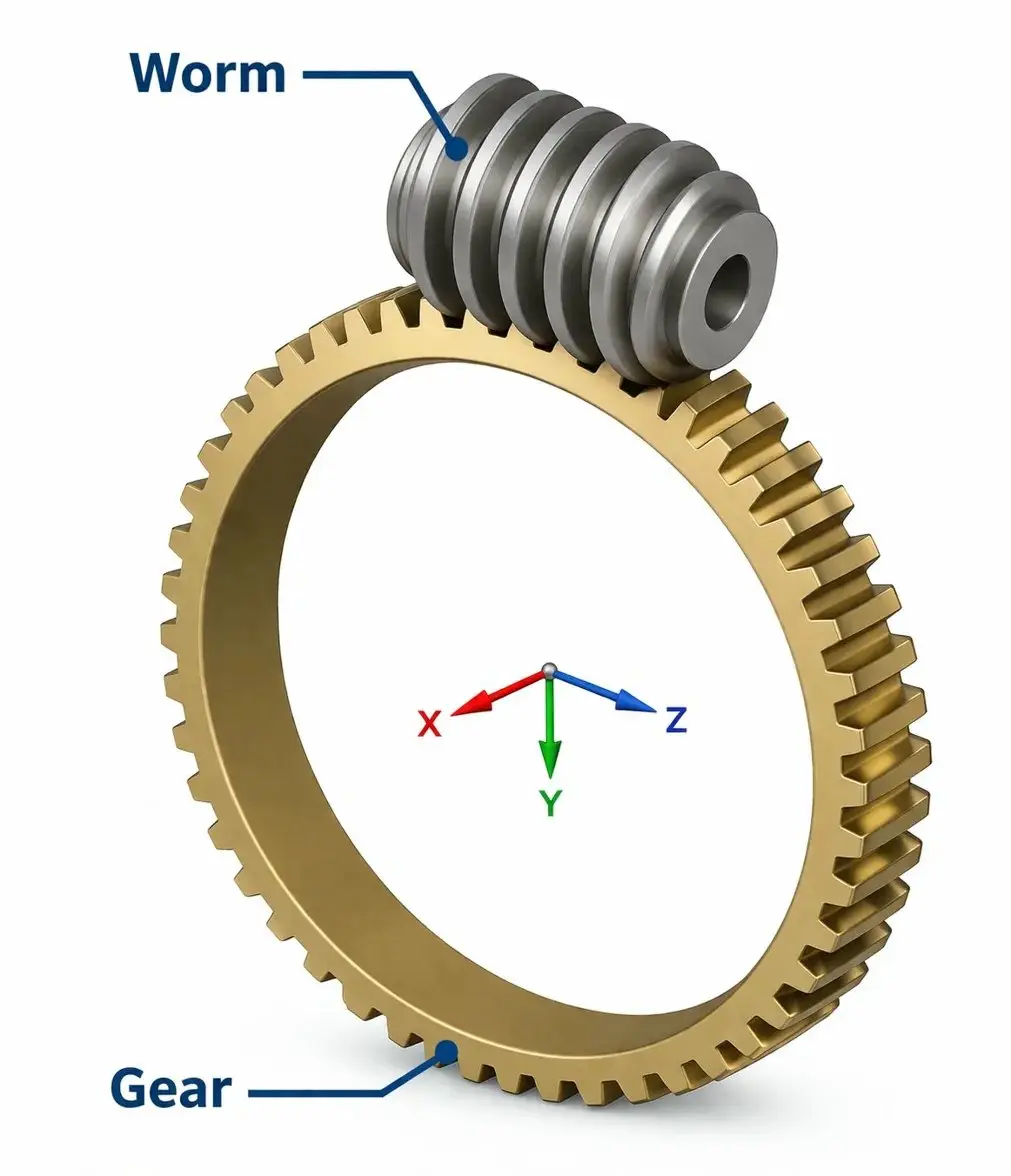
OEM Worm Gear Set — Full Service Scope
| Gear Types | Spur gear, helical gear, internal spur gear, ring gear, straight/spiral bevel gear, hypoid gear, crown wheel & pinion, gear shaft, worm gear & worm shaft, spline shaft & bushing, etc. |
| Gear Material | Carbon steel, alloy steel, stainless steel, brass, bronze, cast iron, nylon, etc. { GB Steel grades: C45, 40Cr, 20CrMo, 20CrMoTi, 17CrNiMo6, 20CrMnTi, 42CrMo, etc. } |
| İşleme | Gear blank turning, gear hobbing, gear milling, gear shaping, gear shaving, tooth grinding, broaching, etc. |
| Heat Treating | Quenching, carburizing, nitriding, carbon-nitriding, salt bath quenching, etc. |
| Başvuru | Automotive, Agricultural, Electronic, Industrial, Medical, Defense, Off-highway, etc. |
GB Steel Grade Guide — Selecting the Right Alloy for Your Application
The GB steel grade list in the OEM services table is not interchangeable — each grade has a specific combination of hardenability, core toughness, and heat treatment response that makes it appropriate for certain worm gear applications and inappropriate for others. Selecting the wrong grade produces premature tooth fatigue, inadequate surface hardness, or excessive brittleness after heat treatment. The guide below covers the six most commonly specified grades for worm gears in industrial and automotive applications.

| Seviye | Isıl İşlem | Surface / Core Hardness | En İyisi İçin | Kaçının |
|---|---|---|---|---|
| C45 | Induction hardening | 55–60 HRC surface / 22–28 HRC core | General industrial worm shafts, low-to-medium torque, indoor environment | High shock loading — low core toughness fractures under impact |
| 40Cr | Through-hardening or induction | 50–55 HRC surface / 32–38 HRC core | Agricultural gearboxes, moderate shock, where C45 core toughness is marginal | Highest precision grades — machinability slightly lower than C45 |
| 20CrMo | Carburizing + quenching | 58–62 HRC case / 30–38 HRC core | Medium-load automotive auxiliary drives, small-module precision worm shafts | Very large gear bodies — hardenability depth may be insufficient for thick sections |
| 20CrMnTi | Carburizing + quenching | 58–62 HRC case / 33–40 HRC core | High-load automotive transmission worms, heavy-duty off-highway drives, defense | Light-load applications where cost is primary — overkill for general industrial duty |
| 17CrNiMo6 | Carburizing + quenching | 60–63 HRC case / 38–44 HRC core | Aircraft gearboxes, wind turbine pitch drives, maximum fatigue strength requirement | Standard industrial duty — material and heat treatment cost is 3–4× C45; not economically justified below maximum fatigue requirements |
| 42CrMo | Through-hardening + tempering | 48–54 HRC uniform through-section | EPS column gears, press screws, heavy structural drives where uniform hardness through the section is preferred over a case-and-core structure | Applications requiring the highest surface hardness only — 42CrMo's uniform hardness means the core is harder (and less tough) than carburized grades with a soft core |
Heat Treatment Selection — Quenching vs Carburizing vs Nitriding for Worm Gears
Heat treatment method is often specified without understanding what each process actually achieves at the tooth surface. The four methods in the OEM services table produce different hardness distributions, case depths, and residual stress states — with direct consequences for wear resistance, impact tolerance, and gear accuracy after treatment.
Quenching & Tempering
Through-hardening process: the gear is heated above the austenite transition, quenched in oil or water, then tempered at 150–600°C to the target hardness. Produces uniform hardness from surface to core. The trade-off is brittleness at high hardness — above approximately 55 HRC, the toughness of through-hardened steel drops sharply. For worm gear applications requiring both wear resistance and shock load tolerance, through-hardening is typically not the first choice. Best applied to worm shaft materials (42CrMo, 40Cr) where core toughness is slightly less critical than for the wheel, and for gear bodies with large sections where case hardening depth is insufficient.
Carburizing & Quenching
Case hardening process: carbon is diffused into the surface at 880–930°C over 4–20 hours to a depth of 0.3–2.0 mm, then the gear is quenched to form martensite in the case only. The result is a hard case (58–63 HRC) over a tough core (30–40 HRC). This combination gives the best combination of wear resistance and impact resistance — the hardened surface resists abrasive and adhesive wear, and the tough core absorbs shock loading at the tooth root. For worm gear applications in automotive, off-highway, and agricultural equipment where shock loads are regular, carburizing is the standard specification. The grain structure improvement from the carburizing cycle also slightly improves the material's fatigue strength, extending service life beyond what a simple hardness comparison would predict.
Nitriding
Surface diffusion of nitrogen at 480–520°C — below the tempering temperature for most alloy steels. This means the gear can be fully machined to final dimensions, then nitrided, with only 0.01–0.02 mm of dimensional change — an advantage for precision gear teeth where post-nitriding grinding would otherwise be required to restore tooth geometry. Nitrided surfaces reach 60–70 HN (approximately equivalent to 65–70 HRC on the nitrided layer scale). The case depth is shallow (0.15–0.5 mm), which limits the maximum contact pressure the surface can withstand — nitriding is appropriate for precision gear drives at moderate contact pressures, not for heavily loaded drives where the case depth is insufficient to support the subsurface stress field.
Carbon-Nitriding (Carbonitriding)
A variant of carburizing where both carbon and nitrogen are diffused simultaneously at 800–880°C. The nitrogen addition improves the hardenability of the case, allows lower quench temperatures (reducing distortion), and produces a more compressive residual stress in the case that improves fatigue resistance. Carbonitriding is typically applied to smaller gear parts (module M1–M3) and parts requiring good surface hardness with minimum distortion after heat treatment — common in automotive transmission and small industrial gearbox applications where post-treatment grinding is expensive or impractical. The case depth is generally 0.1–0.5 mm, shallower than conventional carburizing.
Processing Methods — What Each Operation Contributes to Gear Accuracy
The processing list in the OEM services table is not a menu of equivalent alternatives — each operation plays a specific role in the production sequence, and the combination determines the achievable precision class. Understanding this helps buyers specify a realistic process for their target tolerance without over-specifying expensive operations for tolerances that simpler processes can achieve.
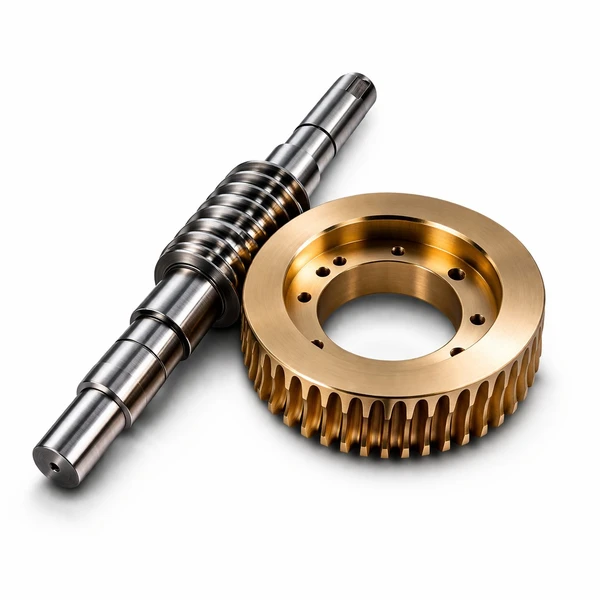
- →Gear blank turning — Sets the OD, bore, and face dimensions. Accuracy here determines how well the gear runs true on the mandrel during hobbing. A poorly turned blank with bore runout produces a hobbed gear with periodic tooth spacing error — this error cannot be corrected by subsequent grinding.
- →Gear hobbing — The primary tooth-cutting operation. Achieves DIN8–DIN9 accuracy as-cut in most materials. The hob geometry determines the tooth profile; the hob mounting accuracy on the hobbing machine determines the lead error. Well-maintained hobbing equipment and sharp hobs are essential for DIN7 or better directly from hobbing.
- →Gear shaving — A finishing operation performed before heat treatment. A hardened shaving cutter removes 0.01–0.05 mm from the tooth flanks while simultaneously applying slight crowning (tooth profile modification) to reduce edge loading under misalignment. Achieves DIN6–DIN7 accuracy but cannot be performed after heat hardening — the tooth surface is too hard for the cutter. For applications requiring DIN6–DIN7 with carburized teeth, shaving is performed before carburizing and grinding is required after.
- →Tooth grinding — The only process capable of consistently achieving DIN5–DIN6 on hardened tooth flanks. A profiled grinding wheel removes 0.05–0.15 mm from the hardened tooth surface, correcting the geometric distortion introduced by the heat treatment cycle. Tooth grinding is the most expensive tooth-finishing operation — it adds significant cost to the per-piece price and requires grinding cycle development for each new gear geometry. Specify only when DIN5–DIN6 is confirmed as a requirement.
- →Broaching — Applied to internal keyways, splines, or non-circular bore profiles after gear teeth are cut. Broaching produces keyways and splines in a single pass with high geometric consistency — tolerances of ±0.005 mm on keyway width are achievable. For custom worm gear wheel bores with non-standard keyway positions or profiles, broaching is the correct process; milled keyways are appropriate where tight positional accuracy is not critical.
Custom OEM vs Standard Catalog — The Complete Procurement Comparison
The right sourcing strategy depends on the application, the production volume, and the supply chain risk tolerance. This comparison is written for engineers and procurement managers making a sourcing decision, not for marketing purposes — both options have legitimate use cases.
| Decision Factor | Custom OEM (Korea Ever-Power) | Standard Catalog Brand |
|---|---|---|
| Ratio availability | Any ratio — tooth count and worm start count designed to your specification without rounding to the nearest catalog ratio | Fixed catalog ratios: typically 5:1, 10:1, 20:1, 30:1, 50:1, 100:1 — any other ratio requires a multi-stage arrangement or mechanical modification |
| Material specification | Any material: C45 through 17CrNiMo6, brass, bronze, stainless, nylon — specify independently for the worm and the wheel | Limited to catalog material options, typically 2–3 choices per model; worm and wheel material pairing is fixed |
| Bore and keyway | Any bore diameter from Ø6 mm to Ø80 mm, any keyway standard (DIN 6885, ANSI B17.1, or custom), any tap position | Pilot bore only (requires secondary machining) or fixed finished bore in standard motor shaft sizes |
| Modül yelpazesi | M0.5 to M12 — any module with correct matched hob; non-standard modules on request with hob lead time | Fixed catalog modules: M1, M1.5, M2, M2.5, M3, M4, M5, M6, M8, M10 typically |
| Supply continuity | Dedicated tooling held in-house; reorders reproduced from same setup with same tolerance — no re-qualification needed on reorder | Subject to catalog revisions, EOL discontinuation, and supplier changes — replacement re-qualification may be required |
| IP and confidentiality | NDA before drawing submission; customer design is not shared or replicated for other customers | Standard catalog — design is public; no IP concern but also no exclusivity |
| Sample-to-production path | Sample produced from drawing or sample part; qualified in your mechanism before production commitment; sample cost credited on order | Order directly from catalog; no sampling step — what you order is what the standard part is |
| Best fit for | Product engineering (requires specific ratio, material, or bore), OEM programs with validated supply, high-value equipment requiring long supply chain certainty | Maintenance replacement where catalog part is the OEM specified part, prototype builds where standard ratio is acceptable, non-critical applications |
OEM Development Process — From First Contact to Validated Production
Custom gear development follows a defined sequence that protects both the buyer's IP and the supplier's production investment. Korea Ever-Power's standard process for new OEM worm gear set development:
- →Step 1 — NDA and inquiry. Before any drawing or sample is shared, an NDA is signed if requested. Inquiry is submitted with available information: target ratio, output torque (Nm), input speed (RPM), material preferences, operating environment, bore configuration, and quantity forecast. Missing parameters are confirmed through a brief technical exchange — we return a confirmed specification for approval before quoting.
- →Step 2 — Quotation and drawing confirmation. We return a price and lead time quotation with a confirmed 2D drawing or 3D model for approval. For reverse-engineered parts (from sample, no drawing), we return the measured drawing within 3–5 working days for customer confirmation before production.
- →Step 3 — Sample production. On drawing approval, samples are produced and typically ready in 15–25 working days depending on module size, material, and heat treatment method. Sample cost is charged separately and credited in full on the first production order.
- →Step 4 — Customer validation. Customer installs samples in the actual mechanism and validates fit, mesh quality, noise, backlash, and endurance cycle performance. Any corrections to bore, tooth profile, or surface finish are incorporated in a second sample round — typically 5–8 working days for a correction batch.
- →Step 5 — Production and dedicated tooling. On sample approval, tooling (hobs, fixtures, inspection gauges) is dedicated to this part number and retained in-house for the customer's production lifetime. Reorders are filled from the same setup — no re-qualification required. Production quantities ship with dimensional inspection records on request.
Application Sectors — Engineering Requirements Per Industry
- ▶Automotive (EPS, seat adjustment, sunroof, mirror, parking brake) — Automotive worm gear sets have the most demanding combination of requirements: compact packaging, high cycle count (10–30 million cycles over vehicle life), wide temperature range (−40°C to +125°C), specific torque envelope, and PPAP-compatible supply documentation. The worm is typically 20CrMnTi carburized and ground; the wheel is bronze or nylon depending on the noise requirement. Material traceability to mill certificate level is standard in Tier 1 supply chains.
- ▶Agricultural machinery (rotary tiller, transplanting, irrigation) — Agricultural drives experience the widest mechanical abuse of any gear application: shock loads from stone impacts, seasonal storage without lubrication for months, wide temperature swings, and field-level maintenance without special tools. 40Cr quenched-and-tempered worm shafts with aluminum-iron bronze wheels are the standard combination — higher core toughness than C45 for shock tolerance, higher strength than tin bronze for impact loads. Sealed gearbox housing retention of lubricant over months of storage is critical — specify IP67-rated sealing if the gearbox will be stored outdoors between seasons.
- ▶Electronic and semiconductor equipment — Wafer handling robots, probe station positioners, and semiconductor process chamber valves require extremely clean operation — no lubricant migration, no metal particle generation, and minimal vibration at the mesh frequency. Worm gears in these applications are typically M1.0–M2.0 in stainless steel or nitrided alloy steel, run dry or with PTFE grease, and held to DIN6–DIN7 for low backlash. The gear housing often requires special sealing to prevent particle contamination of the semiconductor process environment.
- ▶Medical equipment (surgical robots, positioning tables, infusion pumps) — Medical worm drives have unique requirements not seen in industrial applications: sterilization compatibility (autoclave 134°C or EtO gas), FDA-compliant or biocompatible surface treatments, traceable material certificates, and zero contamination tolerance. Stainless steel SS316 is the default material; lubrication is typically food-grade silicone or PTFE. Design review documentation and material certificates meeting ISO 13485 traceability requirements are provided on request.
- ▶Defense and off-highway (turret drives, tracked vehicle final drives, construction equipment) — Defense and off-highway worm gear sets are specified for maximum load capacity and maximum service life in extreme environments. 17CrNiMo6 or 20CrMnTi carburized worm shafts with DIN6-class tooth accuracy are common. Documentation requirements include full material traceability, proof load testing records, and in some cases first article inspection (FAI) reports to MIL or AQAP standards. Korea Ever-Power has produced defense-program gear sets and can support documentation requirements for military procurement.
- ▶Industrial automation (conveyors, packaging, solar trackers, hoists) — Industrial OEM drives span the widest range of requirements: from slow-speed high-load conveyor drives (40:1 to 100:1, bronze wheel, continuous 24-hour duty) to precision packaging machine feeds (15:1, DIN7, frequent start-stop) to solar tracker azimuth drives (60:1 to 150:1, sealed housing, 25-year service life). The key advantage of custom OEM for industrial automation builders is supply chain continuity — a standard catalog part may be discontinued when the catalog supplier changes; a custom part with dedicated tooling held by Korea Ever-Power is available as long as the product is in service.

Why Korea Ever-Power for OEM Worm Gear Sets
- ◈Full gear family coverage: spur, helical, bevel, hypoid, worm, and spline — one engineering team covers all gear types needed in a complex multi-stage drive, eliminating coordination between multiple specialized suppliers.
- ◈Diverse material supply in-house: Tüm GB çelik kaliteleri, bakır alaşımları, mühendislik plastikleri — uyumlu sonsuz vida ve dişli çark aynı kalite sisteminden ve malzeme izlenebilirlik kaydından gelmektedir.
- ◈Tersine mühendislik yeteneği: Mühendisler, çizimlerin mevcut olmadığı durumlarda 3D CAD, 2D çizimler veya fiziksel örnek parçalardan tasarım yapabilirler; CMM ölçümü 3-5 iş günü içinde onaylı bir çizim sunar.
- ◈Özel takım saklama: Müşteri parçaları için ocaklar, fikstürler ve kontrol ölçüm cihazları, üretim ömrü boyunca şirket bünyesinde bulundurulur; yeniden siparişler, kurulum ücreti alınmadan standart teslim süresi içinde karşılanır.
- ◈Geliştirme için minimum sipariş miktarı (MOQ) baskısı yok: Prototip ve küçük ön üretim partileri, doğrulama sürecini desteklemek amacıyla kabul edilir; üretim taahhüdü, kalite onaylandıktan sonra verilir, öncesinde değil.
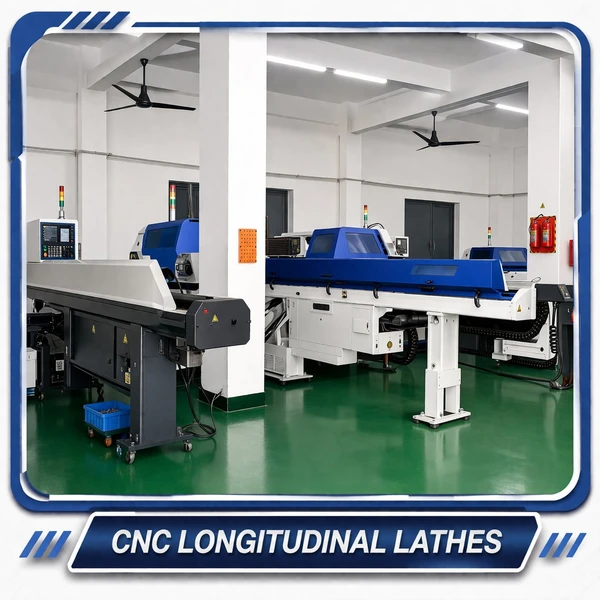
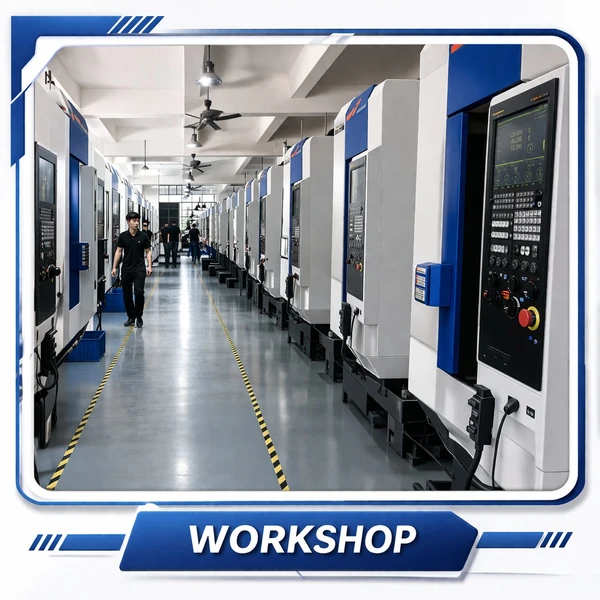
Üretim Tesisi
 |
 |
 |
 |
 |
 |
İlgili Bileşenler
Sonsuz dişli mili — Sertleştirilmiş çelikten üretilmiş, sonsuz dişli milinin tahrik ünitesi. sonsuz dişli takımı Sürtünmeyi azaltan bir kavrama sağlayarak sonsuz vida milini hızlandırılmış aşınmadan korur ve geniş bir hız aralığında sessiz ve güvenilir çalışmayı destekler.
Sonsuz Dişli Redüktörü — Sonsuz vida ve dişli çarkı sızdırmaz bir muhafaza içine entegre eden, tamamen kapalı bir ünite. Özellikle nemli veya yıkanabilir ortamlarda, tutarlı merkez mesafeleri, basitleştirilmiş montaj ve korumalı iç bileşenlerin gerekli olduğu durumlarda idealdir.

Paketleme ve Nakliye
Tüm dişliler, dişli tipine en uygun malzeme ve yöntem kullanılarak güvenli nakliye ve uygun depolama için paketlenir. Hassas dişli setleri, kutulanmadan önce ayrı ayrı pas önleyici VCI kağıdına sarılır ve polietilen torbalara kapatılır; bu, nemli ortamlardan deniz yoluyla yapılan nakliye sırasında yüzey oksidasyonunu önler. Büyük sonsuz dişliler, taşıma sırasında diş yüzeyinin temasını önlemek için ayrı ayrı köpükle desteklenir. 50 kg'ı aşan gönderiler veya karton taşıma sırasında deformasyon riski bulunan sıkı toleranslı dişliler için ahşap kasalar kullanılır.
Nakliye firmanızla birlikte çalışarak ürünleri doğrudan tesisinize gönderiyoruz. Eğer bir nakliye firmanız yoksa, uluslararası sevkiyatı uygun herhangi bir limana ayarlıyor ve hassas mekanik parçaları düzenli olarak dünya çapındaki destinasyonlara taşıyan deneyimli nakliye firmalarıyla çalışıyoruz.

Sıkça Sorulan Sorular
Tasarım çizimlerimizden yola çıkarak özel ürünler üretebilir misiniz?
Evet. Korea Ever-Power, özel dişli geliştirme konusunda deneyimli bir mühendislik ekibine sahip, profesyonel bir metal işleme ve dişli imalat tedarikçisidir. DWG, DXF veya PDF formatında 2B çizimleri ve STEP, IGES, SolidWorks veya CATIA formatında 3B modelleri kabul ediyoruz. Çiziminiz eksikse (örneğin, diş profili toleransı veya delik uyum sınıfı belirtilmemişse), eksiklikleri işaretleyip üretim başlamadan önce onay için teyit edilmiş bir spesifikasyon göndereceğiz. Dişlinin nihai işlevini etkileyecek eksik spesifikasyonlarla üretime devam etmiyoruz.
Çizimim güvende olacak mı?
Evet. Yazılı izniniz olmadan tasarımınızı, 3D modelinizi veya örnek parça bilgilerinizi hiçbir üçüncü tarafla paylaşmayacağız. Herhangi bir çizim veya örnek gönderilmeden önce gizlilik sözleşmesi imzalıyoruz; bu, tüm yeni OEM müşterilerimiz için standart uygulamamızdır, istisnai bir durum olarak talep edilmez. Müşteri spesifikasyonlarına göre üretilen üretim kalıpları, tesisimizde tutulan müşteri mülkiyeti olarak kabul edilir; başka bir müşterinin üretiminde kullanılmaz ve müşterinin yazılı talebi üzerine iade edilir veya imha edilir.
Minimum sipariş miktarı nedir?
Minimum sipariş miktarı konusunda katı bir şartımız yoktur. Standart modüllü özel sonsuz dişli takımları (M2-M8 modül, yaygın çelik kalitelerinde) için, ilk üretim doğrulaması için 10-50 adetlik küçük miktarlar kabul edilmektedir. Standart dışı modüller veya özel takım satın alımını gerektiren alışılmadık malzeme kombinasyonları için, takım maliyetinin makul bir şekilde amortismanına karşılık gelen minimum miktar teklif aşamasında görüşülmektedir - genellikle ilk sipariş için 50-200 adet, takım temin edildikten sonraki tekrar siparişlerde ise minimum miktar şartı yoktur. Tahmininiz ve zaman çizelgenizle ilgili olarak bizimle iletişime geçin, size ekonomik olarak uygun miktar yapısı konusunda tavsiyede bulunacağız.
Seri üretime geçmeden önce numune sağlanabilir mi?
Evet. Üretim siparişi verilmeden önce onaylanmış çizimden numuneler üretilir. Numune miktarları, doğrulama test protokolüne bağlı olarak genellikle 3-10 adettir. Numune maliyeti, malzeme, işleme ve ısıl işlemi kapsar ve üretim teklifinden ayrı olarak ücretlendirilir. Üretim siparişi verildiğinde, numune maliyeti ilk üretim faturasından tamamen düşülür. Numune teslim süresi, modül boyutuna, malzemeye ve ısıl işlem yöntemine bağlı olarak 15-25 iş günüdür.
Teslimat sonrasında kusurlu parçalar nasıl ele alınır?
Tüm ürünlerimiz teslimattan önce kalite kontrolünden geçer ve bir denetim raporu sunulur. Denetim aşaması, sevkiyat öncesinde sapmaları tespit ettiği için uygunsuzluklar nadirdir. Teslimat sırasında bir uygunsuzluk tespit edilirse: lütfen hemen fotoğraflar ve gelen denetimde başarısız olan belirli boyutlar veya özelliklerle birlikte bizimle iletişime geçin. İş günlerinde 24 saat içinde inceleyip yanıt vereceğiz. Onaylanmış üretim hataları, değiştirme sevkiyatı için gidiş-dönüş nakliye masrafları da dahil olmak üzere, masraflarımız bize ait olmak üzere yeniden işleme veya değiştirme yoluyla düzeltilir. Kalibre edilmiş cihazlardan elde edilen ölçüm verilerine itiraz etmiyoruz.
Ödeme koşulları nelerdir?
Sevkiyat öncesi ödeme gereklidir. Kabul edilen ödeme yöntemleri T/T (banka havalesi) ve L/C (akreditif)'dir. Satın alma geçmişi olan mevcut müşteriler için daha uzun ödeme koşulları görüşülebilir - lütfen bizimle iletişime geçin. İlk siparişler için standart süreç, sipariş onayında 30-501 TL depozito ve sevkiyat öncesi 50-701 TL bakiye ödemesidir.
Müşteri Yorumları
Jang Seong-jun — Tedarik Zinciri Yöneticisi, Suwon Otomotiv Parçaları Şirketi (2026 1. Çeyrek)
Elektrikli hidrolik direksiyon kolonu dişli kutusu için özel helisel sonsuz dişli takımları — 42CrMo sonsuz dişli mili, kalay bronz dişli, DIN6 sınıfı, Ø32 mm iç çap ve 8×6 DIN 6885 kama yuvası. Korea Ever-Power, doğrulama sürecimiz için üç örnek üretim turu gerçekleştirdi. Birinci tur: İç çap eşmerkezliği 0,008 mm sapma gösterdi. Bunu CMM verileriyle raporladık. İkinci tur: Rapordan sonraki 24 saat içinde düzeltildi, üç örnek parçanın tamamı tekrar standartlara uygun hale geldi. Üçüncü tur: 20 parçalık üretim onay partisi — hepsi gelen PPAP Seviye 2 dokümantasyon gereksinimlerimizi karşıladı. NDA imzalanmasından üretim onayına kadar toplam OEM geliştirme süresi: 11 hafta. Program kapı takvimimiz dahilinde.
Choi Yun-seo — Ar-Ge Mühendisi, Daejeon Tıbbi Cihaz Üretimi (2025 3. Çeyrek)
Cerrahi pozisyonlama masası ekseni için standart dışı 73:1 oranına ihtiyacımız vardı; bu oran hiçbir katalogda mevcut değildi ve gövde boyut sınırını aşmadan iki kademeli bir sistemle elde edilemezdi. Korea Ever-Power, tek kademeli diş kombinasyonunu (73T tekerlek, tek başlangıçlı paslanmaz çelik sonsuz vida) tasarladı, belirtilen yük altında kendiliğinden kilitlenme marjını doğruladı ve gizlilik sözleşmesinin imzalanmasından itibaren 14 takvim günü içinde üç adet DIN7 sınıfı numune teslim etti. İlk tur numuneler tüm kritik boyutlarda doğru ölçüldü. Gizlilik sözleşmesi, herhangi bir çizim paylaşmadan önce, talep ettiğimiz gün imzalandı. Bu hız ve gizlilik, tıbbi cihaz geliştirme programları için çok önemlidir.
Oh Jin-ho — Tedarik Müdürü, Incheon Tarım Ekipmanları Şirketi (2025 sonu)
Döner tırmık ve fide dikme ekipmanı ailelerimiz için dört farklı oranda özel sonsuz dişli takımları için yıllık OEM programımız bulunmaktadır. Korea Ever-Power, dört parça numarası için de özel kalıplara sahiptir. Kurulum zaten kanıtlanmış olduğundan, yeniden sipariş teslim süresi ilk siparişe göre sürekli olarak 2-4 gün daha kısa olmuştur. Parti bazında delik toleransı dağılımı, siparişin sekiz çeyreği boyunca ±0,012 mm içindedir ve montaj ekibimiz gelen denetim olmadan bu toleransı sağlamaktadır. Fiyat, iki yılda sadece 4%'lik bir artışla istikrarlı kalmıştır; malzeme fiyat hareketleri göz önüne alındığında bu kabul edilebilir bir durumdur. Bu dönemde tedarikçi yeterlilik olayına gerek duyulmamıştır.
Han Soo-bin — Busan Savunma Sistemleri Ltd. Teknik Direktörü (2025 4. Çeyrek)
Savunma sistemleri için yüksek yük kapasiteli özel sonsuz dişli takımları, azimut tahrik sistemi için üretilmiştir — 20CrMnTi sonsuz dişli mili, karbürlenmiş ve DIN6 standardına göre taşlanmış, sfero döküm dişli, malzeme izlenebilirliği fabrika sertifikasına kadar uzanmaktadır. Korea Ever-Power gerekli tüm belgeleri sağlamıştır: kimyasal bileşim ve mekanik özelliklere sahip malzeme sertifikası, boyut kontrol raporu, ısıl işlem kaydı. Dişli geçişi, ilk üretim partisinde herhangi bir yeniden işleme gerek kalmadan sorunsuz ve boşluk spesifikasyonumuza uygun olmuştur. Savunma programlarında hassas mekanik tahrik bileşenleri için Korea Ever-Power'ı onaylı tedarikçi listemize ekledik.
Additional information
| Editör | Cxm |
|---|
İlgili ürünler
-

Otomobil Parçaları için Alaşımlı Çelik Sonsuz Dişli ve Sonsuz Dişli Çark
-

CNC için Paslanmaz Çelik Sonsuz Dişli | ANSI/DIN, Modül 1–3, Sertlik 55–60 HRC
-

Çift Hatlı Sonsuz Dişli | Sürekli Ayarlanabilir Boşluk
-

Silindirik Sonsuz Dişli Çark | Hat Temaslı, Yüksek Yük Kapasiteli, Bronz ve Dökme Demir
-

Pirinç Sonsuz Dişli Çark | M0.5, 20T×1T Eşleşen Set
-

Sonsuz Dişli ve Çark | Modül M3–M12, Oran 20:1–300:1, Hat Temaslı İletim
-

Plastik Sonsuz Dişli | POM ve Naylon, Modül M0.2–M2.0, Kendinden Yağlamalı Tahrik Sistemi