ชุดเฟืองตัวหนอนแบบสั่งทำพิเศษ | OEM/ODM, อัตราทด 20:1–300:1, ครอบคลุมวัสดุและประเภทเฟืองทุกชนิด
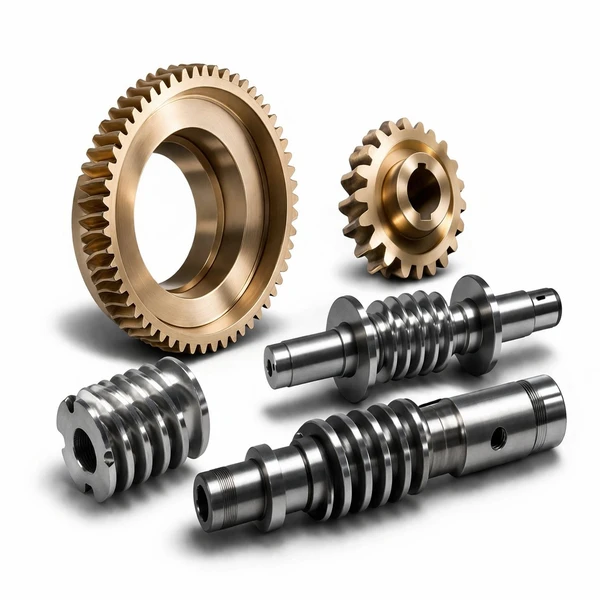
OEM worm gear sets with ratio 20:1 to 300:1+ in a single stage. Gear types: spur, helical, internal, ring, bevel, hypoid, crown wheel, gear shaft, worm & worm shaft, spline shaft. Materials: C45, 40Cr, 20CrMnTi, 42CrMo, 17CrNiMo6, brass, bronze, nylon and more. Heat treatment: quenching, carburizing, nitriding, salt bath. Custom from 3D CAD, 2D drawings, or physical samples.
ภาพรวมผลิตภัณฑ์
Every standard gear catalog was built for the most common applications. Module M4, ratio 20:1, C45 steel, 60-tooth wheel with Ø25 mm bore — this specification covers a large fraction of general industrial drives. But product engineering rarely produces the most common application. An automotive electric power steering column needs 73:1 from a compact package in 42CrMo with a left-hand worm. A medical positioning table needs 48:1 in stainless steel with a DIN7-class tolerance and a keyway at 15° to a specific face datum. A defense turret traverse needs 120:1 with carburized 20CrMnTi worm and a ductile iron wheel with machined mounting bolt circle. None of these exist in any catalog. Korea Ever-Power Worm Gear Co., Ltd manufactures custom ชุดเฟืองตัวหนอน to any ratio, any material pairing, any bore configuration — from 3D CAD files, 2D drawings, or physical samples when drawings are not available. The NDA is signed before the first drawing is shared.
Why Worm Gears for High-Ratio Single-Stage Drives
The worm — a cylindrical gear resembling a threaded screw — paired with a worm wheel allows smaller gearboxes or planetary drives while retaining full torque or power transmission capacity. It is common for worm gear reductions to reach 20:1 and extend to 300:1 or more in a single stage that would require two or three stages of helical gearing to replicate. The geometry that makes this possible also produces the most distinctive operational feature: the worm can effortlessly drive the worm wheel, but the worm wheel cannot drive the worm back. When the gear attempts to rotate the worm, the shallow lead angle of the worm thread means that friction between the contact surfaces keeps the worm locked in position — self-locking is a natural consequence of the geometry, not an add-on feature.
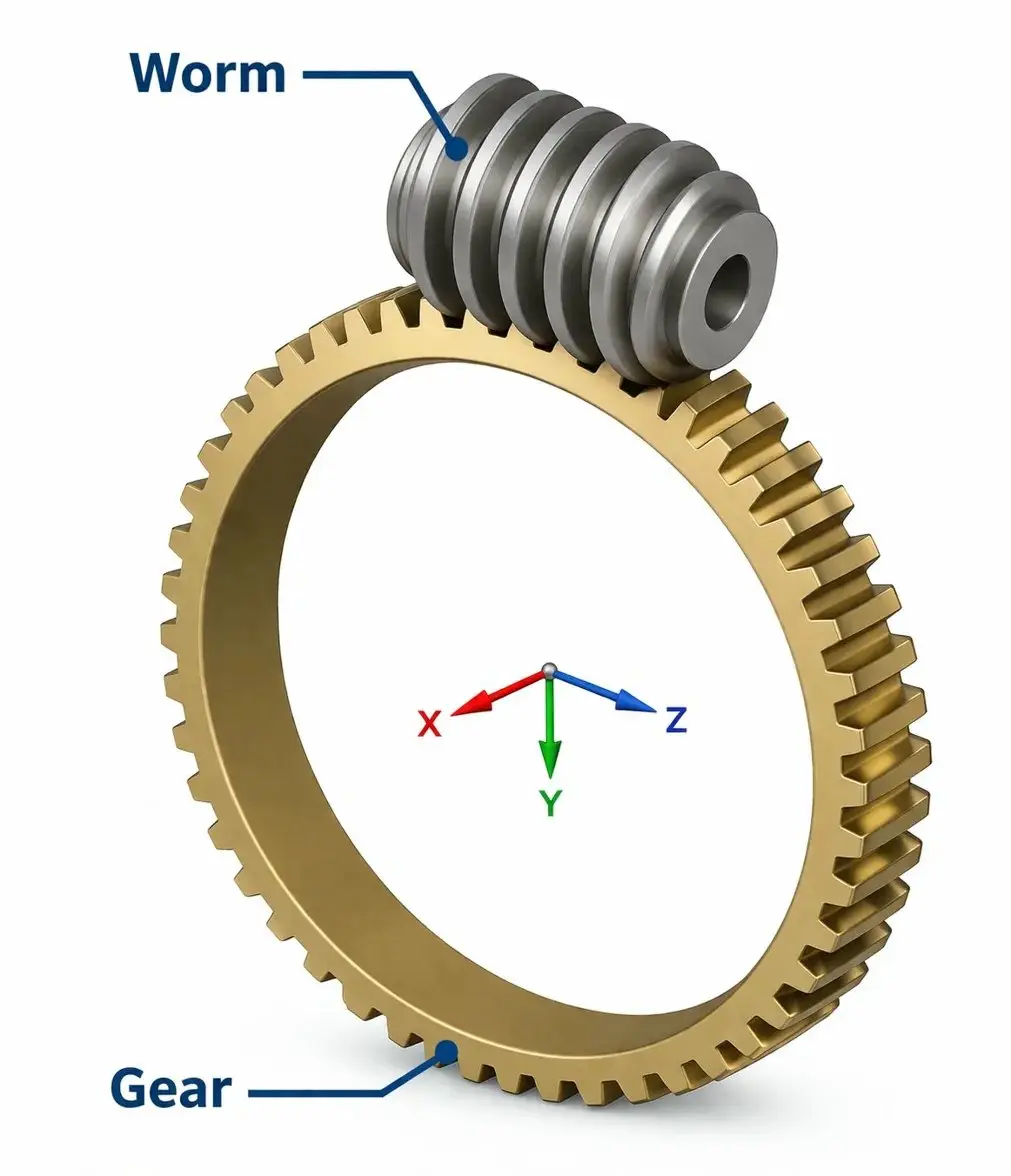
OEM Worm Gear Set — Full Service Scope
| Gear Types | Spur gear, helical gear, internal spur gear, ring gear, straight/spiral bevel gear, hypoid gear, crown wheel & pinion, gear shaft, worm gear & worm shaft, spline shaft & bushing, etc. |
| Gear Material | Carbon steel, alloy steel, stainless steel, brass, bronze, cast iron, nylon, etc. { GB Steel grades: C45, 40Cr, 20CrMo, 20CrMoTi, 17CrNiMo6, 20CrMnTi, 42CrMo, etc. } |
| กำลังประมวลผล | Gear blank turning, gear hobbing, gear milling, gear shaping, gear shaving, tooth grinding, broaching, etc. |
| Heat Treating | Quenching, carburizing, nitriding, carbon-nitriding, salt bath quenching, etc. |
| แอปพลิเคชัน | Automotive, Agricultural, Electronic, Industrial, Medical, Defense, Off-highway, etc. |
GB Steel Grade Guide — Selecting the Right Alloy for Your Application
The GB steel grade list in the OEM services table is not interchangeable — each grade has a specific combination of hardenability, core toughness, and heat treatment response that makes it appropriate for certain worm gear applications and inappropriate for others. Selecting the wrong grade produces premature tooth fatigue, inadequate surface hardness, or excessive brittleness after heat treatment. The guide below covers the six most commonly specified grades for worm gears in industrial and automotive applications.

| ระดับ | การอบชุบด้วยความร้อน | Surface / Core Hardness | เหมาะสำหรับ | Avoid When |
|---|---|---|---|---|
| ซี45 | Induction hardening | 55–60 HRC surface / 22–28 HRC core | General industrial worm shafts, low-to-medium torque, indoor environment | High shock loading — low core toughness fractures under impact |
| 40 ล้านรูปี | Through-hardening or induction | 50–55 HRC surface / 32–38 HRC core | Agricultural gearboxes, moderate shock, where C45 core toughness is marginal | Highest precision grades — machinability slightly lower than C45 |
| 20CrMo | Carburizing + quenching | 58–62 HRC case / 30–38 HRC core | Medium-load automotive auxiliary drives, small-module precision worm shafts | Very large gear bodies — hardenability depth may be insufficient for thick sections |
| 20CrMnTi | Carburizing + quenching | 58–62 HRC case / 33–40 HRC core | High-load automotive transmission worms, heavy-duty off-highway drives, defense | Light-load applications where cost is primary — overkill for general industrial duty |
| 17CrNiMo6 | Carburizing + quenching | 60–63 HRC case / 38–44 HRC core | Aircraft gearboxes, wind turbine pitch drives, maximum fatigue strength requirement | Standard industrial duty — material and heat treatment cost is 3–4× C45; not economically justified below maximum fatigue requirements |
| 42CrMo | Through-hardening + tempering | 48–54 HRC uniform through-section | EPS column gears, press screws, heavy structural drives where uniform hardness through the section is preferred over a case-and-core structure | Applications requiring the highest surface hardness only — 42CrMo's uniform hardness means the core is harder (and less tough) than carburized grades with a soft core |
Heat Treatment Selection — Quenching vs Carburizing vs Nitriding for Worm Gears
Heat treatment method is often specified without understanding what each process actually achieves at the tooth surface. The four methods in the OEM services table produce different hardness distributions, case depths, and residual stress states — with direct consequences for wear resistance, impact tolerance, and gear accuracy after treatment.
Quenching & Tempering
Through-hardening process: the gear is heated above the austenite transition, quenched in oil or water, then tempered at 150–600°C to the target hardness. Produces uniform hardness from surface to core. The trade-off is brittleness at high hardness — above approximately 55 HRC, the toughness of through-hardened steel drops sharply. For worm gear applications requiring both wear resistance and shock load tolerance, through-hardening is typically not the first choice. Best applied to worm shaft materials (42CrMo, 40Cr) where core toughness is slightly less critical than for the wheel, and for gear bodies with large sections where case hardening depth is insufficient.
Carburizing & Quenching
Case hardening process: carbon is diffused into the surface at 880–930°C over 4–20 hours to a depth of 0.3–2.0 mm, then the gear is quenched to form martensite in the case only. The result is a hard case (58–63 HRC) over a tough core (30–40 HRC). This combination gives the best combination of wear resistance and impact resistance — the hardened surface resists abrasive and adhesive wear, and the tough core absorbs shock loading at the tooth root. For worm gear applications in automotive, off-highway, and agricultural equipment where shock loads are regular, carburizing is the standard specification. The grain structure improvement from the carburizing cycle also slightly improves the material's fatigue strength, extending service life beyond what a simple hardness comparison would predict.
Nitriding
Surface diffusion of nitrogen at 480–520°C — below the tempering temperature for most alloy steels. This means the gear can be fully machined to final dimensions, then nitrided, with only 0.01–0.02 mm of dimensional change — an advantage for precision gear teeth where post-nitriding grinding would otherwise be required to restore tooth geometry. Nitrided surfaces reach 60–70 HN (approximately equivalent to 65–70 HRC on the nitrided layer scale). The case depth is shallow (0.15–0.5 mm), which limits the maximum contact pressure the surface can withstand — nitriding is appropriate for precision gear drives at moderate contact pressures, not for heavily loaded drives where the case depth is insufficient to support the subsurface stress field.
Carbon-Nitriding (Carbonitriding)
A variant of carburizing where both carbon and nitrogen are diffused simultaneously at 800–880°C. The nitrogen addition improves the hardenability of the case, allows lower quench temperatures (reducing distortion), and produces a more compressive residual stress in the case that improves fatigue resistance. Carbonitriding is typically applied to smaller gear parts (module M1–M3) and parts requiring good surface hardness with minimum distortion after heat treatment — common in automotive transmission and small industrial gearbox applications where post-treatment grinding is expensive or impractical. The case depth is generally 0.1–0.5 mm, shallower than conventional carburizing.
Processing Methods — What Each Operation Contributes to Gear Accuracy
The processing list in the OEM services table is not a menu of equivalent alternatives — each operation plays a specific role in the production sequence, and the combination determines the achievable precision class. Understanding this helps buyers specify a realistic process for their target tolerance without over-specifying expensive operations for tolerances that simpler processes can achieve.
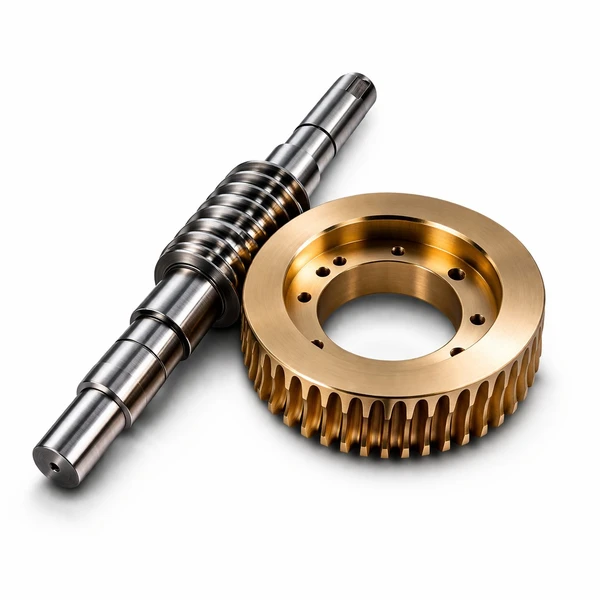
- →Gear blank turning — Sets the OD, bore, and face dimensions. Accuracy here determines how well the gear runs true on the mandrel during hobbing. A poorly turned blank with bore runout produces a hobbed gear with periodic tooth spacing error — this error cannot be corrected by subsequent grinding.
- →Gear hobbing — The primary tooth-cutting operation. Achieves DIN8–DIN9 accuracy as-cut in most materials. The hob geometry determines the tooth profile; the hob mounting accuracy on the hobbing machine determines the lead error. Well-maintained hobbing equipment and sharp hobs are essential for DIN7 or better directly from hobbing.
- →Gear shaving — A finishing operation performed before heat treatment. A hardened shaving cutter removes 0.01–0.05 mm from the tooth flanks while simultaneously applying slight crowning (tooth profile modification) to reduce edge loading under misalignment. Achieves DIN6–DIN7 accuracy but cannot be performed after heat hardening — the tooth surface is too hard for the cutter. For applications requiring DIN6–DIN7 with carburized teeth, shaving is performed before carburizing and grinding is required after.
- →Tooth grinding — The only process capable of consistently achieving DIN5–DIN6 on hardened tooth flanks. A profiled grinding wheel removes 0.05–0.15 mm from the hardened tooth surface, correcting the geometric distortion introduced by the heat treatment cycle. Tooth grinding is the most expensive tooth-finishing operation — it adds significant cost to the per-piece price and requires grinding cycle development for each new gear geometry. Specify only when DIN5–DIN6 is confirmed as a requirement.
- →Broaching — Applied to internal keyways, splines, or non-circular bore profiles after gear teeth are cut. Broaching produces keyways and splines in a single pass with high geometric consistency — tolerances of ±0.005 mm on keyway width are achievable. For custom worm gear wheel bores with non-standard keyway positions or profiles, broaching is the correct process; milled keyways are appropriate where tight positional accuracy is not critical.
Custom OEM vs Standard Catalog — The Complete Procurement Comparison
The right sourcing strategy depends on the application, the production volume, and the supply chain risk tolerance. This comparison is written for engineers and procurement managers making a sourcing decision, not for marketing purposes — both options have legitimate use cases.
| Decision Factor | Custom OEM (Korea Ever-Power) | Standard Catalog Brand |
|---|---|---|
| Ratio availability | Any ratio — tooth count and worm start count designed to your specification without rounding to the nearest catalog ratio | Fixed catalog ratios: typically 5:1, 10:1, 20:1, 30:1, 50:1, 100:1 — any other ratio requires a multi-stage arrangement or mechanical modification |
| Material specification | Any material: C45 through 17CrNiMo6, brass, bronze, stainless, nylon — specify independently for the worm and the wheel | Limited to catalog material options, typically 2–3 choices per model; worm and wheel material pairing is fixed |
| Bore and keyway | Any bore diameter from Ø6 mm to Ø80 mm, any keyway standard (DIN 6885, ANSI B17.1, or custom), any tap position | Pilot bore only (requires secondary machining) or fixed finished bore in standard motor shaft sizes |
| ช่วงโมดูล | M0.5 to M12 — any module with correct matched hob; non-standard modules on request with hob lead time | Fixed catalog modules: M1, M1.5, M2, M2.5, M3, M4, M5, M6, M8, M10 typically |
| Supply continuity | Dedicated tooling held in-house; reorders reproduced from same setup with same tolerance — no re-qualification needed on reorder | Subject to catalog revisions, EOL discontinuation, and supplier changes — replacement re-qualification may be required |
| IP and confidentiality | NDA before drawing submission; customer design is not shared or replicated for other customers | Standard catalog — design is public; no IP concern but also no exclusivity |
| Sample-to-production path | Sample produced from drawing or sample part; qualified in your mechanism before production commitment; sample cost credited on order | Order directly from catalog; no sampling step — what you order is what the standard part is |
| Best fit for | Product engineering (requires specific ratio, material, or bore), OEM programs with validated supply, high-value equipment requiring long supply chain certainty | Maintenance replacement where catalog part is the OEM specified part, prototype builds where standard ratio is acceptable, non-critical applications |
OEM Development Process — From First Contact to Validated Production
Custom gear development follows a defined sequence that protects both the buyer's IP and the supplier's production investment. Korea Ever-Power's standard process for new OEM worm gear set development:
- →Step 1 — NDA and inquiry. Before any drawing or sample is shared, an NDA is signed if requested. Inquiry is submitted with available information: target ratio, output torque (Nm), input speed (RPM), material preferences, operating environment, bore configuration, and quantity forecast. Missing parameters are confirmed through a brief technical exchange — we return a confirmed specification for approval before quoting.
- →Step 2 — Quotation and drawing confirmation. We return a price and lead time quotation with a confirmed 2D drawing or 3D model for approval. For reverse-engineered parts (from sample, no drawing), we return the measured drawing within 3–5 working days for customer confirmation before production.
- →Step 3 — Sample production. On drawing approval, samples are produced and typically ready in 15–25 working days depending on module size, material, and heat treatment method. Sample cost is charged separately and credited in full on the first production order.
- →Step 4 — Customer validation. Customer installs samples in the actual mechanism and validates fit, mesh quality, noise, backlash, and endurance cycle performance. Any corrections to bore, tooth profile, or surface finish are incorporated in a second sample round — typically 5–8 working days for a correction batch.
- →Step 5 — Production and dedicated tooling. On sample approval, tooling (hobs, fixtures, inspection gauges) is dedicated to this part number and retained in-house for the customer's production lifetime. Reorders are filled from the same setup — no re-qualification required. Production quantities ship with dimensional inspection records on request.
Application Sectors — Engineering Requirements Per Industry
- ▶Automotive (EPS, seat adjustment, sunroof, mirror, parking brake) — Automotive worm gear sets have the most demanding combination of requirements: compact packaging, high cycle count (10–30 million cycles over vehicle life), wide temperature range (−40°C to +125°C), specific torque envelope, and PPAP-compatible supply documentation. The worm is typically 20CrMnTi carburized and ground; the wheel is bronze or nylon depending on the noise requirement. Material traceability to mill certificate level is standard in Tier 1 supply chains.
- ▶Agricultural machinery (rotary tiller, transplanting, irrigation) — Agricultural drives experience the widest mechanical abuse of any gear application: shock loads from stone impacts, seasonal storage without lubrication for months, wide temperature swings, and field-level maintenance without special tools. 40Cr quenched-and-tempered worm shafts with aluminum-iron bronze wheels are the standard combination — higher core toughness than C45 for shock tolerance, higher strength than tin bronze for impact loads. Sealed gearbox housing retention of lubricant over months of storage is critical — specify IP67-rated sealing if the gearbox will be stored outdoors between seasons.
- ▶Electronic and semiconductor equipment — Wafer handling robots, probe station positioners, and semiconductor process chamber valves require extremely clean operation — no lubricant migration, no metal particle generation, and minimal vibration at the mesh frequency. Worm gears in these applications are typically M1.0–M2.0 in stainless steel or nitrided alloy steel, run dry or with PTFE grease, and held to DIN6–DIN7 for low backlash. The gear housing often requires special sealing to prevent particle contamination of the semiconductor process environment.
- ▶Medical equipment (surgical robots, positioning tables, infusion pumps) — Medical worm drives have unique requirements not seen in industrial applications: sterilization compatibility (autoclave 134°C or EtO gas), FDA-compliant or biocompatible surface treatments, traceable material certificates, and zero contamination tolerance. Stainless steel SS316 is the default material; lubrication is typically food-grade silicone or PTFE. Design review documentation and material certificates meeting ISO 13485 traceability requirements are provided on request.
- ▶Defense and off-highway (turret drives, tracked vehicle final drives, construction equipment) — Defense and off-highway worm gear sets are specified for maximum load capacity and maximum service life in extreme environments. 17CrNiMo6 or 20CrMnTi carburized worm shafts with DIN6-class tooth accuracy are common. Documentation requirements include full material traceability, proof load testing records, and in some cases first article inspection (FAI) reports to MIL or AQAP standards. Korea Ever-Power has produced defense-program gear sets and can support documentation requirements for military procurement.
- ▶Industrial automation (conveyors, packaging, solar trackers, hoists) — Industrial OEM drives span the widest range of requirements: from slow-speed high-load conveyor drives (40:1 to 100:1, bronze wheel, continuous 24-hour duty) to precision packaging machine feeds (15:1, DIN7, frequent start-stop) to solar tracker azimuth drives (60:1 to 150:1, sealed housing, 25-year service life). The key advantage of custom OEM for industrial automation builders is supply chain continuity — a standard catalog part may be discontinued when the catalog supplier changes; a custom part with dedicated tooling held by Korea Ever-Power is available as long as the product is in service.

Why Korea Ever-Power for OEM Worm Gear Sets
- ◈Full gear family coverage: spur, helical, bevel, hypoid, worm, and spline — one engineering team covers all gear types needed in a complex multi-stage drive, eliminating coordination between multiple specialized suppliers.
- ◈Diverse material supply in-house: all GB steel grades, copper alloys, engineering plastics — the matched worm and wheel come from the same quality system and material traceability record.
- ◈Reverse engineering capability: engineers can design from 3D CAD, 2D drawings, or physical sample parts when drawings are unavailable — CMM measurement returns a confirmed drawing within 3–5 working days.
- ◈Dedicated tooling retention: เตาเผา อุปกรณ์จับยึด และเครื่องมือวัดตรวจสอบสำหรับชิ้นส่วนของลูกค้าจะถูกเก็บไว้ภายในบริษัทตลอดอายุการใช้งานของการผลิต โดยการสั่งซื้อซ้ำจะดำเนินการตามระยะเวลานำส่งมาตรฐานโดยไม่มีค่าใช้จ่ายในการตั้งค่าเพิ่มเติม
- ◈ไม่มีข้อจำกัดขั้นต่ำในการสั่งซื้อสำหรับการพัฒนา: ต้นแบบและชุดการผลิตก่อนการผลิตจำนวนน้อยจะได้รับการยอมรับเพื่อสนับสนุนกระบวนการตรวจสอบความถูกต้อง โดยการตัดสินใจผลิตจะเกิดขึ้นหลังจากที่ยืนยันคุณภาพแล้ว ไม่ใช่ก่อนหน้านั้น
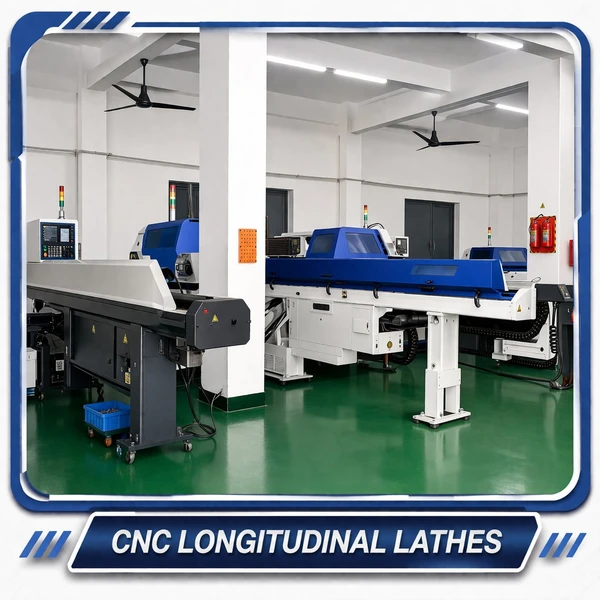
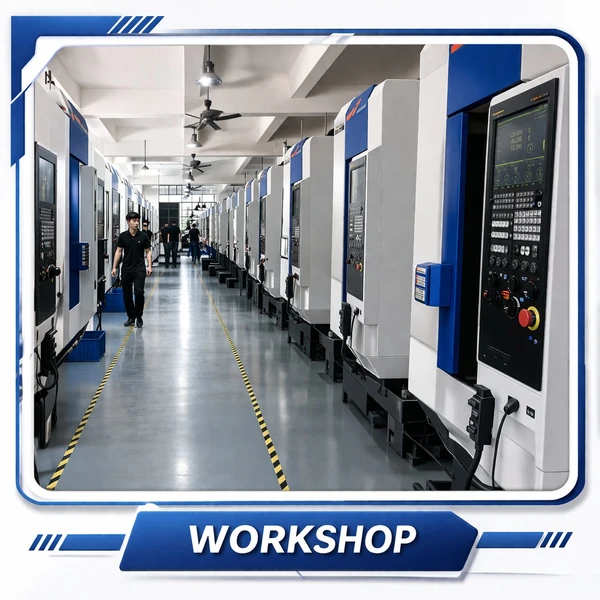
โรงงานผลิต
 |
 |
 |
 |
 |
 |
ส่วนประกอบที่เกี่ยวข้อง
เพลาหนอน — ชิ้นส่วนขับเคลื่อนเหล็กกล้าชุบแข็งที่เป็นคู่กันของเพลาหนอน ชุดเฟืองตัวหนอน พวกมันสามารถช่วยลดแรงเสียดทานภายในเฟือง ป้องกันเพลาตัวหนอนจากการสึกหรอที่เร็วขึ้น และรองรับการทำงานที่เงียบและเชื่อถือได้ในช่วงความเร็วที่กว้าง
เกียร์หนอนลดรอบ — ชุดเฟืองตัวหนอนและเฟืองล้อที่ปิดสนิท เหมาะอย่างยิ่งเมื่อต้องการระยะห่างระหว่างศูนย์กลางที่สม่ำเสมอ การติดตั้งที่ง่าย และชิ้นส่วนภายในที่ได้รับการปกป้อง โดยเฉพาะอย่างยิ่งในสภาพแวดล้อมที่มีความชื้นสูงหรือต้องล้างทำความสะอาด

บรรจุภัณฑ์และการจัดส่ง
เฟืองทุกชิ้นจะถูกบรรจุหีบห่ออย่างปลอดภัยสำหรับการขนส่งและการจัดเก็บที่สะดวก โดยใช้วัสดุและวิธีการที่เหมาะสมที่สุดสำหรับเฟืองแต่ละประเภท ชุดเฟืองความแม่นยำสูงจะถูกห่อด้วยกระดาษกันสนิม VCI แต่ละชิ้นและปิดผนึกในถุงพลาสติกโพลีเอทิลีนก่อนบรรจุลงกล่อง เพื่อป้องกันการเกิดออกซิเดชันที่พื้นผิวระหว่างการขนส่งทางทะเลในสภาพแวดล้อมที่มีความชื้นสูง เฟืองตัวหนอนขนาดใหญ่จะถูกยึดด้วยโฟมทีละชิ้นเพื่อป้องกันการสัมผัสกันของหน้าฟันระหว่างการขนส่ง ลังไม้จะใช้สำหรับการขนส่งที่มีน้ำหนักเกิน 50 กิโลกรัม หรือสำหรับเฟืองที่มีความคลาดเคลื่อนต่ำ ซึ่งการขนส่งด้วยกล่องกระดาษอาจเสี่ยงต่อการเสียรูปในระหว่างการขนส่ง
เราทำงานร่วมกับบริษัทขนส่งสินค้าของคุณเพื่อจัดส่งสินค้าไปยังสถานที่ของคุณโดยตรง หากคุณไม่มีบริษัทขนส่งสินค้า เราจะจัดการการขนส่งระหว่างประเทศไปยังท่าเรือใดก็ได้ที่สะดวก และทำงานร่วมกับบริษัทขนส่งสินค้าที่มีประสบการณ์ซึ่งจัดการชิ้นส่วนเครื่องจักรกลที่มีความแม่นยำสูงไปยังปลายทางทั่วโลกเป็นประจำ

คำถามที่พบบ่อย
คุณสามารถผลิตสินค้าตามสั่งจากแบบร่างที่เราส่งให้ได้หรือไม่?
ใช่แล้ว บริษัท Korea Ever-Power เป็นผู้ผลิตชิ้นส่วนโลหะและเฟืองระดับมืออาชีพ โดยมีทีมวิศวกรที่มีประสบการณ์ในการพัฒนาเฟืองตามสั่ง เรายอมรับแบบร่าง 2 มิติในรูปแบบ DWG, DXF หรือ PDF และโมเดล 3 มิติในรูปแบบ STEP, IGES, SolidWorks หรือ CATIA หากแบบร่างของคุณไม่สมบูรณ์ เช่น ไม่ได้ระบุค่าความคลาดเคลื่อนของรูปทรงฟันเฟืองหรือระดับความพอดีของรู เราจะทำเครื่องหมายส่วนที่ขาดหายไปและส่งรายละเอียดที่ได้รับการยืนยันแล้วเพื่อขออนุมัติก่อนเริ่มการผลิต เราจะไม่ดำเนินการต่อหากรายละเอียดที่ขาดหายไปนั้นส่งผลต่อการทำงานขั้นสุดท้ายของเฟือง
ภาพวาดของฉันจะปลอดภัยหรือไม่?
ใช่แล้ว เราจะไม่เปิดเผยแบบร่าง โมเดล 3 มิติ หรือข้อมูลชิ้นส่วนตัวอย่างของคุณให้แก่บุคคลที่สามโดยไม่ได้รับอนุญาตเป็นลายลักษณ์อักษรจากคุณ เราลงนามในข้อตกลงรักษาความลับ (NDA) ก่อนที่จะส่งแบบร่างหรือตัวอย่างใดๆ ซึ่งเป็นแนวปฏิบัติมาตรฐานของเราสำหรับลูกค้า OEM รายใหม่ทุกราย ไม่ใช่ข้อยกเว้นที่ร้องขอเป็นกรณีๆ ไป เครื่องมือการผลิตที่ทำขึ้นตามข้อกำหนดของลูกค้าถือเป็นทรัพย์สินของลูกค้าที่เก็บไว้ในโรงงานของเรา จะไม่นำไปใช้ในการผลิตของลูกค้ารายอื่น และจะถูกส่งคืนหรือทำลายตามคำขอเป็นลายลักษณ์อักษรจากลูกค้า
ปริมาณการสั่งซื้อขั้นต่ำคือเท่าไร?
เราไม่ได้กำหนดปริมาณการสั่งซื้อขั้นต่ำที่ตายตัว สำหรับชุดเฟืองตัวหนอนแบบโมดูลมาตรฐาน (โมดูล M2–M8 ในเหล็กเกรดทั่วไป) เรารับคำสั่งซื้อจำนวนน้อย 10–50 ชิ้นสำหรับการตรวจสอบการผลิตเบื้องต้น สำหรับโมดูลที่ไม่เป็นมาตรฐานหรือการผสมวัสดุที่ผิดปกติซึ่งต้องซื้อเครื่องมือพิเศษ เราจะหารือเกี่ยวกับปริมาณขั้นต่ำที่สอดคล้องกับการคืนทุนค่าใช้จ่ายของเครื่องมืออย่างเหมาะสมในการเสนอราคา โดยทั่วไปคือ 50–200 ชิ้นสำหรับการสั่งซื้อครั้งแรก และไม่มีขั้นต่ำสำหรับการสั่งซื้อซ้ำเมื่อมีเครื่องมือพร้อมแล้ว ติดต่อเราพร้อมแจ้งการคาดการณ์และระยะเวลาของคุณ และเราจะให้คำแนะนำเกี่ยวกับโครงสร้างปริมาณที่เหมาะสมทางเศรษฐกิจ
สามารถขอตัวอย่างก่อนตัดสินใจผลิตจำนวนมากได้หรือไม่?
ใช่ค่ะ ตัวอย่างจะถูกผลิตขึ้นจากแบบที่ได้รับการยืนยันแล้วก่อนที่จะมีการสั่งผลิต โดยปกติแล้วจำนวนตัวอย่างจะอยู่ที่ 3-10 ชิ้น ขึ้นอยู่กับขั้นตอนการทดสอบการตรวจสอบ ตัวอย่างมีค่าใช้จ่ายครอบคลุมค่าวัสดุ การกลึง และการอบชุบความร้อน และจะคิดค่าใช้จ่ายแยกต่างหากจากใบเสนอราคาการผลิต เมื่อมีการสั่งผลิตแล้ว ค่าใช้จ่ายตัวอย่างจะถูกหักออกจากใบแจ้งหนี้การผลิตครั้งแรกอย่างเต็มจำนวน ระยะเวลานำส่งตัวอย่างคือ 15-25 วันทำการ ขึ้นอยู่กับขนาดของโมดูล วัสดุ และวิธีการอบชุบความร้อน
ชิ้นส่วนที่ไม่ตรงตามข้อกำหนดจะได้รับการจัดการอย่างไรหลังจากส่งมอบแล้ว?
ผลิตภัณฑ์ทั้งหมดของเราผ่านการตรวจสอบคุณภาพ (QC) พร้อมรายงานการตรวจสอบก่อนส่งมอบ ความไม่สอดคล้องนั้นเกิดขึ้นได้ยาก เนื่องจากขั้นตอนการตรวจสอบจะตรวจพบความผิดปกติก่อนการจัดส่ง หากพบความไม่สอดคล้องเมื่อได้รับสินค้า โปรดติดต่อเราทันทีพร้อมรูปถ่ายและขนาดหรือลักษณะเฉพาะที่พบว่ามีข้อบกพร่องในการตรวจสอบ เราจะตรวจสอบและตอบกลับภายใน 24 ชั่วโมงในวันทำการ ข้อบกพร่องจากการผลิตที่ได้รับการยืนยันแล้วจะได้รับการแก้ไขโดยการซ่อมแซมหรือเปลี่ยนใหม่โดยเราเป็นผู้รับผิดชอบค่าใช้จ่ายทั้งหมด รวมถึงค่าขนส่งขาออกสำหรับสินค้าทดแทน เราไม่โต้แย้งข้อมูลการวัดจากเครื่องมือที่ได้รับการสอบเทียบแล้ว
เงื่อนไขการชำระเงินเป็นอย่างไร?
ต้องชำระเงินก่อนจัดส่งสินค้า วิธีการชำระเงินที่ยอมรับได้คือ การโอนเงินผ่านธนาคาร (T/T) และเลตเตอร์ออฟเครดิต (L/C) สำหรับลูกค้าประจำที่มีประวัติการสั่งซื้อ สามารถพูดคุยเกี่ยวกับการขยายระยะเวลาการชำระเงินได้ โปรดติดต่อเรา สำหรับการสั่งซื้อครั้งแรก ขั้นตอนมาตรฐานคือ การวางมัดจำ 30–50% เมื่อยืนยันคำสั่งซื้อ และชำระยอดคงเหลือ 50–70% ก่อนจัดส่งสินค้า
รีวิวจากลูกค้า
จางซองจุน — ผู้จัดการห่วงโซ่อุปทาน บริษัท ซูวอน ออโตโมทีฟ คอมโพเนนต์ส์ (ไตรมาส 1 ปี 2026)
ชุดเฟืองตัวหนอนแบบเกลียวสั่งทำพิเศษสำหรับเกียร์คอลัมน์พวงมาลัยไฟฟ้า — เพลาตัวหนอน 42CrMo, ล้อบรอนซ์ดีบุก, มาตรฐาน DIN6, รูเจาะ Ø32 มม. พร้อมร่องลิ่ม 8×6 DIN 6885 บริษัท Korea Ever-Power ผลิตชิ้นงานตัวอย่างสามรอบสำหรับการตรวจสอบความถูกต้องของเรา รอบแรก: ความเที่ยงตรงของรูเจาะไม่ตรงตามข้อกำหนด 0.008 มม. เราได้รายงานพร้อมข้อมูลจากเครื่องวัดพิกัดสามมิติ (CMM) รอบที่สอง: แก้ไขภายใน 24 ชั่วโมงหลังจากได้รับรายงาน กลับมาตรงตามข้อกำหนดในชิ้นงานตัวอย่างทั้งสามชิ้น รอบที่สาม: ชุดการผลิตเพื่อยืนยันจำนวน 20 ชิ้น — ทั้งหมดผ่านข้อกำหนดเอกสาร PPAP ระดับ 2 ของเรา ระยะเวลาการพัฒนา OEM ทั้งหมดตั้งแต่การลงนาม NDA จนถึงการอนุมัติการผลิต: 11 สัปดาห์ ภายในกำหนดการของโครงการของเรา
ชอย ยุน-ซอ — วิศวกรฝ่ายวิจัยและพัฒนา บริษัท แดจอน เมดิคอล แมเนจเมนท์ (ไตรมาส 3 ปี 2025)
เราต้องการอัตราส่วนที่ไม่เป็นมาตรฐาน 73:1 สำหรับแกนโต๊ะจัดตำแหน่งผ่าตัด ซึ่งไม่มีอยู่ในแคตตาล็อกใดๆ และไม่สามารถทำได้ด้วยสองขั้นตอนโดยไม่เกินขีดจำกัดขนาดของตัวเรือน บริษัท Korea Ever-Power ได้ออกแบบชุดฟันเฟืองแบบขั้นตอนเดียว (ล้อ 73T, เฟืองตัวหนอนสแตนเลสแบบเริ่มต้นเดียว) ยืนยันระยะขอบการล็อคตัวเองภายใต้ภาระที่เรากำหนด และส่งมอบตัวอย่างระดับ DIN7 จำนวน 3 ชิ้นภายใน 14 วันทำการนับจากวันที่ลงนามในข้อตกลงรักษาความลับ ตัวอย่างรอบแรกวัดได้ถูกต้องในทุกมิติที่สำคัญ ข้อตกลงรักษาความลับได้รับการลงนามในวันเดียวกับที่เราร้องขอ ก่อนที่เราจะส่งแบบร่างใดๆ ความเร็วและความรอบคอบเช่นนี้มีความสำคัญอย่างยิ่งสำหรับโครงการพัฒนาอุปกรณ์ทางการแพทย์
โอ จินโฮ — ผู้จัดการฝ่ายจัดซื้อ บริษัท อินชอน แอกริคัล เจควิปเมนท์ คอร์ปอเรชั่น (ปลายปี 2025)
โครงการ OEM ประจำปีสำหรับชุดเฟืองตัวหนอนแบบกำหนดเองในอัตราส่วนที่แตกต่างกันสี่แบบ — สำหรับอุปกรณ์ไถพรวนแบบหมุนและอุปกรณ์ปลูกถ่ายของเรา บริษัท Korea Ever-Power มีเครื่องมือเฉพาะสำหรับหมายเลขชิ้นส่วนทั้งสี่ การรอคอยสำหรับการสั่งซื้อซ้ำนั้นสั้นกว่าการสั่งซื้อครั้งแรก 2-4 วันอย่างสม่ำเสมอ เนื่องจากระบบได้รับการพิสูจน์แล้ว ความคลาดเคลื่อนของรูเจาะระหว่างล็อตอยู่ในช่วง ±0.012 มม. ตลอดแปดไตรมาสของการสั่งซื้อ ซึ่งทีมประกอบของเราสามารถทำงานได้โดยไม่ต้องมีการตรวจสอบขาเข้า ราคาคงที่โดยมีการเพิ่มขึ้นเพียง 4% ในสองปี ซึ่งเป็นที่ยอมรับได้เมื่อพิจารณาจากการเคลื่อนไหวของราคาวัสดุ ไม่จำเป็นต้องมีกิจกรรมการรับรองซัพพลายเออร์ในช่วงเวลาดังกล่าว
ฮัน ซูบิน — ผู้อำนวยการฝ่ายเทคนิค บริษัท ปูซาน ดีเฟนส์ ซิสเต็มส์ จำกัด (ไตรมาส 4 ปี 2025)
ชุดเฟืองตัวหนอนรับน้ำหนักสูงแบบสั่งทำพิเศษสำหรับระบบขับเคลื่อนแบบอะซิมุธในระบบป้องกันประเทศ — เพลาเฟืองตัวหนอน 20CrMnTi อบชุบและเจียรตามมาตรฐาน DIN6 ล้อเหล็กหล่อเหนียว สามารถตรวจสอบย้อนกลับวัสดุได้อย่างครบถ้วนตามใบรับรองจากโรงงาน Korea Ever-Power จัดหาเอกสารที่จำเป็นทั้งหมด: ใบรับรองวัสดุพร้อมองค์ประกอบทางเคมีและคุณสมบัติทางกล รายงานการตรวจสอบขนาด บันทึกการอบชุบความร้อน การทำงานของเฟืองราบรื่นและอยู่ในข้อกำหนดระยะห่างของเฟืองตามที่ต้องการในล็อตการผลิตแรกโดยไม่ต้องมีการแก้ไขใดๆ เราได้เพิ่ม Korea Ever-Power ลงในรายชื่อซัพพลายเออร์ที่ได้รับการอนุมัติสำหรับชิ้นส่วนขับเคลื่อนเชิงกลที่มีความแม่นยำในโครงการด้านการป้องกันประเทศแล้ว
ข้อมูลเพิ่มเติม
| บรรณาธิการ | ซีเอ็กซ์เอ็ม |
|---|
ผลิตภัณฑ์ที่เกี่ยวข้อง
-

เฟืองตัวหนอนและเฟืองตัวหนอนเหล็กอัลลอยสำหรับชิ้นส่วนรถยนต์
-

เฟืองตัวหนอนสแตนเลสสำหรับเครื่อง CNC | มาตรฐาน ANSI/DIN โมดูล 1–3 ความแข็ง 55–60 HRC
-

เฟืองตัวหนอนแบบดูเพล็กซ์ | เฟืองคู่ ปรับระยะคลายตัวได้ต่อเนื่อง
-

ล้อเฟืองตัวหนอนทรงกระบอก | หน้าสัมผัสเส้นตรง รับน้ำหนักได้สูง ทำจากบรอนซ์และเหล็กหล่อ
-

เฟืองตัวหนอนทองเหลือง | M0.5, ชุด 20T×1T จับคู่กัน
-

เฟืองตัวหนอนและเฟืองล้อ | โมดูล M3–M12, อัตราส่วน 20:1–300:1, ระบบส่งกำลังแบบสัมผัสเส้น
-

เฟืองตัวหนอนพลาสติก | POM และไนลอน โมดูล M0.2–M2.0 ระบบขับเคลื่อนหล่อลื่นในตัว