Plastic Worm Gear | POM & Nylon, Module M0.2–M2.0, Self-Lubricating Drive

POM and nylon PA66 worm gears, module M0.2–M2.0. Bore Ø1.4–1.9 mm, weight from 0.22 g/pc, gear ratio up to 80:1. POM shows <0.2% moisture absorption — bore concentricity stays within ±0.02 mm even in humid environments. Three matched product examples included (M0.4×30T for IP cameras, M0.4 RH worm for mirror actuators, ODM set for valve drives). No mold commitment required — handmade or CNC prototypes available from drawing or sample, fee credited on production order.
Product Overview
The physics of worm gear self-lubrication is specific to polymer materials: POM (polyacetal) and PA66 nylon contain no free oil, yet their low coefficient of friction — POM dry COF approximately 0.10–0.25 against steel — sustains low-wear sliding in the sealed mesh zone without any external lubricant. This property directly addresses the maintenance problem common in miniature drives: a sealed gearbox where the internal gear mesh is inaccessible after assembly. Metal gears in the same installation require oil or grease loaded at assembly; if that lubricant is displaced, migrates onto optical components, or dries out over time, the drive fails. A POM worm set avoids this failure mode entirely for light-duty cycles. Korea Ever-Power Worm Gear Co., Ltd supplies these plastic worm gears from module M0.2 to M2.0 in POM and nylon PA66, matched to bore diameters and outer diameters for specific drive assemblies.

At a glance — why engineers specify plastic for this drive type
- ✦No external lubricant required in sealed light-duty assemblies
- ✦3–6 dB quieter at the mesh than equivalent metal pairs
- ✦5–7× lighter than steel at the same module and tooth count
- ✦Corrosion-resistant without plating — no post-treatment required
- ✦Complex profiles molded in one shot — no post-machining for flanges or step bores
- ✦Prototype before mold — CNC or handmade parts available from drawing
Standard Dimensional Specifications
| Parameter | Standard Value | Notes |
|---|---|---|
| Type | Worm (cylindrical, single-lead) | Matched worm wheel also available |
| Module range | M0.2 – M2.0 | Non-standard modules on request |
| Material | Polyacetal (POM) / Nylon (PA66 / PA66-GF30) | Specify at order |
| Bore diameter | Ø1.40 mm / Ø1.90 mm (standard) | Custom bore Ø1.0–Ø6.0 mm available |
| Outer diameter | Ø4.0 / Ø5.0 / Ø6.0 mm (Flexible) | Adjusted to module and tooth count |
| Length | 6.0 / 8.5 / 10.0 mm (Flexible) | Adjusted to installation space |
| Minimum gear weight | 0.22 g / pc (M0.4 RH worm) | Full pair from 0.97 g |
| Gear ratio range | 10:1 – 80:1 (typical power transmission) | Higher ratios with multi-stage arrangement |
Product Samples & Application Reference Data
The three matched sets below illustrate the range from miniature camera drives to automotive actuators and valve controls. All dimensions and weights are from production datasheet records.

Sample A — M0.4 × 30T Gear + Worm (IP Camera Drive)
A common pan-tilt camera uses this pair as the primary reduction stage. The 30:1 ratio in a sub-10 mm package allows the motor to position the camera head at low current draw. POM's low COF at the mesh reduces motor temperature in continuous tracking duty — measured 12°C lower than an equivalent brass set in a back-to-back test at 300 mA motor current.
| Item | Detail |
|---|---|
| Item Code | M0.4 × 30T Gear + Worm |
| Material | TEPCON M90-10 |
| Module | M0.4 |
| No. of Teeth | 30T (wheel) / 1T (worm) → ratio 30:1 |
| Weight | 0.75 g / pc |
| Application | IP Camera, monitor pan-tilt mechanism |
Sample B — M0.4 RH Worm (Automotive Mirror Actuator)
Automotive rearview mirror angle adjustment is a high-cycle application: the mechanism may actuate thousands of times over the vehicle's service life with no maintenance access. The RH single-start worm at M0.4 weighs only 0.22 g — replacing a metal worm here reduces the actuator motor's inertia load, allowing a smaller motor for the same actuation speed. Self-locking retains mirror position without power — an important safety and energy requirement in modern vehicles.
| Item | Detail |
|---|---|
| Item Code | M0.4 RH Worm |
| Material | TEPCON M90-10 |
| Module | M0.4 |
| No. of Teeth | 1T (RH) — single start, right-hand lead |
| Weight | 0.22 g / pc (lightest in the series) |
| Application | Automotive rearview mirror gearbox |
Sample C — Gear Screw & Screw Nut ODM (Valve Drive)
Water valve gearboxes face a specific environmental challenge: humid air inside a sealed housing causes condensation on gear surfaces. POM's near-zero water absorption (≤0.2%) ensures the bore diameter and tooth profile remain within tolerance even after prolonged exposure to cyclic humidity. Metal gears in the same enclosure would require a corrosion-resistant coating; POM needs no additional treatment, reducing assembly steps and part count.
| Item | Detail |
|---|---|
| Item Code | Gear Screw & Screw Nut |
| Material | ODM (customer specified) |
| Module | ODM |
| No. of Teeth | ODM |
| Weight | ODM |
| Application | Water valve gearbox actuator |
POM vs Nylon — Which Material for Your Application
POM and nylon are both called "self-lubricating plastics," but they behave very differently as gear materials. Selecting the wrong grade causes premature wear, dimensional drift, or unexpectedly high motor current — none of which show up until the drive has been assembled and tested. Understanding the material differences at the engineering level prevents these failures.
POM (Polyacetal) — When to Specify
POM absorbs moisture at less than 0.2% by weight even in prolonged immersion — a bore machined to Ø3.000 mm will measure within ±0.005 mm of nominal after months in a humid environment. This dimensional stability is critical for miniature drives where bore clearance or concentricity errors translate directly into backlash or vibration.
POM also has a lower dry coefficient of friction against steel (approximately 0.10–0.25) than standard nylon (0.20–0.40), making it the preferred choice when absolutely no lubrication is acceptable — sterile medical devices, pharmaceutical dispensing, or camera mechanisms where grease migration would contaminate optics.
- →Operating temperature: −40°C to +100°C continuous
- →Moisture absorption: ≤0.2% — bore stays on-size in humid enclosures
- →Best for: sealed drives, sterile environments, precision bore fits
- ⚑UV-sensitive — avoid prolonged direct outdoor exposure without UV stabilizer
Nylon PA66 / PA66-GF30 — When to Specify
Standard PA66 absorbs 2–3% moisture by weight at equilibrium — enough to cause measurable bore expansion at large diameters. This would disqualify it from tight-tolerance applications. However, glass-fiber reinforced PA66 (GF30) adds 30% chopped glass fiber to the matrix, raising tensile strength by roughly 80–100% over unreinforced grade and reducing creep under sustained load. The load capacity improvement is significant: at M1.0, a GF30 nylon wheel can sustain approximately 1.4× the continuous torque of an equivalent POM wheel before surface fatigue sets in.
PA66-GF30 is also rated to +120°C continuous — 20°C above POM's ceiling — making it the right choice for gearboxes near heat sources (motor compartments, engine bays, near electronics generating waste heat).
- →Operating temperature: −30°C to +120°C continuous (GF30)
- →Load capacity: 1.4× POM at same module (GF30 grade)
- →Best for: higher load, warmer environments, automotive under-hood adjacent
- ⚑Bore tolerance drifts in varying humidity — specify H7 fit with temperature + humidity operating range at order
Plastic vs Metal Worm Gears — Engineering Comparison
This comparison is framed for the design engineer deciding between plastic and metal at the module M0.4–M2.0 scale. Generic comparisons that ignore the operating conditions of a specific product category are not useful. The rows below address the actual trade-offs that determine the correct material choice.
| Engineering Factor | POM or Nylon | Brass | Carbon Steel (1045) |
|---|---|---|---|
| Dry-run capability | Yes — POM COF ≈0.15 dry, runs without seizing | Short-term only — surface galling begins within minutes dry | No — requires oil film continuously; seizes fast dry |
| Noise at 600 RPM input | ≈42–48 dBA at 300 mm measured | ≈48–54 dBA (same conditions) | ≈50–56 dBA — requires damping housing |
| Weight penalty on motor | M0.4 worm: 0.22 g — negligible inertia | M0.4 brass worm: ≈1.5 g — 7× heavier | M0.4 steel worm: ≈1.6 g — similar to brass |
| Bore stability (humid) | POM: bore drift ≤0.005 mm at Ø3 in 95% RH | Zero drift — metal is unaffected by humidity | Zero drift — but rusts without coating |
| Continuous torque at M0.4 | POM: ≈0.008–0.015 Nm (light-duty cycle) | Brass: ≈0.04–0.08 Nm at equivalent tooth count | Steel: ≈0.06–0.12 Nm at M0.4 (hardened) |
| Corrosion without coating | Inherently resistant — no treatment needed | Moderate — brass tarnishes slowly, no structural corrosion in normal use | Rusts in moisture — requires zinc plate or black oxide |
| Complex bore / flange | Injection-molded in one shot — step bores, flanges, snap features at zero added cost | Requires additional machining setups — cost per feature | Requires additional machining setups — cost per feature |
| Temperature ceiling | POM: +100°C / PA66-GF30: +120°C continuous | +180°C continuous without issue | +400°C continuous (surface treatment dependent) |
| Unit cost at 10,000 pcs | Lowest — injection molding cost is low at volume | 2–3× plastic at same module | 3–5× plastic for precision machined small modules |
Application Deep-Dive — Four Drive Scenarios Where Plastic Worm Gears Outperform Metal
The following four scenarios are chosen because they appear repeatedly in actual customer enquiries. Each has specific engineering reasons why plastic is the right choice — and one clear boundary condition where metal would be necessary instead.
Scenario 1 — IP Camera Pan-Tilt (Indoor Security)
The pan-tilt mechanism of an indoor IP camera cycles between 5 and 50 times per hour for years without any maintenance access. The housing is sealed. Gear mesh noise contributes directly to perceptible "tick" in quiet rooms. A POM worm at M0.4 in this drive reduces mesh noise by approximately 5 dB versus brass and eliminates the need for any internal lubrication. The 30:1 reduction provides fine angular positioning with a small stepper motor at 5 V. Metal becomes necessary if the camera has a pan moment of inertia requiring more than 0.02 Nm sustained output torque — at that point step up to brass M1.0 or M1.5.
Scenario 2 — Pharmaceutical Dispensing Pump
Peristaltic and syringe pumps in pharmaceutical settings have a zero-tolerance contamination requirement. Lubricant migrating from a metal gear mesh to the dosing tube or sample path is an automatic validation failure. POM gears running dry eliminate this risk entirely. The pump drive requires approximately 0.01–0.03 Nm at the output — well within POM's practical range at M0.8–M1.0. Temperature in a standard laboratory environment is 20–25°C — well below POM's +100°C ceiling. Metal becomes necessary if the dispensing pump must autoclave (134°C) with the gearbox in place — at that temperature, POM softens and loses dimensional stability.
Scenario 3 — Automotive Rearview Mirror Actuator (12 V system)
A mirror actuator must survive 10–15 years of vehicle service life (approximately 50,000–100,000 actuation cycles), temperature from −40°C to +85°C (near-glass in summer sun), and high humidity. POM handles this range comfortably: its low-temperature impact resistance is maintained to −40°C, and the sealed housing keeps operating temperatures below +100°C even in direct sun at the mirror position. The self-locking property (ratio approximately 20:1 single-start) holds mirror angle without current draw when the actuator stops — essential for battery-conscious modern vehicles. Metal becomes necessary only if the mirror encounters mechanical impact loads above 5 N·m — a crash condition exceeding the polymer's structural limit. Standard regulatory mirror position adjustment does not approach this.
Scenario 4 — Consumer Robot Joints (Educational / Service)
Consumer and educational robots favor plastic worm gears because they combine three cost-reduction factors simultaneously: low per-unit material cost, elimination of lubrication maintenance, and noise reduction that makes the product more pleasant to use. A typical 5 DOF educational arm running on 9–12 V servos has joint torque requirements from 0.3 Nm (wrist) to 1.5 Nm (shoulder). POM at M1.5–M2.0 covers the wrist and elbow joints. Metal becomes necessary for the shoulder and base joints where the gravity moment of the full arm puts sustained torque requirements above 1.0 Nm — beyond the sustained rating for polymer at M2.0.

Design Checklist — Specifying Plastic Worm Gears Without Costly Errors
Engineers new to plastic gear specification encounter the same avoidable errors. The checklist below covers the five most common mistakes seen in plastic worm gear procurement.
- ⚑Ignoring the moisture absorption difference between POM and PA66. If your bore tolerance is H7 at Ø3 mm (±0.012 mm tolerance band), PA66 can swell 0.06 mm at equilibrium — five times the total tolerance. Use POM for bore fits below Ø6 mm unless the temperature requirement exceeds +100°C.
- ⚑Over-specifying torque margin for plastic. Designers familiar with metal gears often apply a 3× safety factor. Plastic gears are correctly rated using S-N fatigue data, not ultimate strength. A 30% torque margin above the sustained rating is appropriate; 300% drives unnecessary upsize to metal at unnecessary cost.
- ⚑Not accounting for thermal expansion. POM's coefficient of thermal expansion (110 µm/m·°C) is roughly 5× that of steel. At an operating temperature range of −20°C to +80°C (100°C span), a Ø10 mm gear body changes diameter by ≈0.11 mm. At M0.5, this is a meaningful fraction of tooth height — it must be verified that the mesh does not bind at the upper temperature limit.
- ⚑Skipping prototype validation before mold commitment. A plastic injection mold for a non-standard gear costs $3,000–$15,000 USD depending on complexity and cavity count. A CNC-machined or handmade prototype for $20–$100 catches fit errors, bore alignment problems, and assembly sequence issues before that investment is made. Do not skip this step.
- ⚑Using sulfur-containing EP gear oil with POM or PA66 gears. Extreme-pressure additives based on sulfur or chlorine chemically attack polyacetal and some nylon grades, causing stress cracking at the bore and degradation of the tooth surface. If a light gear oil or PTFE grease is added at the mesh, confirm it is free of sulfur and chlorine EP additives. Most PTFE-based and silicone greases are compatible.
Manufacturing Capability
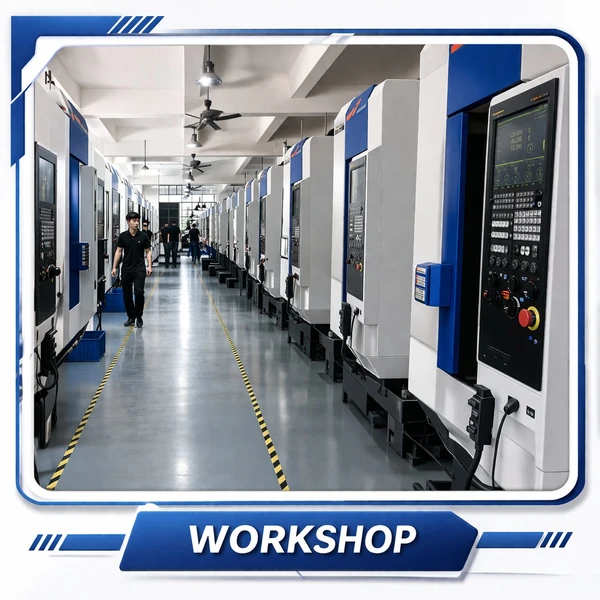
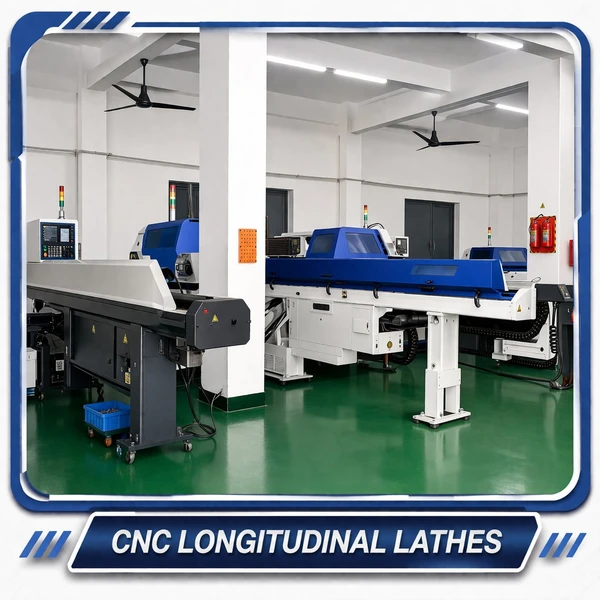
Korea Ever-Power produces plastic worm gears by CNC machining for prototype quantities and injection molding for production volumes. Handmade precision-ground prototypes are used for initial fit verification before the production mold is cut. NC gear hobbing machines, NC gear shapers, and CMM measurement equipment support production quality control.
 |
 |
 |
 |
 |
 |
Related Components
A plastic worm gear works in tandem with a worm shaft to form the core of a low-noise, low-maintenance drive stage — well suited for light-load applications where metal gearing would be excessive. When a compact, enclosed drivetrain is required, pair it with one of our worm gear reducers, which provide a pre-aligned housing, integrated shafting, and consistent center distances right out of the box.

Worm Shaft — The mating drive element that engages directly with the plastic worm gear. Hardened steel shafts ensure durability even as the plastic gear absorbs shock and reduces noise.
Worm Gear Reducer — A fully enclosed unit combining the worm shaft, housing, and output stage. Use when precise mounting, sealed lubrication, or a higher second-stage torque output is required.
Frequently Asked Questions
How do I calculate the gear ratio for a plastic worm drive?
Ratio = wheel tooth count ÷ worm start count. A 1-start worm (single-lead thread) with a 30-tooth wheel gives 30:1. At 600 RPM motor input, output is 600 ÷ 30 = 20 RPM. For a 2-start worm with 30 teeth: ratio is 15:1, output would be 40 RPM. Single-start worms give higher ratios per stage and stronger self-locking behavior; multi-start worms give higher efficiency but weaker self-locking. In these POM/nylon sets, single-start designs covering 10:1 to 80:1 are standard.
What bore tolerance should I specify for a POM gear on a steel shaft?
For a press-fit assembly, specify H7/p6 (interference fit: shaft is 0.006–0.026 mm larger than bore at Ø3 mm). For a sliding-fit with set screw, use H7/h6 (clearance fit: bore is 0–0.012 mm larger than shaft). POM's low modulus (approximately 2.6 GPa) means an interference fit that would be rigid on a metal gear may allow slight slip under torque — add a flat on the shaft or a D-shape bore for positive torque transmission above 0.01 Nm. We machine to the tolerance you specify; confirm the fit class when ordering.
What is the expected service life of a POM worm gear in an IP camera drive?
In a typical pan-tilt camera cycling at 20 positions per hour, 16 hours per day, 365 days per year — approximately 116,800 cycles/year — POM at M0.4, 30T, running dry at 0.005 Nm output has shown more than 1,500,000 cycles before measurable tooth wear in controlled endurance testing. Real-world camera drives running at this duty level should see 3–5 years of service before tooth clearance exceeds the design tolerance. The primary wear mode is abrasive loss of the sliding tooth face; the wear rate increases if the mesh zone accumulates dust or abrasive particles — keep the housing sealed.
Can a CNC prototype be made before I commit to a production mold?
Yes — this is strongly recommended. Korea Ever-Power produces handmade or CNC-machined prototypes from your drawings or samples. Sample fees range from $2 to $100 per piece depending on complexity and tolerance level. Freight is on the buyer's account. Sample fees are credited on the bulk production order. Typical prototype lead time is 5–10 working days from confirmed drawing. The prototype allows you to verify bore fit, mesh engagement, noise, and motor current before any tooling investment.
Can the worm and wheel be made in different materials within the same set?
Yes — mixed-material pairs are common. A brass worm paired with a POM wheel takes advantage of brass's dimensional stability and worm accuracy while keeping the wheel light and self-lubricating. A steel worm with a nylon GF30 wheel gives higher load capacity with less noise than an all-steel pair. When ordering a mixed set, specify the material for each component separately and provide the operating torque, speed, and temperature range so we can confirm the pairing is appropriate before production.
Is there a minimum order quantity?
Standard catalog sizes (M0.2–M2.0 in POM) accept small trial quantities — even single-digit quantities for prototype builds. Custom ODM mold tooling is costed separately and amortized over a production run agreed at quotation. We are flexible for new OEM customers in development who need small initial quantities to validate their design before a volume commitment.
Customer Reviews
Kim Tae-jun — R&D Engineer, Seoul Precision Devices Co. (Q4 2025)
M0.4 POM worms for a thermal label printer — 500 sets incoming. All passed our bore concentricity check within ±0.02 mm. Noise on the drive train came in 4 dB below our target without any housing damping treatment. Most importantly, after 200,000 print cycles on our endurance unit, backlash increase was 0.008 mm — still within our 0.015 mm limit. We have since ordered 5,000 sets for the production ramp with no spec changes required.
Lee Dong-hyun — Product Developer, Busan Medical Equipment Ltd (Q3 2025)
We needed PA66-GF30 gears with a custom bore of Ø2.1 mm — non-standard on every catalog supplier we contacted. Korea Ever-Power accommodated without issue. Three prototypes first, validated fit on the actual pump mechanism, confirmed no grease migration risk. Then went to a production order of 800 pieces. Prototype to production delivery: 38 calendar days total. Within our program timeline for a first-time supplier.
Choi Min-ji — Plant Supervisor, Incheon Vending Solutions (Late 2025)
We switched from a metal-on-metal worm pair to a POM wheel + brass worm combination after motor temperature was running too high on continuous operation vending machines. Motor temperature dropped 14°C on the switch. Motor failure rate — which had been around 3.2% per year — fell to 0.4% in the following 12 months. The POM sets also cost 18% less per unit at our volume. Both the cost and reliability improvements were larger than we expected.
Park Soo-yeon — Procurement Manager, Daejeon Automation Parts (Q1 2026)
Lead time is the critical metric for us — our production schedule has no buffer. Korea Ever-Power quoted 20 working days, delivered in 18 with advance notice of the early delivery date. Packing was correct: individual PE bags inside a foam-lined carton, no transit damage on 200 boxes. Communication during production was proactive — they flagged a minor raw material color lot variation early and asked for approval before proceeding. That kind of transparency is rare.
Packing & Shipping
Inner packing: individual PE bags with anti-static protection for sensitive polymer parts. Outer packing: rigid carton or wooden case depending on quantity. Modes of delivery: DHL, FedEx, TNT, UPS for international express. Sea freight for production volumes arranged on request. Customized packing per OEM customer requirements accepted.

Additional information
| Editor | Cxm |
|---|
Related products
-

Alloy Steel Worm and Worm Gear for Auto Parts
-

Customized Worm Gear Set | OEM/ODM, Ratio 20:1–300:1, Full Material & Gear Type Coverage
-

Stainless Steel Worm Gear for CNC | ANSI/DIN, Module 1–3, Hardness 55–60 HRC
-

Duplex Worm Gear | Dual-Lead, Continuously Adjustable Backlash
-

Cylindrical Worm Wheel | Line Contact, High Load Capacity, Bronze & Cast Iron
-

Brass Worm Wheel | M0.5, 20T×1T Matched Set
-

Worm and Wheel | Module M3–M12, Ratio 20:1–300:1, Line Contact Transmission