The Quotation That Was 35% Cheaper and Cost Four Times More
A production manager at a logistics automation company received three quotations for the same worm gear specification: Module 5, 40:1 ratio, 40Cr shaft, ZCuSn10Pb1 wheel, bore 35 mm H7. Supplier A: KRW 280,000 per set. Supplier B: KRW 420,000. Supplier C (Korea Ever-Power): KRW 380,000. He ordered from Supplier A — a 35% saving on the catalog price.
The Supplier A delivery arrived with a “certificate of conformance” — a single-page document stating the parts met the specification. No material certificate. No CMM report. No heat treatment record. At incoming inspection, the bore measured 35.08 mm — outside the H7 upper limit of 35.025 mm. The bore was re-machined in-house at a cost of KRW 80,000 per set, bringing the effective unit price to KRW 360,000. Three months later, oil analysis showed elevated copper at 2,400 ppm. One year later, the average service life of the Supplier A gear sets was 11 months versus the manufacturer’s intended 48-60 months. The material certificate that was never provided would have confirmed: wheel alloy copper content 62% (minimum standard: 78%), no tin content listed at all. The wheel was brass, not tin bronze.
The difference in true cost: Supplier A at KRW 280,000 + repairs + 3.5 additional replacements over 4 years = effective 4-year cost KRW 1,260,000+ per drive. Korea Ever-Power at KRW 380,000 with confirmed material and geometry = one replacement in 4 years = KRW 380,000 per drive.
What this guide covers: What a complete and credible worm gear quotation contains; what documentation is required and what “certificate of conformance” does and does not prove; how to calculate the true 4-year cost of a worm gear supply relationship; a supplier qualification checklist; and the specific red flags that indicate a low-quality supplier before the first order is placed.

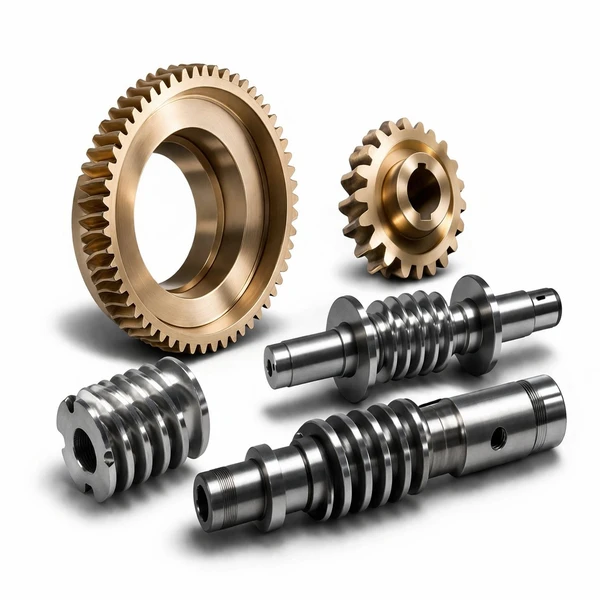
What a Complete Worm Gear Quotation Contains
A quotation is not just a price. A quotation that omits key specification elements forces assumptions — and the cheapest assumption is almost always the lower-quality one. Before accepting any quotation as the basis for a purchase order, confirm the following elements are stated explicitly.
Confirmed material specification
Not ‘alloy steel shaft’ but ‘C45 induction-hardened (50-55 HRC)’ or ’40Cr through-hardened (50-56 HRC)’ or ‘SCM415 carburized (58-62 HRC)’. Not ‘bronze wheel’ but ‘ZCuSn10Pb1 tin bronze’ or ‘ZCuAl10Fe3 aluminum-iron bronze’. The specific alloy designation is the specification — a generic material description is not.
Documented bore tolerance
The bore diameter and tolerance class stated: ’35 mm H7′ means 35.000-35.025 mm. ‘Bore 35 mm’ alone tells you nothing about the actual hole size. Non-standard bore diameters (Level 2 custom) should state the actual bore value and H7 tolerance explicitly.
Precision class stated
DIN 8, DIN 7, or DIN 6 (or equivalent AGMA class). ‘Standard precision’ is not a specification — it tells you nothing about the tolerance values. The precision class determines the allowable lead error, profile deviation, and pitch variation.
Documentation specified
‘Material certificate + CMM inspection report’ is specific. ‘Quality documentation’ is not. State what the documentation package contains and confirm the supplier can provide it before the order is placed.
Lead time and delivery terms
Production lead time (weeks from order confirmation) and shipping terms (FOB, CIF, DDP). Lead time stated in weeks, not ‘approximately’ or ‘around’. Shipping terms stated so landed cost can be calculated.
Minimum order quantity and sample pricing
MoQ per specification. Sample pricing for 1-5 pieces for initial qualification. Production pricing from confirmed MoQ. A supplier that does not offer samples for qualification is not suitable for a new specification.
Documentation Levels — What Each Proves and What It Does Not
Documentation standards in worm gear supply vary significantly between suppliers and between quality levels. Understanding exactly what each document type proves — and what it leaves unverified — is essential for procurement decisions where material verification is safety-critical or required by a quality system.
| Document Type | What It Proves | What It Does NOT Prove | Required For |
|---|---|---|---|
| Certificate of Conformance (CoC) | Supplier states the parts meet the specification | Nothing measurable — supplier’s assertion only | Insufficient for regulated or safety applications |
| Material Certificate (basic) | Material grade is stated | Actual composition, heat number, or origin | Not sufficient for ISO 13485, food, or CE documentation |
| Material Certificate (mill cert) | Actual composition by element, mill heat number traceable to origin | Heat treatment or final part hardness | Required for medical, food-grade, marine, safety-critical |
| Heat Treatment Record | Heat treatment process was performed | Achieved hardness or case depth | Standard industrial quality minimum |
| Case Depth Record | Carburized case depth measured at specified location | Profile deviation, bore tolerance, or gear geometry | Required for D3-D4 duty, SCM415 shafts |
| CMM Dimensional Report | Actual measured dimensions vs tolerance | Material composition or mechanical properties | Required for any precision-class or documentation-level supply |
| Contact Pattern Photo | Actual contact coverage on assembled rig | Long-term wear rate or material properties | Required for precision-class DIN 7 and better |
| Full ISO 13485 Package | Material, process, and quality system traceability | Device-level biocompatibility testing | Required for medical device component supply |
Calculating True Total Cost — The Framework That Makes Price Comparisons Meaningful
Unit price comparison is meaningless without service life data. The correct comparison framework is total cost over a standard period — typically 4 or 5 years for industrial machinery components. Total cost includes: unit price multiplied by the number of replacements needed; installation labour and downtime cost per replacement; incoming inspection cost; documentation management cost; and administrative cost per purchase order.
Supplier Evaluation Red Flags — Before You Place the First Order
Price significantly below market
A worm gear set has defined material costs (steel, bronze, heat treatment) and processing costs (turning, grinding, hobbing, CMM inspection). A price more than 20-25% below market average for a stated specification means one or more of the following: the specification is not what was stated (material substitution, skipped inspection); the vendor is a trader, not a manufacturer; or there is a significant quality compromise that will appear within 6-12 months of operation.
No material certificate offered
A supplier who does not offer a material certificate to mill heat number as standard documentation has a quality management system that cannot trace component materials to their origin. This is disqualifying for food-grade, medical, marine, construction safety, and automotive OEM supply. For general industrial supply, it means you cannot verify the material when a failure occurs.
‘Certificate of conformance’ as sole documentation
A CoC is the supplier self-certifying conformance. It proves only that the supplier states the part meets the specification. Without CMM data and material certificate, the statement is unverifiable. CoC-only documentation is appropriate for commodity fasteners; it is inadequate for engineered mechanical components with specific material and dimensional requirements.
No sample option for first order
A supplier who requires a minimum order of 50 or 100 pieces with no sample option cannot be qualified without committing production quantities. Quality issues discovered at 100 pieces in production are far more expensive to resolve than quality issues found at 3 sample pieces. Any credible worm gear manufacturer can supply 3-5 sample pieces at sample pricing for initial qualification.
Response time of more than 1 working day for standard enquiry
For a standard specification worm gear enquiry (module, ratio, bore, quantity), a response time of more than 1 working day indicates either that the supplier does not stock raw material (and must source before quoting), that the sales function is understaffed, or that the enquiry is not being prioritised. All of these create risk in actual supply chain management.
Manufacturing location is unclear
A trader quoting as a manufacturer will often be vague about where the gears are made. If the quotation response does not state the manufacturing location, ask explicitly. If the response is unclear, treat as a risk: quality control by a trader over a subcontractor is inherently less reliable than quality control by the manufacturer.
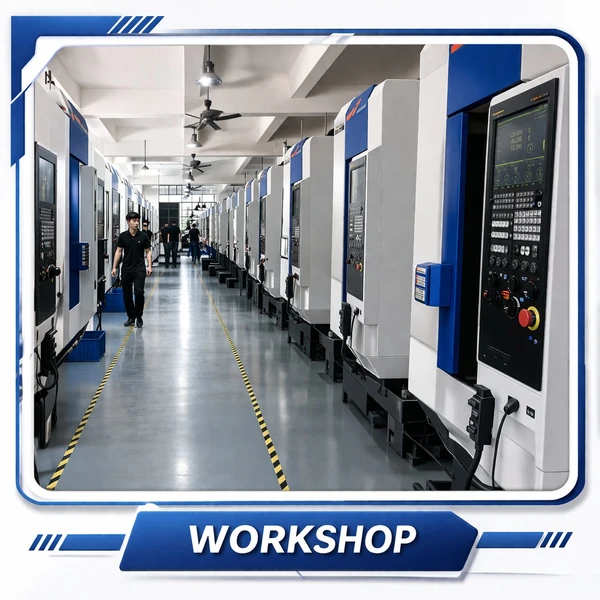
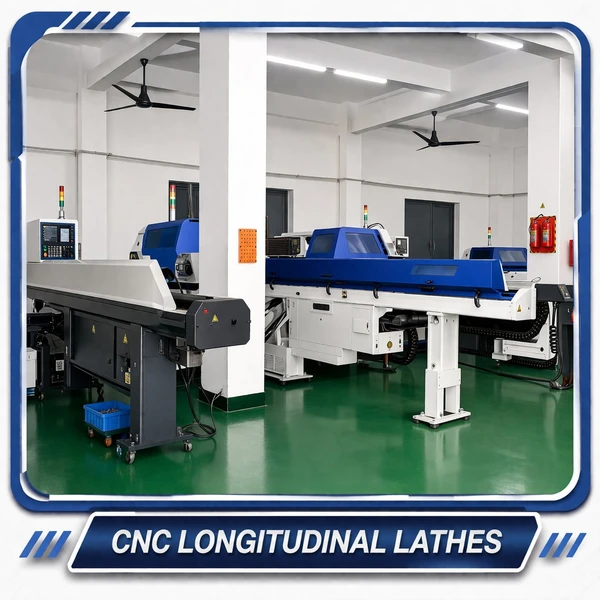
Korea Ever-Power — Manufacturing, Documentation, and Supply
 |
 |
 |
 |
 |
 |
Initial Supplier Qualification Checklist
Корея Евър-Пауър
Complete Supply from a Manufacturer — Not a Trader

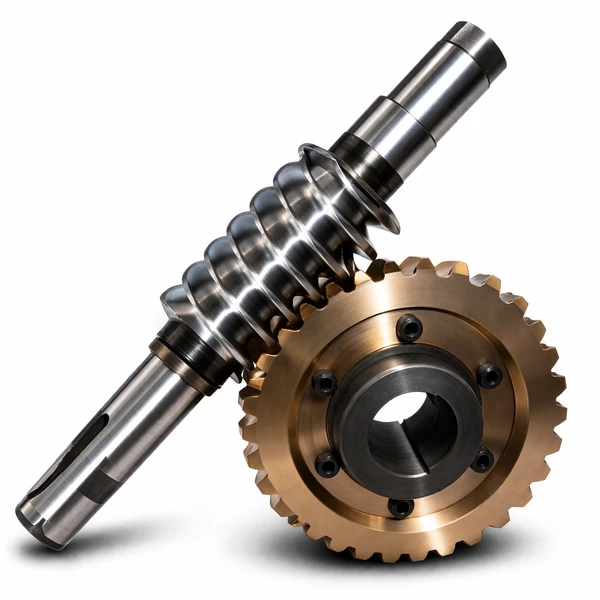
Purchasing FAQ
Worm Gear Procurement — Questions from Buyers and Quality Engineers
Request a Quotation That Proves Its Value
Provide specification parameters and any special documentation requirements. Korea Ever-Power returns a quotation that includes: confirmed material specification, documentation package contents, lead time, and MoQ — everything needed to make a complete procurement decision without assumptions.
Редактор: Cxm