ウォームギアワークショップ4

実践ガイドシリーズ · 熱工学

ウォームギア 熱管理 — 平衡温度の計算、熱限界の特定、冷却の指定

ウォームギア駆動装置には、熱定格と機械的定格の両方があります。ほとんどのエンジニアは機械的側面に注目します。夏に過熱で故障した駆動装置は、機械的仕様の範囲内でしたが、熱平衡を計算していなかったため、熱平衡を超えて動作していました。

熱計算フレームワーク平衡温度の公式冷却方法の比較オイル粘度の影響
⚙ 韓国エバーパワーウォームギア株式会社 京畿道安山市 [email protected]

夏には失敗したが冬には失敗したドライブ

韓国の印刷工場は10月にロール搬送システムに新しいウォームギア駆動装置を設置した。駆動装置は11月、12月、1月、2月までは問題なく稼働していた。しかし、7月中旬、年間で最も暑い週に異音が発生し、過熱し始めた。8月にはウォームのねじ山側面が擦り切れて故障した。駆動装置は機械的負荷に対して適切な仕様で選定されていたが、熱特性は計算されていなかった。

10月の運転条件:周囲温度18℃、ハウジング平衡温度約52℃。7月の運転条件:周囲温度34℃(換気のない機械室)、ハウジング平衡温度約75℃。75℃では、ISO VG 460鉱油の粘度が100cSt未満となり、この滑り速度で必要なEHD油膜厚さを得るには不十分であった。駆動装置は、全季節の負荷に対して機械的に定格されていたが、熱定格は冬季のみであった。

熱計算は複雑ではありません。必要なパラメータは4つだけで、計算時間は10分程度です。このガイドでは、平衡ハウジング温度の計算方法、ドライブが熱限界内にあるかどうかの確認方法、そして限界を超えている場合に適切な冷却装置やオイルのアップグレード方法を指定するための枠組みを提供します。
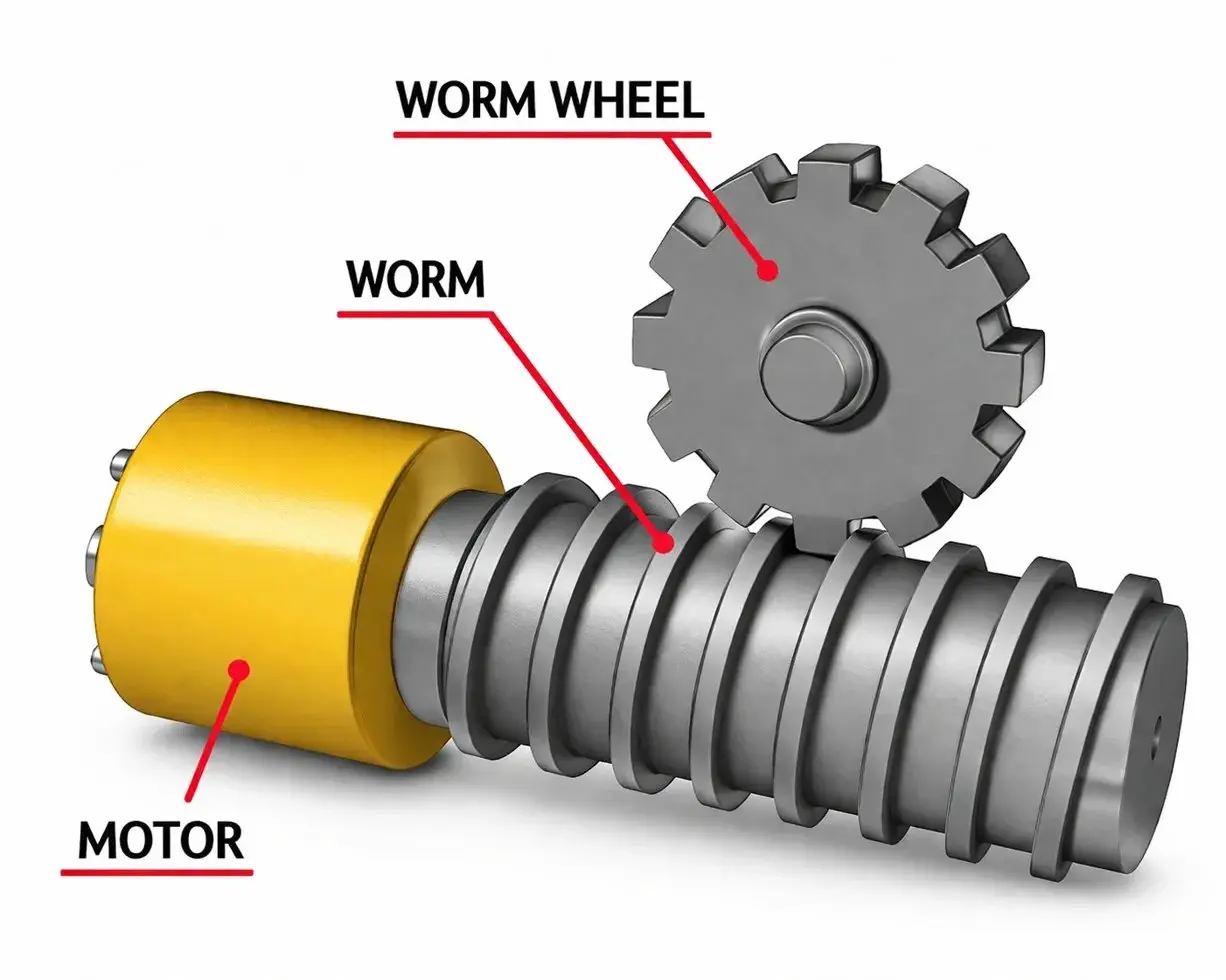
ウォームギア構造3
ウォームギア構造1

ステップ1:ギアのかみ合いにおける発熱量と動力損失を計算する

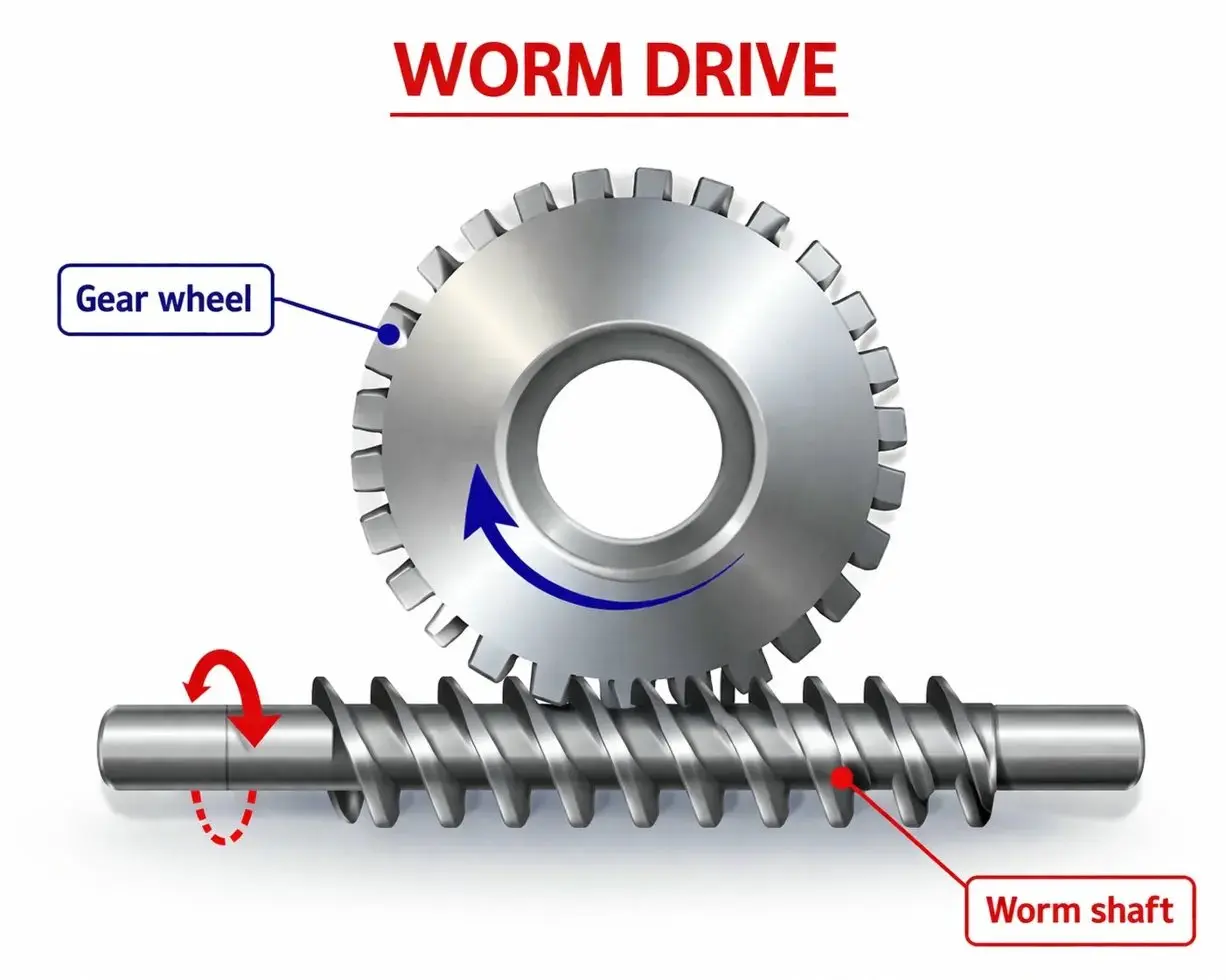
ウォームギア駆動は、他のギアタイプと比較すると非効率的な動力伝達装置である。入力動力の25%から50%がギアのかみ合い接触部で熱に変換される。この熱はハウジング表面を通して周囲環境に継続的に放出されなければならない。発熱量が放熱量を上回ると、ハウジング温度は新たな平衡状態に達するか、あるいは潤滑システムが故障するまで上昇し続ける。

発熱式
Q_損失 (W) = P_入力 (W) × (1 – eta)
P_input = モータ軸出力 (W) = モータ定格出力 × 負荷率
イータ = ウォームギアの機械効率(小数) = tan(ラムダ) / tan(ラムダ + ρ')
例:3 kWの入力、60%の効率:Q_loss = 3,000 x (1 – 0.60) = 1,200 Wの連続発熱
75%の効率の場合:Q_loss = 3,000 x (1 – 0.75) = 750 W — 同じ電力で37%少ない熱

効率は固定されておらず、潤滑油の粘度(温度によって変化する)によって変化するため、熱問題は自己増幅的になります。ドライブは冷えた状態で開始し、オイル粘度が高く、効率は中程度(例えば60%)です。ハウジングが加熱されると、オイル粘度が低下し、潤滑油膜厚さが減少し、摩擦係数が増加し、効率はさらに低下し(おそらく55%まで)、発熱量は1,200Wから1,350Wに増加します。これが、熱フィードバックループです。 効率ガイド(B4)そのため、熱計算は周囲温度ではなく、動作温度で行う必要があるのです。


ステップ2:住宅の平衡温度を計算する

筐体は、発熱量と筐体表面からの放熱量が等しくなったときに熱平衡状態に達する。平衡温度は、熱損失、熱伝達係数、および筐体表面積によって決まる。

熱平衡方程式
放熱(自然対流)
Q_reject (W) = h × A_housing × (T_housing – T_ambient)
h = 対流熱伝達係数 = 10~15 W/m2K (自然対流)、25~40 W/m2K (強制空気)
平衡条件
Q_loss = Q_reject
この方程式が満たされるとき、温度は安定する。
住宅の温度を求める
T_housing = T_ambient + Q_loss / (h x A_housing)
これは定常状態のハウジング表面温度です

計算例: 入力 3 kW、効率 60%、Q_loss = 1,200 W。ハウジング表面積 A = 0.08 m2 (一般的な小型ウォームギアハウジング)。自然対流 h = 12 W/m2K。周囲温度 25 度 C。T_housing = 25 + 1,200 / (12 x 0.08) = 25 + 1,250 = 1,275 度 C — 明らかに間違っています。この式は冷却面のみに有効であり、ハウジング表面積全体には有効ではないためです。実際には、有効放射面積は通常、ハウジング表面積全体の 60-80% です。有効面積 0.06 m2 で再計算: T = 25 + 1,200/(12 x 0.06) = 25 + 1,667 — 明らかに問題があります。正しい解釈:このドライブは、0.08平方メートルの筐体から自然対流で1,200Wの熱を放散することはできません。強制冷却、またはより効率的なドライブ構成が必要です。

熱に関する経験則: 自然対流式のウォームギアハウジングは、周囲温度より1℃上昇するごとに、ハウジング表面積1平方メートルあたり約6~10Wの熱を放出できます。0.08平方メートルのハウジングが50℃上昇した場合、放出できる熱量は0.08 × 8 × 50 = 32Wとなります。Q_lossがこの値を大幅に超える場合は、強制冷却またはより高効率のドライブが必要です。1,200Wの熱損失の場合、それを自然に放出するために必要な温度上昇は1,200 / (0.08 × 8) = 1,875度となり、物理的に不可能です。ドライブには強制冷却またははるかに大きなハウジングが必要です。


動作温度を上昇または低下させる要因

ギア比/リード角

+

高比率(シングルスタート、50:1)=リード角が浅い=効率が低い=発熱量が多い。同じ比率のマルチスタートウォーム=リード角が大きい=効率が高い=発熱量が少ない。熱定格が制約となる場合、マルチスタートウォームの仕様が主要な設計要素となる。

動作速度

-/+

ウォームシャフトの回転速度が速くなると、噛み合い部分の滑り速度が増加し、潤滑状態がEHD(摩擦が少なく、効率が高い)に近づきます。ただし、回転速度が速くなると単位時間あたりの噛み合いサイクル数も増えるため、単位時間あたりの発熱量も増加する可能性があります。熱定格は回転速度によって異なります。

油の粘度

粘度が低いほど、高速走行時のEHD膜形成が良好になり、摩擦係数が低下し、発熱量も減少します。しかし、粘度が低すぎると、低速走行時に表面が十分に分離されず、混合潤滑境界領域となり、摩擦が増加します。運転条件に適した粘度を選択することで、発熱量を最小限に抑えることができます。

PAOと鉱物油の比較

-8~-15℃

PAOの粘度指数(VI)は150以上であるのに対し、鉱物油は90~100程度です。作動温度において、同じISO VGグレードのPAOはより高い粘度を維持し、より良好な油膜を形成します。さらに、PAOは摩擦係数もわずかに低くなっています(PAOの基油化学組成により、境界保護性能が向上しています)。鉱物油からPAOに切り替えることで、作動温度を5~15℃下げることができます。

ハウジングの表面積

ハウジングが大きいほど放熱面積が大きくなり、平衡温度が低下します。熱限界に近い駆動装置の場合、ハウジングの仕様を大きくする(ギアは同じでハウジングを大きくする)ことで、他の変更を加えることなく熱問題を解決できる場合があります。フィンが延長されたハウジングを備えたウォームギア減速機もご用意しています。

周囲温度

+

周囲温度は、筐体の平衡温度に直接加算されます(T_housing = T_ambient + delta_T)。冬期には熱仕様を満たしているドライブでも、周囲温度20℃用に設計されたものが夏期に周囲温度38℃になると、夏期には故障する可能性があります。これは、周囲温度の上昇によってdelta_Tの許容範囲が消費されるためです。


冷却方法 ― 容量、コスト、そしてそれぞれの使用時期

冷却方法 放熱量の増加 導入コスト 複雑 最適な用途
自然対流(筐体表面) ベースライン なし — 標準供給 なし すべてのドライブ - 常に最優先事項
PAO合成油に切り替えましょう 15-25% 熱発生の低減。 低価格 — オイル交換費用のみ なし ドライブが目標温度より5~15℃高い温度で動作している
多条始動ウォームギア(高効率) 20-40% 熱発生の低減。 中速 — ギアセットの変更 デザイン変更 熱限界で駆動。効率改善が最優先事項。
ハウジングに取り付けられた強制空冷ファン 自然対流と比較して2~4倍の消散効果 中型 — ファン + 取り付け 低 - ファンパワー 20-50%の過剰発熱を伴うドライブ
オイル冷却コイル(水冷式または空冷式) 自然対流と比較して5~10倍の消散効果 高圧配管、熱交換器 中程度 - メンテナンスが必要 高出力駆動装置、連続産業用途
大型ハウジング/フィン付きハウジング 1.5~2倍の拒否領域 中規模 — 住宅の変化 低い 適度な余熱で走行する。スペースが許せば
冷却器付き循環オイルシステム 10~20倍の除去能力 高圧 - ポンプ、貯水槽、クーラー 高い — オイル回路全体 超高出力駆動装置、密閉型ウォーム減速機
周囲温度を下げる 平衡状態からの直接的な減算 可変式 - 必要に応じてHVAC 低い すべてのドライブ — 多くの場合、最初の行動が最もシンプル

作動温度におけるオイル粘度 ― 重要な変数

ウォームギア駆動装置の熱性能は、作動温度における油の粘度に大きく左右され、周囲温度における粘度には依存しません。40℃における粘度(460cSt)に基づいてISO VG 460鉱物油を指定することは、ハウジング内部の作動温度における実際の油の性能を誤って表すことになります。

オイルの種類/グレード 40℃における粘度 60℃における粘度 80℃における粘度 粘度指数 適切な範囲
ミネラルISO VG 220 220 cSt 85セント 38セント ~95 周囲温度~55℃の筐体
ミネラルISO VG 460 460 cSt 155 cSt 65セント ~95 周囲温度~65℃の筐体
ミネラルISO VG 680 680 cSt 215 cSt 90 cSt ~95 周囲温度~70℃の筐体
PAO ISO VG 220 (VI=155) 220 cSt 110 cSt 58セント 155 70℃までの低温ハウジング
PAO ISO VG 460 (VI=155) 460 cSt 240 cSt 130 cSt 155 周囲温度~85℃の筐体
PAO ISO VG 680 (VI=155) 680 cSt 360 cSt 200 cSt 155 Up to 95 C housing
Ester ISO VG 460 (VI=170) 460 cSt 265 cSt 150 cSt 170 High-temperature applications

Minimum required viscosity for adequate EHD film in worm gear applications: approximately 60-120 cSt at operating temperature, depending on sliding velocity and module. At sliding velocity 3 m/s and Module 5: minimum approximately 80 cSt at operating temperature. Mineral ISO VG 460 at 80 degrees C provides only 65 cSt — below the minimum. PAO ISO VG 460 at 80 degrees C provides 130 cSt — above the minimum with margin.


Korea Ever-Power — Products for Thermally Demanding Applications
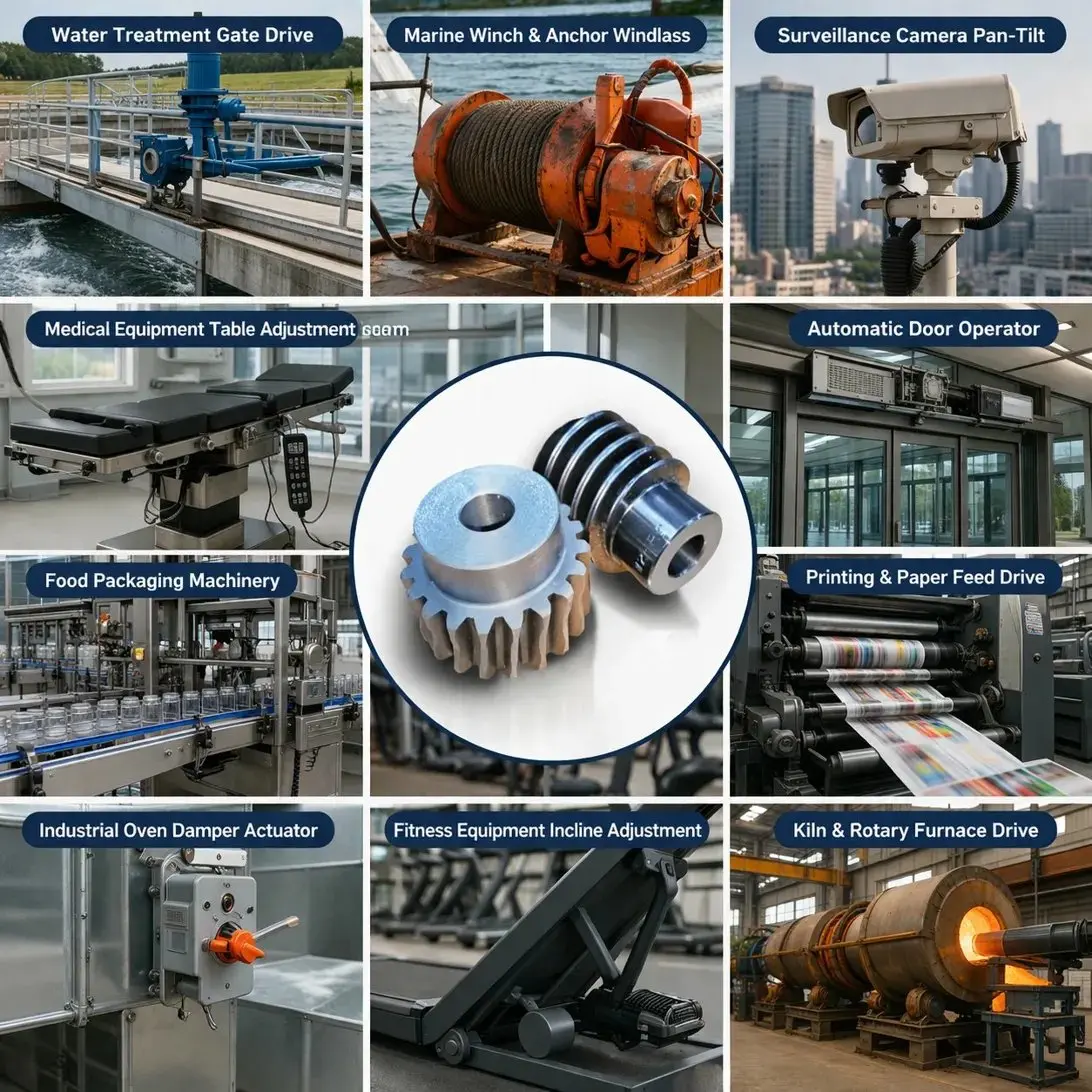
ウォームギアの応用例3 ウォームギアの応用例4 ウォームギアの応用例 5
合金鋼ウォームとウォームギア ウォームギア構造2 ウォームギア関連製品

Thermal Rating Decision Path — What to Do When the Drive is Too Hot

1
Measure ambient temperature Is ambient above the design ambient for the drive? Add forced ventilation to the installation space before any drive modification.
2
Calculate Q_loss Q_loss = P_input x (1 – eta). Is Q_loss within the housing thermal rating? Compare to manufacturer thermal power curve or calculate from surface area.
3
Check oil viscosity grade Is current oil viscosity grade correct for operating temperature? Switch to PAO if using mineral oil — reduces operating temperature 8-15 degrees C without any mechanical change.
4
Check oil level Low oil level reduces heat transfer from mesh to housing. Correct to the specified level.
5
Calculate if multi-start worm helps At same ratio: double-start worm improves efficiency from ~62% to ~75% — reduces Q_loss from 38% to 25% of input power. Calculate new equilibrium temperature with improved efficiency.
6
Specify forced cooling if still over limit If all above actions are insufficient: forced air fan on housing (2-4x rejection capacity), or specify an enclosed worm reducer with integrated oil cooling for larger drives.

韓国エバーパワー

Worm Gear Products for Thermally Demanding Applications
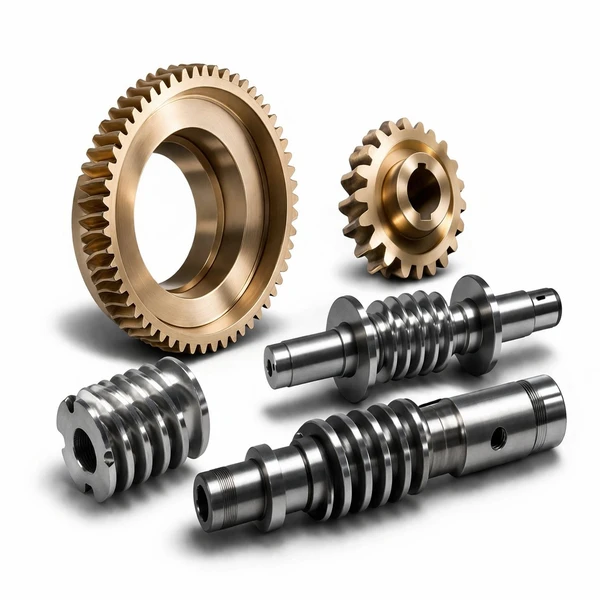
Alloy Steel Worm Gear Set -- Thermal-Optimised Specification
Multi-Start Available / PAO Specification / Thermal Analysis
Alloy Steel Worm Gear Set — Thermal-Optimised Specification
When a worm gear drive is approaching its thermal limit, two specification changes available from Korea Ever-Power can significantly reduce heat generation: (1) multi-start worm (z1=2 or z1=4) at the same gear ratio, increasing efficiency by 10-20 percentage points and reducing heat generation proportionally; and (2) PAO synthetic lubricant specification, with the lubrication data sheet documenting the operating viscosity at the calculated housing equilibrium temperature. For new drive specifications where thermal performance is a concern, Korea Ever-Power calculates the estimated housing equilibrium temperature at order placement — providing efficiency estimate, heat generation at rated power, and estimated temperature rise at the specified operating conditions. If the calculation shows the drive is at or near its thermal limit, multi-start or PAO specification is recommended before the order is placed.

仕様を見る

Custom Worm Gear Set -- With Thermal Performance Analysis
Thermal Calculation Included / Custom Ratio / Full Documentation
Custom Worm Gear Set — With Thermal Performance Analysis
For drive applications where continuous duty, high load factor, or elevated ambient temperature makes thermal performance a specification concern, Korea Ever-Power includes a thermal performance estimate as part of the specification confirmation for every custom gear set order. The estimate covers: forward efficiency at the specified operating point; heat generation at rated and maximum power; estimated housing equilibrium temperature based on standard housing surface area and natural convection; and recommendation for cooling method if the equilibrium temperature exceeds 80 degrees C. This analysis is performed from the application parameters provided at order placement (input power, motor speed, ambient temperature, duty cycle, housing configuration) and documented in the order confirmation.

仕様を見る

Enclosed Worm Gear Reducer -- Thermal-Managed
Worm Reducer / Enclosed / Cooling Options
Enclosed Worm Gear Reducer — Thermal-Managed
For applications requiring more thermal management capacity than a bare gear set in an open housing can provide, Korea Ever-Power’s enclosed worm gear reducer range incorporates design features for improved thermal performance: finned aluminium housing for increased surface area and convection; provision for forced air cooling fan mounting; and oil cooling coil options for high-power installations. The enclosed reducer provides a complete, oil-filled, sealed drive assembly with documented thermal power rating at specified ambient temperature. Thermal power rating is the maximum continuous power at which the housing stays below the lubricant’s temperature limit without external cooling. For drives above the thermal power rating, specification of forced air or oil cooling is included in the delivery documentation. See wormgearreduer.top for the full enclosed reducer range.

仕様を見る

Thermal FAQ

Worm Gear Thermal Management — Questions from Drive System Engineers

What is the maximum safe operating temperature for a worm gear drive, and how is the limit determined?+

The maximum safe operating temperature is determined by three simultaneous limits, and the lowest of the three governs. First, the lubricant thermal stability limit: mineral oil begins to oxidise rapidly above 70 degrees C; PAO synthetic is stable to approximately 100 degrees C; ester-based oils are stable to 110-120 degrees C. Second, the seal elastomer temperature limit: standard NBR seals operate to 100 degrees C continuous; FKM (Viton) seals to 150 degrees C. Third, the bronze wheel temperature limit: sustained temperatures above 150 degrees C can anneal the cold-worked surface layer of the tin bronze wheel, reducing surface hardness and accelerating wear. In practice, the lubricant thermal stability limit governs for mineral oil (70 degrees C), and PAO synthetic allows operation to approximately 100 degrees C. A target housing surface temperature of 70 degrees C maximum is appropriate for mineral oil and 85 degrees C for PAO in continuous industrial service.

My drive runs at 65 degrees C in winter but 82 degrees C in summer. Should I specify cooling for summer operation only?+

The correct approach for seasonally variable temperature applications is to specify the drive for summer worst-case and not add seasonal cooling systems that require seasonal maintenance. Options: (1) switch to PAO synthetic oil, which reduces operating temperature by 8-15 degrees C — this may bring the 82-degree summer peak down to 68-74 degrees C, within acceptable range; (2) specify forced air cooling (axial fan on the housing) that can be left running year-round without any seasonal intervention; (3) if the drive is in a machine room, investigate improving summer ventilation — bringing the ambient from 35 degrees C to 28 degrees C has the same effect as adding 7 degrees C of drive cooling. A seasonally switched cooling system (cooling only in summer) requires reliable operation and maintenance, and if it fails in summer, the drive fails.

Can I use a lower viscosity oil to reduce friction and lower operating temperature?+

Lower viscosity reduces the viscous drag component of friction, which can reduce operating temperature slightly — but this effect is secondary to the lubricant film thickness effect. If viscosity is too low, the EHD film at the mesh contact becomes inadequate, and boundary lubrication friction increases, potentially raising operating temperature above what the higher-viscosity oil produced. The correct approach: specify the minimum viscosity grade that provides adequate EHD film at operating temperature, and switch to PAO (high VI) rather than lower VG grade to get the viscosity stability benefit without the film thickness reduction. Correct minimum viscosity at operating temperature: 60-120 cSt depending on sliding velocity and module. Do not reduce viscosity grade below the minimum required for film formation.

We are designing a new machine and need to confirm the thermal rating of the worm gear drive before finalizing the housing. What parameters does Korea Ever-Power need for a thermal analysis?+

Korea Ever-Power can provide a thermal analysis estimate for new machine designs based on: input power (kW or W), worm shaft speed (RPM), gear ratio and start count (to calculate efficiency), ambient temperature range (minimum and maximum), duty cycle (hours per day, load factor during operation), and housing configuration (whether enclosed or semi-enclosed, mounting orientation). With these parameters, Korea Ever-Power calculates estimated efficiency, heat generation at rated power, and whether the drive is within natural convection thermal rating or requires forced cooling. This analysis is provided as part of the specification confirmation for new drive designs at no charge. Provide the parameters at initial enquiry for the analysis to be included in the quotation response.

Why does a worm gear drive sometimes get hotter after the first oil change than it was before?+

This is the running-in completion effect. During the first 50-100 hours of operation, the tooth flanks are conforming — micro-asperities are cold-working and the contact area is growing toward the full line contact design geometry. During this period, friction at the mesh is slightly higher than the steady-state design value, but the effect is partially masked by the fact that the running-in oil (if it has accumulated wear debris) has added solid particles that slightly increase the effective viscosity. When the running-in oil is changed for fresh clean oil, the viscosity is restored to the grade specification, which may be slightly lower than the debris-thickened running-in oil, resulting in slightly less viscous film thickness and marginally higher friction. This is a transient effect that resolves within 10-20 operating hours as the fresh oil distributes and the contact geometry stabilises.

Is it possible to estimate worm gear efficiency from housing temperature measurement without opening the drive?+

Yes, with reasonable accuracy. Measure: housing surface temperature T_housing, ambient temperature T_ambient, motor input power P_input (from motor current x voltage x power factor). Calculate: Q_loss = P_input x (1 – eta) = h x A x (T_housing – T_ambient). From the housing surface area A (estimated from housing dimensions) and the natural convection coefficient h (estimated as 10-15 W/m2K for natural convection, 25-40 W/m2K for forced air convection), solve for eta: eta = 1 – h x A x (T_housing – T_ambient) / P_input. This method is accurate to +/- 5-10 percentage points for steady-state operation and provides a useful indication of whether efficiency is within the expected range for the drive specification.

Our worm gear drive is enclosed in a machine cabinet with limited ventilation. What cooling approach is most practical?+

For a drive in an enclosed cabinet, the options in order of implementation simplicity: (1) add ventilation holes with filtered covers to the cabinet (bringing ambient air into contact with the housing); (2) add a small axial fan inside the cabinet to circulate air over the housing surface (low power, low noise, effective for moderate heat loads); (3) add a heat exchanger panel to the cabinet (bringing the cabinet interior to ambient temperature); (4) mount the worm gear drive outside the cabinet on the exterior wall, where it has direct ambient air exposure. For drives in thermally critical cabinet installations, specifying an enclosed worm gear reducer with integrated thermal management is the most reliable approach — the reducer housing design accounts for the enclosed installation.

What is the difference between thermal power rating and mechanical power rating for a worm gear reducer?+

Mechanical power rating is the maximum torque/power the gear set can transmit without mechanical failure (tooth fracture, scuffing, pitting fatigue). Thermal power rating is the maximum power the drive can transmit continuously while maintaining housing temperature below the lubricant temperature limit under stated ambient conditions. For standard worm gear reducers at typical ratios, the thermal power rating is often lower than the mechanical power rating — meaning the drive reaches its thermal limit before its mechanical limit in continuous operation. Intermittent duty (where the duty cycle allows the housing to cool during idle periods) allows operation above the continuous thermal rating, because the time-averaged heat generation is lower than the peak instantaneous heat generation. Thermal power rating should always be checked for continuous-duty worm gear drives alongside the mechanical torque rating.

Get a Thermal Analysis for Your Worm Gear Drive

Provide input power, shaft speed, ambient temperature range, duty cycle, and housing configuration. Korea Ever-Power calculates the estimated equilibrium housing temperature and returns a specification recommendation — including whether PAO, multi-start, or forced cooling is needed — with the quotation.

製品を閲覧する

編集者: Cxm