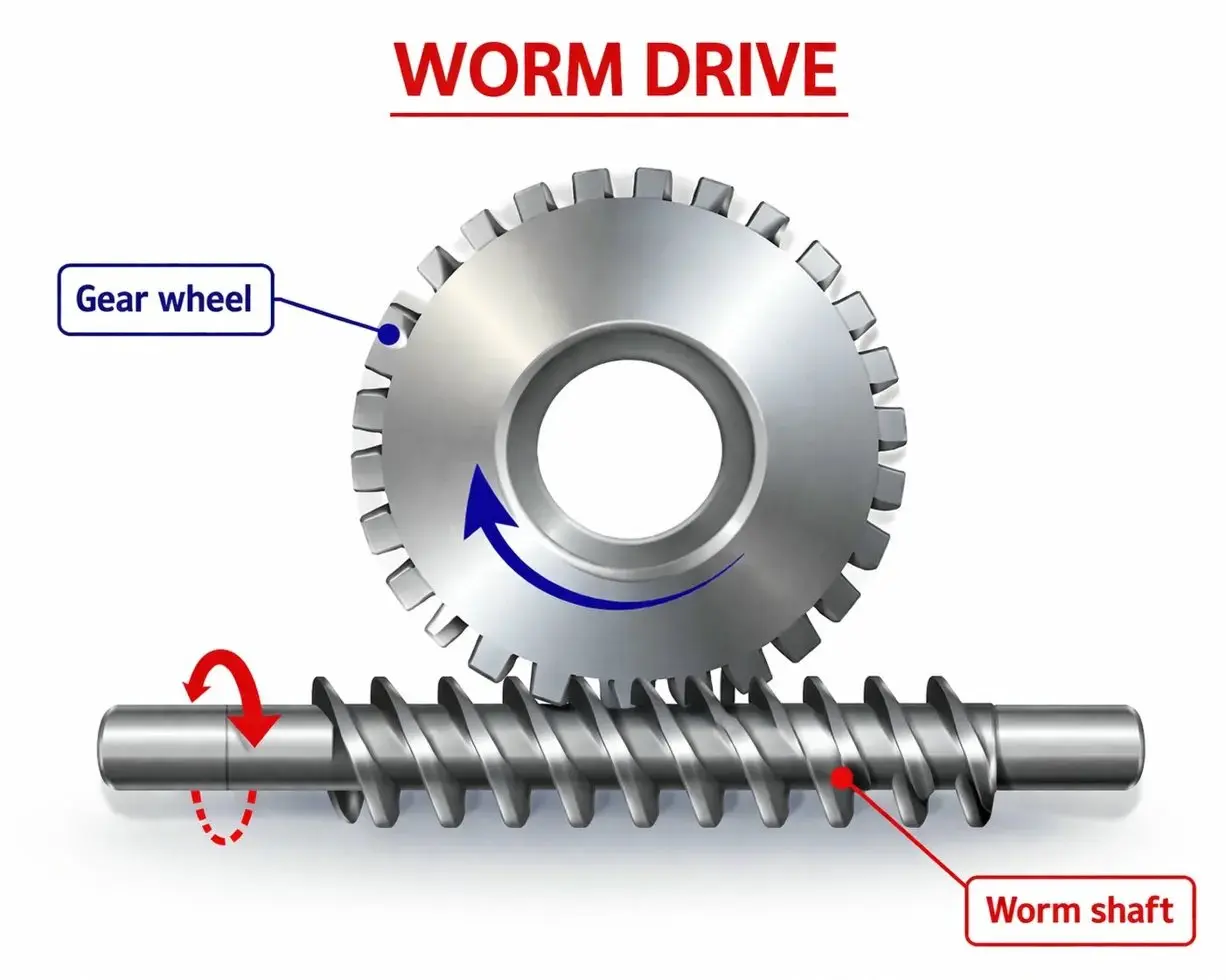
taller de engranajes helicoidales 4

Serie de guías prácticas · Ingeniería térmica

Engranaje helicoidal Gestión térmica — Cálculo de la temperatura de equilibrio, identificación del límite térmico y especificación de la refrigeración

Cada transmisión de engranajes helicoidales tiene una clasificación térmica y mecánica. La mayoría de los ingenieros se centran en la parte mecánica. La transmisión que falló por sobrecalentamiento en verano cumplía con las especificaciones mecánicas, pero operaba por encima del equilibrio térmico sin que nadie calculara el balance de calor.

Marco de cálculo térmicoFórmula de temperatura de equilibrioComparación de métodos de enfriamientoImpacto de la viscosidad del aceite
⚙ Korea Ever-Power Worm Gear Co., Ltd. Ansan-si, Gyeonggi-do, Corea [email protected]

El disco duro que falló en verano pero no en invierno.

En octubre, una imprenta coreana instaló un nuevo mecanismo de engranajes helicoidales en un sistema de manipulación de bobinas. El mecanismo funcionó sin problemas durante noviembre, diciembre, enero y febrero. A mediados de julio, durante la semana más calurosa del año, comenzó a hacer ruido y a sobrecalentarse. En agosto, falló debido al desgaste de los flancos de la rosca del engranaje helicoidal. El mecanismo se había especificado correctamente para la carga mecánica. Sin embargo, nunca se calculó la especificación térmica.

Las condiciones de funcionamiento en octubre fueron: temperatura ambiente de 18 °C y temperatura de equilibrio de la carcasa de aproximadamente 52 °C. En julio: temperatura ambiente de 34 °C (sala de máquinas sin ventilación) y temperatura de equilibrio de la carcasa de aproximadamente 75 °C. A 75 °C, el aceite mineral ISO VG 460 tenía una viscosidad inferior a 100 cSt, insuficiente para el espesor de película EHD requerido a esta velocidad de deslizamiento. El accionamiento estaba diseñado mecánicamente para soportar la carga en todas las estaciones. Su diseño térmico solo era adecuado para el invierno.

El cálculo térmico no es complejo: requiere cuatro parámetros y 10 minutos de cálculo. Esta guía proporciona el marco para calcular la temperatura de equilibrio de la carcasa, determinar si una unidad está dentro de su límite térmico y especificar la refrigeración o la actualización de aceite adecuadas en caso contrario.
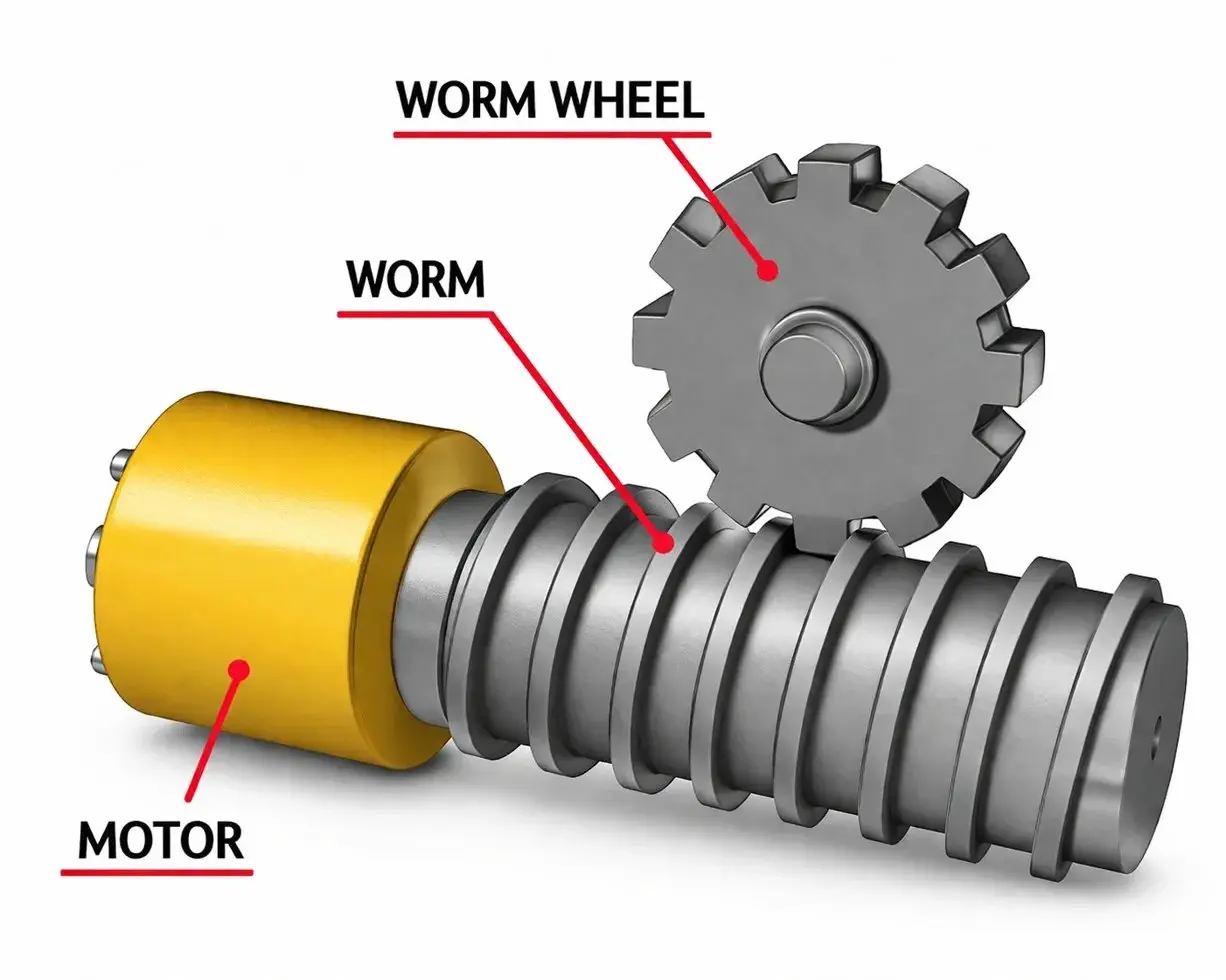
Estructura de engranaje helicoidal 3
Estructura de engranaje helicoidal 1

Paso 1: Calcular el calor generado y la pérdida de potencia en el engranaje.

Un engranaje helicoidal es un dispositivo de transmisión de potencia ineficiente en comparación con otros tipos de engranajes. Entre 251 TP3T y 501 TP3T de la potencia de entrada se convierte en calor en el punto de contacto de los engranajes. Este calor debe disiparse continuamente a través de la superficie de la carcasa hacia el ambiente. Si la generación de calor supera la disipación, la temperatura de la carcasa aumenta hasta alcanzar un nuevo equilibrio o hasta que falla el sistema de lubricación.

Fórmula de generación de calor
Pérdida_Q (W) = Entrada_P (W) x (1 – eta)
P_entrada = potencia del eje del motor (W) = potencia nominal del motor x factor de carga
eta = eficiencia mecánica del engranaje helicoidal (decimal) = tan(lambda) / tan(lambda + rho-prima)
Ejemplo: Entrada de 3 kW con una eficiencia de 60%: Q_loss = 3000 x (1 – 0,60) = 1200 W de generación de calor continua.
Con una eficiencia de 75%: Q_loss = 3000 x (1 – 0,75) = 750 W — 37% generan menos calor para la misma potencia.

La eficiencia no es fija, varía con la viscosidad del lubricante (que varía con la temperatura), razón por la cual el problema térmico se retroalimenta. Un accionamiento arranca en frío, la viscosidad del aceite es alta, la eficiencia es moderada (por ejemplo, 60%). A medida que la carcasa se calienta, la viscosidad del aceite disminuye, el espesor de la película lubricante se reduce, el coeficiente de fricción aumenta, la eficiencia cae aún más (quizás a 55%) y la generación de calor aumenta de 1200 W a 1350 W. Este es el ciclo de retroalimentación térmica descrito en el Guía de eficiencia (B4)Y es por eso que los cálculos térmicos deben realizarse a la temperatura de funcionamiento, no a la temperatura ambiente.


Paso 2: Calcular la temperatura de equilibrio de la vivienda.

La carcasa alcanza el equilibrio térmico cuando la generación de calor es igual a la disipación de calor a través de su superficie. La temperatura de equilibrio depende de la pérdida de calor, el coeficiente de transferencia de calor y la superficie de la carcasa.

Ecuaciones de equilibrio térmico
Rechazo de calor (convección natural)
Q_rechazo (W) = h x A_vivienda x (T_vivienda – T_ambiente)
h = coeficiente de transferencia de calor por convección = 10-15 W/m2K (convección natural), 25-40 W/m2K (aire forzado)
Condición de equilibrio
Pérdida Q = Rechazo Q
Cuando se cumple esta ecuación, la temperatura es estable.
Solución para la temperatura de la vivienda
T_vivienda = T_ambiente + Q_pérdida / (h x A_vivienda)
Esta es la temperatura de la superficie de la carcasa en estado estacionario.

Ejemplo de cálculo: entrada de 3 kW, eficiencia de 60%, Q_loss = 1200 W. Superficie de la carcasa A = 0,08 m2 (carcasa típica de engranaje helicoidal pequeño). Convección natural h = 12 W/m2K. Ambiente 25 grados C. T_carcasa = 25 + 1200 / (12 x 0,08) = 25 + 1250 = 1275 grados C — claramente incorrecto, porque la fórmula solo es válida para la superficie de enfriamiento, no para la superficie total de la carcasa. En la práctica, el área radiante efectiva es típicamente 60-80% de la superficie total de la carcasa. Recalculando con un área efectiva de 0,06 m2: T = 25 + 1200/(12 x 0,06) = 25 + 1667 — todavía claramente problemático. La interpretación correcta es que este variador no puede disipar 1200 W por convección natural en una carcasa de 0,08 m². Se requiere refrigeración forzada o una configuración de variador más eficiente.

Regla general térmica: Una carcasa de engranaje helicoidal de convección natural puede disipar aproximadamente entre 6 y 10 W por metro cuadrado de superficie por cada grado Celsius de aumento de temperatura por encima de la temperatura ambiente. Una carcasa de 0,08 m² con un aumento de 50 grados Celsius puede disipar 0,08 x 8 x 50 = 32 W. Si la pérdida de calor supera significativamente esta cifra, se requiere refrigeración forzada o un variador de frecuencia de mayor eficiencia. Para una pérdida de calor de 1200 W, el aumento de temperatura necesario para disiparla de forma natural sería de 1200 / (0,08 x 8) = 1875 grados, lo cual es físicamente imposible. El variador necesita refrigeración forzada o una carcasa mucho más grande.


Factores que aumentan o disminuyen la temperatura de funcionamiento

Relación de transmisión / Ángulo de avance

+

Relación alta (arranque único a 50:1) = ángulo de avance reducido = baja eficiencia = mayor calor. Enrollador de tornillo sin fin de arranque múltiple con la misma relación = ángulo de avance mayor = mejor eficiencia = menor calor. Si la clasificación térmica es la limitación, la especificación del enrollador de tornillo sin fin de arranque múltiple es el factor de diseño principal.

Velocidad de funcionamiento

-/+

Una mayor velocidad del eje sin fin aumenta la velocidad de deslizamiento en el engranaje, lo que desplaza el régimen de lubricación hacia la electrohidrodinámica (menor fricción, mayor eficiencia). Sin embargo, una mayor velocidad también implica más ciclos de engranaje por unidad de tiempo, por lo que la generación de calor por unidad de tiempo puede aumentar. La capacidad térmica varía con la velocidad.

Viscosidad del aceite

Menor viscosidad = mejor desarrollo de la película EHD a alta velocidad = menor coeficiente de fricción = menor generación de calor. Sin embargo, una viscosidad demasiado baja no separa adecuadamente las superficies a baja velocidad; el régimen de lubricación mixta implica mayor fricción. La viscosidad correcta para las condiciones de operación minimiza la generación de calor.

PAO frente a aceite mineral

-8 a -15 °C

El PAO tiene un índice de viscosidad (VI) superior a 150, frente a los 90-100 del aceite mineral. A la temperatura de funcionamiento, el PAO del mismo grado ISO VG mantiene una viscosidad más alta, lo que proporciona una mejor película; además, el PAO tiene un coeficiente de fricción ligeramente inferior (debido a la mejor protección de la interfaz gracias a su composición química). El cambio de aceite mineral a PAO reduce la temperatura de funcionamiento entre 5 y 15 °C.

Superficie de la vivienda

Una carcasa más grande implica mayor superficie para disipar el calor, lo que resulta en una menor temperatura de equilibrio. Para un accionamiento que opera al límite térmico, una carcasa de mayor tamaño (con los mismos engranajes, pero de mayor diámetro) puede solucionar el problema térmico sin necesidad de realizar ningún otro cambio. Existen reductores de engranajes helicoidales con carcasas de aletas extendidas.

Temperatura ambiente

+

La temperatura ambiente se suma directamente a la temperatura de equilibrio de la carcasa (T_carcasa = T_ambiente + delta_T). Un disco duro que cumple con las especificaciones térmicas en invierno puede fallar en verano si fue diseñado para una temperatura ambiente de 20 °C y la temperatura ambiente en verano es de 38 °C; el margen de delta_T se consume debido al aumento de la temperatura ambiente.


Métodos de refrigeración: capacidad, coste y cuándo utilizar cada uno.

Método de enfriamiento Aumento del rechazo de calor Costo de implementación Complejidad Lo mejor para
Convección natural (superficie de la carcasa) Base Ninguno — suministro estándar Nulo Todos los impulsos: siempre la primera consideración
Cámbiate al aceite sintético PAO. 15-25% reducción en la generación de calor. Bajo: solo el costo del cambio de aceite Nulo Unidades funcionando entre 5 y 15 °C por encima de la temperatura objetivo.
Gusano de arranque múltiple (mayor eficiencia) 20-40% reducción en la generación de calor. Medio: cambio de marchas Cambio de diseño Accionamientos al límite térmico; mejora de la eficiencia principal
Ventilador de refrigeración por aire forzado en la carcasa Rechazo de 2 a 4 veces mayor que la convección natural. Mediano: ventilador + montaje Baja — potencia del ventilador Variadores con generación de calor excesivo 20-50%
Serpentín de refrigeración de aceite (agua o aire) Rechazo de 5 a 10 veces mayor que la convección natural. Alto — tuberías, intercambiador de calor Medio: requiere mantenimiento Accionamientos de alta potencia; servicio industrial continuo
Viviendas más grandes / viviendas con aletas Área de rechazo de 1,5 a 2x Medio — cambio de vivienda Bajo Unidades con exceso de calor moderado; donde el espacio lo permita.
Sistema de aceite circulante con enfriador Capacidad de rechazo de 10 a 20x Alto: bomba, depósito, enfriador Alto: circuito de aceite completo Accionamientos de muy alta potencia; reductores de tornillo sin fin encapsulados
Temperatura ambiente más baja Resta directa del equilibrio Variable: sistema de climatización si es necesario. Bajo Todos los impulsos: a menudo la primera acción más sencilla

Viscosidad del aceite a la temperatura de funcionamiento: la variable crítica.

El rendimiento térmico de un engranaje helicoidal depende fundamentalmente de la viscosidad del aceite a la temperatura de funcionamiento, no a temperatura ambiente. Especificar aceite mineral ISO VG 460 basándose en su viscosidad a 40 °C (460 cSt) no refleja con precisión el rendimiento real del aceite a la temperatura de funcionamiento dentro de la carcasa.

Tipo/Grado de aceite Viscosidad a 40 °C Viscosidad a 60 °C Viscosidad a 80 °C Índice de viscosidad Gama adecuada
Mineral ISO VG 220 220 cSt 85 cSt 38 cSt ~95 Vivienda con temperatura ambiente de hasta 55 °C
Mineral ISO VG 460 460 cSt 155 cSt 65 cSt ~95 Vivienda con temperatura ambiente de hasta 65 °C
Mineral ISO VG 680 680 cSt 215 cSt 90 cSt ~95 Vivienda con temperatura ambiente de hasta 70 °C
PAO ISO VG 220 (VI=155) 220 cSt 110 cSt 58 cSt 155 Vivienda con temperatura de frío a 70 °C
PAO ISO VG 460 (VI=155) 460 cSt 240 cSt 130 cSt 155 Vivienda con temperatura ambiente de hasta 85 °C
PAO ISO VG 680 (VI=155) 680 cSt 360 cSt 200 cSt 155 Up to 95 C housing
Ester ISO VG 460 (VI=170) 460 cSt 265 cSt 150 cSt 170 High-temperature applications

Minimum required viscosity for adequate EHD film in worm gear applications: approximately 60-120 cSt at operating temperature, depending on sliding velocity and module. At sliding velocity 3 m/s and Module 5: minimum approximately 80 cSt at operating temperature. Mineral ISO VG 460 at 80 degrees C provides only 65 cSt — below the minimum. PAO ISO VG 460 at 80 degrees C provides 130 cSt — above the minimum with margin.


Korea Ever-Power — Products for Thermally Demanding Applications
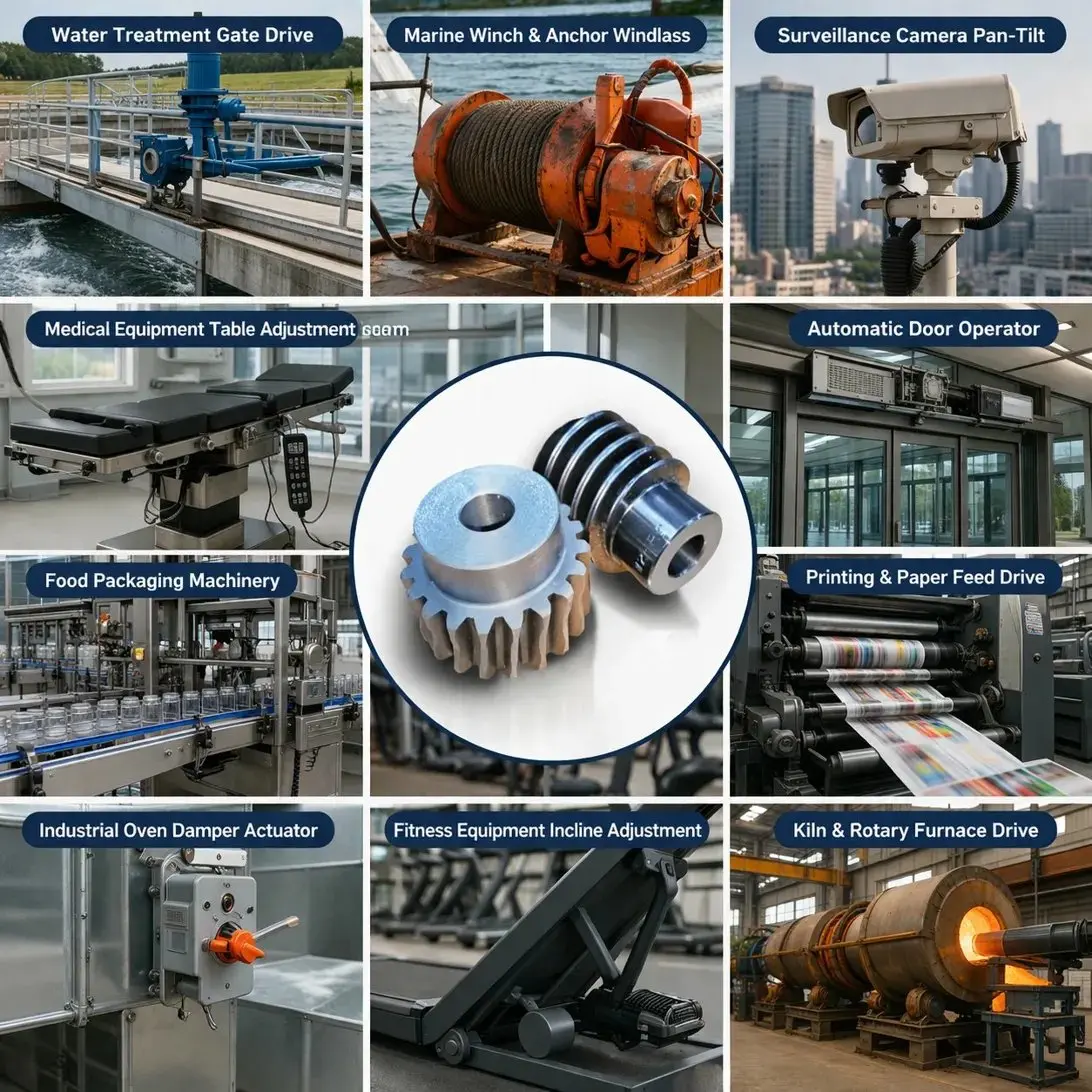
Aplicación de engranaje helicoidal 3 Aplicación de engranaje helicoidal 4 Aplicación de engranaje helicoidal 5
Tornillo sin fin y engranaje helicoidal de acero aleado Estructura de engranaje helicoidal 2 Producto relacionado con engranajes helicoidales

Thermal Rating Decision Path — What to Do When the Drive is Too Hot

1
Measure ambient temperature Is ambient above the design ambient for the drive? Add forced ventilation to the installation space before any drive modification.
2
Calculate Q_loss Q_loss = P_input x (1 – eta). Is Q_loss within the housing thermal rating? Compare to manufacturer thermal power curve or calculate from surface area.
3
Check oil viscosity grade Is current oil viscosity grade correct for operating temperature? Switch to PAO if using mineral oil — reduces operating temperature 8-15 degrees C without any mechanical change.
4
Check oil level Low oil level reduces heat transfer from mesh to housing. Correct to the specified level.
5
Calculate if multi-start worm helps At same ratio: double-start worm improves efficiency from ~62% to ~75% — reduces Q_loss from 38% to 25% of input power. Calculate new equilibrium temperature with improved efficiency.
6
Specify forced cooling if still over limit If all above actions are insufficient: forced air fan on housing (2-4x rejection capacity), or specify an enclosed worm reducer with integrated oil cooling for larger drives.

Corea Ever-Power

Worm Gear Products for Thermally Demanding Applications
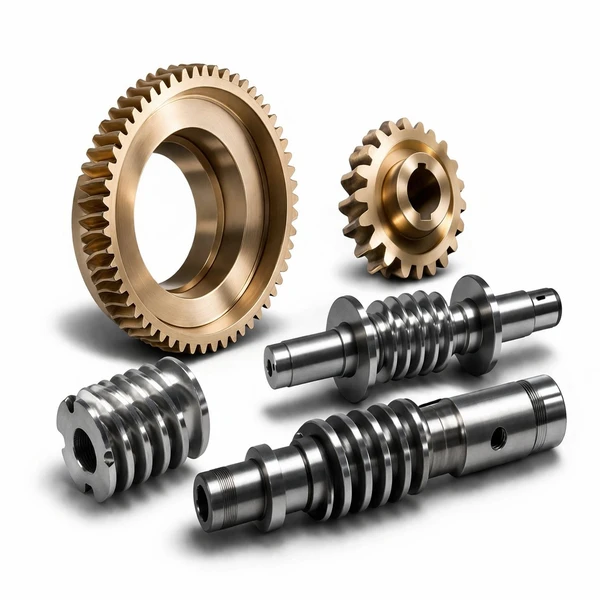
Alloy Steel Worm Gear Set -- Thermal-Optimised Specification
Multi-Start Available / PAO Specification / Thermal Analysis
Alloy Steel Worm Gear Set — Thermal-Optimised Specification
When a worm gear drive is approaching its thermal limit, two specification changes available from Korea Ever-Power can significantly reduce heat generation: (1) multi-start worm (z1=2 or z1=4) at the same gear ratio, increasing efficiency by 10-20 percentage points and reducing heat generation proportionally; and (2) PAO synthetic lubricant specification, with the lubrication data sheet documenting the operating viscosity at the calculated housing equilibrium temperature. For new drive specifications where thermal performance is a concern, Korea Ever-Power calculates the estimated housing equilibrium temperature at order placement — providing efficiency estimate, heat generation at rated power, and estimated temperature rise at the specified operating conditions. If the calculation shows the drive is at or near its thermal limit, multi-start or PAO specification is recommended before the order is placed.

Ver especificaciones

Custom Worm Gear Set -- With Thermal Performance Analysis
Thermal Calculation Included / Custom Ratio / Full Documentation
Custom Worm Gear Set — With Thermal Performance Analysis
For drive applications where continuous duty, high load factor, or elevated ambient temperature makes thermal performance a specification concern, Korea Ever-Power includes a thermal performance estimate as part of the specification confirmation for every custom gear set order. The estimate covers: forward efficiency at the specified operating point; heat generation at rated and maximum power; estimated housing equilibrium temperature based on standard housing surface area and natural convection; and recommendation for cooling method if the equilibrium temperature exceeds 80 degrees C. This analysis is performed from the application parameters provided at order placement (input power, motor speed, ambient temperature, duty cycle, housing configuration) and documented in the order confirmation.

Ver especificaciones

Enclosed Worm Gear Reducer -- Thermal-Managed
Worm Reducer / Enclosed / Cooling Options
Enclosed Worm Gear Reducer — Thermal-Managed
For applications requiring more thermal management capacity than a bare gear set in an open housing can provide, Korea Ever-Power’s enclosed worm gear reducer range incorporates design features for improved thermal performance: finned aluminium housing for increased surface area and convection; provision for forced air cooling fan mounting; and oil cooling coil options for high-power installations. The enclosed reducer provides a complete, oil-filled, sealed drive assembly with documented thermal power rating at specified ambient temperature. Thermal power rating is the maximum continuous power at which the housing stays below the lubricant’s temperature limit without external cooling. For drives above the thermal power rating, specification of forced air or oil cooling is included in the delivery documentation. See wormgearreduer.top for the full enclosed reducer range.

Ver especificaciones

Thermal FAQ

Worm Gear Thermal Management — Questions from Drive System Engineers

What is the maximum safe operating temperature for a worm gear drive, and how is the limit determined?+

The maximum safe operating temperature is determined by three simultaneous limits, and the lowest of the three governs. First, the lubricant thermal stability limit: mineral oil begins to oxidise rapidly above 70 degrees C; PAO synthetic is stable to approximately 100 degrees C; ester-based oils are stable to 110-120 degrees C. Second, the seal elastomer temperature limit: standard NBR seals operate to 100 degrees C continuous; FKM (Viton) seals to 150 degrees C. Third, the bronze wheel temperature limit: sustained temperatures above 150 degrees C can anneal the cold-worked surface layer of the tin bronze wheel, reducing surface hardness and accelerating wear. In practice, the lubricant thermal stability limit governs for mineral oil (70 degrees C), and PAO synthetic allows operation to approximately 100 degrees C. A target housing surface temperature of 70 degrees C maximum is appropriate for mineral oil and 85 degrees C for PAO in continuous industrial service.

My drive runs at 65 degrees C in winter but 82 degrees C in summer. Should I specify cooling for summer operation only?+

The correct approach for seasonally variable temperature applications is to specify the drive for summer worst-case and not add seasonal cooling systems that require seasonal maintenance. Options: (1) switch to PAO synthetic oil, which reduces operating temperature by 8-15 degrees C — this may bring the 82-degree summer peak down to 68-74 degrees C, within acceptable range; (2) specify forced air cooling (axial fan on the housing) that can be left running year-round without any seasonal intervention; (3) if the drive is in a machine room, investigate improving summer ventilation — bringing the ambient from 35 degrees C to 28 degrees C has the same effect as adding 7 degrees C of drive cooling. A seasonally switched cooling system (cooling only in summer) requires reliable operation and maintenance, and if it fails in summer, the drive fails.

Can I use a lower viscosity oil to reduce friction and lower operating temperature?+

Lower viscosity reduces the viscous drag component of friction, which can reduce operating temperature slightly — but this effect is secondary to the lubricant film thickness effect. If viscosity is too low, the EHD film at the mesh contact becomes inadequate, and boundary lubrication friction increases, potentially raising operating temperature above what the higher-viscosity oil produced. The correct approach: specify the minimum viscosity grade that provides adequate EHD film at operating temperature, and switch to PAO (high VI) rather than lower VG grade to get the viscosity stability benefit without the film thickness reduction. Correct minimum viscosity at operating temperature: 60-120 cSt depending on sliding velocity and module. Do not reduce viscosity grade below the minimum required for film formation.

We are designing a new machine and need to confirm the thermal rating of the worm gear drive before finalizing the housing. What parameters does Korea Ever-Power need for a thermal analysis?+

Korea Ever-Power can provide a thermal analysis estimate for new machine designs based on: input power (kW or W), worm shaft speed (RPM), gear ratio and start count (to calculate efficiency), ambient temperature range (minimum and maximum), duty cycle (hours per day, load factor during operation), and housing configuration (whether enclosed or semi-enclosed, mounting orientation). With these parameters, Korea Ever-Power calculates estimated efficiency, heat generation at rated power, and whether the drive is within natural convection thermal rating or requires forced cooling. This analysis is provided as part of the specification confirmation for new drive designs at no charge. Provide the parameters at initial enquiry for the analysis to be included in the quotation response.

Why does a worm gear drive sometimes get hotter after the first oil change than it was before?+

This is the running-in completion effect. During the first 50-100 hours of operation, the tooth flanks are conforming — micro-asperities are cold-working and the contact area is growing toward the full line contact design geometry. During this period, friction at the mesh is slightly higher than the steady-state design value, but the effect is partially masked by the fact that the running-in oil (if it has accumulated wear debris) has added solid particles that slightly increase the effective viscosity. When the running-in oil is changed for fresh clean oil, the viscosity is restored to the grade specification, which may be slightly lower than the debris-thickened running-in oil, resulting in slightly less viscous film thickness and marginally higher friction. This is a transient effect that resolves within 10-20 operating hours as the fresh oil distributes and the contact geometry stabilises.

Is it possible to estimate worm gear efficiency from housing temperature measurement without opening the drive?+

Yes, with reasonable accuracy. Measure: housing surface temperature T_housing, ambient temperature T_ambient, motor input power P_input (from motor current x voltage x power factor). Calculate: Q_loss = P_input x (1 – eta) = h x A x (T_housing – T_ambient). From the housing surface area A (estimated from housing dimensions) and the natural convection coefficient h (estimated as 10-15 W/m2K for natural convection, 25-40 W/m2K for forced air convection), solve for eta: eta = 1 – h x A x (T_housing – T_ambient) / P_input. This method is accurate to +/- 5-10 percentage points for steady-state operation and provides a useful indication of whether efficiency is within the expected range for the drive specification.

Our worm gear drive is enclosed in a machine cabinet with limited ventilation. What cooling approach is most practical?+

For a drive in an enclosed cabinet, the options in order of implementation simplicity: (1) add ventilation holes with filtered covers to the cabinet (bringing ambient air into contact with the housing); (2) add a small axial fan inside the cabinet to circulate air over the housing surface (low power, low noise, effective for moderate heat loads); (3) add a heat exchanger panel to the cabinet (bringing the cabinet interior to ambient temperature); (4) mount the worm gear drive outside the cabinet on the exterior wall, where it has direct ambient air exposure. For drives in thermally critical cabinet installations, specifying an enclosed worm gear reducer with integrated thermal management is the most reliable approach — the reducer housing design accounts for the enclosed installation.

What is the difference between thermal power rating and mechanical power rating for a worm gear reducer?+

Mechanical power rating is the maximum torque/power the gear set can transmit without mechanical failure (tooth fracture, scuffing, pitting fatigue). Thermal power rating is the maximum power the drive can transmit continuously while maintaining housing temperature below the lubricant temperature limit under stated ambient conditions. For standard worm gear reducers at typical ratios, the thermal power rating is often lower than the mechanical power rating — meaning the drive reaches its thermal limit before its mechanical limit in continuous operation. Intermittent duty (where the duty cycle allows the housing to cool during idle periods) allows operation above the continuous thermal rating, because the time-averaged heat generation is lower than the peak instantaneous heat generation. Thermal power rating should always be checked for continuous-duty worm gear drives alongside the mechanical torque rating.

Get a Thermal Analysis for Your Worm Gear Drive

Provide input power, shaft speed, ambient temperature range, duty cycle, and housing configuration. Korea Ever-Power calculates the estimated equilibrium housing temperature and returns a specification recommendation — including whether PAO, multi-start, or forced cooling is needed — with the quotation.

Explorar productos

Editor: Cxm