Produktbeskrivelse
Why Choose Us
Product Details
|
Type |
Worm Gear Speed Reducer/ gearbox |
|
Model |
WMRV 25/30/40/50/63/75/90/110/130/150/185 |
|
Forhold |
7.5,10,15,20,25,30,40,50,60,80,100. |
|
Farve |
Blue(RAL5571)/Silver grey (K9149) Or On Customer Request |
|
Materiale |
Housing: Aluminum alloy(size 25~90) / Cast iron(size 110~185) |
|
Worm wheel: Aluminum Bronze or Tin Bronze |
|
| Worm shaft: 20CrMn Ti | |
|
Output Shaft: steel-45# |
|
|
Pakning |
Carton, Honey Comb Carton, Wooden Case with wooden pallet |
| Garanti | 1 år |
| Input Power | 0.09kw,0.18kw,1.1KW,1.5KW,2.2KW,3KW,4KW,5.5KW,7.5KW,11Kw and so on. |
| Usages | Industrial Machine: Food Stuff, Ceramics, CHEMICAL, Packing, Dyeing,Wood working, Glass. |
| IEC Flange | IEC standard flange or on customer request |
| Smøremiddel | Synthetic oil or worm gear oil |
Firmaprofil
Exhibition
Customized Service
Certificate&Honor
Customer Comments
Ofte stillede spørgsmål
1. How to choose a gearbox which meets our requirement?
You can refer to our catalogue to choose the gearbox or we can help to choose when you provide
the technical information of required output torque, output speed and motor parameter etc.
2. What information shall we give before placing a purchase order?
a) Type of the gearbox, ratio, input and output type, input flange, mounting position, and motor information etc.
b) Housing color.
c) Purchase quantity.
d) Other special requirements.
3. What industries are your gearboxes being used?
Our gearboxes are widely used in the areas of textile, food processing, beverage, chemical industry,
escalator,automatic storage equipment, metallurgy, tabacco, environmental protection, logistics and etc.
4. Do you sell motors?
We have stable motor suppliers who have been cooperating with us for a long-time. They can provide motors
with high quality.
/* January 22, 2571 19:08:37 */!function(){function s(e,r){var a,o={};try{e&&e.split(“,”).forEach(function(e,t){e&&(a=e.match(/(.*?):(.*)$/))&&1
| Anvendelse: | Motor, Machinery, Agricultural Machinery |
|---|---|
| Fungere: | Distribution Power, Speed Changing, Speed Reduction, Speed Increase |
| Layout: | Coaxial |
| Prøver: |
US$ 25/Piece
1 stk. (min. ordre) | Bestil prøve |
|---|
| Tilpasning: |
Tilgængelig
| Tilpasset anmodning |
|---|
.shipping-cost-tm .tm-status-off{background: none;padding:0;color: #1470cc}
|
Forsendelsesomkostninger:
Estimeret fragt pr. enhed. |
about shipping cost and estimated delivery time. |
|---|
| Payment Method: |
|
|---|---|
|
Initial Payment Full Payment |
| Currency: | US$ |
|---|
| Return&refunds: | You can apply for a refund up to 30 days after receipt of the products. |
|---|
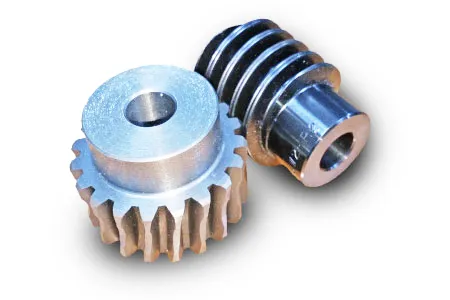
Kan du give eksempler på maskiner, der bruger snekkegear?
Snekkegear anvendes i forskellige maskiner og mekaniske systemer, hvor præcis bevægelseskontrol, høje gearudvekslinger og selvspærrende egenskaber er påkrævet. Her er nogle eksempler på maskiner, der almindeligvis bruger snekkegear:
- Elevatorer: Snekkegear anvendes almindeligvis i elevatorsystemer til at styre elevatorstolens vertikale bevægelse. Det høje udvekslingsforhold, som snekkegear giver, muliggør jævn og kontrolleret løft og sænkning af tunge laster.
- Transportbåndssystemer: Snekkegear bruges i transportbåndssystemer til at drive bevægelsen af bånd eller kæder. Snekkegearenes selvlåsende egenskaber forhindrer transportbåndet i at køre tilbage, når strømmen er afbrudt, hvilket sikrer, at de materialer eller produkter, der transporteres, forbliver på plads.
- Automotive applikationer: Snekkegear kan findes i bilers styresystemer. De bruges ofte i styretøjsgearkasser til at omdanne rattets rotationsbevægelse til sidebevægelse af køretøjets hjul. Snekkegear giver mekanisk fordel og præcis kontrol til styreoperationer.
- Fræsemaskiner: Snekkehjul anvendes i fræsemaskiner til at styre bevægelsen af arbejdsbordet eller spindlen. De tilbyder høj momentoverførsel og præcis positionering, hvilket letter præcis skæring og formning af materialer under fræseoperationer.
- Lifte og taljer: Snekkegear anvendes almindeligvis i løfte- og hejseudstyr, såsom kraner og spil. Deres høje udvekslingsforhold muliggør løft af tunge byrder med minimal indsats, mens den selvlåsende egenskab forhindrer, at byrden falder utilsigtet ned.
- Roterende aktuatorer: Snekkehjul bruges i roterende aktuatorer til at omdanne lineær bevægelse til roterende bevægelse. De anvendes i forskellige applikationer, herunder ventilaktuatorer, robotarme og indeksmekanismer, hvor der kræves kontrolleret og præcis rotationsbevægelse.
- Pakkemaskiner: Snekkegear anvendes i pakkemaskiner, såsom påfyldnings- og kapslingsmaskiner. De hjælper med at styre bevægelsen af transportbånd, roterende skiver eller knastmekanismer, hvilket muliggør præcise og synkroniserede pakkeoperationer.
- Trykpresser: Snekkehjul anvendes i trykpresser til at styre papirfremføringen og bevægelsen af trykpladerne. De giver præcis og ensartet bevægelse, hvilket sikrer nøjagtig registrering og justering af de trykte billeder.
Dette er blot et par eksempler, og snekkegear kan findes i mange andre anvendelser, herunder værktøjsmaskiner, tekstilmaskiner, fødevareforarbejdningsudstyr og meget mere. Snekkegears unikke egenskaber gør dem velegnede til forskellige industrier, hvor bevægelseskontrol, høj momenttransmission og selvspærrende egenskaber er afgørende.
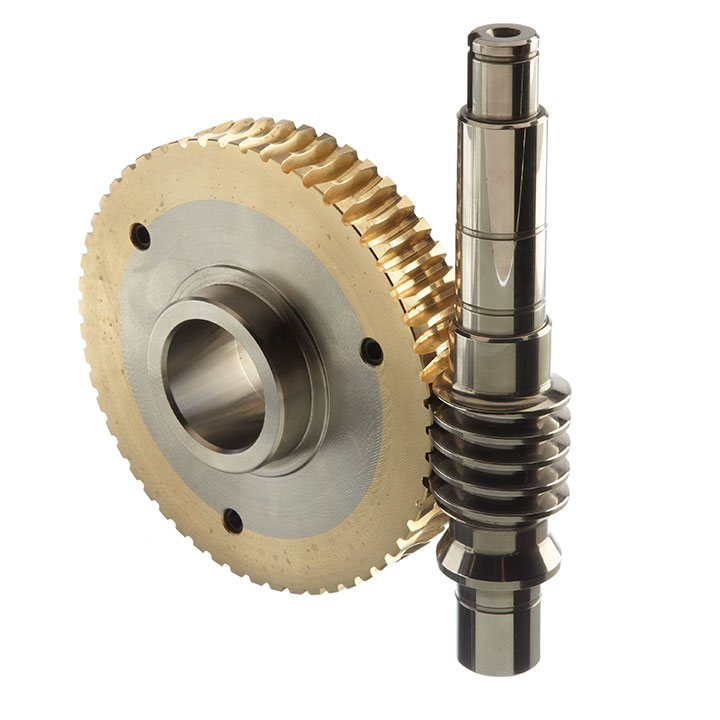
How do you address noise and vibration issues in a worm gear system?
Noise and vibration issues can arise in a worm gear system due to various factors such as misalignment, improper lubrication, gear wear, or resonance. Addressing these issues is important to ensure smooth and quiet operation of the system. Here’s a detailed explanation of how to address noise and vibration issues in a worm gear system:
1. Misalignment correction: Misalignment between the worm and the worm wheel can cause noise and vibration. Ensuring proper alignment of the gears by adjusting their positions and alignment tolerances can help reduce these issues. Precise alignment minimizes tooth contact errors and improves the meshing efficiency, resulting in reduced noise and vibration levels.
2. Lubrication optimization: Inadequate or improper lubrication can lead to increased friction and wear, resulting in noise and vibration. Using the correct lubricant with the appropriate viscosity and additives, and ensuring proper lubrication intervals, can help reduce friction and dampen vibrations. Regular lubricant analysis and replenishment can also prevent excessive wear and maintain optimal performance.
3. Gear inspection and replacement: Wear and damage to the gear teeth can contribute to noise and vibration problems. Regular inspection of the worm gear system allows for early detection of any worn or damaged teeth. Timely replacement of worn gears or damaged components helps maintain the integrity of the gear mesh and reduces noise and vibration levels.
4. Noise reduction measures: Various noise reduction measures can be implemented to minimize noise in a worm gear system. These include using noise-dampening materials or coatings, adding sound insulation or vibration-absorbing pads to the housing, and incorporating noise-reducing features in the gear design, such as profile modifications or helical teeth. These measures help attenuate noise and vibration transmission and improve overall system performance.
5. Resonance mitigation: Resonance, which occurs when the natural frequency of the system matches the excitation frequency, can amplify noise and vibration. To mitigate resonance, design modifications such as changing gear stiffness, altering the system’s natural frequencies, or adding damping elements can be considered. Analytical tools like finite element analysis (FEA) can help identify resonant frequencies and guide the design changes to reduce vibration and noise.
6. Isolation and damping: Isolation and damping techniques can be employed to minimize noise and vibration transmission to the surrounding structures. This can involve using resilient mounts or isolators to separate the gear system from the rest of the equipment or incorporating damping materials or devices within the gear housing to absorb vibrations and reduce noise propagation.
7. Tightening and securing: Loose or improperly tightened components can generate noise and vibration. Ensuring that all fasteners, bearings, and other components are properly tightened and secured eliminates sources of vibration and reduces noise. Regular inspections and maintenance should include checking for loose or worn-out parts and addressing them promptly.
Addressing noise and vibration issues in a worm gear system often requires a systematic approach that considers multiple factors. The specific measures employed may vary depending on the nature of the problem, the operating conditions, and the desired performance objectives. Collaborating with experts in gear design, vibration analysis, or noise control can be beneficial in identifying and implementing effective solutions.
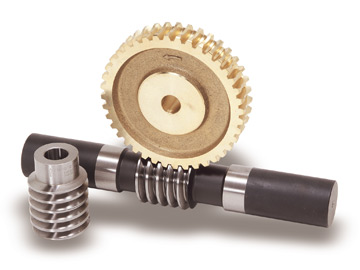
What is the purpose of a self-locking feature in a worm gear?
A self-locking feature in a worm gear serves the purpose of preventing reverse motion or backdriving of the gear system. When a worm gear is self-locking, it means that the worm can rotate the worm wheel, but the reverse action is hindered or restricted, providing a mechanical holding or braking capability. This self-locking feature offers several advantages and is utilized in various applications. Here are the key purposes of the self-locking feature:
- Mechanical Holding: The self-locking capability of a worm gear allows it to hold a specific position or prevent unintended movement when the worm is not actively driving the system. This is particularly useful in applications where it is necessary to maintain a fixed position or prevent the gear from rotating due to external forces or vibrations. Examples include elevators, lifts, and positioning systems.
- Backdriving Prevention: The self-locking feature prevents the worm wheel from driving the worm in the reverse direction. This is advantageous in applications where it is crucial to prevent a load or external force from causing the gear to rotate backward. For instance, in a lifting mechanism, the self-locking feature ensures that the load remains suspended without requiring continuous power input.
- Enhanced Safety: The self-locking property of a worm gear contributes to safety in certain applications. By preventing unintended or undesired motion, it helps maintain stability and reduces the risk of accidents or uncontrolled movement. This is particularly important in scenarios where human safety or the integrity of the system is at stake, such as in heavy machinery or critical infrastructure.
It’s important to note that not all worm gears are self-locking. The self-locking characteristic depends on the design parameters, specifically the helix angle of the worm’s thread. A higher helix angle increases the self-locking tendency, while a lower helix angle reduces or eliminates the self-locking effect. Therefore, when selecting a worm gear for an application that requires the self-locking feature, it is essential to consider the specific design parameters and ensure that the gear meets the necessary requirements.


editor by CX 2024-03-26