Produktbeskrivelse
Produktbeskrivelse
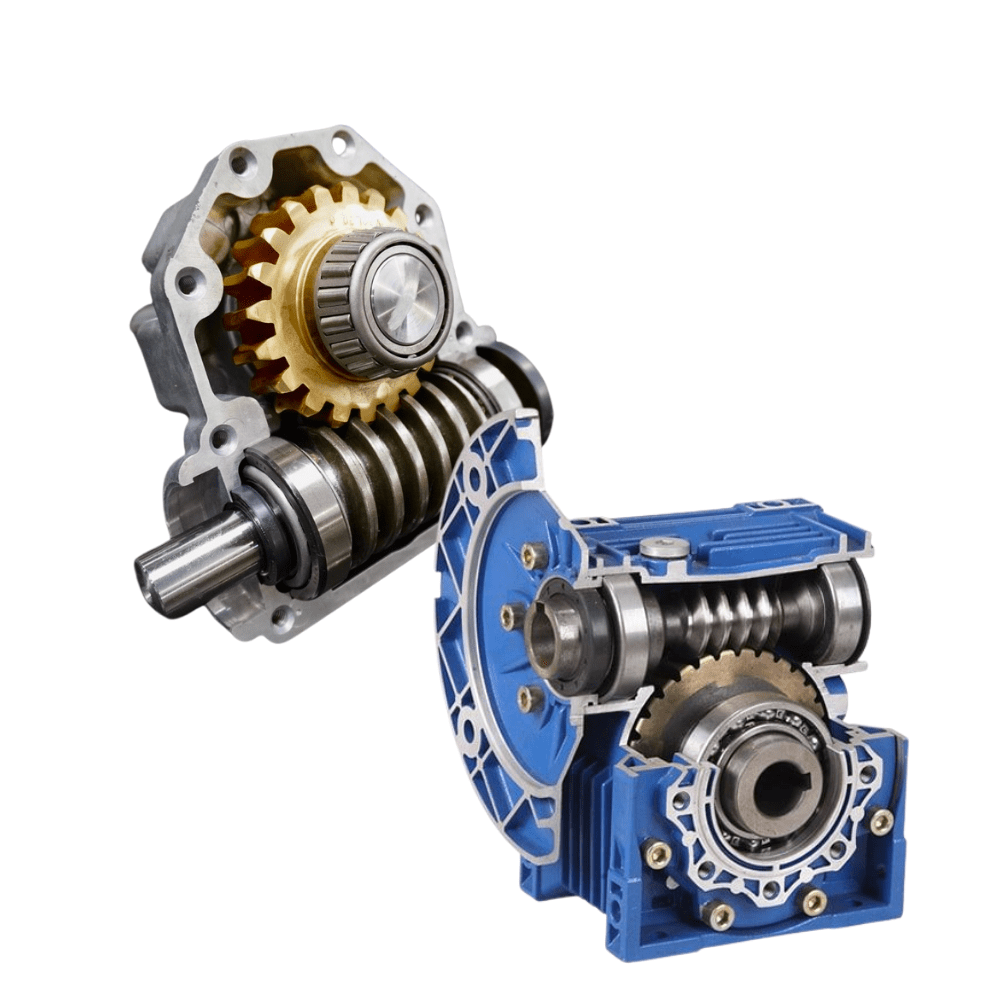
Hovedmaterialer:
1) Hus: aluminiumlegering ADC12 (størrelse 571-090); støbejern HT200 (størrelse 110-150);
2) Snekke: 20Cr, ZI evolventprofil; karboniserings- og quencher-varmebehandling gør gearets overfladehårdhed op til 56-62 HRC; Efter præcisionsslibning er karboniseringslagets tykkelse mellem 0,3-0,5 mm.
3) Snekkehjul: slidbar stannumlegering CuSn10-1
Detaljerede billeder
Kombinationsmuligheder:
Indgang: med indgangsaksel, med firkantet flange, med IEC-standard indgangsflange
Udgang: med momentarm, udgangsflange, enkelt udgangsaksel, dobbelt udgangsaksel, plastikdæksel
Snekkegear fås med forskellige kombinationer: NMRV+NMRV, NMRV+NRV, NMRV+PC, NMRV+UDL, NMRV+MOTORER
Eksploderet visning:
Produktparametre
| Gammel model |
Ny model | Forhold | Centerafstand | Magt | Indgangsdiameter | Udgangsdiameter | Udgangsmoment | Vægt |
| RV571 | 7.5~100 | 25 mm | 0,06 kW ~ 0,12 kW | Φ9 | Φ11 | 21 Nm | 0,7 kg | |
| RV030 | RW030 | 7.5~100 | 30 mm | 0,06 kW ~ 0,25 kW | Φ9 (Φ11) | Φ14 | 45 Nm | 1,2 kg |
| RV040 | RW040 | 7.5~100 | 40 mm | 0,09 kW ~ 0,55 kW | Φ9(Φ11,Φ14) | Φ18(Φ19) | 84 Nm | 2,3 kg |
| RV050 | RW050 | 7.5~100 | 50mm | 0,12 kW ~ 1,5 kW | Φ11(Φ14, Φ19) | Φ25 (Φ24) | 160 Nm | 3,5 kg |
| RV063 | RW063 | 7.5~100 | 63 mm | 0,18 kW ~ 2,2 kW | Φ14(Φ19, Φ24) | Φ25 (Φ28) | 230 Nm | 6,2 kg |
| RV075 | RW075 | 7.5~100 | 75 mm | 0,25 kW ~ 4,0 kW | Φ14(Φ19, Φ24, Φ28) | Φ28 (Φ35) | 410 Nm | 9,0 kg |
| RV090 | RW090 | 7.5~100 | 90 mm | 0,37 kW ~ 4,0 kW | Φ19(Φ24, Φ28) | Φ35 (Φ38) | 725 Nm | 13,0 kg |
| RV110 | RW110 | 7.5~100 | 110 mm | 0,55 kW ~ 7,5 kW | Φ19 (Φ24, Φ28, Φ38) | Φ42 | 1050 Nm | 35,0 kg |
| RV130 | RW130 | 7.5~100 | 130 mm | 0,75 kW ~ 7,5 kW | Φ24(Φ28,Φ38) | Φ45 | 1550 Nm | 48,0 kg |
| RV150 | RW150 | 7.5~100 | 150 mm | 2,2 kW ~ 15 kW | Φ28(Φ38,Φ42) | Φ50 | 84,0 kg |
GMRV-konturdimension:
| GMRV | EN | B | C | C1 | D(H8) | E(h8) | F | G | G1 | H | H1 | jeg | M | N | Åh | P | Q | R | S | T | BL | β | b | t | V |
| 030 | 80 | 97 | 54 | 44 | 14 | 55 | 32 | 56 | 63 | 65 | 29 | 55 | 40 | 57 | 30 | 75 | 44 | 6.5 | 21 | 5.5 | M6*10(n=4) | 0° | 5 | 16.3 | 27 |
| 040 | 100 | 121.5 | 70 | 60 | 18(19) | 60 | 43 | 71 | 78 | 75 | 36.5 | 70 | 50 | 71.5 | 40 | 87 | 55 | 6.5 | 26 | 6.5 | M6*10(n=4) | 45° | 6 | 20.8(21.8) | 35 |
| 050 | 120 | 144 | 80 | 70 | 25(24) | 70 | 49 | 85 | 92 | 85 | 43.5 | 80 | 60 | 84 | 50 | 100 | 64 | 8.5 | 30 | 7 | M8*12(n=4) | 45° | 8 | 28.3(27.3) | 40 |
| 063 | 144 | 174 | 100 | 85 | 25(28) | 80 | 67 | 103 | 112 | 95 | 53 | 95 | 72 | 102 | 63 | 110 | 80 | 8.5 | 36 | 8 | M8*12(n=8) | 45° | 8 | 28.3(31.3) | 50 |
| 075 | 172 | 205 | 120 | 90 | 28(35) | 95 | 72 | 112 | 120 | 115 | 57 | 112.5 | 86 | 119 | 75 | 140 | 93 | 11 | 40 | 10 | M8*14(n=8) | 45° | 8(10) | 31.3(38.3) | 60 |
| 090 | 206 | 238 | 140 | 100 | 35(38) | 110 | 74 | 130 | 140 | 130 | 67 | 129.5 | 103 | 135 | 90 | 160 | 102 | 13 | 45 | 11 | M10*16(n=8) | 45° | 10 | 38.3(41.3) | 70 |
| 110 | 255 | 295 | 170 | 115 | 42 | 130 | – | 144 | 155 | 165 | 74 | 160 | 127.5 | 167.5 | 110 | 200 | 125 | 14 | 50 | 14 | M10*18(n=8) | 45° | 12 | 45.3 | 85 |
| 130 | 293 | 335 | 200 | 120 | 45 | 180 | – | 155 | 170 | 215 | 81 | 179 | 146.5 | 187.5 | 130 | 250 | 140 | 16 | 60 | 15 | M12*20(n=8) | 45° | 14 | 48.8 | 100 |
| 150 | 340 | 400 | 240 | 145 | 50 | 180 | – | 185 | 200 | 215 | 96 | 210 | 170 | 230 | 150 | 250 | 180 | 18 | 72.5 | 18 | M12*22(n=8) | 45° | 14 | 53.8 | 120 |
Firmaprofil
Om CHINAMFG Transmission:
Vi er en professionel producent af reduktionsgear beliggende i HangZhou, ZHangZhoug-provinsen.
Vores førende produkter er et komplet udvalg af RV571-150 snekkegear, der også leverer GKM hypoid-spiralgear, GRC inline-spiralgear, PC-enheder, UDL-variatorer og AC-motorer, G3-spiralgearmotor.
Produkterne anvendes i vid udstrækning til anvendelser som: fødevarer, keramik, emballage, kemikalier, farmaci, plast, papirfremstilling, entreprenørmaskiner, metallurgisk mining, miljøbeskyttelsesteknik og alle former for automatiske linjer og samlebånd.
Med hurtig levering, overlegen eftersalgsservice og avanceret produktionsudstyr sælger vores produkter godt både hjemme og i udlandet. Vi har eksporteret vores reduktionsgear til Sydøstasien, Østeuropa og Mellemøsten osv. Vores mål er at udvikle og innovere på basis af høj kvalitet og skabe et godt omdømme for reduktionsgear.
Pakningsoplysninger: Plastposer + kartoner + trækasser eller på forespørgsel
Vi deltager i Tyskland Hannver Udstilling-ZheJiang PTC Messe-Tyrkiet Vinder Eurasien
Logistik
Eftersalgsservice
1. Vedligeholdelsestid og garantiInden for 1 år efter modtagelse af varer.
2. Andre tjenester: Inklusive vejledning til valg af modellering, installationsvejledning og vejledning til problemløsning osv.
Ofte stillede spørgsmål
1.Q: Kan du lave efter kundens tegning?
A: Ja, vi tilbyder kundetilpasset service i overensstemmelse hermed. Vi kan bruge kundens navneskilt til gearkasser.
2.Q: Hvad er dine betalingsbetingelser?
A: 30% depositum før produktion, balance T/T før levering.
3.Q: Er du et handelsselskab eller en producent?
A: Vi er en producent med avanceret udstyr og erfarne medarbejdere.
4.Q: Hvad er din produktionskapacitet?
A: 8000-9000 STK/MÅNED
5.Q: Er der gratis prøve tilgængelig eller ej?
A: Ja, vi kan levere gratis prøve, hvis kunden accepterer at betale for kureromkostningerne
6.Q: Har du noget certifikat?
A: Ja, vi har CE-certifikat og SGS-certifikatrapport.
Kontaktoplysninger:
Fru Lingel Pan
Hvis du har spørgsmål, er du velkommen til at kontakte mig. Mange tak for din venlige opmærksomhed mod vores virksomhed!
| Anvendelse: | Motor, Maskiner, Marine, Landbrugsmaskiner, Industri |
|---|---|
| Fungere: | Fordelingseffekt, ændring af drivmoment, hastighedsændring, hastighedsreduktion |
| Layout: | Ret vinkel |
| Hårdhed: | Hærdet tandoverflade |
| Installation: | Vandret type |
| Trin: | Dobbelttrin |
| Prøver: |
US$ 12/Piece
1 stk. (min. ordre) | |
|---|
| Tilpasning: |
Tilgængelig
| Tilpasset anmodning |
|---|
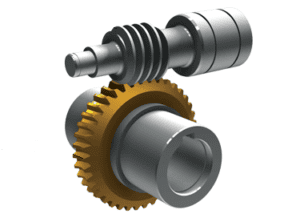
What are the advantages and disadvantages of using a worm gear?
A worm gear offers several advantages and disadvantages that should be considered when selecting it for a specific application. Here’s a detailed explanation of the advantages and disadvantages of using a worm gear:
Advantages of using a worm gear:
- High gear reduction ratio: Worm gears are known for their high gear reduction ratios, which allow for significant speed reduction and torque multiplication. This makes them suitable for applications that require precise motion control and high torque output.
- Compact design: Worm gears have a compact design, making them space-efficient and suitable for applications where size is a constraint. The worm gear’s compactness allows for easy integration into machinery and equipment with limited space.
- Self-locking capability: One of the key advantages of a worm gear is its self-locking property. The angle of the worm thread prevents the reverse rotation of the output shaft, eliminating the need for additional braking mechanisms. This self-locking feature is beneficial for maintaining position and preventing backdriving in applications where holding the load in place is important.
- Quiet operation: Worm gears typically operate with reduced noise levels compared to other gear types. The sliding action between the worm and the worm wheel teeth results in smoother and quieter operation, making them suitable for applications where noise reduction is desired.
- High shock-load resistance: Worm gears have good shock-load resistance due to the sliding contact between the worm and the worm wheel teeth. This makes them suitable for applications that involve sudden or intermittent loads, such as lifting and hoisting equipment.
- Easy installation and maintenance: Worm gears are relatively easy to install and maintain. They often come as a compact unit, requiring minimal assembly. Lubrication maintenance is crucial for optimal performance and longevity, but it is typically straightforward and accessible.
Disadvantages of using a worm gear:
- Lower efficiency: Worm gears tend to have lower mechanical efficiency compared to some other gear types. The sliding action between the worm and the worm wheel teeth generates higher frictional losses, resulting in reduced efficiency. However, efficiency can be improved through careful design, quality manufacturing, and proper lubrication.
- Limited speed capability: Worm gears are not suitable for high-speed applications due to their sliding contact and the potential for heat generation. High speeds can lead to increased friction, wear, and reduced efficiency. However, they excel in low to moderate speed applications where high torque output is required.
- Heat generation: The sliding action between the worm and the worm wheel generates friction, which can result in heat generation. In high-load or continuous-duty applications, this heat buildup can affect the efficiency and longevity of the system. Proper lubrication and heat dissipation measures are necessary to mitigate this issue.
- Less suitable for bidirectional motion: While worm gears offer excellent self-locking capabilities in one direction, they are less efficient and less suitable for bidirectional motion. Reversing the direction of the input or output shaft can lead to increased friction, reduced efficiency, and potential damage to the gear system.
- Lower accuracy in positioning: Worm gears may have lower accuracy in positioning compared to some other gear types, such as precision gear systems. The sliding contact and inherent backlash in worm gears can introduce some degree of positioning error. However, for many applications, the accuracy provided by worm gears is sufficient.
- Potential for wear and backlash: Over time, the sliding action in worm gears can lead to wear and the development of backlash, which is the play or clearance between the worm and the worm wheel teeth. Regular inspection, maintenance, and proper lubrication are necessary to minimize wear and reduce backlash.
When considering the use of a worm gear, it’s essential to evaluate the specific requirements of the application and weigh the advantages against the disadvantages. Factors such as torque requirements, speed limitations, positional stability, space constraints, and overall system efficiency should be taken into account to determine if a worm gear is the right choice.
Kan snekkegear bruges i tunge maskiner og udstyr?
Ja, snekkegear kan bruges i tunge maskiner og udstyr. Her er en detaljeret forklaring af deres egnethed til sådanne anvendelser:
1. Højmomenttransmission: En af de vigtigste fordele ved snekkegear er deres evne til at overføre et højt drejningsmoment. Det unikke design af snekken og snekkehjulet muliggør effektiv momentgenerering og kraftoverførsel. Dette gør snekkegear velegnede til tunge applikationer, der kræver overførsel af betydelige rotationskræfter.
2. Kompakt størrelse: Snekkegear tilbyder en kompakt og pladsbesparende løsning til tunge maskiner. Deres kompakte design muliggør transmission af højt drejningsmoment i en relativt lille pakke. Dette er især fordelagtigt i applikationer, hvor der er pladsbegrænsninger eller krav til kompakt design.
3. Selvlåsende funktion: Snekkegear har en selvlåsende egenskab, hvilket betyder, at snekken kan forhindre tilbagedrift af gearsystemet. Denne funktion er fordelagtig i tunge maskiner, hvor det er vigtigt at opretholde en fast position eller forhindre systemet i at reversere under belastning. Snekkegears selvlåsende evne giver stabilitet og sikkerhed i forskellige tunge applikationer.
4. Høje gearforhold: Snekkegear kan opnå høje udvekslingsforhold, hvilket er fordelagtigt i tunge maskiner, der kræver præcis hastighedsreduktion. De høje udvekslingsforhold muliggør fin kontrol af rotationshastighed og moment, hvilket gør det muligt for gearsystemet at matche kravene til tunge belastninger og krævende driftsforhold.
5. Holdbar konstruktion: Snekkegear fremstilles typisk af robuste materialer såsom legeret stål, støbejern eller bronze. Disse materialer tilbyder fremragende styrke, slidstyrke og holdbarhed, hvilket gør snekkegear i stand til at modstå de tunge belastninger og barske driftsmiljøer, der opstår i tunge maskiner.
6. Overbelastningsbeskyttelse: Det unikke design af snekkegear giver en indbygget overbelastningsbeskyttelse. Når belastningen overstiger gearets kapacitet, forårsager glidefunktionen mellem snekken og snekkehjulet en høj friktionskraft, hvilket begrænser momentoverførslen og forhindrer skader på gearsystemet. Denne overbelastningsbeskyttelsesfunktion er værdifuld i tunge maskiner, hvor der kan forekomme pludselige belastningsstigninger eller uventede overbelastninger.
7. Bredt udvalg af anvendelser: Snekkegear finder anvendelse i forskellige tunge maskiner og udstyr på tværs af forskellige brancher. Nogle eksempler omfatter kraner, spil, elevatorer, minedriftsmaskiner, entreprenørudstyr, valseværker, tunge transportbånd og marine fremdriftssystemer. Snekkegearenes alsidighed gør dem velegnede til en bred vifte af tunge applikationer.
Det er vigtigt at bemærke, at selvom snekkegear tilbyder adskillige fordele for tunge maskiner, er der visse overvejelser at huske på. Disse omfatter korrekt smøring for at minimere friktion og slid, tilstrækkelig køling til at håndtere varmegenerering, korrekt justering for at sikre effektiv kraftoverførsel og regelmæssig vedligeholdelse for at inspicere for tegn på slid eller skader. Ved at imødekomme disse faktorer kan snekkegear pålideligt og effektivt opfylde kravene fra tunge maskiner og udstyr.
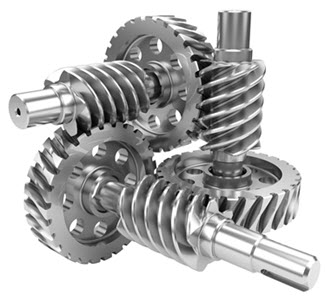
How do you install a worm gear system?
Installing a worm gear system requires careful attention to ensure proper alignment, lubrication, and secure mounting. Here are the general steps involved in installing a worm gear system:
- Prepare the components: Before installation, ensure that all the components of the worm gear system, including the worm, worm wheel, bearings, and housing, are clean and free from any contaminants or damage. Inspect the components for any signs of wear or defects.
- Check alignment: Verify that the mating surfaces of the worm and worm wheel are clean and free from any debris. Ensure that the gear teeth mesh properly and that there is no excessive backlash or misalignment. Make any necessary adjustments or repairs before proceeding with the installation.
- Apply lubrication: Lubricate the worm gear system according to the manufacturer’s recommendations. Select a suitable lubricant that provides sufficient lubrication and reduces friction between the worm and worm wheel during operation. Apply the lubricant evenly to the gear teeth and other contact surfaces.
- Mounting: Position the worm gear system in the desired location, taking into account any space constraints or mounting requirements. Use appropriate fasteners, such as bolts or screws, to securely attach the system to the surrounding structure or base. Ensure that the mounting surfaces are clean, flat, and able to withstand the forces and loads exerted by the gear system.
- Alignment and adjustment: Once the worm gear system is mounted, check the alignment again and make any necessary adjustments. Ensure that the worm and worm wheel are properly engaged and that there is no excessive play or binding. Pay attention to any specified alignment tolerances provided by the manufacturer.
- Testing and operation: After installation, conduct a thorough functional test of the worm gear system. Verify that it operates smoothly, without unusual noise or vibration. Check for proper engagement of the gear teeth and ensure that the system performs as intended under different load conditions. Monitor the system’s performance during initial operation and address any issues or abnormalities promptly.
It’s important to follow the specific installation instructions provided by the gear system manufacturer. Different worm gear designs and applications may have additional installation requirements or considerations that should be taken into account.
Proper installation of a worm gear system ensures its reliable operation, minimizes wear, and maximizes its lifespan. If you are unsure about any aspect of the installation process, it is recommended to consult the manufacturer or seek the assistance of a qualified professional.


editor by CX 2023-09-28