Descrição do produto
Descrição do produto
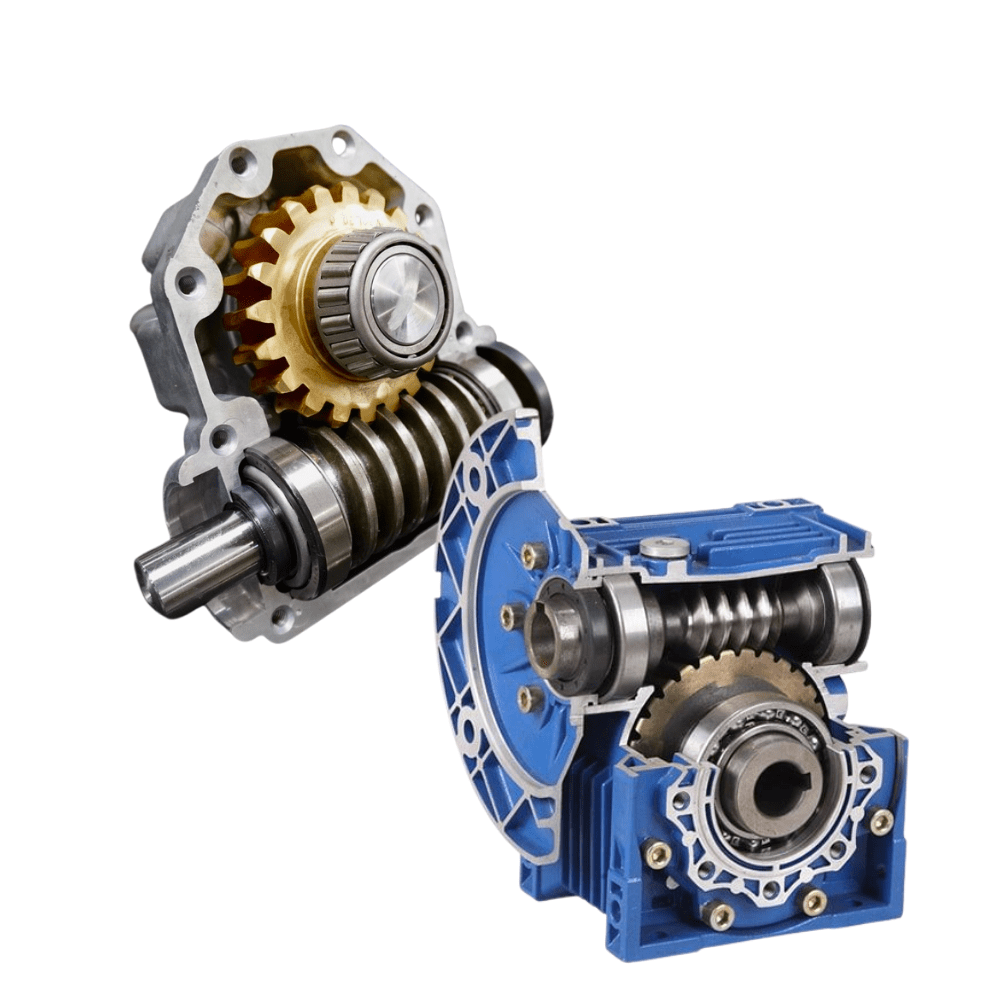
Materiais principais:
1) Carcaça: liga de alumínio ADC12 (tamanho 571-090); ferro fundido HT200 (tamanho 110-150);
2) Rosca sem-fim: 20Cr, perfil involuto ZI; tratamento térmico de carbonização e têmpera confere à engrenagem uma dureza superficial de até 56-62 HRC; após retificação de precisão, a espessura da camada de cementação fica entre 0,3 e 0,5 mm.
3) Roda sem-fim: liga de estanho resistente ao desgaste CuSn10-1
Fotos detalhadas
Opções de combinação:
Entrada: com eixo de entrada, com flange quadrada, com flange de entrada padrão IEC
Saída: com braço de torque, flange de saída, eixo de saída simples, eixo de saída duplo, tampa de plástico
Os redutores de rosca sem-fim estão disponíveis em diferentes combinações: NMRV+NMRV, NMRV+NRV, NMRV+PC, NMRV+UDL, NMRV+MOTORS
Vista explodida:
Parâmetros do produto
| Modelo antigo |
Novo modelo | Razão | Distância do centro | Poder | Diâmetro de entrada. | Diâmetro de saída. | Torque de saída | Peso |
| RV571 | 7.5~100 | 25 mm | 0,06 kW ~ 0,12 kW | Φ9 | Φ11 | 21 N.m | 0,7 kg | |
| RV030 | RW030 | 7.5~100 | 30 mm | 0,06 kW ~ 0,25 kW | Φ9(Φ11) | Φ14 | 45 N.m | 1,2 kg |
| RV040 | RW040 | 7.5~100 | 40 mm | 0,09 kW ~ 0,55 kW | Φ9(Φ11,Φ14) | Φ18(Φ19) | 84 N.m | 2,3 kg |
| RV050 | RW050 | 7.5~100 | 50 mm | 0,12 kW ~ 1,5 kW | Φ11(Φ14,Φ19) | Φ25(Φ24) | 160 N.m | 3,5 kg |
| RV063 | RW063 | 7.5~100 | 63 mm | 0,18 kW ~ 2,2 kW | Φ14(Φ19,Φ24) | Φ25(Φ28) | 230 N.m | 6,2 kg |
| RV075 | RW075 | 7.5~100 | 75 mm | 0,25 kW ~ 4,0 kW | Φ14(Φ19,Φ24,Φ28) | Φ28(Φ35) | 410 N.m | 9,0 kg |
| RV090 | RW090 | 7.5~100 | 90 mm | 0,37 kW ~ 4,0 kW | Φ19(Φ24,Φ28) | Φ35(Φ38) | 725 N.m | 13,0 kg |
| RV110 | RW110 | 7.5~100 | 110 mm | 0,55 kW ~ 7,5 kW | Φ19(Φ24,Φ28,Φ38) | Φ42 | 1050 N.m | 35,0 kg |
| RV130 | RW130 | 7.5~100 | 130 mm | 0,75 kW ~ 7,5 kW | Φ24(Φ28,Φ38) | Φ45 | 1550 N.m | 48,0 kg |
| RV150 | RW150 | 7.5~100 | 150 mm | 2,2 kW ~ 15 kW | Φ28(Φ38,Φ42) | Φ50 | 84,0 kg |
Dimensões do contorno do GMRV:
| GMRV | UM | B | C | C1 | D(H8) | E(h8) | F | G | G1 | H | H1 | EU | M | N | O | P | Q | R | S | T | BL | β | b | t | V |
| 030 | 80 | 97 | 54 | 44 | 14 | 55 | 32 | 56 | 63 | 65 | 29 | 55 | 40 | 57 | 30 | 75 | 44 | 6.5 | 21 | 5.5 | M6*10(n=4) | 0° | 5 | 16.3 | 27 |
| 040 | 100 | 121.5 | 70 | 60 | 18(19) | 60 | 43 | 71 | 78 | 75 | 36.5 | 70 | 50 | 71.5 | 40 | 87 | 55 | 6.5 | 26 | 6.5 | M6*10(n=4) | 45° | 6 | 20.8(21.8) | 35 |
| 050 | 120 | 144 | 80 | 70 | 25(24) | 70 | 49 | 85 | 92 | 85 | 43.5 | 80 | 60 | 84 | 50 | 100 | 64 | 8.5 | 30 | 7 | M8*12(n=4) | 45° | 8 | 28.3(27.3) | 40 |
| 063 | 144 | 174 | 100 | 85 | 25(28) | 80 | 67 | 103 | 112 | 95 | 53 | 95 | 72 | 102 | 63 | 110 | 80 | 8.5 | 36 | 8 | M8*12(n=8) | 45° | 8 | 28.3(31.3) | 50 |
| 075 | 172 | 205 | 120 | 90 | 28(35) | 95 | 72 | 112 | 120 | 115 | 57 | 112.5 | 86 | 119 | 75 | 140 | 93 | 11 | 40 | 10 | M8*14(n=8) | 45° | 8(10) | 31.3(38.3) | 60 |
| 090 | 206 | 238 | 140 | 100 | 35(38) | 110 | 74 | 130 | 140 | 130 | 67 | 129.5 | 103 | 135 | 90 | 160 | 102 | 13 | 45 | 11 | M10*16(n=8) | 45° | 10 | 38.3(41.3) | 70 |
| 110 | 255 | 295 | 170 | 115 | 42 | 130 | – | 144 | 155 | 165 | 74 | 160 | 127.5 | 167.5 | 110 | 200 | 125 | 14 | 50 | 14 | M10*18(n=8) | 45° | 12 | 45.3 | 85 |
| 130 | 293 | 335 | 200 | 120 | 45 | 180 | – | 155 | 170 | 215 | 81 | 179 | 146.5 | 187.5 | 130 | 250 | 140 | 16 | 60 | 15 | M12*20(n=8) | 45° | 14 | 48.8 | 100 |
| 150 | 340 | 400 | 240 | 145 | 50 | 180 | – | 185 | 200 | 215 | 96 | 210 | 170 | 230 | 150 | 250 | 180 | 18 | 72.5 | 18 | M12*22(n=8) | 45° | 14 | 53.8 | 120 |
perfil de companhia
Sobre a transmissão CHINAMFG:
Somos um fabricante profissional de redutores localizado em Hangzhou, província de Zhangzhou.
Nossos principais produtos incluem a linha completa de redutores de rosca sem-fim RV571-150, além de redutores helicoidais hipoides GKM, redutores helicoidais em linha GRC, unidades PC, variadores UDL e motores CA, e motoredutores helicoidais G3.
Os produtos são amplamente utilizados em aplicações como: alimentos, cerâmica, embalagens, produtos químicos, indústria farmacêutica, plásticos, fabricação de papel, máquinas de construção, mineração metalúrgica, engenharia de proteção ambiental e todos os tipos de linhas automatizadas e linhas de montagem.
Com entrega rápida, serviço pós-venda superior e instalações de produção avançadas, nossos produtos são bem aceitos tanto no mercado interno quanto no externo. Exportamos nossos redutores para o Sudeste Asiático, Europa Oriental, Oriente Médio e outras regiões. Nosso objetivo é desenvolver e inovar com base na alta qualidade e construir uma sólida reputação no mercado de redutores.
Informações sobre a embalagem: Sacos plásticos + Caixas de papelão + Caixas de madeira, ou conforme solicitação.
Participamos da Exposição de Hannover, na Alemanha, da Feira PTC de Zhejiang e do evento "Turquia Win Eurasia".
Logística
Serviço pós-venda
1. Tempo de manutenção e garantiaDentro de 1 ano após o recebimento do produto..
2. Outros serviços: Incluindo guia de seleção de modelos, guia de instalação e guia de resolução de problemas, etc.
Perguntas frequentes
1. P: Vocês conseguem fabricar conforme o desenho do cliente?
A: Sim, oferecemos serviço personalizado de acordo com as necessidades dos clientes. Podemos utilizar a placa de identificação do cliente nas caixas de engrenagens.
2. P: Quais são as suas condições de pagamento?
A: Depósito de 30% antes da produção, saldo por T/T antes da entrega.
3. P: Vocês são uma empresa comercial ou fabricante?
A: Somos um fabricante com equipamentos avançados e funcionários experientes.
4. P: Qual é a sua capacidade de produção?
A: 8000-9000 unidades/mês
5. P: Há amostra grátis disponível?
A: Sim, podemos fornecer amostras grátis se o cliente concordar em pagar o custo do frete.
6. P: Você possui algum certificado?
A: Sim, temos certificado CE e relatório de certificação SGS.
Informações de contato:
Sra. Lingel Pan
Em caso de dúvidas, não hesite em me contatar. Muito obrigado pela sua atenção à nossa empresa!
| Aplicativo: | Motores, máquinas, máquinas marítimas, máquinas agrícolas, indústria |
|---|---|
| Função: | Distribuição de potência, alteração do torque de acionamento, mudança de velocidade, redução de velocidade |
| Layout: | Ângulo reto |
| Dureza: | Superfície dentária endurecida |
| Instalação: | Tipo horizontal |
| Etapa: | Passo Duplo |
| Exemplos: |
US$ 12/Piece
1 unidade (pedido mínimo) | |
|---|
| Personalização: |
Disponível
| Solicitação personalizada |
|---|
What are the advantages and disadvantages of using a worm gear?
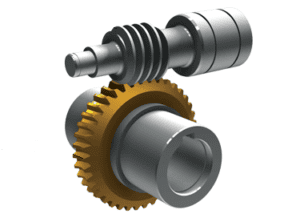
A worm gear offers several advantages and disadvantages that should be considered when selecting it for a specific application. Here’s a detailed explanation of the advantages and disadvantages of using a worm gear:
Advantages of using a worm gear:
- High gear reduction ratio: Worm gears are known for their high gear reduction ratios, which allow for significant speed reduction and torque multiplication. This makes them suitable for applications that require precise motion control and high torque output.
- Compact design: Worm gears have a compact design, making them space-efficient and suitable for applications where size is a constraint. The worm gear’s compactness allows for easy integration into machinery and equipment with limited space.
- Self-locking capability: One of the key advantages of a worm gear is its self-locking property. The angle of the worm thread prevents the reverse rotation of the output shaft, eliminating the need for additional braking mechanisms. This self-locking feature is beneficial for maintaining position and preventing backdriving in applications where holding the load in place is important.
- Quiet operation: Worm gears typically operate with reduced noise levels compared to other gear types. The sliding action between the worm and the worm wheel teeth results in smoother and quieter operation, making them suitable for applications where noise reduction is desired.
- High shock-load resistance: Worm gears have good shock-load resistance due to the sliding contact between the worm and the worm wheel teeth. This makes them suitable for applications that involve sudden or intermittent loads, such as lifting and hoisting equipment.
- Easy installation and maintenance: Worm gears are relatively easy to install and maintain. They often come as a compact unit, requiring minimal assembly. Lubrication maintenance is crucial for optimal performance and longevity, but it is typically straightforward and accessible.
Disadvantages of using a worm gear:
- Lower efficiency: Worm gears tend to have lower mechanical efficiency compared to some other gear types. The sliding action between the worm and the worm wheel teeth generates higher frictional losses, resulting in reduced efficiency. However, efficiency can be improved through careful design, quality manufacturing, and proper lubrication.
- Limited speed capability: Worm gears are not suitable for high-speed applications due to their sliding contact and the potential for heat generation. High speeds can lead to increased friction, wear, and reduced efficiency. However, they excel in low to moderate speed applications where high torque output is required.
- Heat generation: The sliding action between the worm and the worm wheel generates friction, which can result in heat generation. In high-load or continuous-duty applications, this heat buildup can affect the efficiency and longevity of the system. Proper lubrication and heat dissipation measures are necessary to mitigate this issue.
- Less suitable for bidirectional motion: While worm gears offer excellent self-locking capabilities in one direction, they are less efficient and less suitable for bidirectional motion. Reversing the direction of the input or output shaft can lead to increased friction, reduced efficiency, and potential damage to the gear system.
- Lower accuracy in positioning: Worm gears may have lower accuracy in positioning compared to some other gear types, such as precision gear systems. The sliding contact and inherent backlash in worm gears can introduce some degree of positioning error. However, for many applications, the accuracy provided by worm gears is sufficient.
- Potential for wear and backlash: Over time, the sliding action in worm gears can lead to wear and the development of backlash, which is the play or clearance between the worm and the worm wheel teeth. Regular inspection, maintenance, and proper lubrication are necessary to minimize wear and reduce backlash.
When considering the use of a worm gear, it’s essential to evaluate the specific requirements of the application and weigh the advantages against the disadvantages. Factors such as torque requirements, speed limitations, positional stability, space constraints, and overall system efficiency should be taken into account to determine if a worm gear is the right choice.
Can worm gears be used in heavy-duty machinery and equipment?
Yes, worm gears can be used in heavy-duty machinery and equipment. Here’s a detailed explanation of their suitability for such applications:
1. High torque transmission: One of the key advantages of worm gears is their ability to transmit high torque. The unique design of the worm and worm wheel allows for efficient torque generation and power transmission. This makes worm gears well-suited for heavy-duty applications that require the transfer of substantial rotational forces.
2. Compact size: Worm gears offer a compact and space-saving solution for heavy-duty machinery. Their compact design allows for the transmission of high torque in a relatively small package. This is particularly advantageous in applications where space constraints or compact design requirements are present.
3. Self-locking feature: Worm gears exhibit a self-locking characteristic, meaning that the worm can prevent the back-driving of the gear system. This feature is beneficial in heavy-duty machinery where it is essential to maintain a fixed position or prevent the system from reversing under load. The self-locking capability of worm gears provides stability and safety in various heavy-duty applications.
4. High gear ratios: Worm gears can achieve high gear ratios, which is advantageous in heavy-duty machinery that requires precise speed reduction. The high gear ratios allow for fine control of rotational speed and torque output, enabling the gear system to match the requirements of heavy loads and demanding operating conditions.
5. Durable construction: Worm gears are typically manufactured using robust materials such as alloy steels, cast iron, or bronze. These materials offer excellent strength, wear resistance, and durability, making worm gears capable of withstanding the heavy loads and harsh operating environments encountered in heavy-duty machinery.
6. Overload protection: The unique design of worm gears provides inherent overload protection. When the load exceeds the gear’s capacity, the sliding action between the worm and worm wheel causes a high frictional force, limiting the torque transmission and preventing damage to the gear system. This overload protection feature is valuable in heavy-duty machinery where sudden load spikes or unexpected overloads can occur.
7. Wide range of applications: Worm gears find applications in various heavy-duty machinery and equipment across different industries. Some examples include cranes, winches, elevators, mining machinery, construction equipment, rolling mills, heavy-duty conveyors, and marine propulsion systems. The versatility of worm gears makes them suitable for a wide range of heavy-duty applications.
It is important to note that while worm gears offer several advantages for heavy-duty machinery, there are certain considerations to keep in mind. These include proper lubrication to minimize friction and wear, adequate cooling to manage heat generation, proper alignment to ensure efficient power transmission, and regular maintenance to inspect for signs of wear or damage. By addressing these factors, worm gears can reliably and effectively meet the demands of heavy-duty machinery and equipment.
Como instalar um sistema de engrenagem helicoidal?
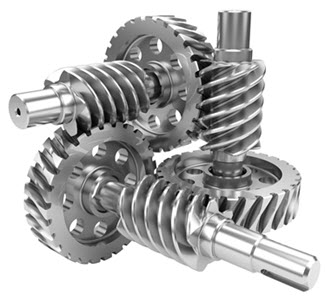
A instalação de um sistema de engrenagem helicoidal requer atenção cuidadosa para garantir o alinhamento correto, a lubrificação adequada e a fixação segura. A seguir, estão os passos gerais envolvidos na instalação de um sistema de engrenagem helicoidal:
- Prepare os componentes: Antes da instalação, certifique-se de que todos os componentes do sistema de engrenagem helicoidal, incluindo o parafuso sem-fim, a coroa, os rolamentos e a carcaça, estejam limpos e isentos de contaminantes ou danos. Inspecione os componentes em busca de sinais de desgaste ou defeitos.
- Verificar alinhamento: Verifique se as superfícies de contato do parafuso sem-fim e da coroa estão limpas e livres de quaisquer detritos. Certifique-se de que os dentes da engrenagem se encaixam corretamente e que não há folga excessiva ou desalinhamento. Faça os ajustes ou reparos necessários antes de prosseguir com a instalação.
- Aplique lubrificante: Lubrifique o sistema de engrenagem helicoidal de acordo com as recomendações do fabricante. Selecione um lubrificante adequado que proporcione lubrificação suficiente e reduza o atrito entre o parafuso sem-fim e a coroa durante a operação. Aplique o lubrificante uniformemente nos dentes da engrenagem e em outras superfícies de contato.
- Montagem: Posicione o sistema de engrenagem helicoidal no local desejado, levando em consideração quaisquer restrições de espaço ou requisitos de montagem. Utilize fixadores apropriados, como parafusos ou porcas, para prender o sistema com segurança à estrutura ou base circundante. Certifique-se de que as superfícies de montagem estejam limpas, planas e capazes de suportar as forças e cargas exercidas pelo sistema de engrenagem.
- Alinhamento e ajuste: Após a montagem do sistema de engrenagem helicoidal, verifique novamente o alinhamento e faça os ajustes necessários. Certifique-se de que a engrenagem helicoidal e a coroa estejam devidamente encaixadas e que não haja folga excessiva ou travamento. Preste atenção às tolerâncias de alinhamento especificadas pelo fabricante.
- Testes e operação: Após a instalação, realize um teste funcional completo do sistema de engrenagem helicoidal. Verifique se ele opera suavemente, sem ruídos ou vibrações incomuns. Verifique o engate correto dos dentes da engrenagem e assegure-se de que o sistema funcione conforme o esperado sob diferentes condições de carga. Monitore o desempenho do sistema durante a operação inicial e resolva quaisquer problemas ou anormalidades imediatamente.
É importante seguir as instruções de instalação específicas fornecidas pelo fabricante do sistema de engrenagens. Diferentes projetos e aplicações de engrenagens helicoidais podem ter requisitos ou considerações de instalação adicionais que devem ser levados em conta.
A instalação correta de um sistema de engrenagem helicoidal garante seu funcionamento confiável, minimiza o desgaste e maximiza sua vida útil. Caso tenha dúvidas sobre qualquer aspecto do processo de instalação, recomenda-se consultar o fabricante ou buscar a ajuda de um profissional qualificado.


editor by CX 2023-09-28