Descrição do produto
SWL series skillful manufacture screw reducer:
1.Convenient to adjust
2.Wide range of ratio
3.Easy to install
4.high torque
Application Industries:
Our SWL series screw jacks are widely used in the industries such as metallurgy,mining,hoisting and transportation, electrical power,energy source,constrction and building material,light industry and traffice industry
Parâmetros do produto
|
Tipo |
Modelo |
Screw thread size |
Max |
Max |
Weight without stroke |
Screw weight |
|
SWL Screw jack |
SWL2.5 |
Tr30*6 |
25 |
25 |
7.3 |
0.45 |
|
SWL5 |
Tr40*7 |
50 |
50 |
16.2 |
0.82 |
|
|
SWL10/15 |
Tr58*12 |
100/150 |
99 |
25 |
1.67 |
|
|
SWL20 |
Tr65*12 |
200 |
166 |
36 |
2.15 |
|
|
SWL25 |
Tr90*16 |
250 |
250 |
70.5 |
4.15 |
|
|
SWL35 |
Tr100*18 |
350 |
350 |
87 |
5.20 |
|
|
SWL50 |
Tr120*20 |
500 |
500 |
420 |
7.45 |
|
|
SWL100 |
Tr160*23 |
1000 |
1000 |
1571 |
13.6 |
|
|
SWL120 |
Tr180*25 |
1200 |
1200 |
1350 |
17.3 |
|
1.Compact structure,Small size.Easy mounting,varied types. Can be applied in 1 unit or multiple units. |
||||
|
2.High reliability.Long service life; With the function of ascending,descending,thrusting,overturning |
||||
|
3.Wide motivity.It can be drived by electrical motor and manual force. |
||||
|
4.It is usually used in low speed situation,widely used in the fields of |
Fotos detalhadas
PRODUCT SPECIFICATIONS
SWL Series
Swl series worm screw lift is a kind of basic lifting component, which can lift, lower, propel, turn and other functions through the worm drive screw.
Screw jack can be widely used in machinery, metallurgy, construction, chemical, medical, cultural and health, and other industries. Can according to a certain procedure to accurately control the adjustment of the height of ascension or propulsion, can be directly driven by motor or other power, can also be manually. This series of worm screw lift can be self-locking, with the bearing capacity ranging from 2.5 tons to 120 tons, the maximum input speed of 1500 r/min, and the max lifting speed of 2.7 m/min.
Features:
1. Suitable for heavy load, low speed and low frequency;
2. Main components: precision trapezoid screw pair and high precision worm gear pair.
3. Compact design, small volume, light weight, wide drive sources, low noise, easy operation, convenient
maintenance.
4. The trapezoid screw has self-locking function, it can hold up load without braking device when screw stops traveling.
5. The lifting height can be adjusted according to customer requirements.
6. Widely applied in industries such as machinery, metellurgy, construction and hydraulic equipment.
7. Top End: top plate, clevis end, threaded end, plain end, forked head and rod end.
|
1. screw rod |
2. nut bolt |
3. cover |
4.Skeleton oil seal |
5.Bearing |
|
6.Worm gear |
7.Oil filling hole |
8.Case |
9.Skeleton oil seal |
10.Cover |
|
11. nut bolt |
12.Bearing |
13.Skeleton oil seal |
14.Bearing |
15.worm |
|
16.Flat key |
17.Bearing |
18.Skeleton oil seal |
19.Cover |
20.Nut bolt |
Descrição do produto
|
MODEL |
|
SWL2.5 |
SWL5 |
SWL10 |
SWL15 |
SWL20 |
SWL25 |
SWL35 |
|
Maximum lifting force (kN) |
|
25 |
50 |
100 |
150 |
200 |
250 |
350 |
|
Screw thread size |
|
Tr30*6 |
Tr40*7 |
Tr58*12 |
Tr58*12 |
Tr65*12 |
Tr90*16 |
Tr100*20 |
|
Maximum tension (kN) |
|
25 |
50 |
99 |
166 |
250 |
350 |
|
|
Worm gear ratio (mm) |
P |
1/6 |
1/8 |
3/23 |
1/8 |
3/32 |
3/32 |
|
|
|
M |
1/24 |
1/24 |
1/24 |
1/24 |
1/32 |
1/32 |
|
|
Worm non rotating stroke (mm) |
P |
1.0 |
0.875 |
1.565 |
1.56 |
1.5 |
1.875 |
|
|
M |
0.250 |
0.292 |
0.5 |
0.5 |
0.5 |
0.625 |
||
|
Maximum elongation of screw rod under tensile load (mm) |
|
1500 |
2000 |
2500 |
3000 |
3500 |
4000 |
|
|
Maximum lifting height at maximum pressure load (mm) |
The head of the screw rod is not guided |
250 |
385 |
500 |
400 |
490 |
850 |
820 |
|
Lead screw head guide |
400 |
770 |
1000 |
800 |
980 |
1700 |
1640 |
|
|
Worm torque at full load(N.m) |
P |
18 |
39.5 |
119 |
179 |
240 |
366 |
464 |
|
M |
8.86 |
19.8 |
60 |
90 |
122 |
217 |
253 |
|
|
efficiency(%) |
P |
22 |
23 |
20.5 |
|
19.5 |
16 |
18 |
|
M |
11 |
11.5 |
13 |
|
12.8 |
9 |
11 |
|
|
Weight without stroke(kg) |
|
7.3 |
16.2 |
25 |
|
36 |
70.5 |
87 |
|
Weight of screw rod per 100mm(kg) |
|
0.45 |
0.82 |
1.67 |
|
2.15 |
4.15 |
5.20 |
SWL Worm Gear Screw Jack Mounting Dimensions
| Standard or Nonstandard: | Nonstandard |
|---|---|
| Aplicativo: | Textile Machinery, Garment Machinery, Conveyer Equipment, Electric Cars, Motorcycle, Food Machinery, Marine, Mining Equipment, Agricultural Machinery, Car, Power Transmission |
| Input Speed: | 8-360rpm |
| Gear Material: | Low Carbon High Alloy Steel |
| Gearing Arrangement: | Minhoca |
| Mounting Position: | Horizontal (Foot Mounted) or Vertical (Flange Moun |
| Exemplos: |
US$ 50/Peça
1 unidade (pedido mínimo) | |
|---|
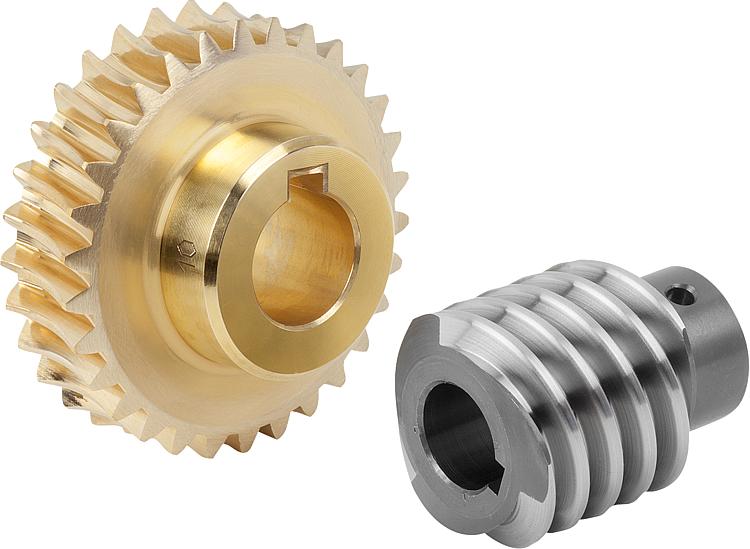
Can worm gears be used in precision manufacturing equipment?
Yes, worm gears can be used in precision manufacturing equipment. Here’s a detailed explanation of their use in precision manufacturing:
1. Precision Motion Control: Worm gears can provide precise motion control in manufacturing equipment. Their design allows for high gear ratios, which enables fine adjustments and precise positioning. This is particularly useful in applications where accurate and repeatable movement is required, such as CNC machines, robotic arms, and coordinate measuring machines (CMMs).
2. Load Holding and Backdriving Prevention: Worm gears have a self-locking characteristic, meaning they can hold loads in position without the need for additional brakes or clutches. This feature is advantageous in precision manufacturing equipment where holding a position is critical. The self-locking property also helps prevent backdriving, ensuring stability and accuracy during operation.
3. Compact Design: Worm gears have a compact design, which can be beneficial in space-constrained manufacturing equipment. Their worm and worm wheel configuration allows for a compact footprint, making them suitable for applications where size limitations exist.
4. High Torque Transmission: Worm gears can transmit high torque, making them suitable for heavy-duty precision manufacturing equipment. The meshing of the worm and worm wheel generates a large contact area, enabling efficient power transfer and load handling capabilities.
5. Reduced Noise and Vibration: Worm gears operate with a sliding motion rather than a rolling motion, resulting in reduced noise and vibration levels. This characteristic is advantageous in precision manufacturing equipment, as it helps maintain a quieter working environment and minimizes potential disturbances that could affect the precision of the manufacturing process.
6. Lubrication and Maintenance: Proper lubrication is crucial for the efficient and reliable operation of worm gears in precision manufacturing equipment. Lubricants help reduce friction and wear between the gear teeth, ensuring smooth and accurate motion. Regular maintenance and lubrication schedules should be followed to optimize gear performance and extend their service life.
While worm gears offer several advantages in precision manufacturing equipment, it’s important to consider the specific requirements of the application. Factors such as gear ratio, efficiency, backlash, and operating conditions should be carefully evaluated to ensure that worm gears are the appropriate choice for achieving the desired precision and performance.
Overall, worm gears can be successfully utilized in precision manufacturing equipment, providing precise motion control, load holding capabilities, compactness, and high torque transmission. When properly selected, installed, and maintained, worm gears can contribute to the accuracy, reliability, and efficiency of precision manufacturing processes.
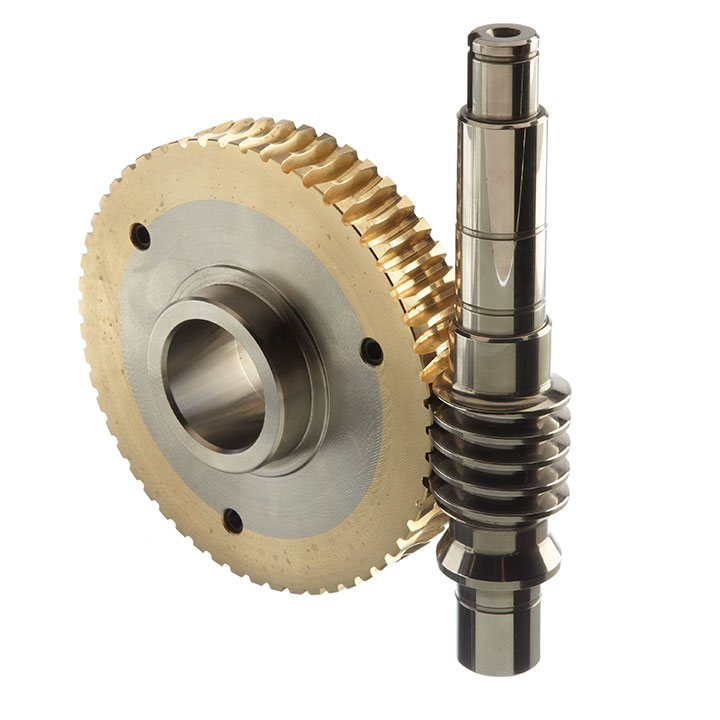
Como lidar com problemas de ruído e vibração em um sistema de engrenagem helicoidal?
Problemas de ruído e vibração em um sistema de engrenagem helicoidal podem surgir devido a diversos fatores, como desalinhamento, lubrificação inadequada, desgaste das engrenagens ou ressonância. Resolver esses problemas é importante para garantir o funcionamento suave e silencioso do sistema. Aqui está uma explicação detalhada de como solucionar problemas de ruído e vibração em um sistema de engrenagem helicoidal:
1. Correção de desalinhamento: O desalinhamento entre o parafuso sem-fim e a coroa pode causar ruído e vibração. Garantir o alinhamento correto das engrenagens, ajustando suas posições e tolerâncias de alinhamento, pode ajudar a reduzir esses problemas. O alinhamento preciso minimiza os erros de contato entre os dentes e melhora a eficiência do engrenamento, resultando em níveis reduzidos de ruído e vibração.
2. Otimização da lubrificação: A lubrificação inadequada ou incorreta pode levar ao aumento do atrito e do desgaste, resultando em ruído e vibração. O uso do lubrificante correto, com a viscosidade e os aditivos adequados, e a garantia de intervalos de lubrificação apropriados podem ajudar a reduzir o atrito e a amortecer as vibrações. A análise e a reposição regulares do lubrificante também podem prevenir o desgaste excessivo e manter o desempenho ideal.
3. Inspeção e substituição de engrenagens: O desgaste e os danos nos dentes da engrenagem podem contribuir para problemas de ruído e vibração. A inspeção regular do sistema de engrenagem helicoidal permite a detecção precoce de dentes desgastados ou danificados. A substituição oportuna de engrenagens desgastadas ou componentes danificados ajuda a manter a integridade do engrenamento e reduz os níveis de ruído e vibração.
4. Medidas de redução de ruído: Diversas medidas de redução de ruído podem ser implementadas para minimizar o ruído em um sistema de engrenagem helicoidal. Essas medidas incluem o uso de materiais ou revestimentos de amortecimento de ruído, a adição de isolamento acústico ou almofadas de absorção de vibração à carcaça e a incorporação de recursos de redução de ruído no projeto da engrenagem, como modificações de perfil ou dentes helicoidais. Essas medidas ajudam a atenuar a transmissão de ruído e vibração e a melhorar o desempenho geral do sistema.
5. Mitigação da ressonância: A ressonância, que ocorre quando a frequência natural do sistema coincide com a frequência de excitação, pode amplificar o ruído e a vibração. Para mitigar a ressonância, podem ser consideradas modificações no projeto, como a alteração da rigidez das engrenagens, a modificação das frequências naturais do sistema ou a adição de elementos de amortecimento. Ferramentas analíticas, como a análise de elementos finitos (FEA), podem auxiliar na identificação das frequências de ressonância e orientar as alterações de projeto para reduzir a vibração e o ruído.
6. Isolamento e amortecimento: Técnicas de isolamento e amortecimento podem ser empregadas para minimizar a transmissão de ruído e vibração para as estruturas circundantes. Isso pode envolver o uso de suportes resilientes ou isoladores para separar o sistema de engrenagens do restante do equipamento, ou a incorporação de materiais ou dispositivos de amortecimento dentro da caixa de engrenagens para absorver vibrações e reduzir a propagação de ruído.
7. Aperto e fixação: Componentes soltos ou apertados incorretamente podem gerar ruído e vibração. Garantir que todos os fixadores, rolamentos e outros componentes estejam devidamente apertados e seguros elimina as fontes de vibração e reduz o ruído. Inspeções e manutenções regulares devem incluir a verificação de peças soltas ou desgastadas e a sua correção imediata.
A resolução de problemas de ruído e vibração em um sistema de engrenagem helicoidal geralmente exige uma abordagem sistemática que considere múltiplos fatores. As medidas específicas empregadas podem variar dependendo da natureza do problema, das condições de operação e dos objetivos de desempenho desejados. A colaboração com especialistas em projeto de engrenagens, análise de vibração ou controle de ruído pode ser benéfica na identificação e implementação de soluções eficazes.
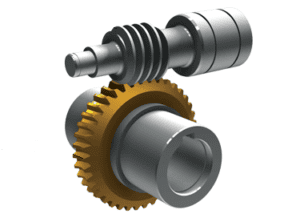
Understanding Worm Gears and Their Operation
A worm gear is a type of mechanical gear that consists of a threaded screw-like component (called the worm) and a toothed wheel (called the worm gear). It is used to transmit motion between non-intersecting and perpendicular shafts. Here’s how it works:
The worm, typically in the form of a cylindrical rod with a helical thread, meshes with the teeth of the worm gear. When the worm is rotated, its threads engage with the teeth of the worm gear, causing the gear to rotate. The direction of rotation of the worm gear is perpendicular to the axis of the worm.
One significant feature of worm gears is their ability to provide high gear reduction ratios. The number of teeth on the worm gear relative to the number of threads on the worm determines the reduction ratio. This makes worm gears suitable for applications where high torque and low-speed rotation are required.
Worm gears are commonly used in various mechanical systems, such as conveyor systems, lifts, automotive steering mechanisms, and more. Their unique design also provides a self-locking feature: when the system is not actively rotating the worm, the gear cannot easily backdrive the worm due to the angle of the threads, providing mechanical advantage and preventing reverse motion.


editor by CX 2023-09-13