Roda Gigi Cacing untuk Sistem Pelacak Matahari — Spesifikasi Keandalan 25 Tahun
Kegagalan penggerak pelacak pada tahun ke-8 dari proyek 25 tahun akan menghancurkan keuntungan finansial dari sistem pelacakan dibandingkan dengan sistem kemiringan tetap. Panduan ini mengidentifikasi tiga mekanisme mekanis yang menyebabkan kegagalan penggerak cacing pelacak surya sebelum siklus proyek berakhir — dan apa yang perlu ditentukan untuk mencegah masing-masing kegagalan tersebut.
Faktor Ekonomi yang Membuat Keandalan Penggerak Tak Bisa Ditawar
Sistem pelacak horizontal sumbu tunggal pada proyek tenaga surya utilitas 100 MW meningkatkan hasil energi sekitar 23% dibandingkan dengan susunan kemiringan tetap pada lintang lokasi yang sama. Pada lokasi 100 MW di Korea Selatan dengan faktor kapasitas 15%, ini berarti sekitar 3,45 juta kWh tambahan per tahun. Dengan harga PPA 0,09 USD/kWh, itu sekitar 310.000 USD per tahun dalam pendapatan tambahan — pembenaran finansial untuk memilih sistem pelacak daripada kemiringan tetap sejak awal.
Sekarang pertimbangkan penggantian gearbox pada tahun ke-8 di lokasi dengan 1.000 drive. Mobilisasi lapangan, penyewaan peralatan, dan 1.000 drive pengganti dengan harga 280 USD per unit menghabiskan biaya sekitar 560.000 USD untuk suku cadang dan tenaga kerja. Penggantian ini juga menyebabkan baris pelacak yang terpengaruh tidak beroperasi selama rata-rata 7 hari di seluruh armada, yang mengakibatkan kerugian pembangkitan sekitar 60.000 USD. Total biaya penggantian — 620.000 USD — setara dengan dua tahun penuh manfaat peningkatan hasil. Perhitungan tingkat pengembalian internal proyek mengasumsikan tidak ada penggantian drive besar selama 25 tahun. Satu kejadian pada tahun ke-8 telah menghabiskan 8% dari total keuntungan hasil siklus hidup.
Inilah mengapa spesifikasi dari roda gigi cacing Memilih set roda gigi yang tepat untuk sistem penggerak pelacak surya adalah keputusan investasi, bukan keputusan pembelian. Set roda gigi termurah yang sesuai dengan adaptor motor dan antarmuka poros keluaran bukanlah jawaban yang tepat. Jawaban yang tepat adalah set roda gigi yang masih akan beroperasi sesuai spesifikasi hingga tahun ke-25 — dan Korea Ever-Power mendesainnya seperti itu. roda gigi cacing pelacak surya Khususnya seputar persyaratan tersebut.

Tiga Mekanisme yang Membunuh Penggerak Pelacak Matahari Lebih Awal
Mekanisme 1 — Korosi Poros Cacing di Atmosfer Kelautan dan Industri
Poros ulir baja karbon berlapis seng di lingkungan atmosfer pesisir mengalami rangkaian kegagalan yang terdokumentasi dengan baik dalam instalasi industri lepas pantai dan pesisir, tetapi sering diremehkan dalam spesifikasi proyek tenaga surya. Ion klorida di udara laut menembus lapisan seng pada diskontinuitas lapisan—goresan, retak tegangan akar ulir akibat siklus termal, dan porositas pada lapisan seng yang diendapkan secara elektrokimia. Begitu klorida mencapai substrat baja, korosi pitting dimulai dan berkembang dengan laju 4 hingga 8 kali lebih cepat daripada perlindungan galvanik dari seng residual yang dapat menekannya. Di lingkungan pesisir Korea yang moderat (3–5 km dari laut), poros ulir baja karbon berlapis seng dapat mengembangkan lubang korosi tembus dinding pada akar ulir dalam waktu 5 hingga 7 tahun. Gejala pertama yang terlihat biasanya adalah pengoperasian yang berisik akibat pengikatan ulir yang kasar; kegagalan fungsionalnya adalah peningkatan cepat pada kelonggaran diikuti oleh hilangnya penguncian sendiri sepenuhnya ketika lubang-lubang tersebut menciptakan konsentrasi tegangan permukaan yang memungkinkan deformasi ulir di bawah beban angin.
Mekanisme 2 — Kerusakan Termal Gemuk Akibat Siklus Suhu Harian
Rumah girboks pelacak surya di iklim gurun dan kontinental mengalami siklus suhu harian yang tidak dapat ditahan oleh gemuk mineral. Girboks tertutup yang terpapar sinar matahari langsung di musim panas mencapai suhu internal 75–85°C pada siang hari — didorong oleh radiasi matahari yang diserap pada permukaan rumah girboks, bukan hanya oleh gesekan jala gigi. Pada suhu ini, minyak dasar gemuk mineral keluar dari pengental dengan laju yang terukur. Minyak yang terpisah bermigrasi karena gravitasi ke titik terendah rumah girboks. Permukaan gigi di atas genangan minyak secara bertahap hanya menggunakan residu pengental kering sebagai pelumas. Pada saat suhu lingkungan turun di musim gugur dan prosesnya berbalik, permukaan gigi telah mengakumulasi kerusakan kelelahan akibat periode pengoperasian kering. Selama 5 hingga 8 tahun siklus termal harian, mekanisme ini menghasilkan keausan adhesif progresif pada permukaan gigi roda perunggu. Kondisi akhirnya adalah penggerak yang telah kehilangan 40–60% dari kapasitas torsi nominalnya karena degradasi profil gigi.
Mekanisme 3 — Akumulasi Reaksi Balik dan Hilangnya Akurasi Pelacakan
Backlash pada rangkaian roda gigi cacing mewakili zona mati sudut ketika sumbu berbalik arah. Pada penggerak pelacak baru yang disetel ke backlash 0,05 mm pada lingkaran pitch roda gigi cacing, zona mati ini kira-kira 0,05 ÷ 60 mm radius pitch = 0,00083 radian = 2,9 menit busur. Seiring ausnya gigi roda perunggu timah di bawah 9.000 siklus pelacakan harian selama 25 tahun, backlash meningkat sekitar 0,015–0,030 mm per tahun tergantung pada tingkat tegangan kontak dan kondisi pelumasan. Pada tahun ke-6 hingga ke-8 pengoperasian tanpa penyesuaian, backlash dapat mencapai 0,15–0,20 mm — setara dengan 8,6 hingga 11,5 menit busur zona mati pelacakan. Panel yang melenceng 0,15 derajat dari jalur selama iradiasi puncak kehilangan sekitar 0,4% hasil harian. Selama lebih dari 10 tahun beroperasi dengan penyimpangan ini, kehilangan energi kumulatif dapat melebihi 1,5% dari total produksi seumur hidup — yang dapat diukur dalam rasio kinerja energi proyek dan berpotensi memicu diskusi garansi kinerja dengan pemilik proyek.
Rentang Spesifikasi — Roda Gigi Cacing Pelacak Surya
| Parameter | Rentang / Opsi | Catatan Aplikasi Tenaga Surya |
|---|---|---|
| Modul | M4 – M10 | M5–M8 untuk sebagian besar baris pelacak sumbu tunggal utilitas |
| Rasio pengurangan | 40:1 – 150:1 | Rasio 60:1 – 100:1 paling umum untuk pelacak sumbu tunggal horizontal. |
| Bahan poros cacing | C45 + seng fosfat (darat), SS304 (paparan air tawar), SS316 (pesisir/laut) | Pemilihan material spesifik lokasi — lihat Matriks Klasifikasi Lokasi di bawah ini |
| Bahan roda | ZCuSn10Pb1 (perunggu timah) standar; ZCuAl10Fe3 untuk lokasi dengan angin kencang dan beban tinggi. | Perunggu timah lebih disukai untuk tugas pelacakan terus menerus dan sifat anti-gores. |
| Kelas presisi | DIN7 – DIN8 | DIN7 di mana akurasi pelacakan dalam ±0,15 derajat ditentukan. |
| Opsi cacing Dupleks | Tersedia — celah balik dapat disesuaikan tanpa penggantian komponen. | Direkomendasikan untuk instalasi sumbu ganda dan sumbu tunggal dengan akurasi tinggi. |
| Verifikasi penguncian otomatis | Terkonfirmasi pada suhu ekstrem di lokasi dengan pelumas sintetis yang ditentukan. | Margin keamanan yang terdokumentasi terhadap torsi angin disertakan dengan setiap set tingkatan pelacak. |
| Spesifikasi pelumas | PAO sintetis NLGI 2, -40°C hingga +140°C; ISO VG 220–460 untuk wadah penangas minyak | Tidak ada gemuk mineral — pendarahan di atas 75°C membuat permukaan gigi tetap kering pada jam-jam puncak produksi. |
| Suhu pengoperasian | -40°C hingga +85°C | Suhu permukaan bangunan di bawah sinar matahari langsung di tengah musim panas: hingga 85°C di iklim Korea/Asia Tenggara. |
Penguncian Otomatis pada Suhu Ekstrem — Mengapa Asumsi Berbahaya
Kondisi penguncian otomatis untuk penggerak ulir terpenuhi ketika sudut ulir (λ) lebih kecil daripada sudut gesekan efektif (ρ') pada kontak gigi. Sudut gesekan efektif didefinisikan sebagai arctan(μ / cos(α)), di mana μ adalah koefisien gesekan pada kontak gigi dan α adalah sudut tekanan. Untuk ulir dengan sudut tekanan standar 20 derajat: ρ' = arctan(μ / 0,940).
Poin penting yang seringkali terlewatkan dalam sebagian besar spesifikasi pelacak surya adalah bahwa μ bukanlah konstanta — nilainya berubah seiring dengan viskositas pelumas, yang juga berubah seiring dengan suhu. Gemuk sintetis PAO NLGI 2 pada suhu 20°C dapat memberikan μ = 0,07 pada kontak jaring perunggu, menghasilkan ρ' = 4,3 derajat. Gemuk yang sama pada suhu housing 80°C memiliki viskositas yang lebih rendah, kekuatan lapisan yang lebih rendah, dan μ dapat turun menjadi 0,045 — memberikan ρ' = 2,7 derajat. Jika sudut ulir cacing adalah 3,5 derajat (yang menghasilkan rasio 80:1 dengan pemilihan diameter silinder pitch standar), kondisi penguncian otomatis terpenuhi pada suhu 20°C dengan margin keamanan 0,8 derajat — tetapi gagal pada suhu 80°C, di mana sudut gesekan turun di bawah sudut ulir. Penggerak akan berputar balik di bawah beban angin pada suhu puncak musim panas, tepat pada periode waktu ketika lokasi tersebut berada di bawah iradiasi matahari tertinggi dan paling membutuhkan pelacakan yang akurat.
Spesifikasi roda gigi cacing pelacak surya kami selalu mencakup perhitungan margin penguncian otomatis yang dilakukan pada koefisien gesekan minimum yang diharapkan — yang sesuai dengan suhu operasi maksimum dengan pelumas sintetis yang ditentukan. Jika margin di bawah 1,5 derajat pada titik mana pun dalam rentang suhu operasi, kami mendesain ulang sudut ulir atau merekomendasikan pelumas dengan viskositas lebih tinggi untuk mengembalikan margin tersebut. Perhitungan ini dan inputnya disediakan sebagai dokumen dalam paket kualifikasi — bukan pernyataan pada lembar data, tetapi catatan teknik yang dapat dilacak.
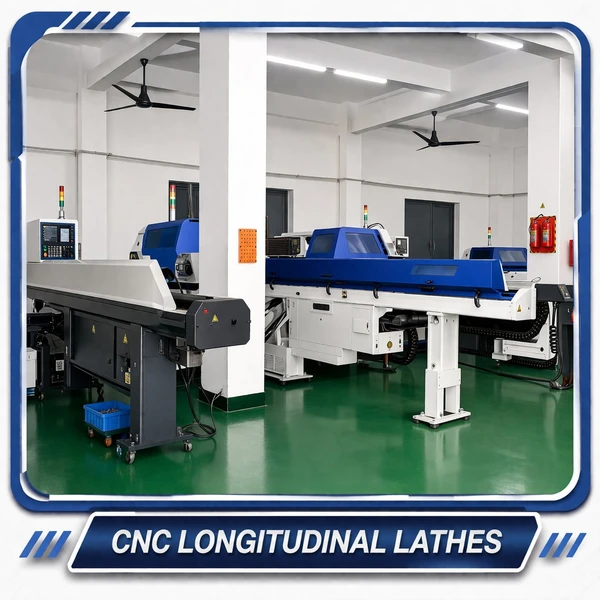
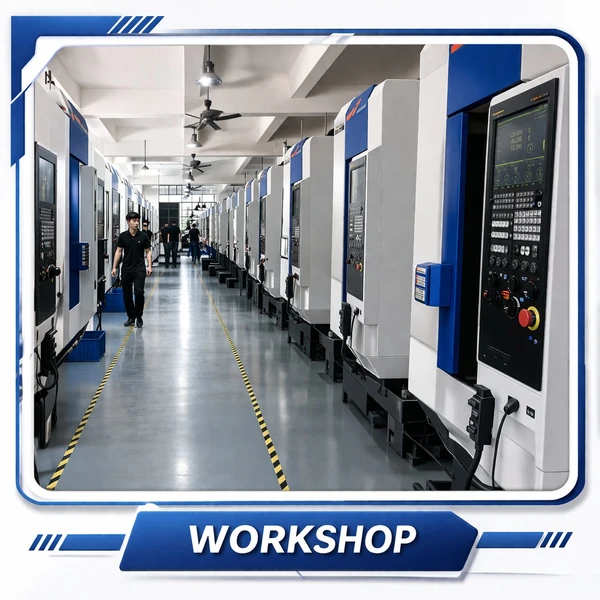
Fasilitas Manufaktur
 |
 |
 |
 |
Matriks Klasifikasi Lokasi — Pilih Material Poros Cacing yang Tepat untuk Instalasi Anda
Pemilihan material untuk poros ulir harus didasarkan pada tingkat korosif atmosfer lokasi, bukan pada harga terendah yang tersedia pada modul tertentu. Matriks ini mencakup empat jenis lokasi yang paling sering ditemui dalam proyek tenaga surya di Korea dan Asia:
| Jenis Situs | Keterangan | Poros Cacing yang Direkomendasikan | Uji Korosi Minimum |
|---|---|---|---|
| Pedalaman — Kering atau Pertanian | Korea bagian pedalaman, Tiongkok tengah/barat, gurun Timur Tengah — tidak ada polusi udara klorida atau industri yang signifikan. | C45 + seng fosfat + gemuk sintetis | Uji semprot garam netral 96 jam sesuai ISO 9227 |
| Pedalaman — Suasana Industri | Lokasi kawasan industri, berdekatan dengan pabrik semen/baja/kimia — kontaminasi SO2 atau partikulat yang tinggi. | C45 + galvanis celup panas (85 µm) atau SS304 | Uji semprotan garam 240 jam; uji atmosfer SO2 |
| Pesisir — Dalam radius 5 km dari laut | Pantai barat dan selatan Korea, garis pantai Laut Kuning, pesisir Asia Tenggara — atmosfer klorida laut | SS316 — ketahanan terhadap korosi pitting klorida diperlukan | Uji semprot garam 500 jam; sertifikat pasivasi |
| Pembangkit Listrik Tenaga Surya Terapung — Waduk Air Tawar | Instalasi waduk, danau, atau sungai besar — kelembapan tinggi, kabut air tawar, tanpa klorida | Rumah tertutup SS304 + IP67 — hanya tahan korosi air tawar | Uji semprotan garam 96 jam; uji perendaman IP67 pada rakitan casing. |
Strategi Cacing Dupleks untuk Akurasi Pelacakan 25 Tahun
A roda gigi cacing dupleks Set roda gigi cacing ganda—juga disebut cacing ulir ganda—mempertahankan akurasi pelacakan selama siklus hidup proyek penuh dengan memungkinkan celah balik (backlash) dipulihkan tanpa mengganti set roda gigi. Mekanisme ini bekerja sebagai berikut: sisi ulir cacing diproduksi dengan nilai ulir yang sedikit berbeda di sisi kiri dan kanan, sehingga ketebalan gigi ulir meningkat secara terus menerus dari satu ujung cacing ke ujung lainnya. Menggeser cacing secara aksial dengan jumlah yang dikalibrasi akan menggerakkan bagian ulir yang lebih tebal ke dalam jalinan dengan roda, menutup celah balik. Geometri kontak antara cacing dan roda tidak berubah oleh pergeseran ini—area kontak gigi penuh, kapasitas beban, dan margin penguncian sendiri tetap utuh selama penyesuaian. Hanya dimensi celah balik yang berubah.
Untuk roda gigi cacing M6 pelacak surya standar dengan rasio 80:1, perbedaan jarak antara kedua sisi kira-kira 0,15 mm per putaran. Ini memberikan rentang penyesuaian sekitar 1,0 mm pergeseran aksial roda gigi cacing, yang sesuai dengan penyesuaian celah dari nol hingga 0,15 mm pada lingkaran pitch. Celah terakumulasi sekitar 0,015–0,025 mm per tahun dalam operasi pelacak normal. Dimulai dari 0,05 mm saat pemasangan, penggerak mencapai ambang batas penyesuaian 0,10 mm dalam waktu sekitar 2 hingga 4 tahun. Tim O&M yang melakukan penyesuaian pergeseran aksial pada interval ini — prosedur 20 menit dengan alat tangan standar — mengembalikan penggerak ke celah 0,05 mm. Prosedur ini dapat diulang 4 hingga 6 kali sebelum gigi roda aus hingga batas penggantian, memberikan total masa pakai 10 hingga 25 tahun tanpa penggantian komponen tergantung pada tingkat tegangan kontak dan kualitas pelumasan. Untuk proyek yang dibiayai dengan jangka waktu 25 tahun, strategi roda gigi cacing inilah yang sesuai dengan model bisnisnya.
Referensi Kompatibilitas Sistem Pelacak
Nama merek dicantumkan hanya untuk tujuan referensi dimensi. Korea Ever-Power tidak berafiliasi dengan, didukung oleh, atau diotorisasi oleh produsen pelacak mana pun yang tercantum. Semua merek dagang adalah milik dari pemiliknya masing-masing.
| Sistem Pelacak | Jenis Penggerak | Catatan Pencocokan |
|---|---|---|
| NEXTracker (NX Horizon) | Penggerak putar dengan roda gigi cacing internal | Konfirmasi modul dan jumlah gigi diperlukan — kirimkan dimensi internal drive. |
| Array Technologies (ATI) | Penggerak reduksi gigi dengan tahap cacing | Gambar dimensi diperlukan untuk pencocokan. |
| Perangkat Keras PV | Unit penggerak putar pelacak khusus | Modul M5–M8 — kirimkan nomor komponen untuk penawaran harga |
| GameChange Solar | Penggerak cacing terintegrasi motor | Tersedia pilihan ukuran lubang dan flensa motor yang sesuai. |
| Ideematec | Kombinasi cincin putar dan penggerak cacing | Konfirmasi modul dan jarak pusat diperlukan. |
Studi Kasus Referensi Proyek
Kontraktor EPC — Proyek Pesisir Jeolla Selatan, Korea Selatan · Kuartal 2 2023
Menyetir: Pelacak horizontal sumbu tunggal, 28 MW, 4,2 km dari pantai Laut Kuning. M6, 80:1, poros cacing SS316, roda perunggu timah, diuji semprotan garam selama 500 jam.
Kontraktor EPC sebelumnya pernah mengalami kegagalan penggerak akibat korosi pada proyek pesisir sebelumnya, di mana poros C45 berlapis seng mengalami korosi tembus dinding dalam waktu 4 tahun. Pemilik proyek baru mensyaratkan bukti ketahanan korosi selama 25 tahun yang terdokumentasi — pernyataan pada lembar data tidak dapat diterima. Poros ulir SS316 yang dipoles secara elektrolitik hingga Ra 0,4 µm telah ditentukan. Uji semprot garam netral selama 500 jam memastikan tidak ada korosi logam dasar pada permukaan gigi. Batas penguncian otomatis diverifikasi pada suhu -10°C dan +75°C. Inspeksi lapangan selama tiga tahun pada tahun 2026 memastikan tidak ada korosi yang terukur pada permukaan gigi, celah balik sesuai spesifikasi asli pada 95% unit yang diperiksa. Proyek pesisir kedua sebesar 45 MW dipesan pada kuartal keempat tahun 2025 menggunakan spesifikasi yang sama.
“Hasil uji semprot garam selama 500 jam dan perhitungan penguncian otomatis yang diverifikasi suhu persis seperti yang dibutuhkan oleh tinjauan teknis pemilik proyek untuk menyetujui spesifikasi tersebut.” — Direktur Teknik Proyek
Produsen Tracker — Proyek Sumbu Ganda Queensland, Australia · Kuartal 1 2024
Menyetir: Penggerak azimut sumbu ganda, 150 MW, suhu sekitar -5°C hingga +45°C, suhu casing maksimum +85°C. Roda gigi cacing dupleks M7, DIN7
Roda gigi cacing standar sebelumnya pada sumbu azimut mengakumulasi kelonggaran 0,6 derajat dalam waktu 6 tahun, memicu persyaratan spesifikasi ulang di tengah proyek. Produsen pelacak membutuhkan solusi dupleks yang mempertahankan akurasi pelacakan dalam ±0,3 derajat selama 25 tahun tanpa penggantian roda gigi. Dupleks M7 disesuaikan hingga 0,06 mm saat pemasangan; perbedaan ulir 0,18 mm/putaran memberikan rentang penyesuaian 0,8 mm. Gemuk sintetis PAO NLGI 2 dengan rating hingga 140°C ditentukan untuk suhu rumah di musim panas Queensland. Inspeksi 12 bulan: kelonggaran terukur sebesar 0,09 mm — dalam ambang batas 0,10 mm, tidak diperlukan penyesuaian pada interval ini.
“Panduan penyesuaian dupleks ada di dalam kemasan. Tim O&M saya menggunakannya langsung dalam dokumentasi protokol pemeliharaan untuk kontrak O&M selama 25 tahun.”
Proyek Tenaga Surya Gurun — Arab Saudi, 500 MW · Kuartal ke-3 2023
Menyetir: Penggerak azimut pelacak horizontal sumbu tunggal, lingkungan gurun, suhu sekitar -5°C hingga +50°C, suhu casing hingga +85°C. C45 + galvanisasi celup panas 85 µm, diuji semprotan garam selama 720 jam.
Penggerak pelacak sebelumnya menggunakan gemuk mineral yang menunjukkan pemisahan oli pada suhu rumah di atas 75°C selama jam puncak pembangkitan di musim panas — menyebabkan jaring cacing beroperasi dengan pengental kering selama 3 hingga 4 jam setiap hari. Gemuk kalsium sulfonat sintetis PAO NLGI 2 yang ditentukan memiliki peringkat suhu -40°C hingga +140°C. Pada inspeksi 24 bulan: viskositas sampel gemuk sesuai spesifikasi dan tidak ada produk degradasi termal yang terdeteksi oleh ferrografi. Nol kegagalan terkait pelumasan di seluruh armada selama periode tersebut.
“Dua tahun tanpa kegagalan pelumasan sama sekali pada armada 500 MW di iklim gurun. Spesifikasi gemuk sintetis adalah solusi yang tepat.”
Proyek Pembangkit Listrik Tenaga Surya Terapung — Delta Mekong, Vietnam · Kuartal ke-4 2024
Menyetir: Penggerak azimuth, susunan panel surya terapung 45 MW di atas waduk. Kelembaban relatif tinggi, kabut air tawar, suhu ambien tropis 15–42°C. Poros ulir SS304, rumah tertutup rapat IP67.
Poros baja karbon dari pemasok sebelumnya dengan pelapisan seng standar mengalami delaminasi di area penopang bantalan dalam waktu 18 bulan karena siklus kondensasi dan endapan mineral air tawar. SS304 kemudian ditentukan — ketahanan korosi yang cukup di air tawar tanpa biaya tambahan SS316. Jurnal rumah bantalan tertutup IP67 mencegah masuknya kondensasi di lokasi poros yang paling rentan. Inspeksi 14 bulan: tidak ada korosi pada permukaan poros, semua segel utuh. Proyek terapung 30 MW kedua dioperasikan pada awal tahun 2025 menggunakan spesifikasi yang identik.
“Penggunaan SS304 sebagai pengganti SS316 menghemat biaya secara signifikan tanpa mengurangi daya tahan di lingkungan air tawar. Rekomendasi tersebut secara teknis benar.”
Spesifikasi Katalog Standar vs Spesifikasi Pelacak Surya 25 Tahun
| Faktor | Katalog Standar Roda Gigi Cacing | Spesifikasi Tenaga Surya Korea Ever-Power 25 Tahun |
|---|---|---|
| Bahan poros (pesisir) | C45 + pelapisan seng — berlubang dalam 5–7 tahun di atmosfer pesisir | SS316 — molibdenum mencegah korosi pitting klorida selama 25 tahun masa proyek. |
| Verifikasi penguncian otomatis | Tercantum dalam lembar data hanya pada suhu ruangan. | Suhu ekstrem dihitung dan didokumentasikan di lokasi — margin keamanan dapat dilacak. |
| Reaksi negatif pada tahun ke-10 ke atas | 0,15–0,20 mm — akurasi pelacakan menurun, kehilangan hasil energi | Dupleks: dikembalikan ke 0,05 mm pada setiap interval penyesuaian O&M — akurasi tetap terjaga |
| Spesifikasi pelumas | Mineral NLGI 2 — pemisahan minyak di atas 75°C, permukaan gigi kering pada puncak musim panas | PAO sintetis NLGI 2, berperingkat 140°C — tidak bocor pada suhu operasi di lokasi mana pun. |
| Dokumentasi proyek | Lembar data produk | Sertifikat material, uji semprot garam, perhitungan penguncian otomatis, perhitungan umur kelelahan, pernyataan kompatibilitas pelumas. |
| Pemeliharaan tak terencana yang diperkirakan | 1–3 kali penggantian gearbox dalam 25 tahun | Tidak ada reaksi balik yang tidak direncanakan — penyesuaian terjadwal hanya setiap 2–4 tahun sekali. |

Untuk aplikasi yang memerlukan rakitan penggerak putar lengkap dengan spesifikasi material dan dokumentasi yang dijelaskan dalam panduan ini, pasangan roda gigi cacing yang cocok tersedia dalam bentuk pra-rakit dalam wadah tertutup IP67 untuk pemasangan tabung torsi standar. Tertutup secara ringkas. reduktor roda gigi cacing dengan pemilihan material spesifik lokasi — darat, pesisir, atau terapung — tersedia sebagai unit lengkap yang siap dipasang. Paket dokumentasi kualifikasi proyek lengkap disiapkan sebagai standar untuk tinjauan EPC dan manajemen aset.
Pertanyaan yang Sering Diajukan
Tentukan Penggerak Cacing Pelacak Surya Anda — Dokumentasi Proyek Lengkap Termasuk
Kirimkan parameter penggerak pelacak Anda: modul, rasio, torsi keluaran, lokasi situs dan kelas atmosfer, rentang suhu, dan persyaratan dokumentasi. Kami akan merespons dengan spesifikasi yang telah dikonfirmasi, ruang lingkup paket kualifikasi, dan harga dalam satu hari kerja. Perjanjian kerahasiaan (NDA) tersedia sebelum pertukaran gambar.
Editor: Cxm