The 14-Month Drive and the 72-Month Drive — What Was Different
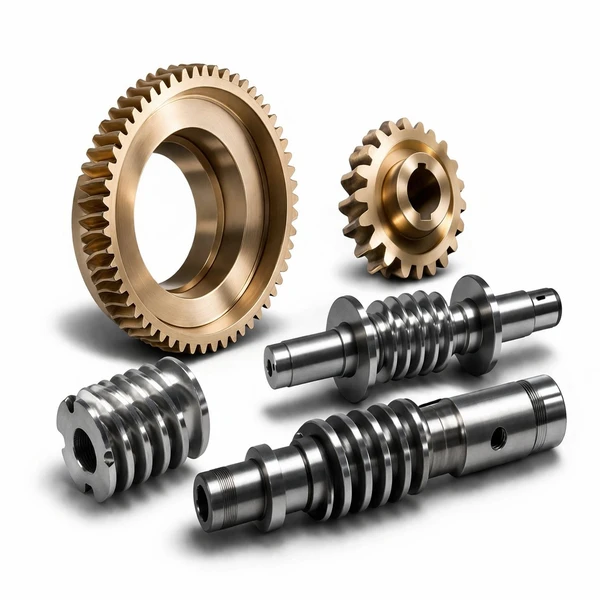
Two neighboring conveyor lines in a Korean automotive parts warehouse. Both use a 40:1 alloy steel worm gear set, M5, 40Cr shaft, ZCuSn10Pb1 tin bronze wheel. Both drives carry pallets on an 8-degree incline, three shifts per day. Line A replaced its worm wheel every 13-15 months — always from abrasive wear leading to excessive backlash. Line B was still running on its original gear set at 72 months when the plant went through an equipment audit. The maintenance records explained everything: the two lines had different supervisors, and the maintenance procedures were not standardized.
Line B had six practices that Line A did not: a running-in oil change at 100 hours; a filtered breather on the housing; correct non-EP lubricant (Line A had been using the same EP oil as the conveyor chain drives); PAO synthetic instead of mineral oil; a soft-start motor controller; and a magnetic drain plug checked at every oil change. None of these cost more than the value of one replacement wheel, and together they produced a service life 5x longer.
This guide quantifies the contribution of each practice, provides the implementation steps, and estimates the lifetime cost saving from each lever — to help maintenance managers build the business case for implementing them across all worm gear drives in their facility.


The Six Service Life Levers — Implementation and Expected Impact
These six levers are listed in order of impact on worm gear service life. The first three produce the largest improvement. All six together account for the 5x difference observed between the best-maintained and worst-maintained drives in equivalent applications.
Expected Service Life by Specification and Maintenance Level
| Applikationstype | Material Spec | Maintenance Level | Expected Wheel Life | Key Assumption |
|---|---|---|---|---|
| Standard conveyor | C45 shaft + Sn10 bronze | Poor: EP oil, no running-in oil change | 8-14 months | EP oil corrosion + running-in abrasion |
| Standard conveyor | 40Cr shaft + Sn10 bronze | Standard: non-EP mineral oil, change 2,000h | 24-36 months | Normal wear at rated load |
| Standard conveyor | 40Cr shaft + Sn10 bronze | Good: PAO oil, running-in change, filtered breather | 48-72 months | Clean lubrication, controlled wear rate |
| Standard conveyor | SCM415 shaft + Sn10 bronze | Good: PAO oil, all 6 levers implemented | 72-96 months | Maximum achievable with standard tin bronze |
| High-cycle packaging | 40Cr shaft + Sn10 bronze | Poor: DOL start, no running-in | 4-8 months | Root fillet fatigue from DOL torque peaks |
| High-cycle packaging | SCM415 shaft + Sn10 bronze | Good: soft-start, PAO, all levers | 36-60 months | Fatigue life optimized, wear controlled |
| Food processing | SS316 shaft + Sn10 bronze | Good: NSF H1 PAO, CIP compatible seals | 36-60 months | Corrosion eliminated, NSF H1 reduces scuffing resistance — monitor |
| Marine/offshore | SS316 shaft + Al-iron bronze | Good: marine PAO, FKM seals, all levers | 60-120 months | Corrosion eliminated, al-iron bronze for splash zone |
Korea Ever-Power Production — Built for Long Service Life
 |
 |
 |
 |
 |
 |
Building the Business Case — Service Life Cost Calculation
Field Results
Four Service Life Extension Cases — Measured Before and After
Situation: A logistics centre with 32 pallet conveyor corner drives was replacing worm wheels every 7-9 months. Oil analysis of the drain oil showed 2,800 ppm copper — a clear signature of EP sulfur attack on the bronze wheels. The maintenance team had been using the same ISO VG 460 EP gear oil for the worm drives as for the pallet chain lubricant.
Opløsning: All 32 drives drained and refilled with non-EP ISO VG 460 mineral oil. Running-in oil change protocol introduced for all future replacements. Average wheel life post-change: 38 months across 12 complete cycles observed over the subsequent 4 years.
Situation: An automotive assembly line ran packaging conveyors with DOL motor starts 8-12 times per hour per line. CMM analysis of failed wheels showed root fillet cracking — bending fatigue, not surface wear. The calculation confirmed: DOL start torque at 2.3x rated, producing bending stress at the root fillet 2.3x higher than running stress — and fatigue life proportional to 1/(2.3)^3 = approximately 8% of rated fatigue life.
Opløsning: Soft-start electronic starters installed. Motor start torque limited to 1.25x rated. Bending stress at root fillet reduced to 1.25x running stress. Fatigue life improved by factor of (2.3/1.25)^3 = 12.5x. First wheel set still in service at 28 months post-installation.
Situation: A container terminal’s deck-level conveyor worm gear drives were failing with abrasive wear patterns at 10-18 months. Oil analysis confirmed high iron and silica particle counts — airborne sand and grit from the port environment entering through unsealed housing vents. The housing vent ports had standard open breathers.
Opløsning: 10-micrometre filtered breathers installed on all housing vent ports. Shaft seal inspection added to the quarterly maintenance schedule with immediate replacement if lip wear detected. After 36 months: zero premature failures attributable to abrasive contamination. Three drives still on original gear sets.
Situation: A cold storage facility’s conveyor worm drives were experiencing two problems: excessive noise and high motor current at cold-start (warehouse at -5 degrees C), and shorter-than-expected service life. The mineral ISO VG 460 oil at -5 degrees C had viscosity approximately 2,800 cSt — generating viscous drag that overloaded the motor at startup. The high drag also produced shear heating in the mesh, cycling the oil between cold-viscous and warm-thin conditions that accelerated wear.
Opløsning: ISO VG 460 mineral oil replaced with PAO ISO VG 220 (VI=155). At -5 degrees C, PAO 220 viscosity is approximately 560 cSt vs 2,800 cSt for mineral 460 — eliminating the cold-start overload. At operating temperature the PAO 220 provides adequate film thickness. Motor startup current returned to normal. Wheel life extended from 14 months to beyond 36 months at last inspection.
Koreas evige magt
Long-Life Worm Gear Products and the Documentation That Proves It
Service Life FAQ
Worm Gear Service Life — Questions from Maintenance Engineers
Extend the Service Life of Your Worm Gear Drives
Describe your application and current wheel life. Korea Ever-Power will identify which of the six levers applies to your situation and recommend specification or maintenance changes that address the root cause — before the next replacement cycle begins.
Redaktør: Cxm