Description du produit
Article : Composants de transmission pour fraisage et tournage de précision d'usine, arbre chaud en acier/cuivre, engrenage chaud
1. Haut degré d'automatisation et grande efficacité de production ;
2. Forte adaptabilité aux objets usinés CNC. Lors du changement d'objet à usiner, outre le remplacement et la résolution du mode de serrage de la pièce brute, il suffit de la reprogrammer ;
3. Haute précision d'usinage et qualité stable. La précision dimensionnelle d'usinage se situe entre 0,005 et 0,01 mm, indépendamment de la complexité des pièces ;
Paramètre :
| Article | Composants de transmission usinés avec précision en acier/cuivre, arbre chaud, engrenage chaud |
| Poids | Personnalisé |
| Dimension | Personnalisé |
| Matériel | Alliage d'aluminium (6063 T5, 6061, 5052, 7075, 1060…), acier inoxydable (316L, 304, 303…), cuivre, laiton, bronze, acier au carbone, PET, POM, nylon… |
| Technologie d'usinage | Usinage CNC 3, 4, 5 axes, fraisage CNC, tournage CNC, découpe laser, moulage sous pression, forgeage à froid, extrusion d'aluminium, fabrication de tôles, estampage, soudage, soudage par friction-malaxage, assemblage. |
| Traitement de surface | Anodisation, peinture, revêtement en poudre, électrophorèse, passivation, sablage, placage, noircissement, polissage… |
| Tolérance | ±0,01 mm |
| Application | Boîtiers de produits électroniques, châssis de télécommunications, couvercles, pièces de structure aérospatiale, dissipateurs thermiques, plaques de refroidissement en aluminium, engrenages et arbres, roulements, systèmes d'alimentation à grande vitesse, autres pièces usinées sur mesure OEM/ODM |
Notre avantage :
1. Équipe d'ingénieurs expérimentée ;
2. Inspection complète du processus de contrôle qualité, système de qualité complet avant, pendant et après le traitement ;
3. Réponse efficace et rapide, interaction harmonieuse entre les activités commerciales et la production, et compréhension précise des besoins des clients ;
| Application: | Moteurs, Voitures électriques, Motos, Machines, Machines marines, Jouets, Machines agricoles, Voiture |
|---|---|
| Dureté: | Surface dentaire durcie |
| Position de la vitesse : | Engrenage externe |
| Méthode de fabrication : | Engrenage roulant |
| Forme de la partie dentelée : | Engrenage droit |
| Matériel: | Acier inoxydable |
| Exemples : |
US$ 10/Pièce
1 pièce (commande minimale) | |
|---|
| Personnalisation : |
Disponible
| Demande personnalisée |
|---|
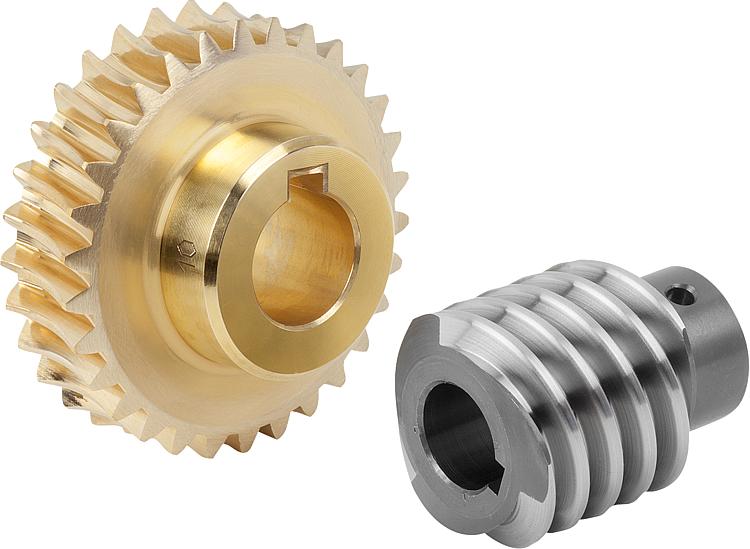
Les engrenages à vis sans fin sont-ils adaptés aux applications à couple élevé ?
Les engrenages à vis sans fin sont en effet parfaitement adaptés aux applications à couple élevé. Voici une explication détaillée des raisons pour lesquelles les engrenages à vis sans fin conviennent aux applications à couple élevé :
Les engrenages à vis sans fin sont réputés pour leur capacité à réduire considérablement la vitesse et à multiplier le couple. Ils se composent d'une roue dentée cylindrique filetée, appelée vis sans fin, et d'une roue dentée, appelée roue dentée. L'interaction entre la vis sans fin et la roue dentée permet la transmission du mouvement et du couple.
Voici les raisons pour lesquelles les engrenages à vis sans fin conviennent aux applications à couple élevé :
- Rapport de réduction élevé : Les engrenages à vis sans fin offrent des rapports de réduction élevés, généralement de 20:1 à 300:1, voire plus. Ce rapport de réduction important permet de diminuer considérablement la vitesse de rotation tout en multipliant le couple. C'est pourquoi les engrenages à vis sans fin sont particulièrement efficaces dans les applications exigeant un couple élevé.
- Fonction d'autoverrouillage : Les engrenages à vis sans fin possèdent une propriété d'autoblocage unique, ce qui leur permet de maintenir leur position et d'empêcher tout retour en arrière sans nécessiter de mécanismes de freinage supplémentaires. L'angle du filet de la vis sans fin crée un avantage mécanique qui s'oppose à la rotation inverse de la roue dentée, assurant ainsi d'excellentes caractéristiques d'autoblocage. Cette capacité d'autoblocage rend les engrenages à vis sans fin idéaux pour les applications où le maintien de la charge est crucial, comme dans les équipements de levage et de manutention.
- Conception robuste et résistante : Les engrenages à vis sans fin sont généralement fabriqués avec des matériaux durables, tels que l'acier ou le bronze, qui leur confèrent une grande résistance et une excellente tenue à l'usure. Cette conception robuste leur permet de supporter des charges importantes et de transmettre un couple élevé sans compromettre leurs performances ni leur durée de vie.
- Haute résistance aux chocs : Les engrenages à vis sans fin présentent une bonne résistance aux chocs, c'est-à-dire aux charges soudaines ou intermittentes qui dépassent les conditions normales de fonctionnement. Le contact glissant entre la vis sans fin et les dents de la roue dentée permet une certaine absorption des chocs, ce qui rend les engrenages à vis sans fin adaptés aux applications impliquant des impacts fréquents ou inattendus de couple élevé.
- Compact et peu encombrant : Les engrenages à vis sans fin présentent une conception compacte, ce qui les rend peu encombrants et adaptés aux applications où l'encombrement est limité. Leur compacité facilite leur intégration dans les machines et les équipements, même en cas de contraintes d'espace.
Il est important de noter que si les engrenages à vis sans fin excellent dans les applications à couple élevé, ils peuvent ne pas convenir aux applications à grande vitesse. Le contact glissant entre la vis sans fin et la roue dentée génère du frottement, ce qui peut entraîner un échauffement et une réduction du rendement à haute vitesse. Par conséquent, les engrenages à vis sans fin sont généralement privilégiés dans les applications à vitesse faible à modérée nécessitant un couple élevé.
Lors du choix d'une vis sans fin pour une application à couple élevé, il est important de prendre en compte les exigences spécifiques de couple, les conditions de fonctionnement et tout autre facteur tel que la vitesse, le rendement et la stabilité de position. Un dimensionnement, une lubrification et un entretien appropriés sont également essentiels pour garantir des performances optimales et une longue durée de vie dans les applications à couple élevé.
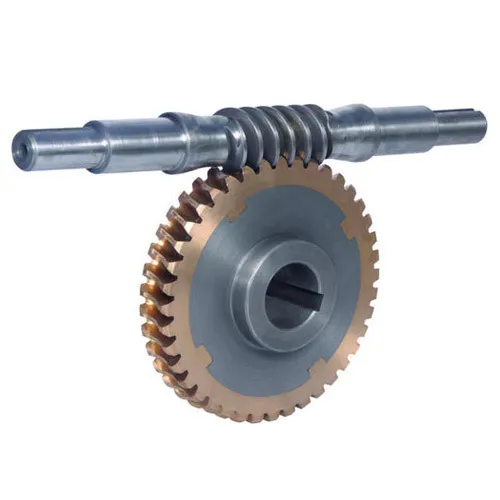
Comment adapter un système mécanique existant avec un engrenage à vis sans fin ?
Lors de la modernisation d'un système mécanique existant par l'ajout d'un engrenage à vis sans fin, plusieurs éléments doivent être pris en compte. Voici une explication détaillée du processus de modernisation :
- Évaluer le système existant : Avant de procéder à la modernisation, évaluez minutieusement le système mécanique existant. Comprenez sa conception, son fonctionnement et ses limites. Identifiez les raisons précises justifiant une modernisation par engrenage à vis sans fin, telles que le besoin d'un couple accru, d'une efficacité améliorée ou d'une précision accrue.
- Analyser la compatibilité : Évaluer la compatibilité d'un engrenage à vis sans fin avec le système existant. Prendre en compte des facteurs tels que l'espace disponible, l'intégrité structurelle, les exigences d'alignement et la capacité de charge du système. S'assurer que l'ajout d'un engrenage à vis sans fin ne compromet pas les performances globales ni la sécurité du système.
- Sélectionnez la roue dentée à vis sans fin appropriée : En fonction des exigences et des contraintes de la modernisation, choisissez un engrenage à vis sans fin adapté. Tenez compte de facteurs tels que le rapport de réduction, le couple admissible, le rendement, le jeu et les options de montage. Sélectionnez un engrenage à vis sans fin qui réponde aux besoins spécifiques de la modernisation et qui soit compatible avec le système existant.
- Modifier ou adapter le système : Selon l'analyse de compatibilité, il peut être nécessaire de modifier ou d'adapter certains composants du système existant pour intégrer la vis sans fin. Cela peut impliquer des ajustements au niveau des arbres, des roulements, des carters ou d'autres éléments mécaniques. Veillez à ce que toutes les modifications ou adaptations soient réalisées avec précision et conformément aux normes en vigueur.
- Installez la roue à vis sans fin : Installez la roue dentée à vis sans fin sélectionnée dans le système modifié ou adapté. Suivez scrupuleusement les instructions et recommandations du fabricant pour une installation correcte. Respectez les couples de serrage, les exigences de lubrification et les procédures d'assemblage spécifiques. Assurez-vous que la roue dentée à vis sans fin est correctement fixée et alignée afin de minimiser les défauts d'alignement et d'optimiser les performances.
- Tester et optimiser : Après l'installation, testez minutieusement le système modernisé afin de garantir son bon fonctionnement et ses performances. Effectuez des tests pour vérifier la transmission du couple, le rendement, le jeu, le niveau sonore et tout autre paramètre pertinent. Surveillez le système en fonctionnement et procédez aux ajustements ou optimisations nécessaires pour en optimiser les performances.
- Documenter et tenir à jour : Documentez le processus de modernisation, y compris les modifications, ajustements ou optimisations apportés au système existant. Conservez les enregistrements des procédures d'installation, des résultats des tests et des interventions de maintenance. Inspectez et entretenez régulièrement le système modernisé afin de garantir son bon fonctionnement et sa fiabilité.
Il est important de noter que la modernisation d'un système mécanique existant par l'ajout d'un engrenage à vis sans fin exige une expertise en génie mécanique et une bonne compréhension des spécificités du système. Si vous ne possédez pas les connaissances ou l'expérience nécessaires, il est conseillé de consulter des professionnels ou des ingénieurs spécialisés dans les systèmes de transmission de puissance afin de garantir la réussite de cette modernisation.
Comment choisir la taille de roue dentée à vis sans fin adaptée à votre application ?
Choisir la vis sans fin de la bonne taille pour votre application implique de prendre en compte plusieurs facteurs afin de garantir des performances et une durée de vie optimales. Voici les principaux points à considérer :
Exigences de charge :
Déterminez la charge maximale que la roue à vis sans fin devra transmettre. Celle-ci inclut le couple (force de rotation) et la charge axiale (force exercée sur l'axe de la roue). Calculez ou estimez les charges de pointe et continues auxquelles la roue sera soumise en fonctionnement. Tenez compte des facteurs tels que les chocs, les forces dynamiques et les variations de charge. Ces informations permettront de déterminer la capacité de charge requise de la roue à vis sans fin.
Rapport de transmission :
Déterminez le rapport de réduction adapté à votre application. Ce rapport détermine la réduction de vitesse et la multiplication du couple assurées par le système à vis sans fin. Tenez compte des exigences spécifiques de votre application, telles que la vitesse de sortie souhaitée et le couple nécessaire à l'entraînement de la charge. Choisissez une vis sans fin dont le rapport de réduction répond aux exigences de votre application, en tenant compte des limitations des options disponibles.
Efficacité:
Tenez compte des exigences d'efficacité de votre application. Les engrenages à vis sans fin présentent généralement un rendement inférieur à celui d'autres types d'engrenages en raison du glissement entre la vis sans fin et la roue dentée. Si l'efficacité est un critère essentiel pour votre application, choisissez un engrenage à vis sans fin de conception et de matériaux offrant un rendement supérieur, comme un engrenage à double enveloppe.
Contraintes d'espace :
Évaluez l'espace disponible pour l'ensemble vis sans fin dans votre application. Tenez compte des dimensions de la vis sans fin, notamment son diamètre, sa longueur et les exigences de montage. Assurez-vous que la vis sans fin choisie puisse s'intégrer dans l'espace disponible sans compromettre les autres composants ni le fonctionnement.
Vitesse et conditions de fonctionnement :
Tenez compte de la vitesse de fonctionnement et des conditions environnementales dans lesquelles la vis sans fin sera utilisée. Certaines vis sans fin présentent des limitations de vitesse dues à des facteurs tels que la génération de chaleur et les besoins en lubrification. Assurez-vous que la vis sans fin sélectionnée est adaptée à la plage de vitesses prévue et qu'elle peut résister à la température, à l'humidité et aux autres facteurs environnementaux de votre application.
Normes de fabrication et qualité :
Choisissez une vis sans fin conforme aux normes de fabrication et aux exigences de qualité reconnues. Privilégiez les vis sans fin de fabricants réputés proposant des produits fiables et durables. Tenez compte de facteurs tels que la qualité des matériaux, l'état de surface et la précision du processus de fabrication.
En évaluant soigneusement ces facteurs et en tenant compte des exigences spécifiques de votre application, vous pouvez choisir la vis sans fin de la bonne taille qui répond à vos exigences en matière de performance, de charge et d'espace, ce qui donne un système d'engrenage fiable et efficace.


Édité par CX le 17/09/2023